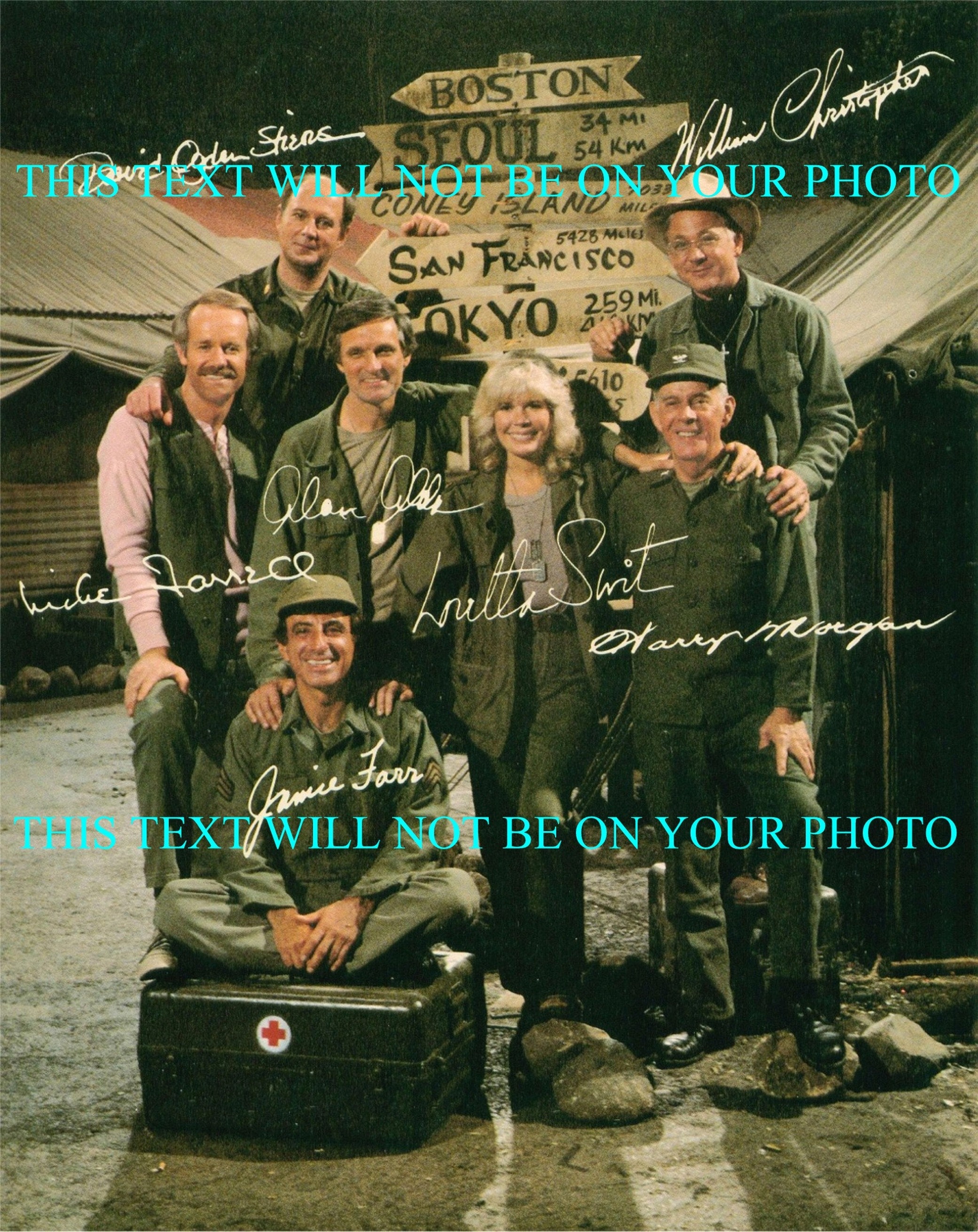
What Happened to the Cast of MAS*H: A Legacy Explored in 2026
As of 2026, the surviving members of the MASH* cast, including Alan Alda, Loretta Swit, and Jamie Farr, remain active in public life through humanitarian efforts, science communication, and the arts. While several iconic stars like Har...
As of 2026, the surviving members of the MASH* cast, including Alan Alda, Loretta Swit, and Jamie Farr, remain active in public life through humanitarian efforts, science communication, and the arts. While several iconic stars like Harry Morgan and David Ogden Stiers have passed away, their collective work continues to influence modern television history.
Contents
Decades after the 4077th Mobile Army Surgical Hospital folded its tents in the most-watched scripted television finale in history, the legacy of the cast remains a point of deep interest for fans. MASH* was more than a sitcom; it was a cultural touchstone that balanced the horrors of war with the necessity of humor. The actors who portrayed these beloved characters did not simply fade into obscurity; they leveraged their fame to become advocates, authors, and industry leaders.
The Evolution of the Core Survivors
The surviving cast members have spent the years since 1983 diversifying their portfolios, often moving away from the "sitcom" label to pursue deep-seated personal passions.
Alan Alda (Capt. Benjamin Franklin "Hawkeye" Pierce)
Alan Alda, who turned 90 in 2026, remains the most visible and influential alumnus of the series. Following the show's conclusion, Alda transitioned from being the face of a television comedy to a serious advocate for science and communication. In 2015, Alda was diagnosed with Parkinson’s disease, a fact he shared publicly in 2018 to encourage others to remain active and positive.
In the decades following the Korean War setting of MASH*, Alda founded the Alan Alda Center for Communicating Science at Stony Brook University. This institution uses improvisational theater techniques—many of which Alda honed during his acting career—to help scientists communicate complex ideas more effectively to the public. His podcast, Clear+Vivid, continues to be a platform for high-level discourse on empathy and understanding.
Loretta Swit (Maj. Margaret "Hot Lips" Houlihan)
Loretta Swit successfully shed the "Hot Lips" persona to become a prominent voice for animal rights and an accomplished artist. By 2026, Swit has become as well known for her activism as for her acting. Through the SwitHeart Animal Alliance, she has worked tirelessly to end animal cruelty and support shelters globally.
Her artistic pursuits also took center stage post-series. Swit is a recognized watercolorist, and her book, SwitHeart: The Art of Loretta Swit, showcases her talent while donating proceeds to charity. Though she occasionally returns to the stage for theatrical productions, her primary focus remains on humanitarian work and the preservation of wildlife.
Jamie Farr (Cpl. Maxwell Q. Klinger)
Jamie Farr, the man who made the dress a symbol of comedic protest, has remained a steady presence in the entertainment industry. While he is semi-retired in 2026, Farr has spent much of the last four decades as a fixture in regional theater and as a beloved personality in his hometown of Toledo, Ohio.
For many years, the Jamie Farr Toledo Classic (now the Dana Open) was a highlight of the LPGA Tour, raising millions for local charities. Farr has also penned a memoir, Just Farr Fun, detailing his journey from the 4077th to his life as a character actor. His enduring popularity is a testament to the warmth he brought to the role of Klinger.
Mike Farrell (Capt. B.J. Hunnicutt)
Mike Farrell took the integrity of B.J. Hunnicutt into his real-world endeavors. Farrell became a formidable producer and activist, notably producing the 1998 film Patch Adams. However, his most significant work has been in the realm of social justice. As a long-time president of Death Penalty Focus, Farrell has been a leading voice in the movement to abolish the death penalty in the United States. His commitment to human rights has taken him around the world, often visiting refugee camps and conflict zones, embodying the humanitarian spirit of the show he starred in for eight seasons.
Remembering Those Who Have Passed
The passage of time has inevitably led to the loss of several key figures who defined the 4077th. Their deaths were mourned by millions, marking the end of various eras within the MASH* timeline.
Harry Morgan (Col. Sherman T. Potter)
Harry Morgan, who provided the show with its steady, fatherly leadership as Colonel Potter, passed away in 2011 at the age of 96. Morgan was already a veteran actor before joining MASH*, known for his role in Dragnet. After the series ended, he reprised his role in the short-lived spin-off AfterMASH, but he is primarily remembered as the definitive moral compass of the 4077th.
David Ogden Stiers (Maj. Charles Emerson Winchester III)
David Ogden Stiers brought a level of sophisticated wit to the show that was unmatched. Following MASH*, Stiers became a prolific voice actor, most famously voicing Cogsworth in Disney’s Beauty and the Beast. He was also a talented conductor and served as the associate conductor for the Newport Symphony Orchestra. Stiers passed away in 2018 from bladder cancer, leaving behind a legacy of both comedic brilliance and musical dedication.
William Christopher (Father John Patrick Francis Mulcahy)
The gentle Father Mulcahy was portrayed by William Christopher, who passed away on December 31, 2016—exactly one year after his co-star Wayne Rogers. Christopher was a devoted advocate for people with autism, a cause close to his heart as his son was on the spectrum. He spent much of his post-MASH* life working with the National Autistic Society and appearing in various stage productions.
Wayne Rogers (Capt. "Trapper" John McIntyre)
Wayne Rogers left MASH* after only three seasons due to contract disputes and a desire for more character development. Interestingly, Rogers had one of the most successful post-acting careers of the entire cast, but not in Hollywood. He became a highly successful financial analyst and investor, frequently appearing on Fox News’ Cashin' In. Rogers died in 2015, having built a business empire far removed from the operating rooms of Korea.
| Actor | Character | Role Tenure | Current Status (2026) | Primary Post-MASH Legacy |
|---|---|---|---|---|
| Alan Alda | Hawkeye Pierce | Seasons 1-11 | Active | Science Communication & Podcasts |
| Loretta Swit | Margaret Houlihan | Seasons 1-11 | Active | Animal Rights Activism & Painting |
| Jamie Farr | Maxwell Klinger | Seasons 1-11 | Semi-Retired | Theater & Philanthropy |
| Mike Farrell | B.J. Hunnicutt | Seasons 4-11 | Active | Human Rights Activism & Producing |
| Gary Burghoff | Radar O'Reilly | Seasons 1-8 | Retired | Wildlife Art & Jazz Music |
| Harry Morgan | Sherman Potter | Seasons 4-11 | Deceased (2011) | Classical TV Leadership |
| David Ogden Stiers | Charles Winchester | Seasons 6-11 | Deceased (2018) | Voice Acting & Orchestra Conducting |
| William Christopher | Father Mulcahy | Seasons 1-11 | Deceased (2016) | Autism Advocacy |
| Wayne Rogers | Trapper John | Seasons 1-3 | Deceased (2015) | Financial Analysis & Investment |
| McLean Stevenson | Henry Blake | Seasons 1-3 | Deceased (1996) | Sitcom History |
| Larry Linville | Frank Burns | Seasons 1-5 | Deceased (2000) | Character Acting |
The Impact of Character Departures
One of the reasons the "what happened to the cast" question remains so prevalent is the high turnover rate in the show's early years. The departures of McLean Stevenson (Henry Blake) and Larry Linville (Frank Burns) changed the trajectory of the series.
McLean Stevenson left the show in 1974, seeking leading-man status. His character’s death in the episode "Abyssinia, Henry" remains one of the most shocking moments in television history. Unfortunately, Stevenson struggled to find another hit, and he famously admitted that leaving MASH* was the biggest mistake of his career. He passed away in 1996.
Larry Linville, who played the "ferret-faced" Frank Burns, left in 1977. Unlike his character, Linville was beloved by the cast. He left because he felt he had taken the one-dimensional character of Frank as far as he could go. Linville continued to work in guest roles and theater until his death in 2000.
Gary Burghoff, the only actor to play his role in both the original MASH* film and the television series, left in Season 8. Burghoff cited burnout and a desire to spend more time with his family. While he appeared in a pilot for a spin-off titled WALTER*, it was not picked up. In 2026, Burghoff is largely retired from the screen, focusing instead on his passion for jazz drumming and wildlife painting.
Frequently Asked Questions
Why did so many cast members leave MAS*H before it ended?
Most departures were due to creative differences or the desire to avoid typecasting. Wayne Rogers felt his character was becoming secondary to Alan Alda's Hawkeye. McLean Stevenson wanted to pursue his own show. Gary Burghoff left due to personal exhaustion and the demands of the filming schedule.
Is there a MAS*H reboot planned for 2026?
There are currently no plans for a scripted reboot of MASH*. The creators and surviving cast have often stated that the original series captured a specific lightning-in-a-bottle moment that cannot be replicated. However, retrospective specials and digitally remastered versions continue to keep the show in the public eye.
Who was the first main cast member to pass away?
McLean Stevenson, who played Lt. Col. Henry Blake, was the first primary cast member to pass away. He died of a heart attack on February 15, 1996. Tragically, Roger Bowen, who played Henry Blake in the MASH* movie, died of a heart attack just one day later.
Are any of the cast members still friends?
Yes, the surviving cast members are famously close. Alan Alda, Mike Farrell, and Loretta Swit have frequently appeared together at reunions and on Alda’s podcast. They often describe themselves as a family that was forged in the "trenches" of a demanding production schedule.
Future Legacy and Accessibility
The enduring relevance of the MASH* cast is sustained by the show's continued availability on streaming platforms like Hulu and Disney+. In 2026, the series serves as a historical document of both the Korean War era and the 1970s American zeitgeist.
For those looking to explore the cast's work beyond the show, the Stony Brook University archives and the various humanitarian foundations mentioned above offer a deeper look into how these actors used their platform for global good. Watching the series today remains a masterclass in ensemble acting, and following the lives of the actors provides an inspiring look at how to navigate a post-fame career with grace and purpose.
Image Gallery