Weekend Road Closures Phoenix AZ: 2026 Construction Guide and Detour Routes
Navigating weekend road closures in Phoenix during 2026 requires monitoring the Arizona Department of Transportation (ADOT) schedules, specifically for the I-10, I-17, and Loop 101 corridors. Most major restrictions occur from Friday a...
Navigating weekend road closures in Phoenix during 2026 requires monitoring the Arizona Department of Transportation (ADOT) schedules, specifically for the I-10, I-17, and Loop 101 corridors. Most major restrictions occur from Friday at 10:00 PM through Monday at 5:00 AM. Utilizing the AZ511 system and pre-planned detour routes is essential for avoiding significant transit delays during these critical infrastructure upgrades.
Contents
The 2026 Phoenix Freeway Improvement Landscape
The Phoenix metropolitan area continues to experience rapid population growth, necessitating an aggressive schedule of freeway expansions and pavement life-extension projects. In 2026, the focus has shifted toward finalizing the multi-year Broadway Curve transition and expanding capacity on the northern stretches of the Loop 101 and I-17. For motorists, this means that weekend travel, while lighter in volume than weekday commutes, is often more complex due to full directional closures.
Understanding the "Weekend Window" is critical for technical trip planning. ADOT and the Maricopa Association of Governments (MAG) typically authorize full closures to begin late Friday evening. These windows are engineered to maximize the efficiency of heavy machinery deployment and safety for construction crews. By concentrating work into a 55-hour continuous block, engineers can complete tasks that would otherwise take weeks of nightly closures, such as bridge girder placement or large-scale asphalt rubber paving.
Major Freeway Projects Impacting 2026 Weekend Travel
Several high-priority projects dominate the 2026 construction calendar. Each of these represents a significant investment in regional mobility but requires periodic weekend shutdowns to maintain safety and structural integrity.
I-10 Broadway Curve Completion and Maintenance
The I-10 Broadway Curve Improvement Project, one of the largest in Arizona history, has entered its final phases of landscaping, final-layer paving, and signage integration in 2026. While the primary capacity-adding lanes are open, weekend closures remain necessary for:
- Final friction course application (rubberized asphalt).
- Integration of Smart Highway overhead signage.
- Bridge aesthetic finishes and pedestrian bridge connections.
I-17 North "Flex Lanes" and Widening
North of the Phoenix metro area, the I-17 project between Anthem and Sunset Point continues to see weekend activity. In 2026, the focus is on the operational testing of the flex lane system. Motorists should anticipate:
- Full closures for system-wide signal testing.
- Lane narrowings for rockfall mitigation and drainage finalization.
- Friday afternoon congestion as North Valley residents head toward the high country.
Loop 101 (Pima Freeway) North Expansion
The expansion of the Loop 101 between I-17 and Pima Road remains a major focal point. Weekend closures in this corridor are typically used for:
- Interchange reconstruction at 7th Street and Cave Creek Road.
- Widening of the bridges over the Central Arizona Project (CAP) canal.
- Installation of new sound walls and drainage structures.
Comparative Analysis of 2026 Infrastructure Impacts
To assist in route planning, the following table summarizes the primary construction zones and their expected impact levels during a typical 2026 weekend.
| Freeway Corridor | Primary Project Phase | Typical Closure Frequency | Impact Level |
|---|---|---|---|
| I-10 (Broadway Curve) | Final Paving / System Integration | Bi-weekly (Directional) | High |
| I-17 (North Valley) | Flex Lane Testing / Drainage | Monthly (Full/Partial) | Moderate |
| Loop 101 (Pima) | Capacity Widening | Weekly (Directional) | Very High |
| US 60 (Superstition) | Pavement Life Extension | Periodic (Selective) | Moderate |
| SR-51 (Piestewa) | Maintenance / Signal Upgrades | Quarterly | Low |
| Loop 202 (South Mtn) | General Maintenance | Rare | Low |
Official ADOT Detour Strategies for High-Traffic Corridors
When a major freeway segment is closed, ADOT provides official detours designed to handle high volumes of traffic. However, these routes often become saturated. As a Senior Technical SEO Strategist and SME in local logistics, I recommend the following corridor-specific strategies.
West Valley to Sky Harbor (I-10 Eastbound Closures)
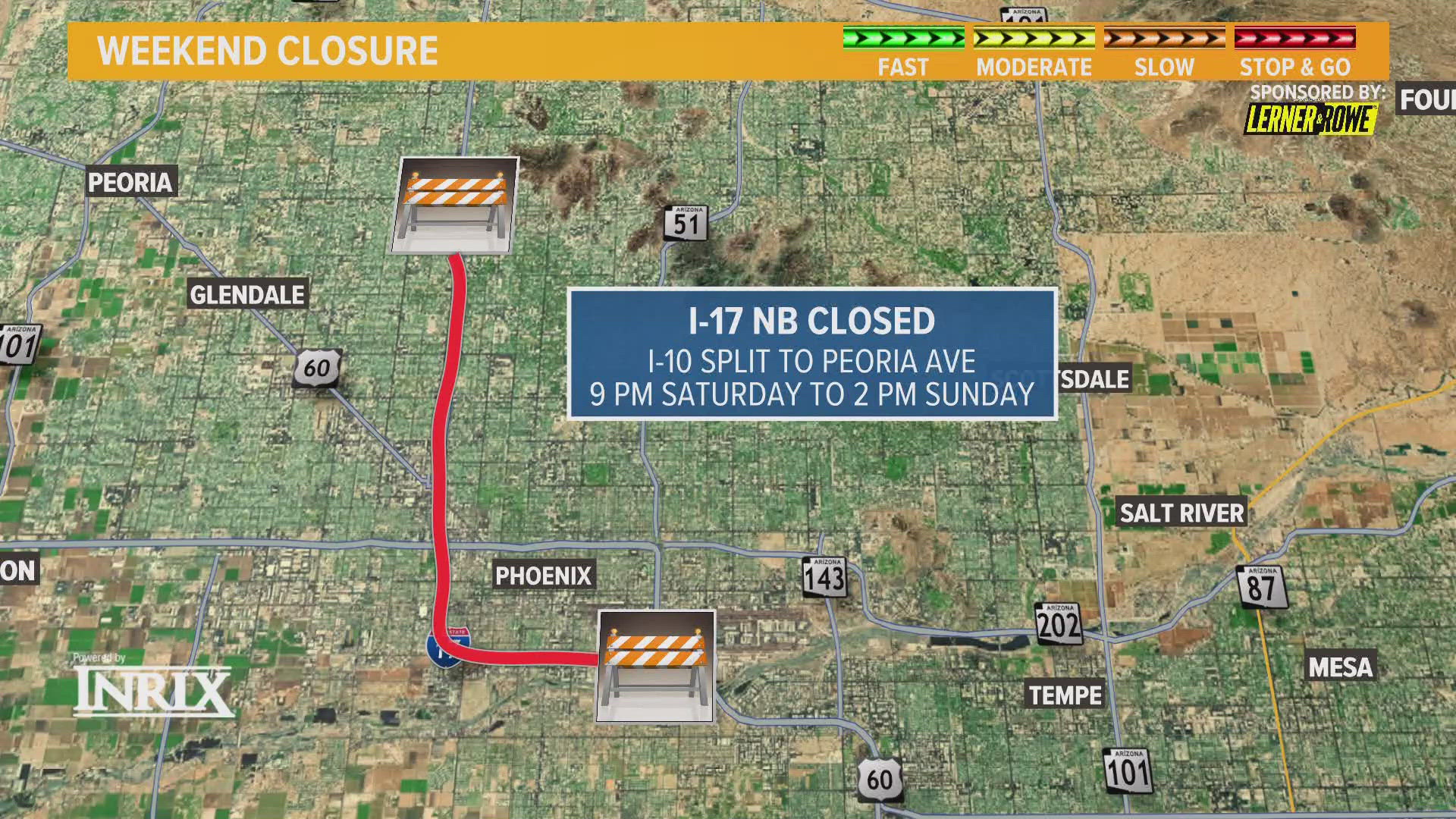
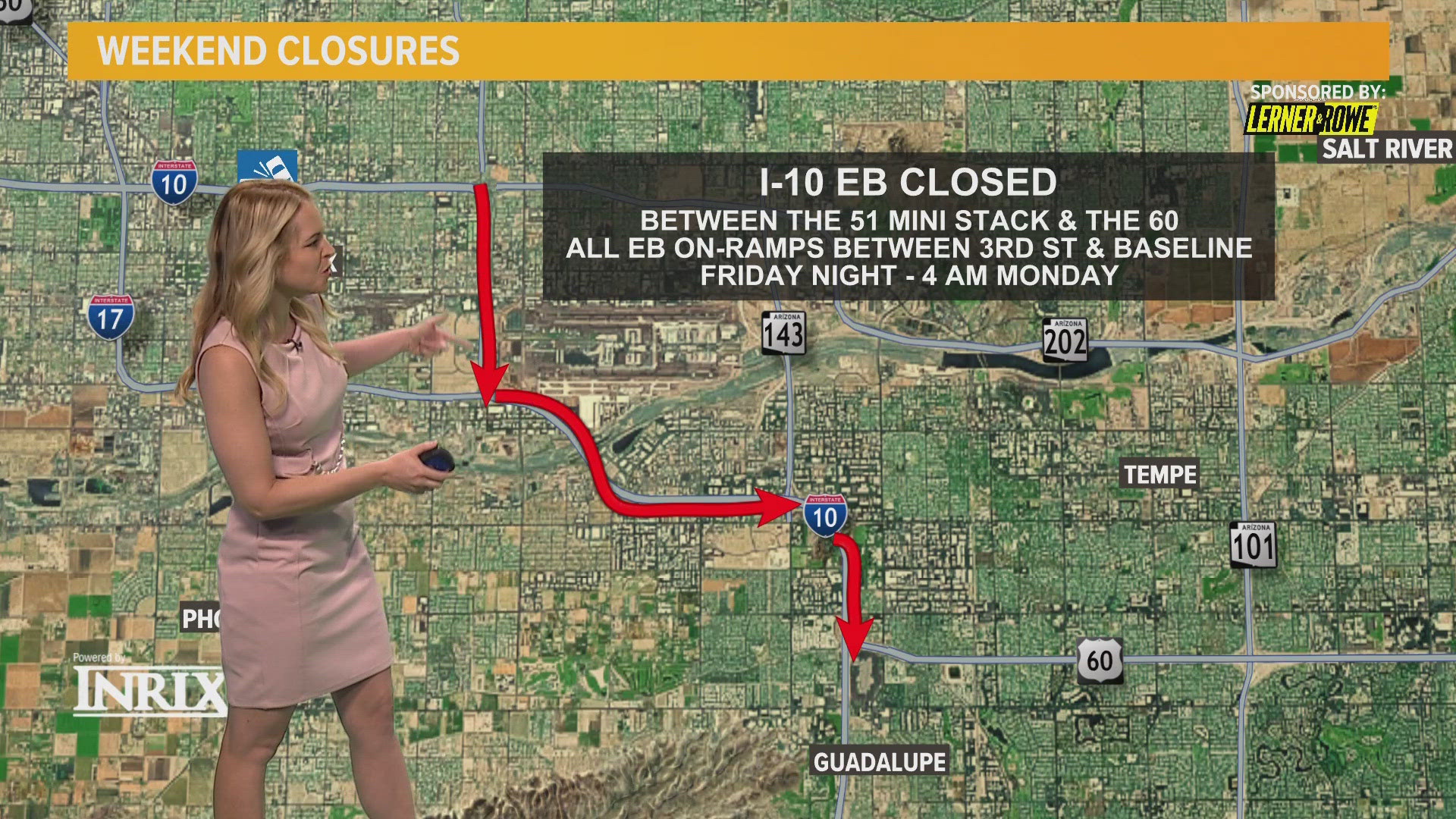
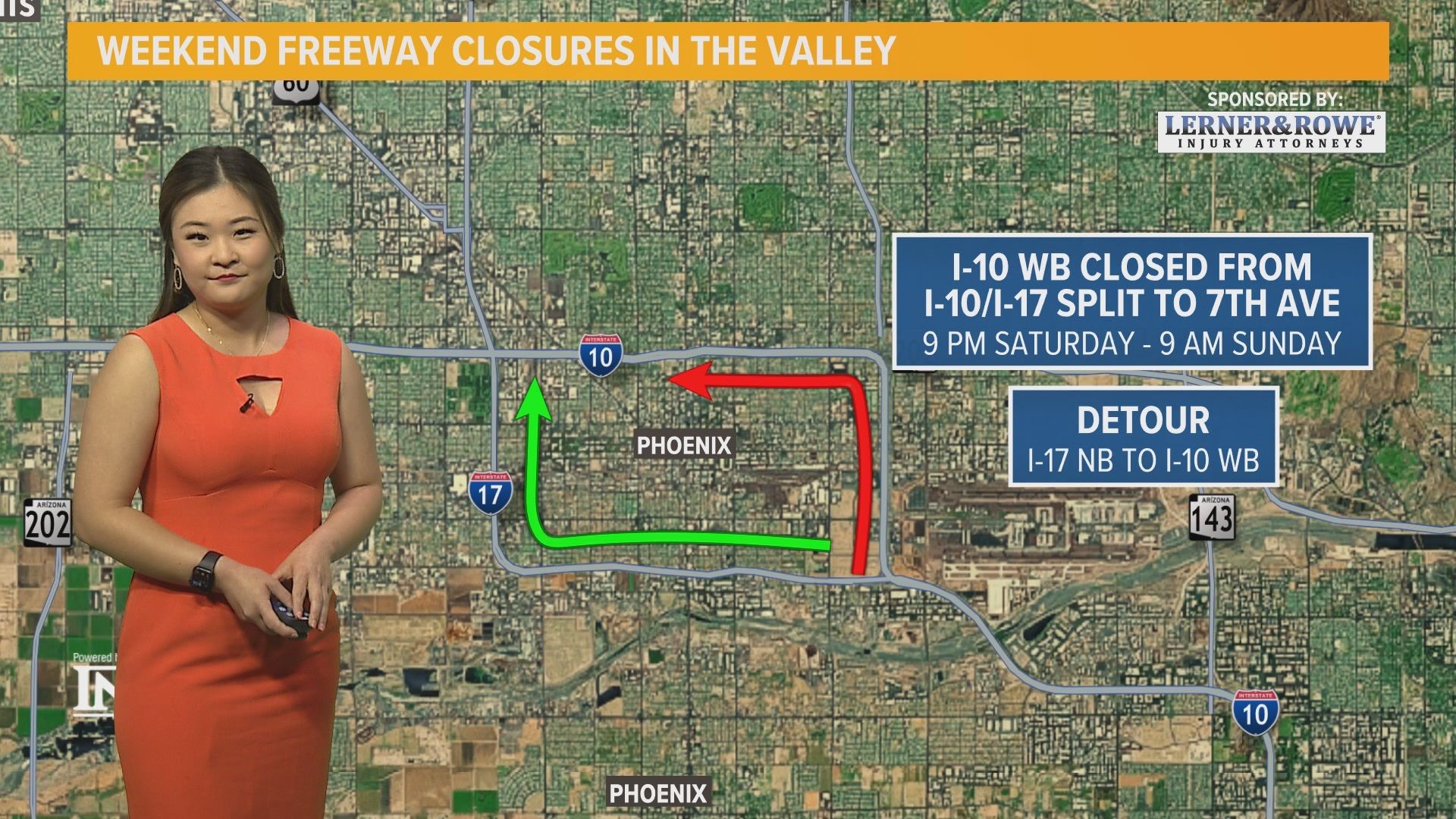
If I-10 is closed between the "Stack" (I-17 junction) and the "Mini-Stack" (Loop 202 junction), the official detour often utilizes I-17 south to the Durango Curve. To avoid the inevitable bottleneck:
- Northern Alternative: Use the Loop 101 North to Loop 202 (Red Mountain) East.
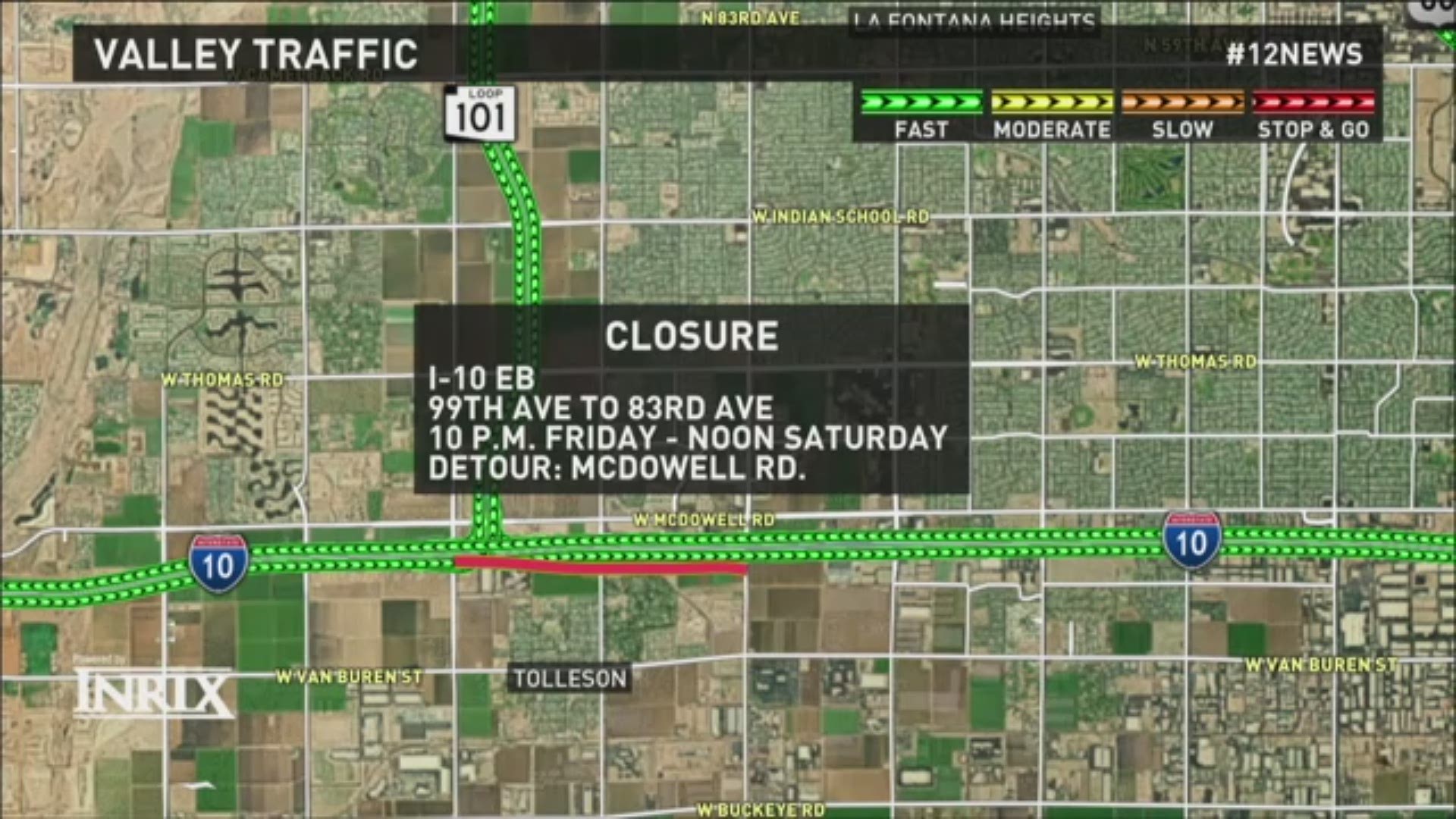
- Surface Street Efficiency: McDowell Road or Buckeye Road can serve as effective relief valves, provided there are no concurrent municipal utility works.
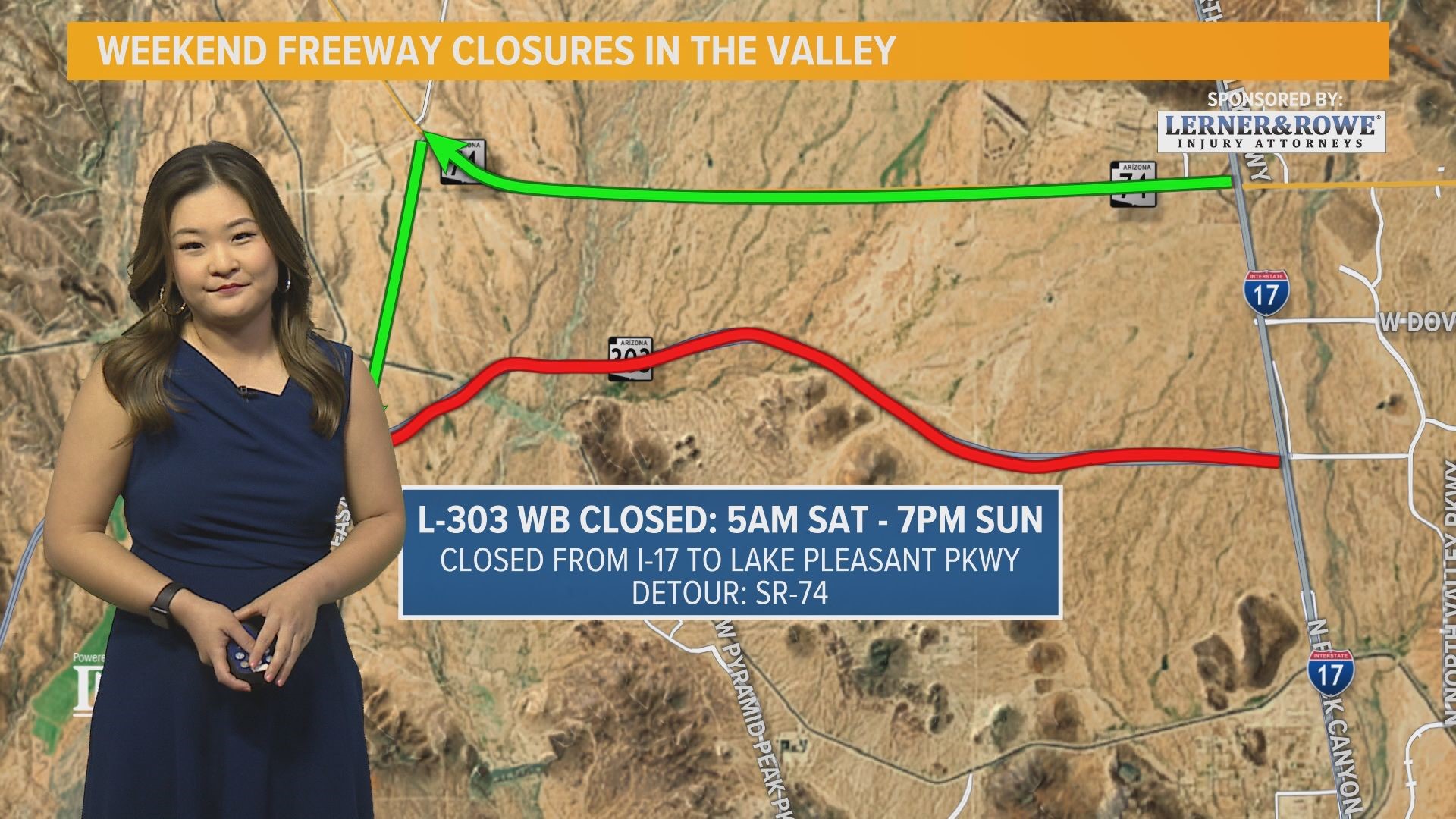
- Southern Alternative: For those coming from the far West Valley (Goodyear/Buckeye), the Loop 303 to the Loop 202 (South Mountain Freeway) remains the most reliable bypass to reach the East Valley or the airport.
North Phoenix to Scottsdale (Loop 101 Eastbound Closures)
Closures on the northern Loop 101 frequently push traffic onto local arterials.
- Primary Detour: Use Beardsley Road (the frontage road). Note that this will be heavily congested.
- Secondary Bypass: Deer Valley Road or Pinnacle Peak Road are superior alternatives for east-west transit, as they possess fewer retail entry points than Bell Road.
- Strategic Timing: Travel before 9:00 AM on Saturdays or after 7:00 PM on Sundays to avoid the peak "retail rush" traffic on these surface street detours.
City of Phoenix Surface Street Restrictions
Beyond the freeways managed by ADOT, the City of Phoenix Street Transportation Department manages local road closures. In 2026, many of these are driven by light rail expansion (Northwest Extension Phase II) and utility modernizations.
Critical Operational Note: Light Rail Construction
Central Avenue and 19th Avenue Corridors Significant weekend restrictions persist along the 19th Avenue corridor as final station integration for the light rail continues. Motorists should avoid 19th Avenue between Dunlap and Peoria Avenues.
Intersection Capacity Reductions When light rail work intersects with major arterials, expect left-turn prohibitions. These are often not reflected accurately on generic GPS apps until the closure is well underway.
Advanced Navigation and Real-Time Monitoring Tools
In 2026, the technology available for monitoring weekend closures has reached peak integration. To stay ahead of delays, motorists should utilize a multi-layered information approach:
- AZ511 Mobile App: This remains the authoritative source. In 2026, the app features "Predictive Congestion" which uses AI to estimate travel times through detour routes based on historical closure data.
- ADOT Alerts: Subscription-based SMS or email alerts provide "Quick-Strike" notifications of unplanned closures due to accidents or emergency repairs.
- V2X (Vehicle-to-Everything) Notifications: If you are driving a 2025 or 2026 model year vehicle, ensure your "Road Hazard" and "Traffic Flow" alerts are enabled. Many newer vehicles now receive direct data feeds from ADOT's Traffic Management Center.
- Social Media Monitoring: ADOT’s official channels (X, formerly Twitter, and Facebook) remain the fastest way to verify if a scheduled closure has been canceled or reopened early.
Engineering Perspectives: Why Weekend Closures Occur
From a technical SME perspective, the public often wonders why multiple corridors are closed simultaneously. This is often due to the "Climate Window" required for specific materials.
- Asphalt Temperature Requirements: In the Phoenix desert, asphalt rubber (the quiet pavement used on freeways) must be laid when both the ambient air temperature and the ground temperature fall within a specific range. In the spring and fall of 2026, the weekend nights provide the only optimal window for these high-performance materials to cure correctly.
- Logistics of Heavy Equipment: Mobilizing specialized machinery, such as bridge girder cranes or large-scale milling machines, is cost-prohibitive for short nightly shifts. A 55-hour weekend window allows for a single mobilization and demobilization cycle, saving millions in taxpayer funds.
- Safety Buffers: Full closures eliminate the risk of "errant vehicle" intrusions into the work zone, which is the leading cause of construction worker fatalities in Arizona.
Frequently Asked Questions
What time do weekend road closures usually start in Phoenix?
Most major freeway closures in the Phoenix metro area begin on Friday at 10:00 PM. Occasionally, for high-priority projects or long-term bridge work, restrictions may begin as early as 9:00 PM to allow for the staging of heavy equipment.
How can I find out if the I-10 is closed this weekend?
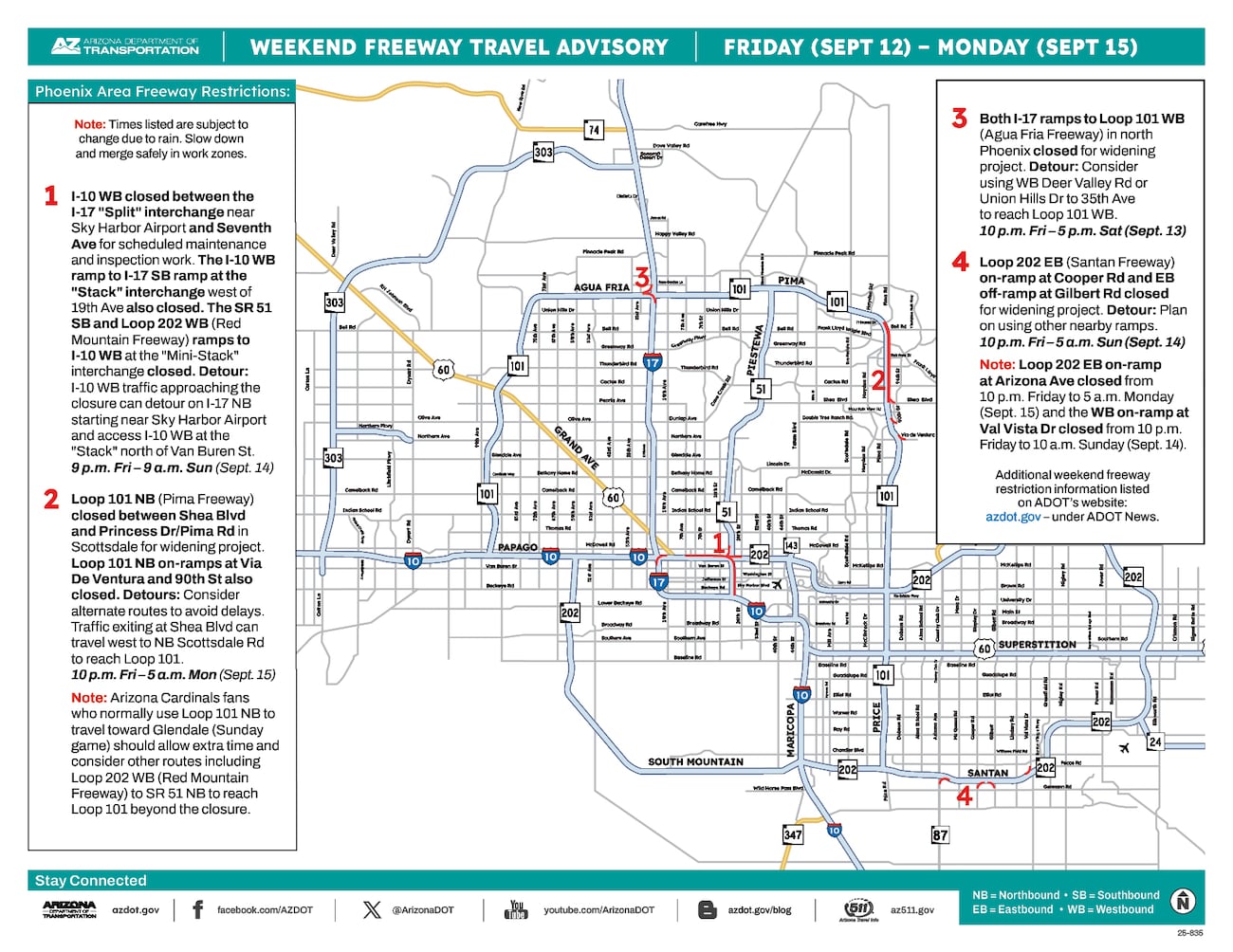
The most reliable method is to check the AZ511.gov website or the ADOT Weekend Freeway Travel Advisory, which is typically released every Thursday afternoon. These resources provide specific mile-marker data and suggested detour routes for the upcoming weekend.
Are surface streets also closed when the freeway is shut down?
Generally, major surface streets remain open; however, the streets immediately adjacent to freeway off-ramps (frontage roads) will experience significantly higher traffic volumes. Localized municipal work may also close surface streets, which can be verified through the Phoenix "Public Works" or "Street Transportation" department portals.
Why does ADOT close multiple freeways at the same time?
Closures are coordinated through the Maricopa Association of Governments to minimize regional gridlock, but sometimes overlapping projects are unavoidable due to federal funding deadlines or specialized contractor availability. Engineers attempt to ensure that "competing" detours do not use the same surface streets.
Will the light rail construction affect weekend traffic in 2026?
Yes, specifically in the North Phoenix and South Mountain corridors. Light rail expansion often requires weekend intersection closures for track installation and overhead power line work, which can impact north-south travel across the city.
Strategic Recommendation for 2026 Travelers
For residents and visitors alike, the best strategy for managing weekend road closures in Phoenix is "The Rule of 20." Always assume that a detour will add at least 20 minutes to your travel time. By checking the AZ511 system before leaving your driveway and choosing a route that bypasses the primary closure zone entirely—even if the mileage is longer—you can ensure a more predictable and less stressful transit experience.
Image Gallery