Understanding Florida’s Bear Hunting Regulations and Legal Status in 2026
As of 2026, you cannot hunt bears in Florida for sport or recreation. While the Florida Fish and Wildlife Conservation Commission (FWC) possesses the regulatory authority to permit a harvest, no active hunting season has been establish...
As of 2026, you cannot hunt bears in Florida for sport or recreation. While the Florida Fish and Wildlife Conservation Commission (FWC) possesses the regulatory authority to permit a harvest, no active hunting season has been established since the limited 2015 hunt. Current laws focus on population management through non-lethal means and specific self-defense provisions for private property owners.
Contents
The question of whether one can hunt bears in the Sunshine State is a complex intersection of wildlife biology, state legislation, and public safety policy. While the Florida black bear (Ursus americanus floridanus) population has seen a significant recovery over the last several decades, the state remains firm in its decision to keep recreational hunting closed. However, legislative shifts in 2024 introduced new nuances regarding "lethal take" in self-defense scenarios, which many residents often mistake for a hunting allowance. To navigate these regulations safely and legally, it is essential to understand the distinction between a sanctioned hunt, nuisance removal, and the legal right to protect one's home.
The Legal Framework of Bear Management in Florida
The primary authority governing all wildlife in the state is the Florida Fish and Wildlife Conservation Commission (FWC). Under Florida Administrative Code, the Florida black bear is a protected species. For much of the 20th century, the species was on the verge of extirpation, with populations dipping as low as 300 to 500 individuals in the 1970s. This led to a complete ban on hunting that lasted for over 20 years.
In 2015, the FWC briefly reopened a bear hunting season, which resulted in the harvest of 304 bears over just two days. The hunt was met with significant public outcry and legal challenges, leading the commission to suspend future hunts indefinitely. As of 2026, this moratorium remains in place. The FWC manages the population through the "Florida Black Bear Management Plan," which emphasizes habitat preservation, the reduction of human-bear conflicts, and data collection rather than population control through recreational harvesting.
The 2024 Self-Defense Act (House Bill 1317)
A major shift in Florida's legal landscape occurred in 2024 with the passage of legislation often referred to as the "Self-Defense Act." This law provides a narrow exception to the prohibition on killing bears, but it is strictly not a hunting law. Under this statute, individuals are not prosecuted for using lethal force against a bear on their private property if they feel it is necessary to protect themselves, their families, or their dwellings.
However, the requirements for this protection are rigorous:
- Imminent Threat: The person must have a reasonable belief that using force was necessary to prevent death or serious bodily injury.
- No Luring: The individual must not have intentionally attracted the bear using food, garbage, or other attractants.
- Mandatory Reporting: Anyone who kills a bear under this provision must notify the FWC within 24 hours.
- No Retention: The person is prohibited from keeping the bear’s carcass, hide, or any other parts. The FWC takes possession of the animal for biological sampling and disposal.
Failure to meet any of these criteria can result in felony charges for the illegal taking of a protected species.
Biological Rationale for the Hunting Moratorium
The decision to keep bear hunting closed in 2026 is rooted in the FWC’s current biological assessment of the species. Florida black bears are unique compared to their counterparts in the northern United States. They do not hibernate in the traditional sense, and their habitat is increasingly fragmented by rapid urban development.
Population Estimates and Carrying Capacity
According to the most recent FWC census data, there are approximately 4,000 to 4,500 adult bears in Florida. While this is a massive increase from the 1970s, biologists argue that the "carrying capacity"—the number of bears the environment can naturally support—is limited by the loss of contiguous forest land.
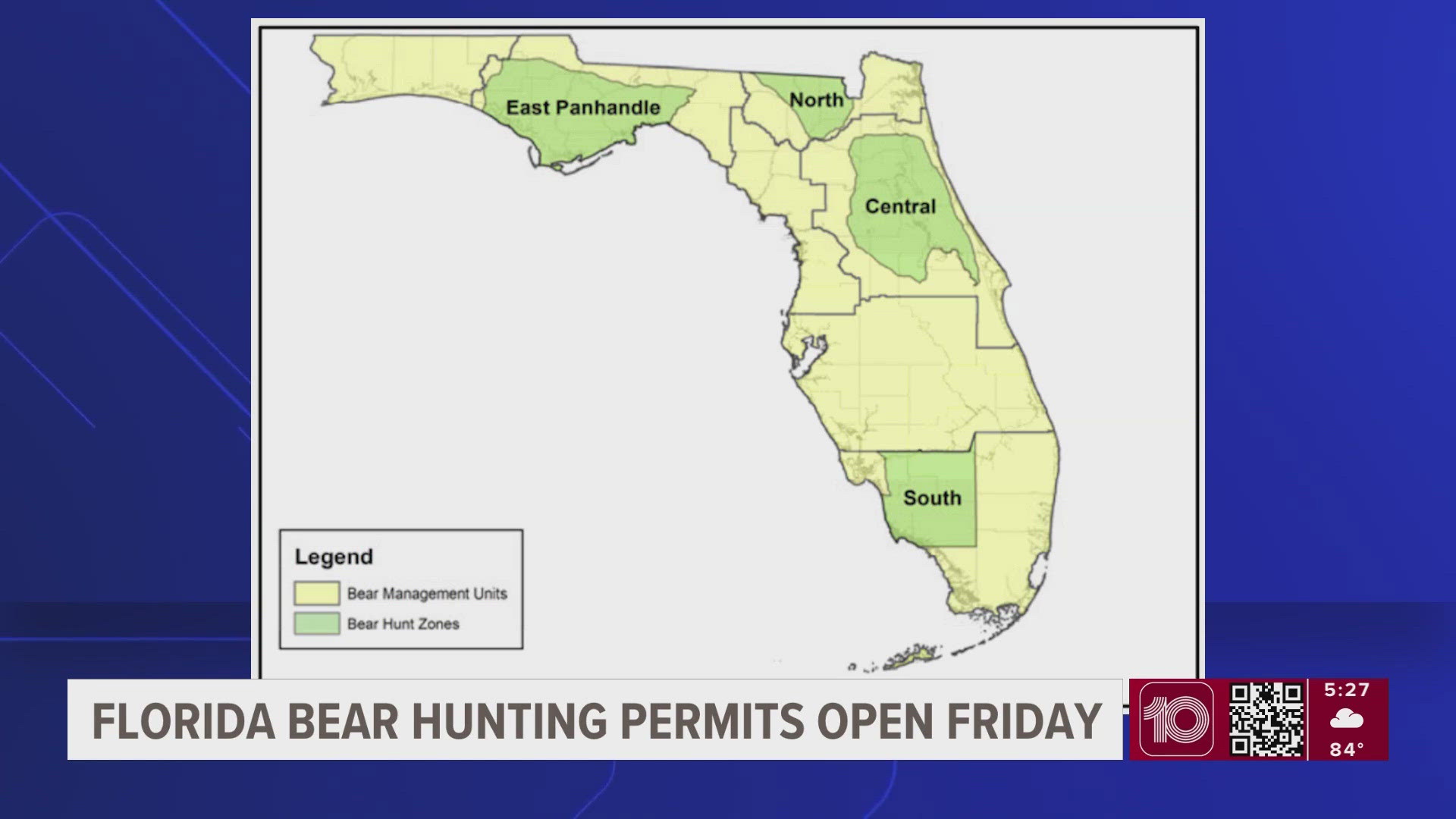
The state is divided into seven Bear Management Units (BMUs):
- Eglin: Panhandle area.
- Apachicola: Large populations in national forests.
- Big Bend: Coastal swamp regions.
- Osceola: North Florida near the Georgia border.
- St. Johns: Central Florida corridor.
- Ocala/St. Johns: The highest density of bear-human interactions.
- South: The Everglades and Big Cypress regions.
Because the populations in these units are not all growing at the same rate, the FWC has determined that a statewide hunt would be biologically irresponsible. Some units, like Ocala, may have high numbers, while others remain fragile.
Comparing Hunting, Self-Defense, and Nuisance Removal
It is common for residents and visitors to confuse the different legal avenues for dealing with bears. The following table clarifies the distinctions between these actions as of 2026.
| Feature | Recreational Hunt | Self-Defense (2024 Law) | Nuisance Removal |
|---|---|---|---|
| Current Status | Prohibited | Legal with Conditions | FWC Authorized Only |
| Location | Public/Private Land (if open) | Private Property Only | Anywhere deemed a risk |
| Permit Required? | Yes (Not currently issued) | No | No (State action) |
| Can you keep the bear? | Usually yes (if open) | No | No |
| Intent | Sport/Harvest | Protection of Life/Home | Public Safety |
| Targeting | Random/Selection | Specific Threatening Bear | Specific Conflict Bear |
Penalties for Illegal Bear Hunting in 2026
Because the Florida black bear remains a state-protected species, the penalties for illegal hunting—often classified as poaching—are severe. Florida Statute 379.404 dictates the legal consequences for those who violate wildlife protections.
Criminal Consequences
First-time offenders caught hunting bears can face a first-degree misdemeanor, punishable by up to one year in jail and fines reaching several thousand dollars. However, if the act is determined to be a "Level 4" violation—which includes the commercial sale of bear parts or the killing of multiple bears—it can be elevated to a third-degree felony. Felony convictions in Florida carry a potential five-year prison sentence and the permanent loss of firearm rights.
Administrative Penalties
Beyond jail time, the FWC has the authority to revoke hunting and fishing licenses for several years or even a lifetime. Violators are often entered into the Interstate Wildlife Violator Compact, meaning a hunting ban in Florida would prevent the individual from legally hunting in nearly every other state in the U.S.
Civil Restitution
In addition to criminal fines, the state may seek civil restitution. This is a monetary value assigned to the animal itself to compensate the public for the loss of wildlife resources. For a Florida black bear, these costs can exceed $5,000 per animal.
Bear-Wise Practices: The Alternative to Hunting
Since hunting is not an option for managing bears in residential areas, the FWC emphasizes "Bear-Wise" protocols. These are technical and behavioral adjustments designed to minimize bear-human conflict without the need for lethal force.
- Secure Attractants: The number one reason bears enter human spaces is food. Using FWC-approved bear-resistant trash cans is a requirement in many Florida counties.
- Feeding Prohibition: It is illegal to intentionally feed bears in Florida. This includes leaving out pet food or high-calorie birdseed in areas with known bear activity.
- Electric Fencing: For those with beehives, livestock, or gardens, electric fencing is the most effective non-lethal deterrent recognized by state biologists.
- Harassment Techniques: If a bear is on your property but not posing an immediate threat, the FWC recommends "hazing." This includes loud noises (air horns), flashing lights, or motion-activated water sprinklers to encourage the bear to maintain a natural fear of humans.
Frequently Asked Questions
Can I get a permit to hunt a bear on my own land if they are destroying crops?
No. There is no specific "damage permit" for bears equivalent to those issued for deer or wild hogs. If bears are causing significant agricultural damage, you must contact the FWC. They may provide technical assistance or, in extreme cases, authorize a professional trapper to relocate or euthanize the animal. Shooting a bear for crop damage without FWC authorization remains illegal in 2026.
Is the Florida black bear still on the Endangered Species List?
The Florida black bear was removed from the state's "Threatened" list in 2012 because it met conservation goals, but it remains a "state-designated threatened species" under a different protective framework (Chapter 68A-27, F.A.C.). It is not federally listed under the Endangered Species Act, though it is protected by state law.
Are there any plans to open a bear season in 2027 or 2028?
The FWC meets regularly to review population data. While there are always discussions regarding the use of hunting as a management tool, there is currently no active proposal or timeline to reinstate a bear hunting season. Any such change would require a public notice period and a formal vote by the FWC Commissioners.
What should I do if I see someone hunting or poaching a bear?
You should immediately contact the FWC Wildlife Alert Hotline at 1-888-404-FWCC (3922). Tips that lead to a citation or arrest are often eligible for a cash reward, and you can remain anonymous.
Can I keep a bear hide if I kill it in self-defense?
Absolutely not. Under the 2024 Self-Defense Act, you are strictly prohibited from possessing any part of the bear. The law was written specifically to prevent "trophy hunting" from being disguised as self-defense. The carcass must be turned over to the FWC in its entirety.
Practical Recommendation for Florida Residents
If you are experiencing issues with bears on your property, your first action should be to audit your attractants rather than seeking a hunting solution. Ensure all trash is secured in bear-resistant containers and remove bird feeders or outdoor pet bowls. If a bear becomes bold or aggressive, document the behavior and contact your local FWC regional office. For those who feel their physical safety is at risk on their own property, familiarize yourself with the specific reporting requirements of the 2024 Self-Defense Act to ensure you remain within the bounds of the law. Hunting for bears in Florida remains illegal, and the state's enforcement agencies maintain a zero-tolerance policy for unauthorized harvesting.
Image Gallery