How Virtual Network Security Works in Cloud Environments: A Comprehensive Guide
Virtual network security in cloud environments functions by creating logical isolation layers through Software-Defined Networking (SDN). It uses a combination of micro-segmentation, virtual firewalls, and identity-aware access controls...
Virtual network security in cloud environments functions by creating logical isolation layers through Software-Defined Networking (SDN). It uses a combination of micro-segmentation, virtual firewalls, and identity-aware access controls to inspect, filter, and encrypt traffic. By enforcing policies at the granular resource level rather than the broad perimeter, it ensures Zero Trust protection across distributed infrastructures.
Contents
The Architecture of Cloud Network Isolation
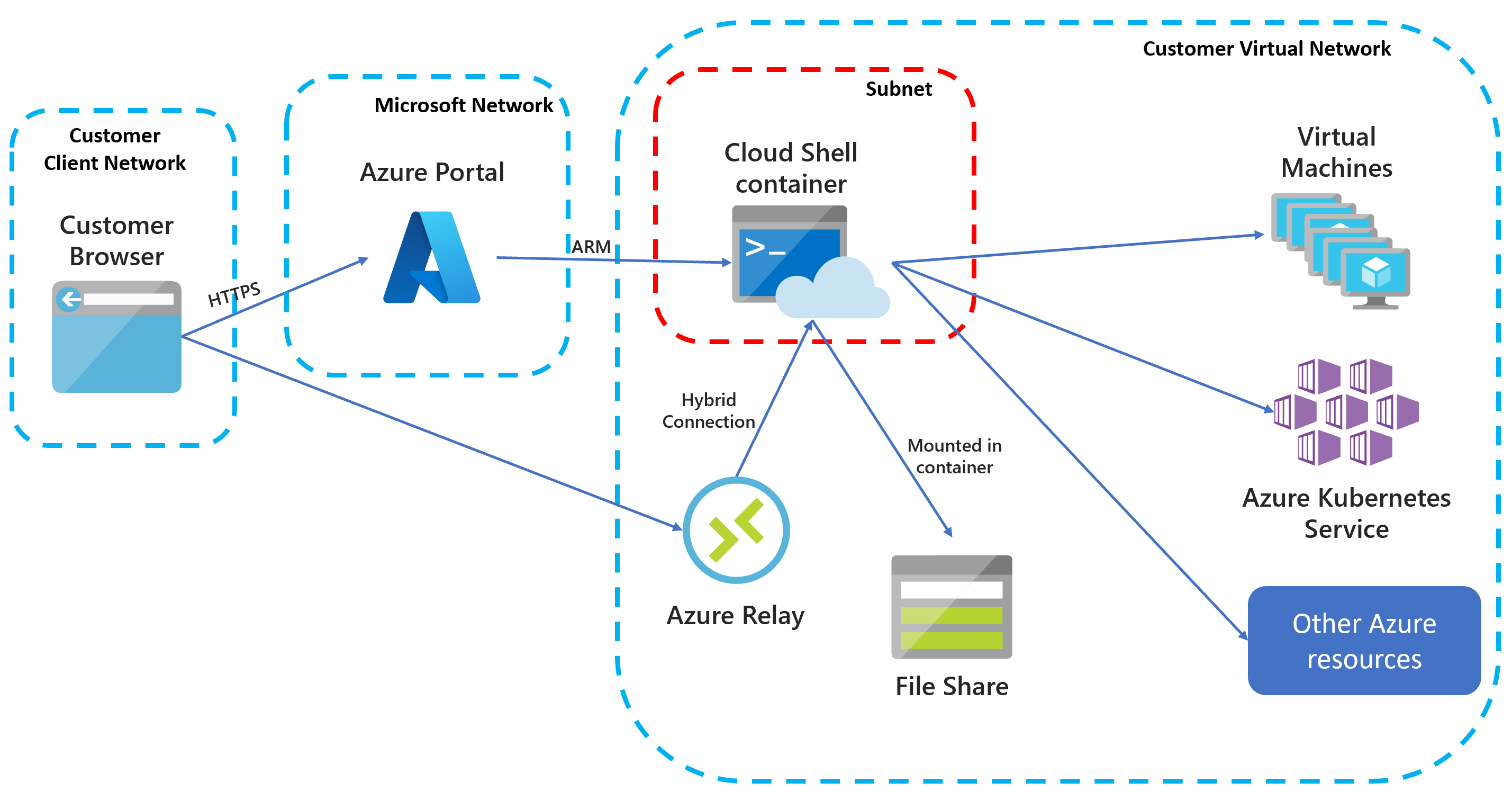
At the core of virtual network security is the concept of logical isolation within a shared physical environment. Unlike traditional data centers that rely on physical cables and hardware switches to separate departments or functions, cloud providers utilize Software-Defined Networking (SDN) to create Virtual Private Clouds (VPCs) or Virtual Networks (VNETs).
When a tenant creates a virtual network, the cloud provider's abstraction layer ensures that packets from one tenant cannot "leak" into another's space. This is achieved through encapsulation protocols like VXLAN (Virtual Extensible LAN) or NVGRE. These protocols wrap the tenant's data packets in a provider-managed header that includes a unique Virtual Network Identifier (VNI). As of 2026, this encapsulation happens at the hypervisor or specialized SmartNIC level, ensuring that even if an attacker compromises a virtual machine, they remain trapped within the logical boundaries of that specific virtual network.
Within these VPCs, administrators define subnets. Security is reinforced here by separating "Public" subnets (those with routes to the Internet Gateway) from "Private" subnets (those which only communicate internally or through a controlled proxy). This tiered architecture is the first line of defense, ensuring that database servers or internal application logic are never directly reachable from the public internet.
The Mechanisms of Traffic Filtering: Security Groups and NACLs
Filtering in a virtual environment operates at two primary layers: the subnet level and the individual resource level. Understanding the distinction between these mechanisms is critical for maintaining a robust security posture.
Network Access Control Lists (NACLs)
NACLs act as the first gatekeeper at the subnet boundary. They are generally stateless, meaning they do not remember the "state" of a connection. If you allow inbound traffic on port 80, you must explicitly create an outbound rule to allow the response to leave. NACLs are primarily used for broad "coarse-grained" security, such as blocking specific CIDR blocks (IP ranges) known for malicious activity or ensuring that entire segments of the network cannot talk to one another.
Security Groups (Distributed Firewalls)
Security Groups function at the instance or Network Interface (NIC) level. Unlike NACLs, they are stateful. If an inbound request is permitted, the outbound response is automatically allowed, regardless of outbound rules. In 2026, Security Groups are often managed as "Identity-Based" rules rather than just IP-based rules. Instead of saying "allow IP 10.0.1.5," administrators write rules such as "allow traffic from Web-Server-Group to App-Server-Group." This abstraction allows the network to scale dynamically; as new servers are added to a group, they automatically inherit the correct security policies without manual IP configuration.
Micro-segmentation and the Zero Trust Model
The traditional "castle and moat" security model—where everything inside the network is trusted—has proven insufficient in modern cloud deployments. Today, virtual network security relies on micro-segmentation.
Micro-segmentation divides the cloud environment into small, isolated segments down to the individual workload level. This prevents "lateral movement," a technique where an attacker breaches one low-security entry point (like a web server) and moves sideways through the network to reach high-value targets (like a customer database).
By implementing a Zero Trust Architecture (ZTA), the network operates on the principle of "never trust, always verify." In this framework, every single communication request, even between two internal services, must be authenticated, authorized, and encrypted. This is often managed through a Service Mesh (such as Istio or Linkerd), which uses "sidecar" proxies to handle security logic, ensuring that the application code itself doesn't need to manage complex encryption handshakes.
Protecting Data in Transit: Encryption and Private Links
Virtual network security is not merely about blocking traffic; it is about ensuring the integrity and confidentiality of the data that is allowed. In 2026, encryption in transit is a non-negotiable standard.
- Virtual Private Networks (VPNs): For connecting on-premises data centers to the cloud, IPsec VPNs provide an encrypted tunnel over the public internet.
- Transport Layer Security (TLS): Almost all internal cloud traffic is now wrapped in TLS 1.3. Many cloud providers now offer "Encryption in Transit" by default at the infrastructure layer, encrypting traffic between instances at the physical host level using high-speed hardware-offloaded keys.
- Private Links and Endpoints: One of the most significant security enhancements in recent years is the move away from public endpoints. Previously, if a virtual machine needed to access a cloud storage bucket (like S3 or Azure Blobs), the traffic would often traverse the public internet. Today, Private Links allow these services to appear as if they are physically inside the tenant's private virtual network. This eliminates exposure to the public internet entirely for administrative and data-sync tasks.
Comparing Cloud Security Implementation Layers
The following table compares the different layers of virtual network security to help architects decide where to place specific controls.
| Security Layer | Scope | Statefulness | Best Use Case |
|---|---|---|---|
| Network ACL (NACL) | Subnet-wide | Stateless | Blocking malicious IP ranges; broad network boundaries. |
| Security Group | Instance / NIC | Stateful | Primary firewall for applications; micro-segmentation. |
| Identity & Access (IAM) | Resource / User | N/A | Controlling who can modify network configurations. |
| Next-Gen Firewall (NGFW) | VPC / Gateway | Stateful | Deep Packet Inspection (DPI); intrusion prevention (IPS). |
| Service Mesh | Container / Pod | Stateful | Mutual TLS (mTLS) and service-to-service authentication. |
Monitoring, Detection, and AI-Driven Response
In 2026, virtual network security is no longer a "set and forget" configuration. It is a continuous cycle of monitoring and automated response. Cloud-native tools generate vast amounts of VPC Flow Logs, which record metadata about every packet passing through the network (source, destination, port, protocol, and action taken).
These logs are fed into AI-driven security engines (such as Amazon GuardDuty or Azure Sentinel) that perform behavioral analysis. If a web server suddenly starts communicating with a known Command & Control (C2) server or begins scanning internal ports—behavior atypical for its "peer group"—the system can automatically trigger a "quarantine" Security Group. This automated orchestration reduces the Mean Time to Remediate (MTTR) from hours to seconds, stopping breaches before they can escalate.
Common Pitfalls in Virtual Network Security
Despite the advanced tools available, several common mistakes continue to plague cloud environments:
- Overly Permissive Rules: The "Any-Any" rule (allowing all traffic on all ports) is often used during troubleshooting and then forgotten, leaving a permanent hole in the perimeter.
- Default Configurations: Many cloud resources ship with default security groups that may allow public SSH (Port 22) or RDP (Port 3389) access.
- Ignoring Egress Traffic: Most organizations focus on who can get in, but few monitor what is going out. If a server is compromised, it will attempt to "phone home" to an external server. Blocking all outbound traffic except to known, required destinations is a critical "defense in depth" strategy.
- Complexity Overload: Managing hundreds of VPCs across multiple regions can lead to "shadow IT" and misconfigurations. Utilizing Infrastructure as Code (IaC) tools like Terraform or Pulumi is essential for maintaining consistency and auditing changes.
FAQs
What is the difference between a virtual firewall and a physical firewall?
A virtual firewall is a software-based security appliance or service that filters traffic in a virtualized environment. Unlike physical firewalls, which are limited by hardware ports and physical location, virtual firewalls can be deployed elastically, scale with traffic, and are often "distributed," meaning they apply rules directly at the virtual interface of every server rather than at a single central chokepoint.
How does micro-segmentation improve security compared to traditional VLANs?
Traditional VLANs (Virtual Local Area Networks) are often too broad, placing hundreds of servers in a single "trusted" zone. If one server in a VLAN is breached, all others are vulnerable. Micro-segmentation applies security policies to individual workloads or even specific processes, ensuring that even if one server is compromised, the attacker cannot reach any other resource without passing through additional security checks.
Can I use my existing on-premises firewall rules in the cloud?
While the logic of your rules (e.g., "Allow Web to SQL on port 1433") remains the same, the implementation is different. You cannot simply "import" a hardware config file. You must translate those rules into cloud-native constructs like Security Groups or Cloud Firewalls. Most organizations use this transition as an opportunity to move toward identity-based rules rather than static IP-based rules.
Does virtual network security impact application performance?
In 2026, the performance impact is negligible for most applications. Modern cloud providers use hardware acceleration (SR-IOV and SmartNICs) to process security rules at the physical network interface layer. This means packet filtering and even encryption happen at "wire speed," adding only microseconds of latency that are imperceptible to the end user.
Why is the Shared Responsibility Model important for network security?
The Shared Responsibility Model defines who is responsible for what. The cloud provider is responsible for the "Security of the Cloud" (the physical wires, the hypervisor, and the global infrastructure). You are responsible for "Security in the Cloud" (how you configure your VPCs, which ports you open, and how you manage your encryption keys). If you leave a port open, the provider is not responsible for the resulting breach.
Final Recommendation
To secure a cloud environment effectively, start by adopting a Zero Trust mindset. Begin with a "Deny All" default posture for both inbound and outbound traffic, and only open specific ports and protocols as required by the application. Leverage Infrastructure as Code (IaC) to ensure that your security configurations are version-controlled and peer-reviewed. Finally, move beyond simple IP filtering by integrating Identity-Aware Proxy (IAP) services, ensuring that network access is granted based on the user's identity and device health rather than just their location on the network.
Image Gallery