Workers Compensation Guidebooks for Injured Workers: A Comprehensive Resource Navigator
Workers compensation guidebooks serve as essential navigational tools for employees who have suffered work-related injuries or illnesses, providing a structured roadmap through the complex legal and insurance landscape. These guides, t...
Workers compensation guidebooks serve as essential navigational tools for employees who have suffered work-related injuries or illnesses, providing a structured roadmap through the complex legal and insurance landscape. These guides, typically published by state regulatory boards or legal aid organizations, detail the mandatory timelines for reporting injuries, the methods for accessing medical treatment, and the specific formulas used to calculate wage replacement benefits. In 2026, these resources have become increasingly digitized, offering interactive checklists and real-time portal integration to ensure injured workers can secure their rights without procedural delays.
Contents
The Role of Official State Guidebooks in the Claims Process
The primary source of information for any injured worker should be the official guidebook provided by their specific state or jurisdictional workers' compensation board. Because workers' compensation laws are predominantly governed at the state level rather than the federal level, a "one size fits all" approach does not exist. Each state has unique statutes regarding which employers must carry insurance, what constitutes a compensable injury, and how disputes are adjudicated.
Official guidebooks are designed to bridge the information gap between the insurance carrier, the employer, and the injured employee. In 2026, most state agencies, such as the California Department of Industrial Relations or the New York Workers' Compensation Board, provide these manuals in multi-language formats and accessible digital PDF versions. These documents are not merely advisory; they often contain the specific forms (such as the Form C-3 in New York or the DWC-1 in California) that are legally required to initiate a claim.
The utility of these guides lies in their ability to demystify the "No-Fault" system. Under most workers' compensation laws, an employee does not need to prove that the employer was negligent to receive benefits. However, in exchange for this "no-fault" coverage, the worker generally gives up the right to sue the employer in civil court for pain and suffering. The guidebook explains this trade-off in detail, helping the worker understand why their compensation is limited to medical costs and a percentage of lost wages.
Key Components Every Injured Worker Should Look For
When examining a workers' compensation guidebook, several critical sections dictate the success or failure of a claim. A comprehensive guide should be evaluated based on how clearly it explains the following pillars of the compensation system:
1. Mandatory Reporting Timelines
Every jurisdiction has a "Statute of Limitations" or a notification period. In some states, you must notify your employer in writing within 30 days; in others, the window may be shorter. A quality guidebook will highlight these deadlines prominently, as missing a reporting deadline is the most common reason for claim denial.
2. The Medical Provider Network (MPN)
One of the most contentious areas of workers' compensation is who chooses the doctor. Guidebooks explain whether the state allows the employee to choose their own physician or if they must select a doctor from a list provided by the employer’s insurance company. Understanding the rules for "changing physicians" is vital if a worker is unhappy with the initial diagnosis or treatment plan.
3. Benefit Categorization and Calculations
Guidebooks break down the four main types of benefits:
- Temporary Total Disability (TTD): For workers who cannot work at all while recovering.
- Temporary Partial Disability (TPD): For those who can work light duty but earn less than their pre-injury wages.
- Permanent Partial Disability (PPD): For workers who have a lasting impairment but can still work in some capacity.
- Permanent Total Disability (PTD): For those whose injuries prevent them from ever returning to gainful employment.
In 2026, most guides include updated benefit caps, which are often tied to the State Average Weekly Wage (SAWW). These figures are adjusted annually, and the guidebook ensures the worker knows the maximum weekly amount they are entitled to receive.
Comparing Resource Types: Official vs. Private Guides
Not all guidebooks are created equal. While state-issued manuals are the "gold standard" for procedural accuracy, private legal guides or union-provided handbooks often offer more strategic advice on how to handle adversarial insurance adjusters.
| Feature | State-Issued Guidebooks | Private Legal/Advocacy Guides |
|---|---|---|
| Primary Goal | Regulatory compliance and procedural neutrality. | Maximizing claim value and protecting legal rights. |
| Tone | Objective and factual. | Strategic and protective. |
| Cost | Always free (Public Domain). | Often free (as marketing) or via legal aid. |
| Best For | Finding official forms and filing deadlines. | Understanding how to handle "Independent" Medical Exams (IMEs). |
| Updates | Updated when laws change (e.g., 2026 revisions). | Updated based on recent case law and court rulings. |
| Dispute Advice | Explains the hearing process neutrally. | Provides tips on testimony and evidence gathering. |
Navigating the 2026 Workers' Compensation Landscape
As of 2026, the workers' compensation system has integrated several technological and policy shifts that are reflected in the latest editions of injured worker guidebooks. One significant change is the standard inclusion of Telehealth Guidelines. Following the maturation of remote medicine, many guidebooks now explain how virtual visits count toward medical evidence and when a physical examination is non-negotiable.
Furthermore, the 2026 guides place a heavier emphasis on Vocational Rehabilitation and "Return-to-Work" (RTW) programs. Insurance carriers are increasingly incentivized to provide retraining benefits early in the claim process. Guidebooks now frequently feature sections on "Modified Duty" and how an employee should respond if an employer offers a position that fits their medical restrictions but differs from their previous role.
Another modern addition to these guides is information regarding Mental-Mental and Physical-Mental claims. Historically, psychological injuries were difficult to prove. Current guidebooks reflect updated 2026 standards for PTSD and work-related stress, detailing the specific evidentiary burdens required to sustain a psychiatric claim without an accompanying physical injury.
Step-by-Step Action Plan Found in Standard Guides
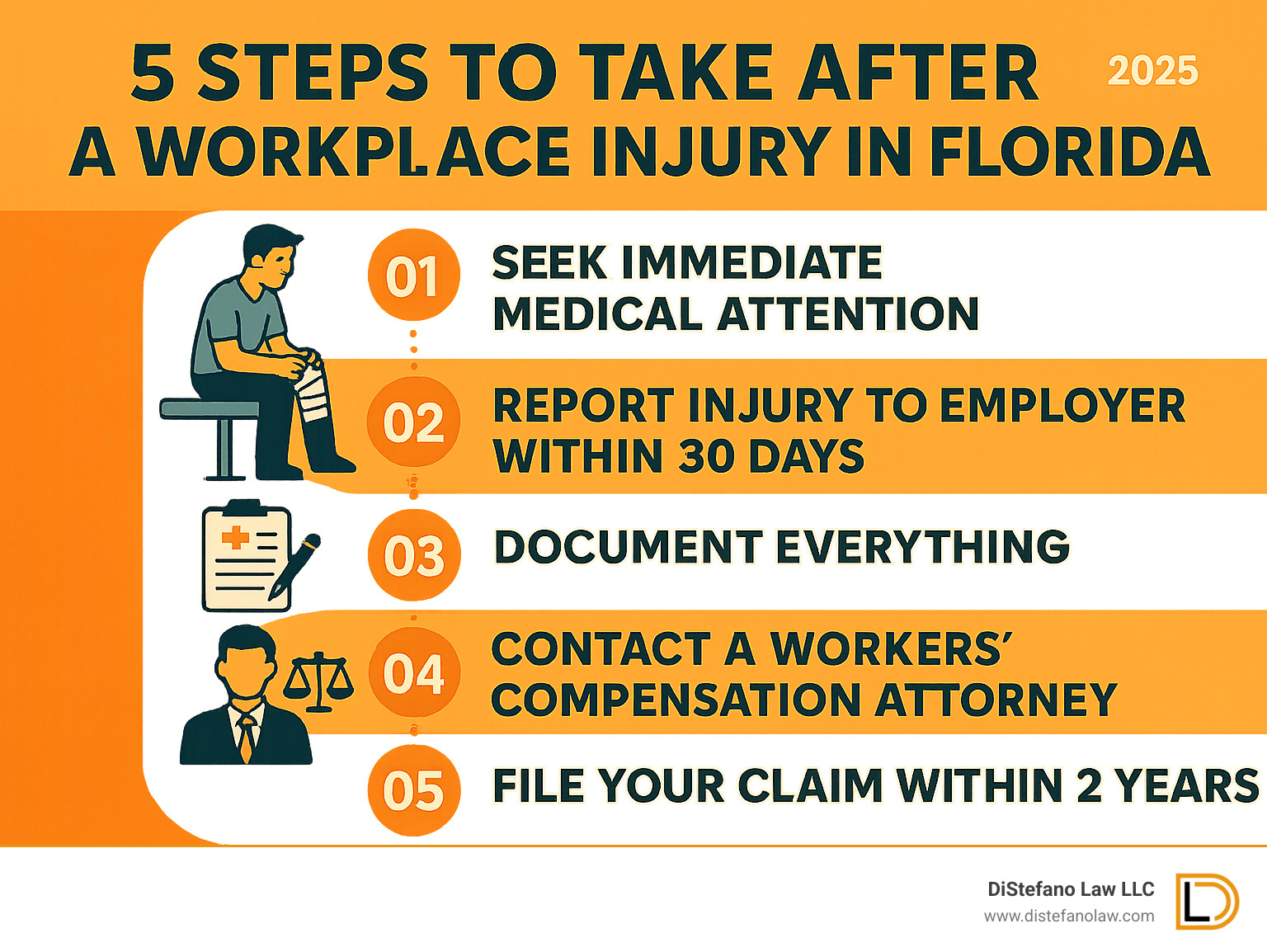
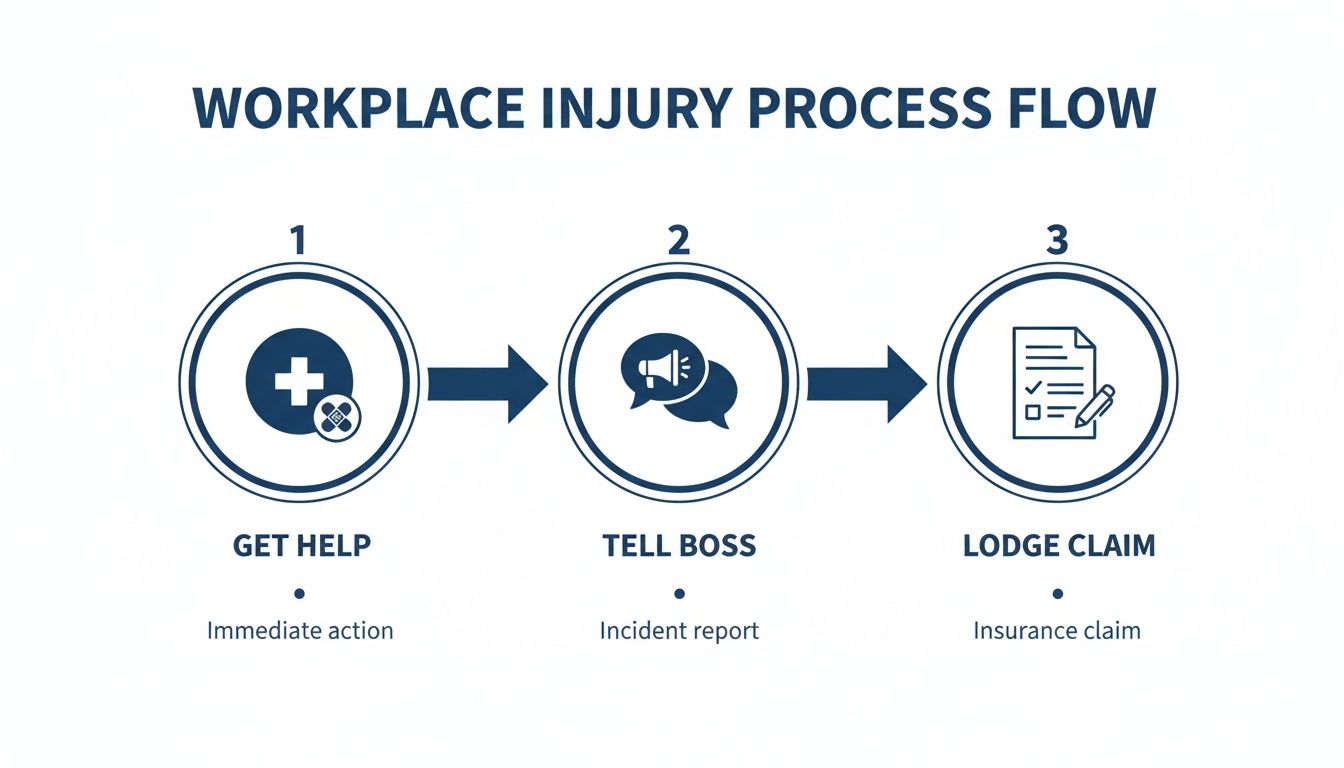
Most guidebooks suggest a chronological approach to managing a workplace injury. Following this sequence is essential for preserving the integrity of the claim:
- Immediate Medical Attention: Seek care first. Inform the healthcare provider that the injury is work-related so the billing is routed correctly to the workers' compensation carrier rather than private health insurance.
- Written Notification: Even if a supervisor saw the accident, most guidebooks emphasize the necessity of a written notice. This creates a paper trail that is difficult for insurance companies to dispute later.
- Claim Filing: This is the formal "Claim for Compensation." It is a separate step from notifying the employer. In 2026, this is predominantly done through secure state portals.
- The "Waiting Period": Most states have a 3-to-7-day waiting period before wage replacement benefits begin. Guidebooks explain whether these days are retroactively paid if the disability lasts beyond a certain timeframe (usually 14 days).
- Reaching Maximum Medical Improvement (MMI): This is the point where a doctor determines the condition is not expected to improve significantly with further treatment. The guidebook will explain that at MMI, a worker is evaluated for a "Permanent Disability Rating," which determines the final settlement or long-term award.
Common Pitfalls and Troubleshooting
Even with a guidebook in hand, workers often encounter "friction points" where the insurance carrier denies a claim or stops payments. Guidebooks typically include a "Troubleshooting" or "Appeals" section to address these issues.
The Independent Medical Examination (IME): Perhaps the most misunderstood part of the process is the IME. Despite its name, the doctor is chosen and paid for by the insurance company. Guidebooks advise workers that they must attend these appointments or risk losing their benefits, but they also remind workers that they have the right to a copy of the resulting medical report.
The "Refusal of Light Duty": If an employer offers work within a doctor's restrictions and the employee refuses it, the insurance carrier may stop disability payments. Modern guidebooks provide templates or checklists for evaluating whether a light-duty offer is "Bona Fide" and meets the legal requirements for a return-to-work attempt.
Statute of Repose vs. Statute of Limitations: A technical distinction often found in more detailed guides is the difference between the time to report an injury and the time to file a formal claim with the state. While reporting might be required in 30 days, filing the claim might have a two-year limit. The guidebook ensures the worker does not confuse these two critical dates.
Frequently Asked Questions
Can I be fired for filing a workers' compensation claim?
No. In almost every jurisdiction, it is illegal for an employer to retaliate against an employee for exercising their right to file a workers' compensation claim. However, guidebooks often clarify that an employer can terminate an employee if they are unable to perform their job duties and no reasonable accommodation exists, provided the termination is not a direct retaliation for the claim itself.
What if my injury was my own fault?
Workers' compensation is a no-fault system. Unless the injury was caused by willful self-injury, intoxication, or a violation of a strictly enforced safety policy, you are generally still eligible for benefits. The guidebook's primary function is to help you document the incident regardless of who was at fault.
Does workers' compensation cover repetitive motion injuries?
Yes. Modern guidebooks include extensive sections on "Occupational Diseases" and "Repetitive Stress Injuries" like carpal tunnel syndrome. These claims require proving that the work environment was the primary cause of the condition over time, rather than a single traumatic event.
Can I see my own family doctor for my work injury?
This depends entirely on your state's laws. Some states allow "Pre-designation," where you can see your own doctor if you filed paperwork with your employer before the injury occurred. Others require you to see a doctor within the insurance company's network for the first 30 to 90 days. Always check the "Medical Care" section of your state's specific guidebook for 2026 regulations.
How much of my salary will I receive while I'm off work?
Typically, you will receive approximately two-thirds (66.67%) of your Average Weekly Wage (AWW), up to a state-mandated maximum. The AWW is usually calculated based on your earnings in the 52 weeks prior to the injury. Guidebooks often provide a worksheet to help you calculate this figure yourself to ensure the insurance company's math is correct.
Practical Recommendation for Injured Workers
The most effective way to utilize workers' compensation guidebooks is to download the 2026 version specifically from your State’s Workers' Compensation Board website immediately following an injury. Do not rely on outdated brochures found in breakrooms or generic advice from internet forums. Once you have the official guide, create a dedicated folder (physical or digital) to house your claim number, medical reports, and a log of all communications with the insurance adjuster. If your claim involves a permanent disability, surgery, or a disputed "Return-to-Work" order, use the guidebook's "Appeals" section to identify local legal aid services or qualified workers' compensation attorneys who can provide a free consultation.
Image Gallery