Comprehensive Guide to Industry and Competitor Analysis in 2026
Conducting a thorough industry and competitor analysis requires a systematic evaluation of market forces, structural trends, and direct rival positioning to inform strategic business decisions. In 2026, leveraging both qualitative fram...
Conducting a thorough industry and competitor analysis requires a systematic evaluation of market forces, structural trends, and direct rival positioning to inform strategic business decisions. In 2026, leveraging both qualitative frameworks and advanced data analytics allows organizations to accurately identify operational gaps, anticipate market shifts, and sustain competitive advantage.
Contents
Core Foundations of Market and Competitor Evaluation
Strategic positioning begins with a rigorous understanding of the macro-environment and the immediate competitive landscape. Without a foundational view of external pressures, internal resource allocation risks addressing symptoms rather than market drivers.
An effective evaluation framework integrates several core components to establish baseline metrics:
- Market Sizing and Growth Trajectory: Determining Total Addressable Market (TAM), Serviceable Available Market (SAM), and Serviceable Obtainable Market (SOM) using current 2026 econometric projections.
- Regulatory and Compliance Landscape: Factoring in updated statutory frameworks, data privacy mandates, and industry-specific certifications governing the operating environment.
- Customer Segmentation Analysis: Identifying primary buyer personas, shifting consumer preferences, and evolving purchasing behavior patterns.
- Macroeconomic Indicator Monitoring: Assessing inflation rates, supply chain stability, labor market dynamics, and capital availability.
Establishing these foundational parameters ensures that subsequent competitor assessments are contextualized within realistic market boundaries rather than isolated vacuums.
Analytical Frameworks for Structural Market Assessment
Deploying established strategic frameworks provides a structured methodology for breaking down complex industry dynamics. Organizations must move beyond surface-level observation to evaluate structural profitability and competitive intensity.
Porter's Five Forces Model in Modern Markets
Applying Michael Porter’s framework helps isolate the primary forces shaping industry profitability:
- Threat of New Entrants: Evaluating capital requirements, switching costs, economies of scale, and proprietary technology barriers that deter startups.
- Bargaining Power of Buyers: Analyzing customer concentration, price sensitivity, and the availability of alternative solutions.
- Bargaining Power of Suppliers: Assessing supplier concentration, unique input value, and the threat of forward integration.
- Threat of Substitutes: Identifying products or services from outside the traditional industry definition that fulfill the same core customer need.
- Competitive Rivalry: Measuring market saturation, competitor growth rates, product differentiation levels, and exit barriers.
Strategic Group Mapping
Strategic groups categorize industry players by specific variables such as pricing strategy, geographic reach, distribution channels, and product quality. Plotting competitors on a two-axis matrix—for example, Price versus Product Breadth—highlights underserved market niches and overcrowded competitive clusters where margin compression is likely.
Identifying and Categorizing Competitors
Not all competitors pose the same level of threat or operate under the same business model. A precise classification system ensures resource allocation matches the actual strategic risk presented by each market player.
- Direct Competitors: Entities offering identical or highly similar products or services to the same target audience at comparable price points.
- Indirect Competitors: Businesses offering different products or solutions that satisfy the same underlying customer need or solve the same problem.
- Replacement or Substitute Competitors: Alternative methodologies or technologies that render traditional offerings obsolete or fundamentally change customer habits.
- Aspirational Competitors: Market leaders operating at a scale or tier above the organization, serving as benchmarks for long-term capability development.
Collecting Intelligence and Competitive Data
Actionable insights depend on the systematic gathering of reliable, ethical, and verifiable data points. Relying on assumptions or outdated public relations material compromises the validity of the entire analysis.
* Primary Data Sources: Direct customer interviews, focus groups, sales team feedback, industry expert consultations, and trade show observations. * Secondary Data Sources: Regulatory filings, earnings transcripts, patent applications, third-party market research reports, and digital footprint analytics.
When gathering digital intelligence, tracking competitors' web traffic composition, organic search visibility, paid advertising spend, and social engagement metrics provides an empirical view of their customer acquisition engines. Tools that measure domain authority, backlink velocity, and content publishing frequency offer clear visibility into how rivals capture market share online.
Evaluating Competitor Capabilities and Performance Metrics
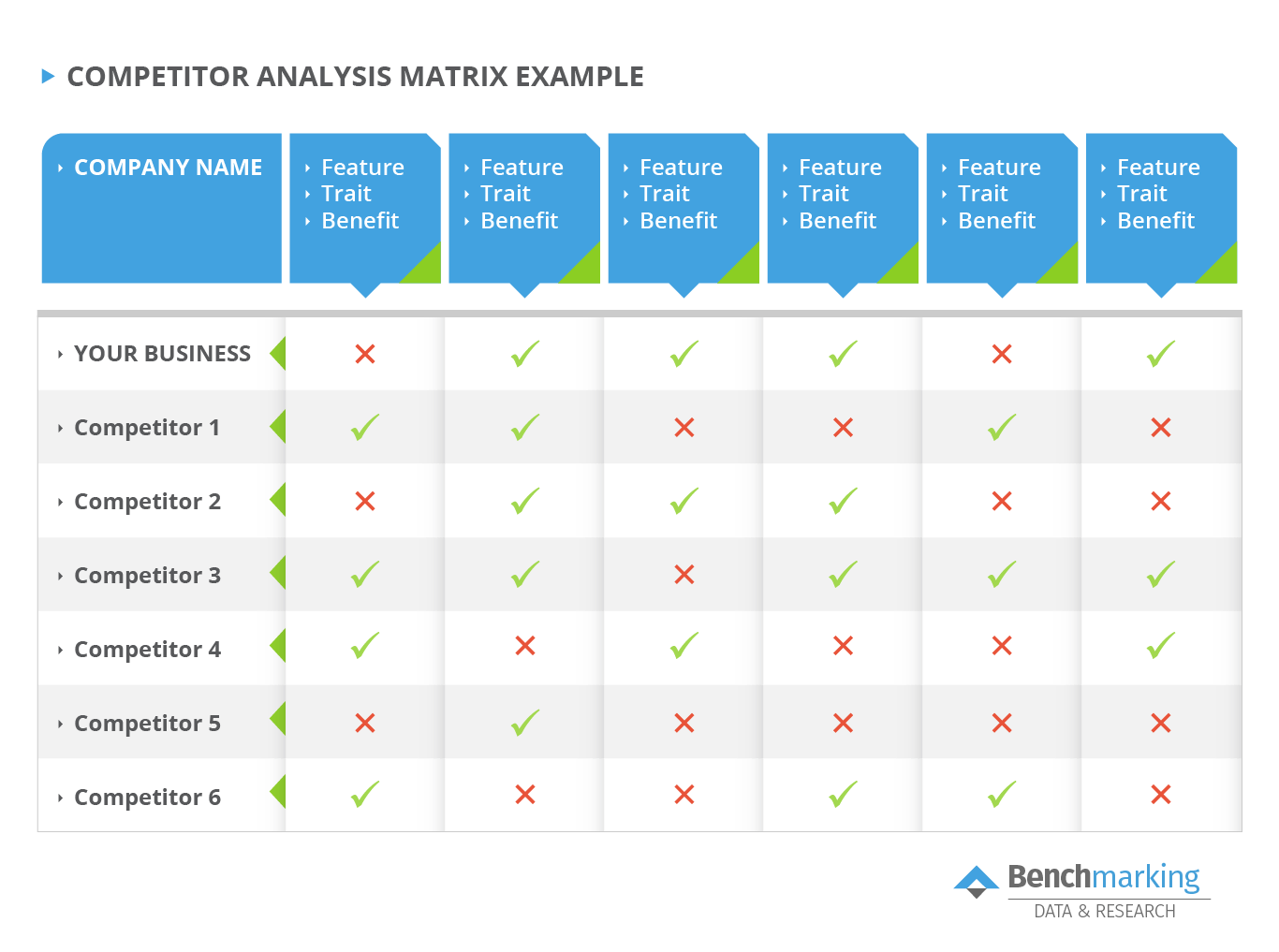
A rigorous comparative analysis evaluates competitors across key operational, financial, and market-facing dimensions. This structured comparison highlights specific operational vulnerabilities and competitive strengths.
| Evaluation Dimension | Metric or Focus Area | Analytical Objective |
|---|---|---|
| Financial Health | Gross margin, revenue growth, burn rate, capital backing | Assess competitor staying power and pricing flexibility |
| Product & Technology | Feature sets, UX/UI quality, R&D velocity, patent portfolio | Identify technical advantages or feature gaps in the market |
| Go-to-Market Strategy | Channel mix, CAC, LTV, sales cycle length, pricing tiers | Evaluate acquisition efficiency and monetization models |
| Brand & Positioning | Share of voice, customer sentiment, NPS, review ratings | Measure brand equity and customer satisfaction levels |
| Operational Scale | Headcount growth, geographic footprint, supply chain resilience | Determine execution capacity and structural scalability |
Comparative Strengths, Weaknesses, Opportunities, and Threats (SWOT)
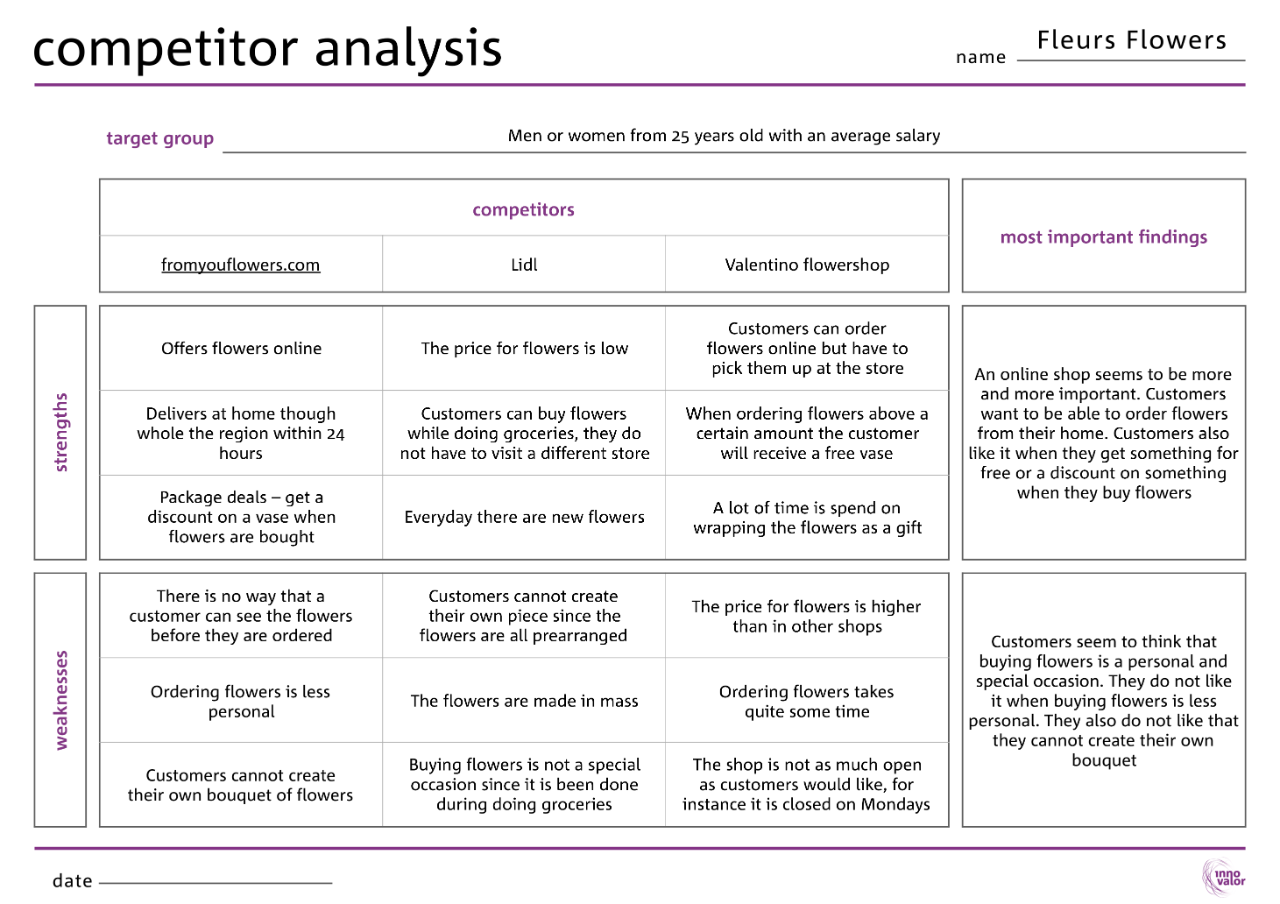
Translating raw competitive intelligence into strategic decisions requires synthesizing findings through a customized SWOT matrix. This process connects internal operational realities with external market conditions observed during the research phase.
- Strengths (Internal): Proprietary technology, lower cost structure, established brand loyalty, or superior talent retention.
- Weaknesses (Internal): High customer acquisition costs, legacy technical debt, limited geographic reach, or narrow product lines.
- Opportunities (External): Underserved customer segments, regulatory shifts favoring new business models, or emerging technological integrations.
- Threats (External): Aggressive pricing wars by well-funded rivals, tightening regulatory compliance, or macroeconomic downturns impacting buyer budgets.
Step-by-Step Guide to Executing an Analysis
Executing a repeatable, high-integrity competitive analysis involves a clear sequential workflow from initial scoping to ongoing monitoring.
- Define Objectives: Establish the primary business goal, whether launching a new product, repositioning an existing brand, or defending market share.
- Select Competitor Set: Choose 3 to 5 primary competitors and 2 indirect alternatives that reflect current market reality.
- Gather Intelligence: Compile quantitative financial data, technical specifications, pricing sheets, and qualitative customer reviews.
- Perform Gap Analysis: Compare internal performance metrics against competitor benchmarks across product, price, place, and promotion.
- Synthesize Strategic Insights: Draft actionable recommendations based on identified market opportunities and competitor vulnerabilities.
- Implement and Monitor: Distribute findings to leadership and product teams, establishing a cadence for quarterly updates.
Common Pitfalls and Strategic Mistakes
Organizations frequently misinterpret market data or execute analyses using flawed methodologies. Avoiding these common errors ensures strategic plans remain grounded and effective.
- Confirmation Bias: Selecting data that supports pre-existing leadership assumptions while ignoring contradictory market signals.
- Static Reporting: Treating the analysis as a one-time project rather than a dynamic, continuous monitoring process.
- Over-Indexing on Direct Rivals: Ignoring disruptive indirect substitutes that capture customer attention from unexpected angles.
- Feature-Only Comparison: Focusing entirely on product feature checklists while ignoring brand equity, customer service quality, and distribution efficiency.
Frequently Asked Questions
What is the primary purpose of an industry and competitor analysis?
The primary purpose is to evaluate market dynamics, identify rival strengths and weaknesses, and uncover actionable opportunities to secure sustainable competitive advantage. This structured evaluation informs strategic planning, product development, and resource allocation.
How often should a business update its competitive analysis?
Organizations should conduct a comprehensive review annually, supplemented by continuous quarterly tracking of pricing changes, product launches, and major market shifts. Rapidly evolving industries may require monthly monitoring of digital and operational metrics.
What is the difference between direct and indirect competitors?
Direct competitors offer identical or very similar products to the same target audience at comparable price points. Indirect competitors offer different solutions that satisfy the same core customer need or solve the same underlying problem through alternative means.
How can small businesses conduct competitive analysis with limited budgets?
Small businesses can leverage free or low-cost resources, including public social media monitoring, customer review sites, SEO intelligence tools, industry forums, and direct interactions with current and prospective clients.
What metrics matter most when assessing competitor financial health?
Key metrics include gross profit margins, revenue growth rates, pricing flexibility, funding or cash reserves, and reported customer acquisition efficiency. These indicators reveal whether a competitor's market share gains are financially sustainable.
Image Gallery