Why the Cloud Makes Security as a Service Work
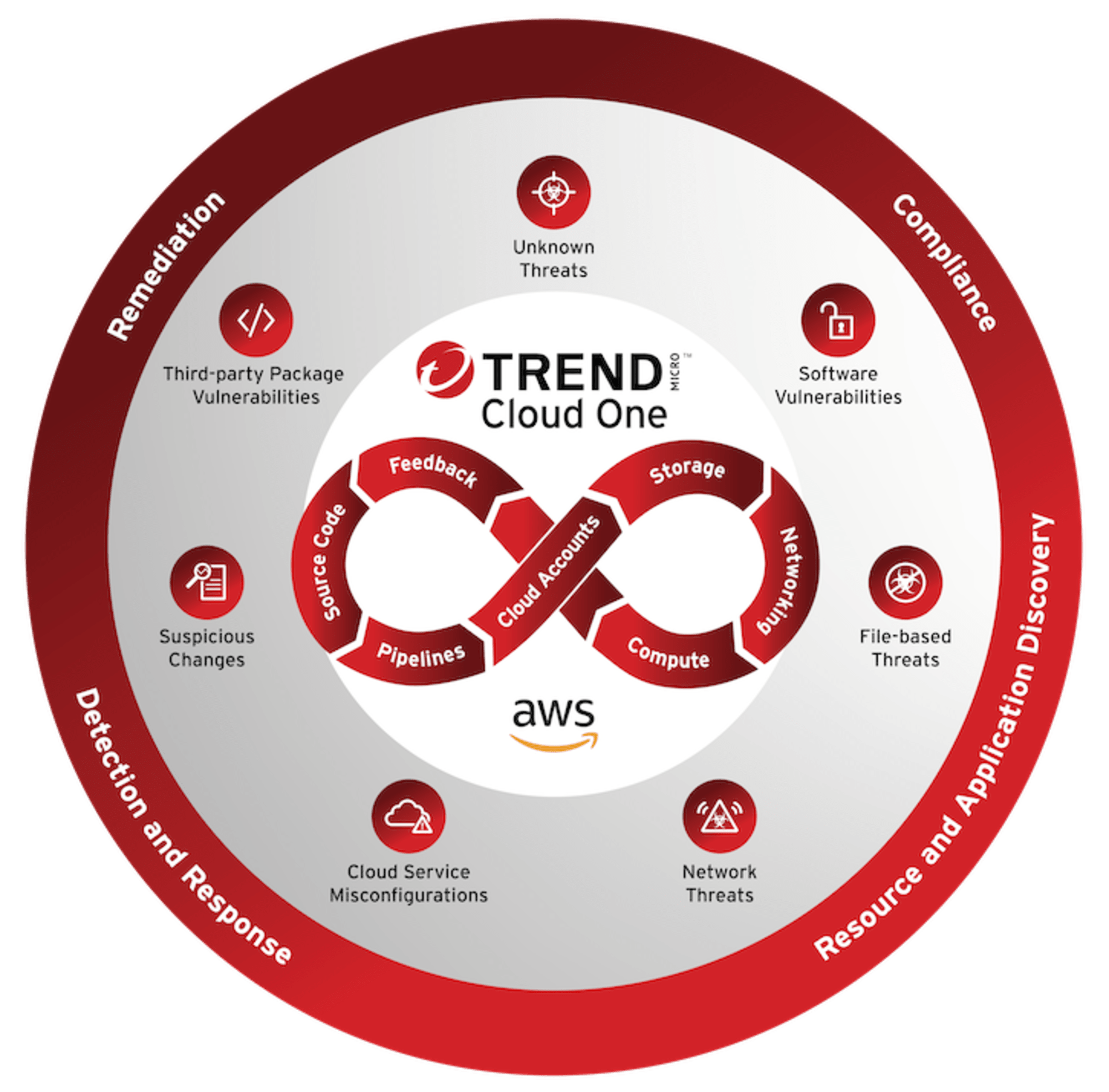
The cloud makes Security as a Service (SECaaS) work by providing the massive scalability, real-time data processing, and centralized management required to combat modern cyber threats. By leveraging elastic infrastructure, SECaaS provi...
The cloud makes Security as a Service (SECaaS) work by providing the massive scalability, real-time data processing, and centralized management required to combat modern cyber threats. By leveraging elastic infrastructure, SECaaS providers can deploy updates instantly, analyze global threat intelligence, and offer enterprise-grade protection to organizations without the need for high upfront capital investments.
Contents
The shift from traditional on-premises security to cloud-delivered models is not merely a change in location; it is a fundamental transformation of how security is engineered. In 2026, as the perimeter has effectively vanished due to remote work and multi-cloud adoption, SECaaS has become the standard for resilient IT operations. The underlying cloud architecture provides the "engine" that allows security tools to function with the speed and agility that hardware appliances simply cannot match.
The Architectural Foundation of SECaaS
To understand why the cloud is the essential catalyst for Security as a Service, one must first look at the limitations of traditional hardware-based security. For decades, organizations relied on stacked appliances—firewalls, intrusion detection systems, and web filters—housed in local data centers. These systems were static, expensive to scale, and often operated in silos.
The cloud changes this dynamic through multi-tenancy and resource pooling. In a SECaaS model, the provider uses a shared cloud infrastructure to host security applications for thousands of clients simultaneously. This allows for a level of efficiency and compute power that a single organization could never justify on its own. Because the infrastructure is software-defined, the security provider can allocate more resources to a specific client during a surge in traffic or a massive brute-force attack, ensuring that protection remains constant regardless of the load.
Furthermore, cloud-native security tools are built using microservices. This means that individual components of a security suite—such as malware scanning, URL filtering, or identity verification—can be updated or scaled independently. This modularity ensures that the service remains highly available and can evolve rapidly as new vulnerabilities are discovered.
Scalability and Elasticity: Handling the Modern Threat Landscape
The most compelling reason the cloud makes SECaaS work is its inherent elasticity. Cybersecurity threats are rarely linear; they arrive in unpredictable bursts. A Distributed Denial of Service (DDoS) attack, for example, can flood a network with terabytes of junk traffic in seconds.
A traditional on-premises firewall has a fixed "ceiling." Once its processor or memory is saturated, it either crashes or starts dropping legitimate traffic. In contrast, cloud-based SECaaS leverages the near-infinite capacity of global cloud providers. When a DDoS attack is detected, the SECaaS provider can instantly spin up thousands of additional "scrubbing" nodes across its global network to absorb and neutralize the traffic.
This scalability also applies to data ingestion. Modern security relies heavily on Security Information and Event Management (SIEM) and Extended Detection and Response (XDR). These systems collect logs from every laptop, server, and application in an organization. As companies grow, the volume of this data becomes staggering. The cloud provides the storage and compute power necessary to ingest, index, and analyze these petabytes of data in real-time, looking for the "needle in the haystack" that indicates a breach.
Global Threat Intelligence and the "Herd Immunity" Effect
One of the most significant advantages of the cloud-delivered model is the ability to aggregate and act upon global threat intelligence. In a hardware-centric world, if a company in London was hit by a new strain of ransomware, a company in New York might not receive a patch or signature update for days or even weeks.
SECaaS flips this script. Because the security service is centralized in the cloud, the provider has visibility into threats across its entire customer base. This creates a feedback loop often referred to as herd immunity:
- Detection: A new malicious file is identified at "Customer A."
- Analysis: The SECaaS provider’s AI-driven engines analyze the file's behavior in a cloud sandbox.
- Neutralization: A new signature or behavioral rule is created.
- Global Update: The protection is pushed to "Customer B" through "Customer Z" instantly.
In 2026, this process is almost entirely automated. The cloud enables the massive compute cycles required for high-speed machine learning models to identify zero-day threats before they can spread. Without the cloud’s ability to centralize data from millions of endpoints, this level of proactive defense would be impossible.
Economic Viability: Shifting from CapEx to OpEx
The cloud makes SECaaS work from a financial perspective by democratizing access to high-end security tools. Historically, advanced security was the domain of the Fortune 500 because it required millions of dollars in hardware, specialized cooling, rack space, and a team of onsite engineers to maintain it.
By delivering security as a utility, cloud providers allow small and medium-sized enterprises (SMEs) to access the same caliber of protection.
- Reduced Capital Expenditure (CapEx): Organizations no longer need to buy expensive appliances that will be obsolete in three years.
- Predictable Operating Expenses (OpEx): Security becomes a monthly or annual subscription based on usage or seat count.
- Lower Maintenance Costs: The SECaaS provider handles all patching, hardware refreshes, and software updates.
- Specialized Expertise: SECaaS gives companies access to the provider’s specialized Security Operations Center (SOC) staff, which is crucial given the persistent global shortage of cybersecurity talent.
Comparing Cloud-Based SECaaS vs. On-Premises Security
The following table highlights the fundamental differences that make the cloud-based model superior for modern enterprise requirements.
| Feature | Traditional On-Premises Security | Cloud-Native SECaaS |
|---|---|---|
| Deployment Speed | Weeks or months (shipping, racking, cabling) | Minutes to hours (API integration, agent deployment) |
| Scalability | Limited by physical hardware specifications | Virtually unlimited via cloud elasticity |
| Maintenance | Manual patching and hardware refreshes | Managed by the service provider (Seamless) |
| Cost Structure | High upfront CapEx + annual maintenance fees | Subscription-based OpEx |
| Threat Intelligence | Periodic updates; local visibility only | Real-time updates; global visibility |
| Remote Support | Requires VPNs or backhauling traffic | Native support for distributed, mobile workforces |
| Resource Usage | Hardware often sits idle or is over-taxed | Efficient resource pooling and multi-tenancy |
Enabling Zero Trust and SASE Architectures
In 2026, the dominant security framework is Zero Trust, which operates on the principle of "never trust, always verify." Implementing Zero Trust is extremely difficult with traditional "castle and moat" hardware because users are no longer inside the castle. They are in coffee shops, home offices, and branch locations, accessing applications that live in various clouds (SaaS, IaaS, PaaS).
The cloud makes SECaaS work in this environment by acting as a cloud-native security broker. This is often delivered through Secure Access Service Edge (SASE). SASE converges networking and security into a single cloud-delivered service. Instead of routing all traffic back to a central corporate data center for inspection (which causes massive latency), traffic is routed to the nearest cloud "Point of Presence" (PoP).
At these PoPs, the SECaaS provider applies security policies—such as Identity and Access Management (IAM), Data Loss Prevention (DLP), and Cloud Access Security Broker (CASB) functions—before allowing the user to connect to the application. This distributed approach is only possible because of the global reach and interconnectivity of the cloud.
Overcoming Potential Hurdles: Latency and Data Sovereignty
While the cloud is the primary enabler of SECaaS, it does introduce specific challenges that providers have worked to solve. Two of the most prominent are latency and data residency.
Latency was once a major concern for cloud security. If every web request has to travel to a distant data center for inspection, the user experience suffers. To solve this, SECaaS providers have built massive global networks with hundreds of PoPs located inside major Internet Exchange Points (IXPs). By keeping the security processing as close to the user as possible, the "latency tax" is often reduced to unnoticeable levels, sometimes even improving performance through optimized routing.
Data Sovereignty involves legal requirements for data to remain within specific geographic borders (such as GDPR in Europe or various data laws in the Middle East and Asia). The cloud makes it possible to solve this through regionalization. Top-tier SECaaS providers allow organizations to choose exactly which cloud regions their data is processed and stored in. This granular control ensures that while the management of security is centralized, the data remains compliant with local regulations.
Practical Steps for Adopting SECaaS
For organizations looking to transition to a SECaaS model, the following steps are recommended:
- Inventory Assets: Identify where your data lives (on-prem, SaaS, or public cloud) to determine which SECaaS modules are most critical.
- Evaluate Provider Connectivity: Ensure the SECaaS provider has PoPs near your major user concentrations to minimize latency.
- Audit Compliance Standards: Verify that the provider meets your industry-specific requirements, such as SOC2, HIPAA, or PCI DSS.
- Start with "Low-Hanging Fruit": Many organizations begin by moving Email Security or Web Filtering to the cloud before migrating more complex functions like SIEM or Firewall-as-a-Service (FWaaS).
- Focus on Integration: Choose providers that offer robust APIs to ensure your security stack can communicate with your existing IT management tools.
FAQ
How does SECaaS improve incident response times? SECaaS significantly reduces incident response times by automating the initial detection and containment phases. Because the infrastructure is cloud-based, security teams can trigger automated "playbooks" that isolate infected endpoints or revoke compromised credentials across the entire global network in seconds, rather than requiring manual intervention at each local site.
Is SECaaS more secure than on-premises hardware? In most cases, yes. SECaaS providers specialize exclusively in security and maintain a level of patch management, redundancy, and specialized staffing that most individual companies cannot replicate. According to the Cloud Security Alliance (CSA), the vast majority of cloud-related security failures are due to customer misconfiguration rather than the cloud infrastructure itself.
What is the role of AI in 2026 SECaaS models? By 2026, AI is the backbone of SECaaS. It is used for predictive analytics, identifying "low and slow" attacks that bypass traditional threshold-based alerts. The cloud provides the massive GPU and TPU clusters required to train these AI models on trillions of events, allowing for autonomous threat hunting that functions 24/7.
Can SECaaS protect legacy on-premises applications? Yes. SECaaS can protect legacy systems through a "connector" or "agent" model. A small software component is installed in the local environment which creates an outbound, encrypted tunnel to the cloud security platform. This allows the cloud-based SECaaS to apply modern protections—like Multi-Factor Authentication (MFA) and Web Application Firewalls (WAF)—to old applications without modifying the original code.
What happens if the SECaaS provider experiences an outage? Redundancy is a core feature of cloud-based SECaaS. Leading providers use multiple availability zones and even multi-cloud strategies to ensure 99.999% uptime. Additionally, most SECaaS agents are designed with "fail-open" or "fail-closed" configurations, allowing organizations to decide whether traffic should be allowed or blocked if the security service becomes unreachable.
Final Recommendation
For organizations operating in 2026, relying on static, hardware-based security is no longer a viable strategy against an increasingly automated and cloud-native threat landscape. To achieve the necessary agility, organizations should prioritize a Security as a Service (SECaaS) model that leverages cloud-native architectures. This shift not only reduces technical debt and capital expenditure but also ensures that your security posture evolves at the same speed as the threats it is designed to stop. Start by migrating your most exposed services—such as web and email gateways—to the cloud to experience immediate improvements in visibility and management.
Image Gallery