Understanding Connotations: Definitions, Nuances, and Impact on Communication
A connotation is the emotional, cultural, or social association that a word carries beyond its literal, dictionary definition. While a word's denotation provides its objective meaning, its connotation provides the subjective "flavor" o...
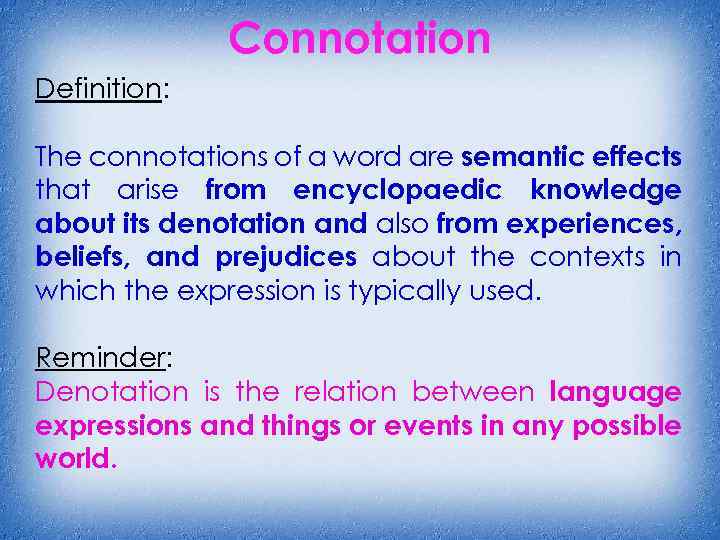
A connotation is the emotional, cultural, or social association that a word carries beyond its literal, dictionary definition. While a word's denotation provides its objective meaning, its connotation provides the subjective "flavor" or "feeling," influencing how a message is received and interpreted by an audience in various contexts.
Contents
To truly master language, whether in creative writing, professional communication, or daily conversation, one must look past the surface level of vocabulary. Words are rarely neutral; they are tools shaped by history, culture, and personal experience. In 2026, as global communication becomes more instantaneous and AI-driven sentiment analysis becomes a standard part of digital interaction, understanding the subtle weight of word choice—the connotation—is more critical than ever for clarity and impact.
Denotation vs. Connotation: The Core Distinction
Understanding the difference between denotation and connotation is the first step in linguistic proficiency. These two concepts represent the two layers of meaning found in almost every word in the English language.
Literal Meanings (Denotation)
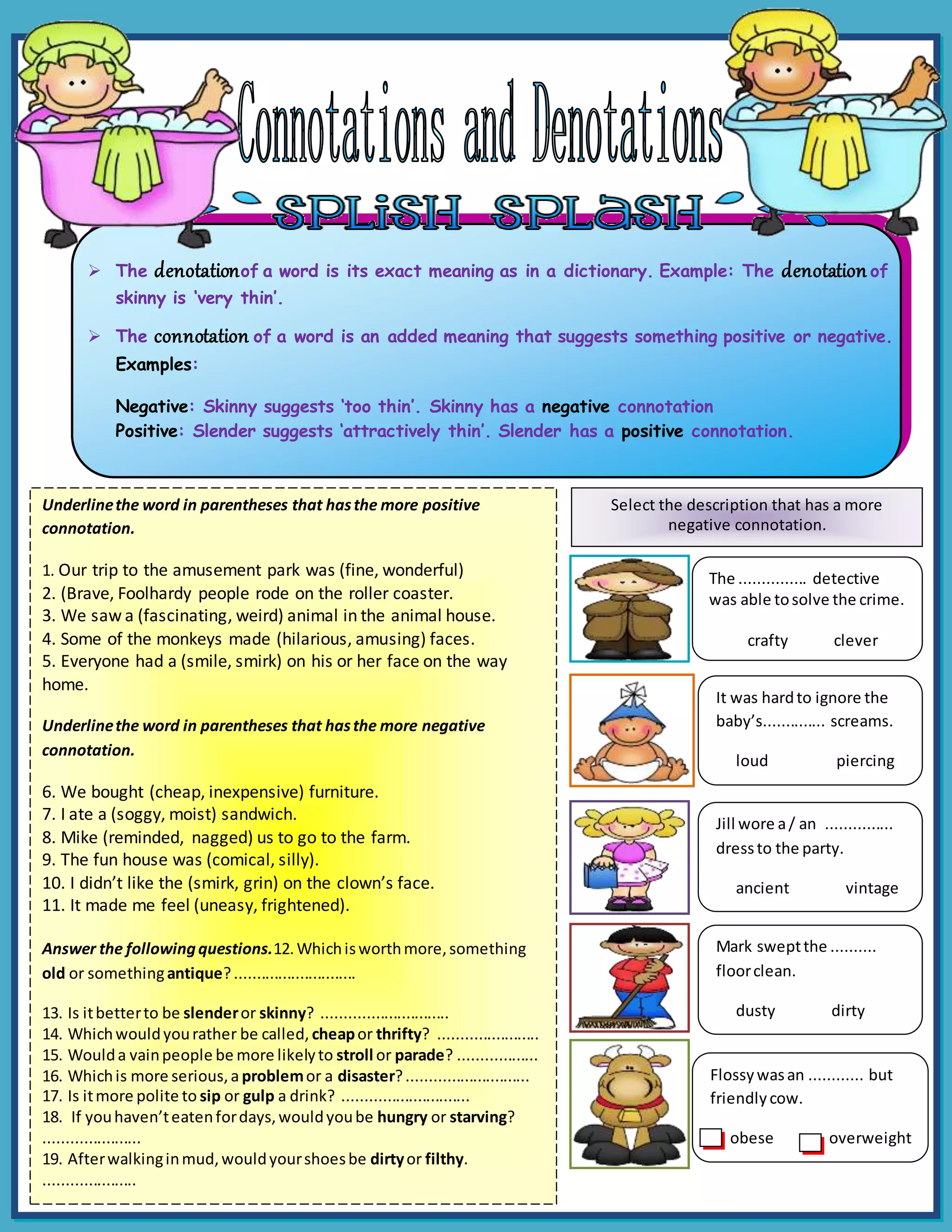
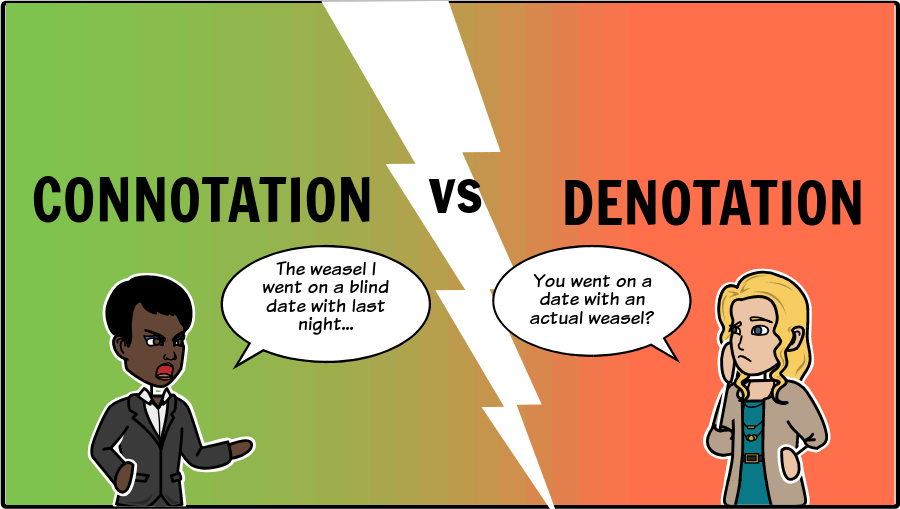
Denotation refers to the literal, restrictive, or "dictionary" definition of a word. It is meant to be objective and universal. For example, the denotation of the word "snake" is a limbless, scaly, elongate reptile. This definition is factual and scientific. If you are reading a biology textbook, the word is used purely for its denotation to identify a specific genus or species.
Implicit Meanings (Connotation)
Connotation refers to the array of secondary meanings or emotional echoes that a word evokes. Using the same example, the word "snake" often carries connotations of betrayal, sneakiness, or danger when applied to a person. If someone says, "He is such a snake," they are not suggesting the individual is a limbless reptile; they are utilizing the negative connotation to describe a perceived character flaw.
The interplay between these two layers allows for depth in communication. Without connotation, language would be clinical, dry, and incapable of conveying human emotion or complex social subtext.
The Spectrum of Connotative Meanings
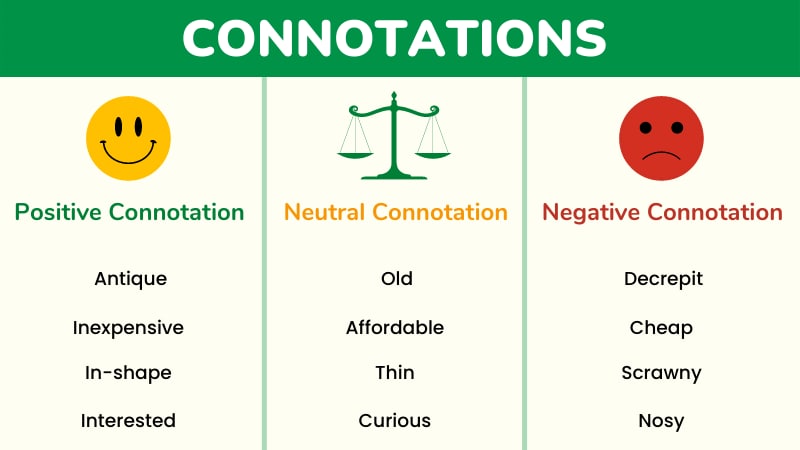
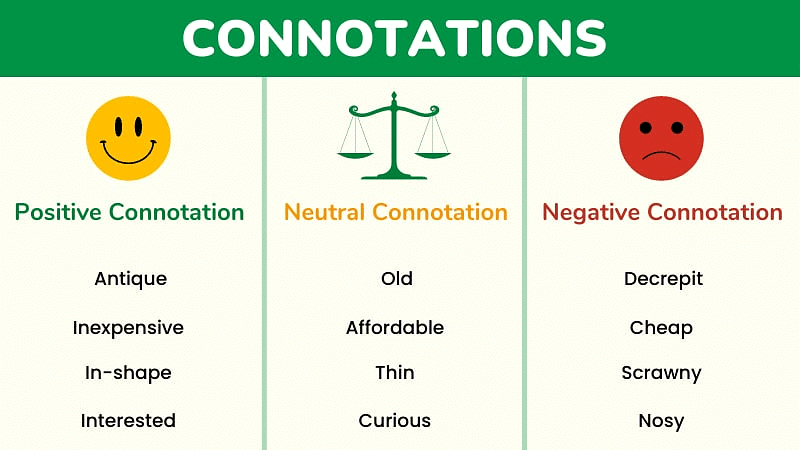
Connotations are generally categorized into three types: positive, negative, and neutral. Choosing a word from the wrong part of this spectrum can completely alter the intent of a sentence, leading to misunderstandings or unintended offense.
Positive Connotations
Words with positive connotations evoke favorable feelings or associations. They are often used in marketing, diplomacy, and interpersonal praise to build rapport and create a sense of value.
- Example: Consider the difference between "thrifty" and "cheap." Both describe someone who is careful with money. However, "thrifty" suggests wisdom, resourcefulness, and responsible financial management. It is a compliment to someone’s character.
Negative Connotations
Negative connotations evoke unpleasant, critical, or derogatory feelings. These are frequently used in persuasive writing to cast an opponent or an idea in a poor light, or in casual speech to express disapproval.
- Example: Returning to "thrifty" versus "cheap," the word "cheap" implies a lack of generosity, poor quality, or a narrow-minded focus on cost at the expense of others. Even though the literal action (saving money) is the same, the word "cheap" serves as a social critique.
Neutral Connotations
Neutral connotations are used when the speaker wants to remain objective or avoid swaying the listener’s emotions. These are essential in technical writing, legal documents, and news reporting where bias must be minimized.
- Example: Using the word "frugal" or "economical" often sits in the middle of the spectrum. While "economical" can lean positive, it is frequently used in a business context to describe a process that minimizes waste without necessarily attaching a moral judgment to the actor.
Factors Influencing Connotation
Connotations are not static; they are living components of language that shift based on several external factors. What one person perceives as a positive term, another might see as negative based on their background.
Cultural and Regional Context
Culture plays a massive role in how words are perceived. For instance, the word "ambitious" is generally viewed as a positive trait in many Western corporate cultures, symbolizing drive and a desire for success. However, in some collectivist cultures, "ambitious" can carry a negative connotation of being self-centered or willing to step over others to achieve personal gain.
Historical Evolution of Language
The passage of time can flip the connotation of a word entirely—a process known in linguistics as "amelioration" (becoming more positive) or "pejorative" (becoming more negative).
- Amelioration: The word "nice" originally meant "ignorant" or "foolish" in Middle English. Over centuries, it shifted through meanings of "fussy" and "delicate" to eventually become the catch-all positive term it is today.
- Pejorative: Conversely, the word "silly" used to mean "blessed" or "innocent." Over time, it evolved to mean "weak" and eventually "foolish."
Personal Experience and Subjectivity
On a micro-level, personal history dictates connotation. A person who grew up with a beloved pet dog will have positive connotations for the word "canine," associating it with loyalty and warmth. Someone who was bitten by a dog as a child may have an immediate, visceral negative connotation of fear or aggression when hearing the same word.
Connotations in Practical Application
Mastering connotations is not just an academic exercise; it has real-world implications in professional and creative fields.
Marketing and Branding
Copywriters are masters of connotation. They select words that trigger specific emotional responses to drive consumer behavior. A real estate agent rarely lists a "small house"; instead, they list a "cozy cottage." "Small" is neutral or slightly negative (implying cramped quarters), whereas "cozy" suggests warmth and intimacy. Similarly, luxury brands use words like "vintage" instead of "used" or "old" because "vintage" implies value, history, and curated quality.
Legal and Technical Writing
In the legal field, connotations can be dangerous. Precision is the primary goal. Lawyers often avoid words with heavy emotional baggage because they can introduce ambiguity or bias into a contract or a courtroom. Using "incident" instead of "accident" or "catastrophe" keeps the language focused on the facts of the event rather than the emotional weight of the outcome.
Leadership and Management
Effective leaders use connotations to motivate and clarify. Using "challenges" instead of "problems" shifts the team’s mindset from a state of being hindered to a state of overcoming obstacles. In 2026, as remote and asynchronous work remains a standard, the ability to choose words that convey the correct "tone" in text-based communication is a vital leadership soft skill.
Comparative Table of Connotative Synonyms
The following table demonstrates how words with nearly identical denotations (the basic concept) can have wildly different connotations.
| Basic Concept | Positive Connotation | Neutral Connotation | Negative Connotation |
|---|---|---|---|
| Self-Confidence | Assertive | Confident | Arrogant |
| Body Weight | Slender | Thin | Scrawny |
| Change | Innovation | Alteration | Disruption |
| Speech | Eloquent | Talkative | Loquacious |
| Intelligence | Brilliant | Smart | Wise-guy / Know-it-all |
| Age | Mature | Elderly | Decrepit |
| Persistence | Tenacious | Persistent | Stubborn |
| Curiosity | Inquisitive | Interested | Nosy |
Avoiding Common Pitfalls in Communication
One of the most common mistakes in writing is using a thesaurus to find a "fancier" word without checking its connotation. This often leads to "tone deafness," where the writer's intent and the reader's perception are misaligned.
- Check the Context: Before selecting a synonym, ask yourself: What is the goal of this sentence? If you are writing a formal apology, avoid words that sound "dismissive," even if they are technically accurate.
- Audience Awareness: Who is reading your work? A word that is acceptable in a tech startup might be viewed as "unprofessional" in a traditional financial institution.
- AI and Sentiment Tools: In 2026, many word processors include sentiment analysis features. While these are helpful for identifying overly negative or aggressive tones, they often miss deep cultural nuances. Always perform a final human check to ensure the "feel" of the writing is correct.
Frequently Asked Questions
Can a word have both positive and negative connotations?
Yes. Depending on the context and the speaker, many words are "contested." For example, the word "radical" can be positive in the context of "radical innovation" (meaning groundbreaking) or negative in a political context (meaning extremist).
How do I find the connotation of an unfamiliar word?
While a standard dictionary provides the denotation, a "usage dictionary" or a "learner’s dictionary" often provides examples of how the word is used in context. Reading high-quality journalism and literature is also the best way to absorb the natural connotations of a language.
Why does connotation matter in SEO and digital content?
In 2026, search engine algorithms are highly sophisticated at understanding user intent and sentiment. Content that uses words with the right connotations for its target audience—such as "authoritative" versus "opinionated"—is more likely to satisfy user intent and rank higher in search results.
Is connotation the same as subtext?
They are related but different. Connotation is a property of a specific word. Subtext is the meaning of an entire passage or conversation that is not explicitly stated. A writer uses words with specific connotations to build subtext.
Can connotations change over time?
Absolutely. This is called linguistic drift. Social movements often reclaim words with negative connotations (like "queer") and turn them into terms of empowerment. Conversely, neutral words can become "taboo" or offensive over time as social sensibilities evolve.
Practical Recommendation
To improve your command of connotations, practice "active reading." When you encounter a word that makes you feel a certain way—whether it’s a sense of excitement in an advertisement or a sense of unease in a news report—identify the specific word causing that reaction. Ask yourself what its literal definition is and why the author chose it over a more neutral synonym. Applying this level of scrutiny to your own writing will ensure that your message is not just heard, but understood exactly as you intended.
Image Gallery