Understanding the Signs of a Seizure: Symptoms and Clinical Identification
Recognizing the signs of a seizure requires identifying sudden, uncontrolled electrical disturbances in the brain that manifest as physical, sensory, or cognitive symptoms. These episodes range from subtle behavioral changes, such as s...
Recognizing the signs of a seizure requires identifying sudden, uncontrolled electrical disturbances in the brain that manifest as physical, sensory, or cognitive symptoms. These episodes range from subtle behavioral changes, such as staring spells, to intense convulsions. Understanding these variations is critical for accurate reporting and timely medical intervention in 2026.
Contents
Distinguishing Between Seizure Types and Symptom Presentations
Seizures are broadly categorized based on their origin within the brain and the clinical manifestations they produce. The International League Against Epilepsy (ILAE) framework remains the clinical standard for 2026. Recognizing the specific type is essential for both triage and long-term neurological management.
Focal Seizures
Formerly known as partial seizures, these originate in one hemisphere of the brain. The patient may remain conscious (focal aware) or experience an alteration in consciousness (focal impaired awareness).
- Motor Symptoms: Involuntary twitching of a specific limb, rhythmic jerking, or repetitive movements such as lip-smacking or hand-wringing.
- Sensory Symptoms: Experiencing an unusual smell, taste, visual disturbance, or a tingling sensation (paresthesia) in the skin.
- Autonomic Symptoms: Sudden flushing, nausea, or a rising sensation in the stomach that precedes the event.
Generalized Seizures
These involve both hemispheres of the brain simultaneously and are typically characterized by a loss of consciousness.
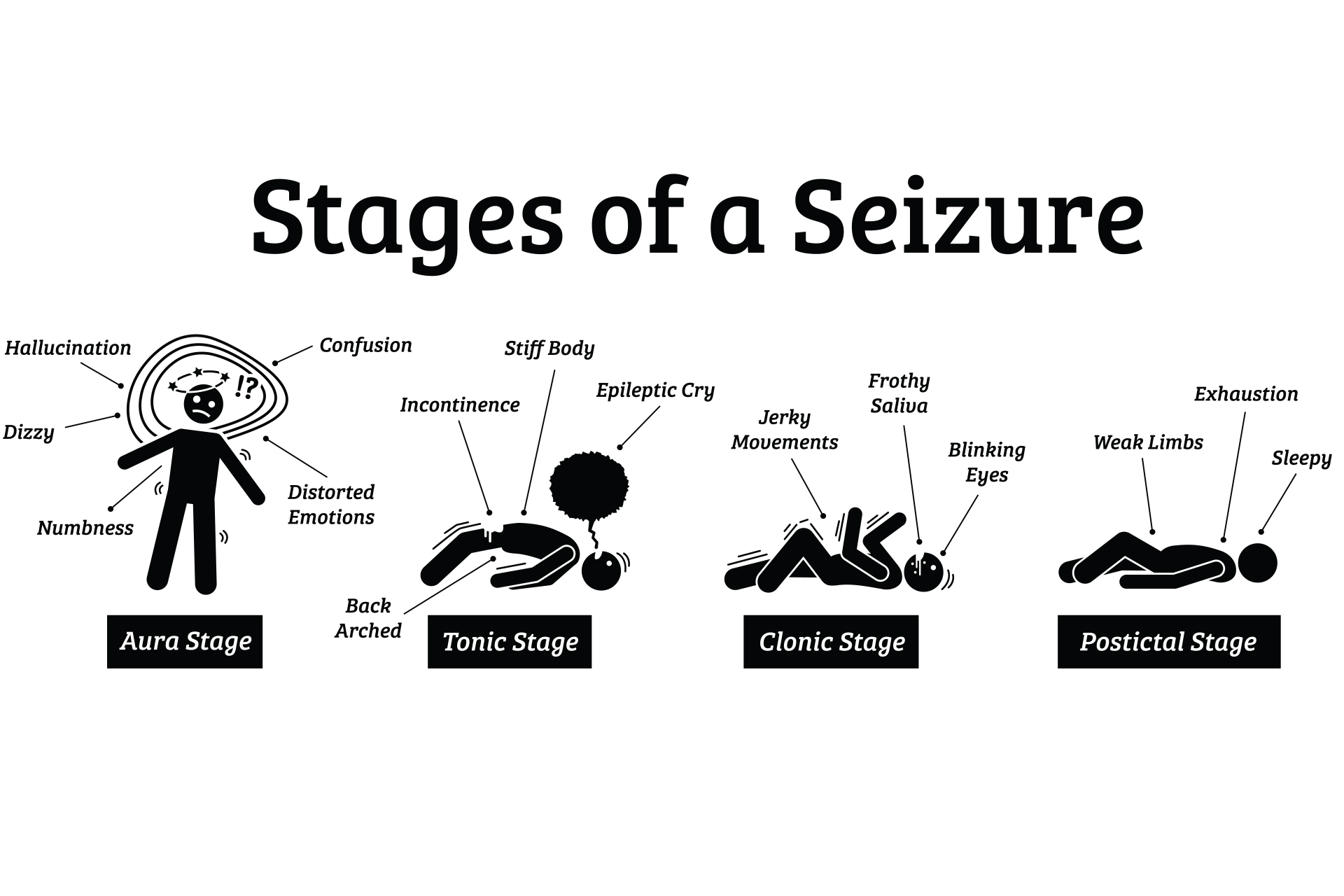
- Tonic-Clonic (Grand Mal): This is the most recognizable form. It begins with stiffening (tonic phase) followed by rhythmic, violent jerking (clonic phase). The patient may lose bladder control, bite their tongue, or experience blue-tinted skin due to temporary respiratory disruption.
- Absence (Petit Mal): Common in children but occurring in adults, these appear as "staring spells" where the individual abruptly stops moving and speaking for 5 to 15 seconds. There is no post-seizure confusion, and the person resumes activity as if nothing happened.
- Atonic (Drop Attacks): Characterized by a sudden loss of muscle tone, causing the individual to collapse forward or fall to the ground.
- Myoclonic: Brief, sudden, shock-like jerks of a muscle or group of muscles, often occurring shortly after waking.
Comparative Overview of Seizure Manifestations
| Seizure Type | Level of Consciousness | Typical Duration | Primary Physical Indicators |
|---|---|---|---|
| Focal Aware | Maintained | Seconds to minutes | Twitching, aura (sensory shift) |
| Focal Impaired | Altered/Lost | 1–3 minutes | Lip-smacking, wandering, confusion |
| Tonic-Clonic | Lost | 1–3 minutes | Rigidity, violent jerking, post-ictal fatigue |
| Absence | Lost/Suspended | < 15 seconds | Staring, blinking, no motor jerking |
| Atonic | Brief Lapse | Seconds | Sudden collapse, head drop |
The Post-Ictal Phase and Recovery Indicators
The phase immediately following a seizure is known as the post-ictal state. This period is crucial for diagnostic monitoring as it indicates how the brain recovers from the electrical surge.
Clinical observation in 2026 emphasizes the following signs of post-ictal recovery:
- Extreme Fatigue: Patients often fall into a deep sleep, commonly lasting from minutes to several hours.
- Confusion and Disorientation: Difficulty speaking or remembering the events immediately preceding the seizure.
- Headache: Migraine-like pain is a frequent side effect of the electrical over-activity.
- Muscle Soreness: Resulting from the intense, involuntary contractions during tonic-clonic episodes.
- Amnesia: Many patients will have no memory of the event itself or the period immediately following it.
Recognizing a Medical Emergency: When to Seek Urgent Care
While not all seizures require immediate emergency transport, certain criteria dictate when a patient must be taken to a facility like an Emergency Department or a Level 4 Epilepsy Center.
- Prolonged Seizure: Any seizure lasting longer than five minutes.
- Status Epilepticus: A series of seizures occurring without the patient regaining consciousness in between.
- Injury: If the patient suffered a fall, head trauma, or aspiration during the event.
- Breathing Difficulty: If the patient struggles to breathe or fails to resume regular breathing patterns after the jerking stops.
- First-Time Occurrence: Any individual experiencing their first seizure must receive a neurological workup, including an EEG and potentially an MRI, to rule out structural brain anomalies or metabolic imbalances.
Diagnostic Procedures and Clinical Standards
In 2026, medical professionals utilize standardized protocols to differentiate between true epileptic seizures and "nonepileptic" events (often psychogenic).
Clinical Diagnostic Framework
Electroencephalogram (EEG) The gold standard for detecting abnormal electrical brain activity. Long-term video-EEG monitoring is the most accurate method for mapping the focus of the seizure and determining the classification.
Neuroimaging (MRI) Essential for identifying structural causes such as tumors, scarring (sclerosis), or developmental malformations. High-resolution 3T MRI scanners are standard in modern neurological centers.
Blood and Metabolic Panels Used to rule out non-epileptic triggers such as severe electrolyte imbalances, hypoglycemia, or drug-induced toxicities.
Common Questions Regarding Seizure Symptoms
How can I tell if a staring spell is an absence seizure or daydreaming?
An absence seizure is characterized by a sudden, absolute cessation of activity that cannot be interrupted by calling the person’s name or tapping them. The person will not respond to external stimuli, whereas a person who is simply daydreaming can be easily startled or brought back to attention.
Do all seizures involve physical convulsions?
No. Many seizure types involve no convulsions at all. Focal seizures or absence seizures may involve subtle changes in consciousness, emotional shifts, or small, repetitive, non-convulsive movements.
Can stress or lack of sleep cause seizure-like symptoms?
While extreme fatigue and stress are significant "triggers" that lower the seizure threshold in people with existing epilepsy, they generally do not cause a seizure in a person without a predisposition to the condition. However, these factors can exacerbate existing neurological symptoms.
What should I do if I see someone having a seizure?
Keep the person safe. Move hard or sharp objects away from them. Cushion their head with a soft item. Do not restrain their movements, and never place anything in their mouth. Stay with them until they regain consciousness and are aware of their surroundings.
Are there warning signs before a seizure begins?
Some individuals experience an "aura," which is essentially a small, focal seizure that serves as a warning sign. An aura can include feelings of déjà vu, a strange smell, a sudden feeling of fear, or a rising sensation in the gut. Learning to identify one's specific aura can help a patient take safety precautions.
Professional Care Recommendations
If you or a loved one are exhibiting recurring or concerning symptoms, you must consult a board-certified neurologist or an epileptologist. Early diagnosis is the most significant factor in long-term seizure management and quality of life. Seek a facility that utilizes the 2026 clinical guidelines for epilepsy monitoring and follow-up care.
Image Gallery