Why the Term vs Permanent Life Insurance Cost in Canada Matters
Understanding the financial mechanics behind term versus permanent life insurance costs in Canada is critical because it dictates long-term household cash flow, estate planning viability, and whether a policy lapses when protection is...
Understanding the financial mechanics behind term versus permanent life insurance costs in Canada is critical because it dictates long-term household cash flow, estate planning viability, and whether a policy lapses when protection is needed most. Choosing between these structures involves balancing immediate affordability against lifetime guarantees, tax-sheltered growth, and structural renewal risk in a distinct regulatory and economic environment.
Contents
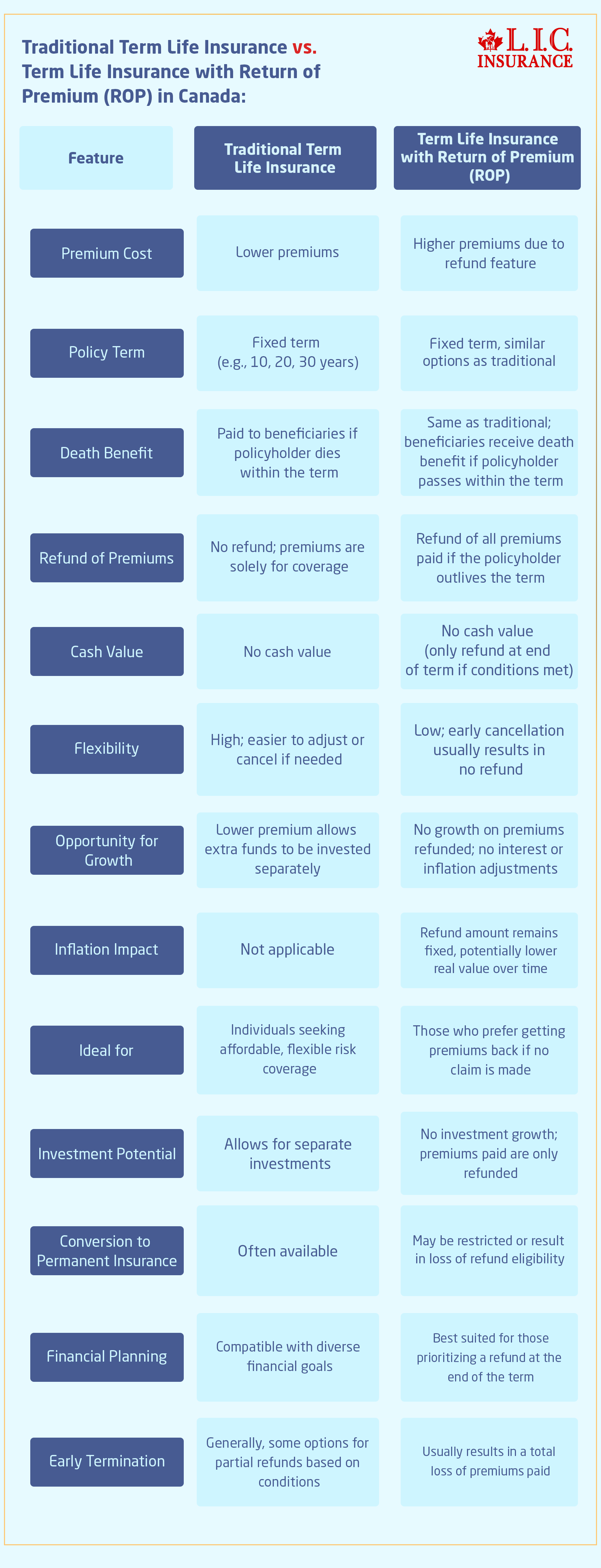
Canadian consumers face a stark financial dichotomy when shopping for life insurance. Term insurance offers low initial premiums for a fixed period—such as 10, 20, or 30 years—making it ideal for income replacement during peak earning and child-rearing years. Permanent life insurance, encompassing whole life and universal life, secures coverage for an individual’s entire lifetime while incorporating a savings component known as the cash surrender value. Because permanent policies require insurers to manage long-term mortality risks and build investment reserves, their upfront price tags are exponentially higher.
Analyzing why this cost differential matters goes beyond comparing monthly bills. It requires evaluating how inflation, changing health profiles, tax legislation governed by the Canada Revenue Agency (CRA), and evolving family needs intersect over decades. A superficial focus on cheap monthly premiums can lead to severe financial penalties later in life, while an overly aggressive permanent insurance commitment can strain a household budget prematurely.
The Structural Anatomy of Canadian Life Insurance Costs
Insurance pricing in Canada is determined by actuarial tables, regulatory reserves mandated by the Office of the Superintendent of Financial Institutions (OSFI), and individual underwriting factors. To understand why cost comparisons matter, one must examine how pricing models differ fundamentally at their core.
Term insurance operates on a renewable term-to-100 or decreasing term basis, though most modern policies are sold as 10-year (T10) or 20-year (T20) plans. The insurer calculates the probability of death within that specific timeframe. Consequently, young, healthy applicants enjoy minimal rates. However, when a term policy expires and the insured chooses to renew without medical requalification, the premium skyrockets based on the applicant's attained age. This structural reality makes term insurance cost-effective in the short run but potentially prohibitive in old age.
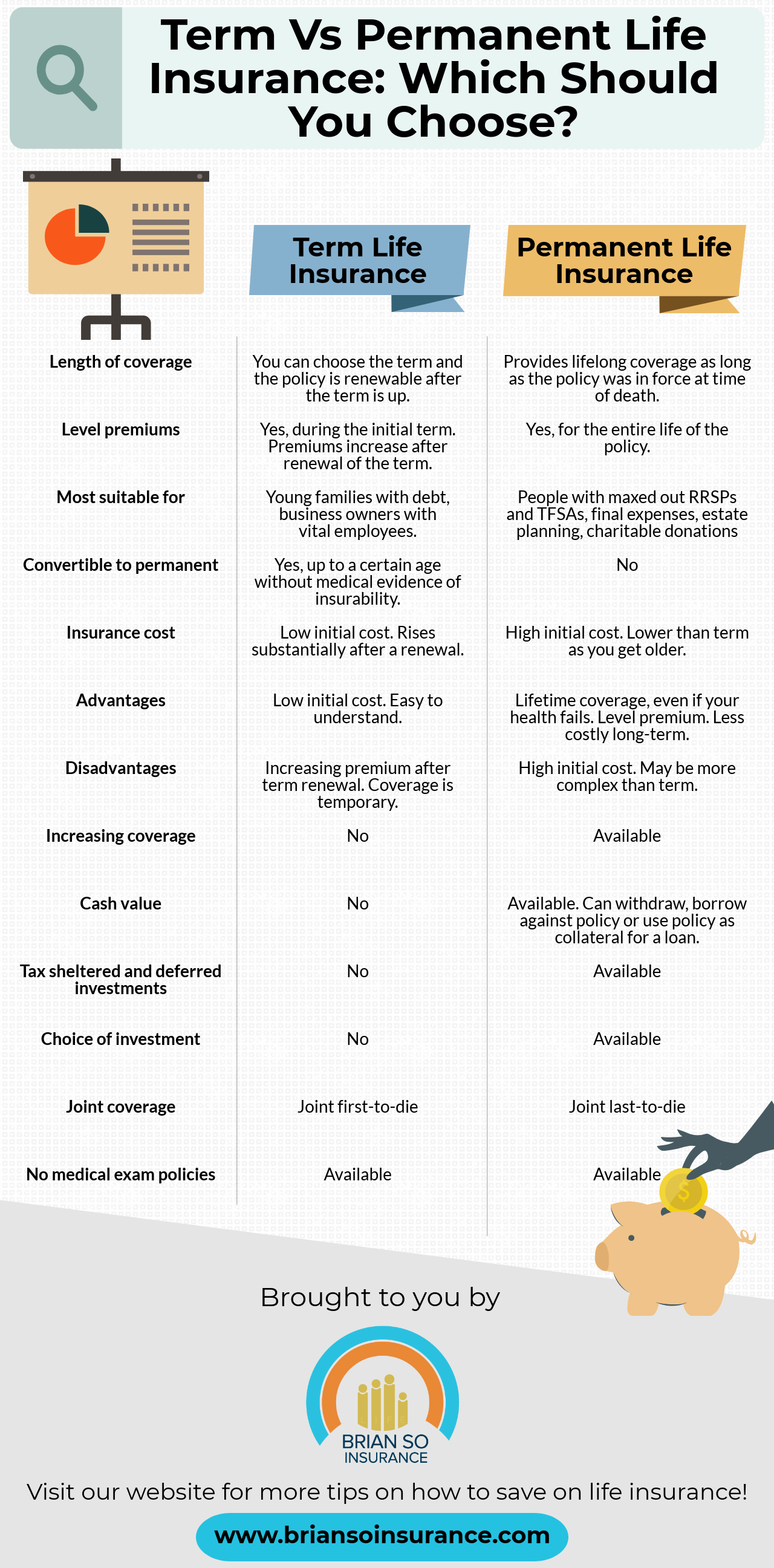
| Feature | Term Life Insurance | Permanent Life Insurance |
|---|---|---|
| Duration | Fixed period (10, 20, 30 years) | Lifetime (to age 100 or death) |
| Initial Cost | Low, highly affordable for youth | High, significantly more costly |
| Premium Trajectory | Rises sharply upon renewal | Level and guaranteed for life |
| Cash Value Component | None | Yes, builds tax-sheltered equity |
| Primary Financial Goal | Temporary income replacement | Estate planning, final expenses |
Permanent insurance, conversely, spreads the lifetime cost of the policy evenly across the insured's life. Whole life policies feature level premiums that never increase, backed by guarantees from the insurer's participating account. Universal life policies offer greater investment flexibility, allowing policyholders to allocate excess premium payments into tax-preferred investment accounts. The higher initial cost of permanent insurance directly funds these investment reserves and guarantees, transforming a pure expense into a multi-faceted financial asset.
Short-Term Budgeting Versus Long-Term Solvency
The immediate impact of insurance premiums on monthly cash flow often drives consumer decision-making. A 35-year-old non-smoking male might secure a $1,000,000 20-year term policy for under $40rictly per month. A whole life policy with the exact same death benefit could easily exceed $1,000 monthly. This stark variance makes term insurance the default choice for young families managing mortgages, childcare, and everyday living expenses.
However, viewing cost solely through the lens of monthly affordability creates a dangerous blind spot. Term insurance is a temporary fix for a permanent problem: mortality. If a policyholder relies on a 20-year term policy to cover final expenses or estate tax liabilities that arise at age 80, they will find themselves priced out of coverage. Renewing a term policy at age 65 or 75 often results in premiums that consume a massive portion of a fixed retirement income, forcing many Canadians to let their coverage lapse when they need it most.
Evaluating cost requires projecting financial obligations across an entire lifecycle. If a household requires lifetime protection—such as providing for a dependent with lifelong disabilities, funding a corporate buy-sell agreement, or offsetting anticipated probate and capital gains taxes upon death—paying the higher cost of permanent insurance early on avoids catastrophic financial exposure later.
Tax Implications and Regulatory Frameworks in Canada
The financial mathematics of permanent life insurance in Canada are heavily influenced by the Income Tax Act, administered by the CRA. Permanent policies feature an internal accumulation fund where dividends or investment earnings grow on a tax-deferred basis, provided the policy stays within specific exempt test limits.
When a permanent policy holder passes away, the death benefit is paid out to beneficiaries tax-free, bypassing the probate process if a named beneficiary is designated (other than the estate). Furthermore, policyholders can leverage the cash value of a permanent policy by taking out a policy loan or using the cash surrender value as collateral for a commercial line of credit from a chartered bank, all without triggering immediate taxable income events.
Term insurance offers no such tax-advantaged accumulation features. It is a pure risk-protection product. Therefore, when analyzing the cost of permanent insurance, sophisticated buyers factor in the tax-sheltered growth of the cash value. In many high-net-worth scenarios, the internal rate of return on the permanent insurance cash value, combined with the tax-free payout, offsets the high initial premium disparity, making it a compelling wealth-preservation vehicle.
Opportunity Cost and the "Buy Term and Invest the Difference" Strategy
A foundational debate in Canadian financial planning is the viability of the "buy term and invest the difference" (BTID) strategy. Proponents argue that because permanent insurance is expensive, individuals should purchase low-cost term insurance and invest the premium savings into registered accounts like Registered Retirement Savings Plans (RRSPs) and Tax-Free Savings Accounts (TFSAs), or non-registered portfolios.
While mathematically sound on paper, the success of the BTID strategy depends heavily on human behavior and market performance.
- Behavioral Discipline: Most consumers fail to consistently invest the difference between term and permanent premiums over a 30-year horizon, often redirecting those funds toward discretionary consumer spending.
- Market Volatility: Unlike the contractual guarantees of a participating whole life policy, equity investments carry market risk. A severe market downturn coinciding with retirement can deplete the investment portfolio just as term renewal rates spike or coverage expires.
- Contribution Room Limits: High earners often exhaust their TFSA and RRSP contribution limits, making the tax-exempt status of a permanent life insurance policy an attractive supplementary vehicle for surplus capital.
Understanding these dynamics clarifies why a blanket rule does not exist. The choice between term and permanent cost structures is fundamentally a choice between transferring risk entirely to an insurer versus assuming investment and longevity risk oneself.
Common Pitfalls in Canadian Insurance Cost Analysis
Navigating the Canadian insurance market exposes buyers to several recurring traps that distort cost assessments:
- Focusing Exclusively on the First-Year Premium: Many term policies feature low introductory rates that escalate rapidly or convert to yearly renewable term structures. Buyers must examine the schedule of guaranteed maximum premiums over 20 to 30 years.
- Over-Insuring with Permanent Products: Purchasing a whole life policy that stretches monthly cash flow to its absolute limit increases the risk of policy default during an economic downturn or job loss.
- Ignoring Conversion Privileges: Many Canadian term policies include a conversion option, allowing the policyholder to convert all or part of their term coverage into a permanent policy without undergoing medical underwriting. Failing to verify the expiration age and terms of this clause can eliminate a vital financial safety net.
- Misunderstanding Universal Life Cost of Insurance (COI): Universal life policies often feature unbundled pricing where the COI increases annually as the insured ages. If the underlying investments underperform, the policyholder may be forced to inject substantial cash injections later in life to prevent the policy from collapsing.
Frequently Asked Questions
Can I convert a term life insurance policy into a permanent policy in Canada without a medical exam?
Yes, most Canadian life insurance providers offer a conversion privilege on term policies. This allows you to convert your term coverage into a permanent plan (such as whole life or universal life) up to a certain age—typically age 65 or 71—without providing evidence of insurability or undergoing a medical exam. This is a crucial feature for locking in permanent coverage if your health deteriorates during the term period.
Why do permanent life insurance premiums remain level while term premiums rise?
Permanent insurance premiums are leveled out using actuarial smoothing. You pay an amount significantly higher than the actual cost of insurance in your younger years. The insurer invests this excess capital into conservative reserves, which generates returns to help cover the exponentially higher cost of mortality when you reach advanced age. Term insurance, by contrast, prices risk only for a short, specific block of time.
Are life insurance death benefits taxable in Canada?
Generally, death benefits paid out from both term and permanent life insurance policies to a named beneficiary are received completely tax-free in Canada. They also bypass probate fees if a beneficiary other than the estate is designated, ensuring prompt liquidity for surviving family members or corporate partners.
Is the cash value of permanent life insurance accessible while I am alive?
Yes. Policyholders can access the cash surrender value of a permanent policy through policy withdrawals, surrendering a portion of the coverage, or taking out a policy loan directly from the insurer or a commercial bank using the policy as collateral. However, withdrawals or policy surrenders may trigger taxable events if they exceed the adjusted cost basis (ACB) defined by the CRA.
How does underwriting impact the final cost of Canadian life insurance?
Underwriting evaluates your age, gender, smoking status, medical history, family health background, occupation, and lifestyle hobbies. Smokers generally pay two to three times more than non-smokers. Securing a policy at a younger age locks in a lower underwriting classification, whereas waiting until health complications arise drives premium costs up dramatically across both term and permanent products.
Strategic Next Steps for Canadian Consumers
Selecting the appropriate life insurance structure requires a rigorous assessment of current financial liabilities, future obligations, and risk tolerance. Start by calculating your exact capital needs using a comprehensive financial inventory that accounts for outstanding mortgages, income replacement duration, debt liabilities, and projected estate taxes.
Consult with an independent, licensed insurance advisor in Canada who has access to multiple carriers rather than a captive agent tied to a single institution. Request detailed ledger illustrations showing guaranteed and projected values over 10-, 20-, and 30-year horizons. By mapping out your cash flow realities against long-term mortality and wealth-transfer goals, you can secure the precise balance of term affordability and permanent stability your household requires.
Image Gallery