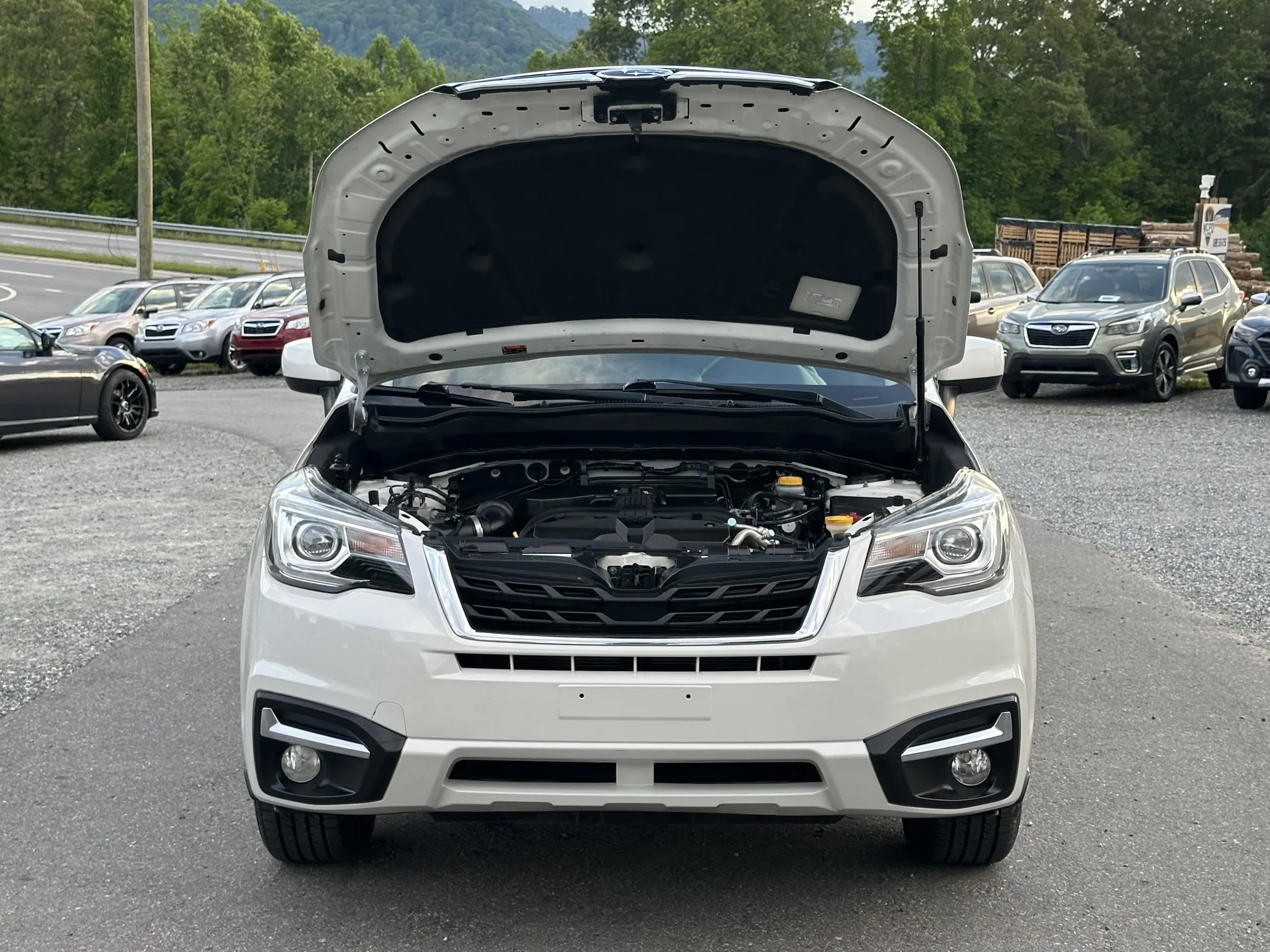
2018 Subaru Forester Specs Overview: A Comprehensive Guide to Performance and Features
The 2018 Subaru Forester serves as the final model year of the fourth-generation (SJ) platform, offering a refined blend of Symmetrical All-Wheel Drive, high ground clearance, and versatile cargo space. Available with either a 170-hors...
The 2018 Subaru Forester serves as the final model year of the fourth-generation (SJ) platform, offering a refined blend of Symmetrical All-Wheel Drive, high ground clearance, and versatile cargo space. Available with either a 170-horsepower 2.5L engine or a 250-horsepower 2.0L turbocharged engine, it remains a highly sought-after crossover in 2026 for its mechanical simplicity and visibility.
Contents
The 2018 Subaru Forester is often regarded as a "sweet spot" for enthusiasts and practical drivers alike. As the last iteration before the 2019 redesign, it corrected many of the minor teething issues seen in earlier 2014–2015 models, particularly regarding oil consumption and infotainment stability. In 2026, these vehicles are frequently found on the secondary market, valued for their ruggedness and the availability of a manual transmission—a feature that vanished from the Forester lineup immediately following this production year.
Powertrain and Engine Performance
Subaru offered two distinct powerplants for the 2018 model year, catering to different driving priorities. Both engines utilize Subaru’s signature "Boxer" layout, where the cylinders are horizontally opposed. This design allows the engine to sit lower in the chassis, resulting in a lower center of gravity and improved handling stability compared to traditional upright engines.
The 2.5i Naturally Aspirated Engine
The vast majority of 2018 Foresters are equipped with the 2.5-liter FB25 engine. This four-cylinder unit produces 170 horsepower at 5,800 rpm and 174 lb-ft of torque at 4,100 rpm. While it is not designed for high-performance sprints, it provides reliable, linear power delivery suitable for daily commuting and light off-roading. By 2018, Subaru had largely resolved the piston ring issues that affected earlier versions of the FB25, making this one of the most durable iterations of the engine.
The 2.0XT Turbocharged Engine
For drivers seeking more engagement, the 2.0XT trims feature a 2.0-liter turbocharged, direct-injection engine (FA20DIT). This engine increases output significantly to 250 horsepower and 258 lb-ft of torque. Unlike the 2.5i, which can run on 87-octane fuel, the 2.0XT requires premium gasoline to maintain its performance and prevent engine knock. In the 2026 used market, the 2.0XT is considered a "sleeper" performance SUV, offering acceleration that rivals many contemporary luxury crossovers.
Transmission and Symmetrical All-Wheel Drive
A core spec that defines the 2018 Forester is the standard Symmetrical All-Wheel Drive (AWD) system. Unlike many competitors that use "slip-and-grip" systems (which only send power to the rear wheels after the front wheels lose traction), the Forester’s system is always active, distributing power to all four wheels continuously for better balance and quicker response times.
Transmission Options
The 2018 model year was notable for being one of the last to offer a 6-speed manual transmission, available on the base and Premium trims with the 2.5i engine. However, the most common transmission is the Lineartronic Continuously Variable Transmission (CVT).
While early CVTs faced criticism for "rubber-band" feel, the 2018 version includes stepped-gear simulation under heavy acceleration, making it feel more like a traditional automatic. The 2.0XT models use a "High-Torque" version of the CVT designed to handle the increased stress of the turbocharger, which includes paddle shifters and SI-Drive (Subaru Intelligent Drive) modes to adjust throttle response.
X-Mode and Off-Road Capability
Higher trims equipped with the CVT also include X-Mode. When engaged at speeds below 18 mph, X-Mode optimizes engine output, transmission ratios, and the AWD system to maximize traction on slippery surfaces. It also includes Hill Descent Control, which manages braking automatically when navigating steep, technical declines, allowing the driver to focus entirely on steering.
Interior Dimensions and Utility
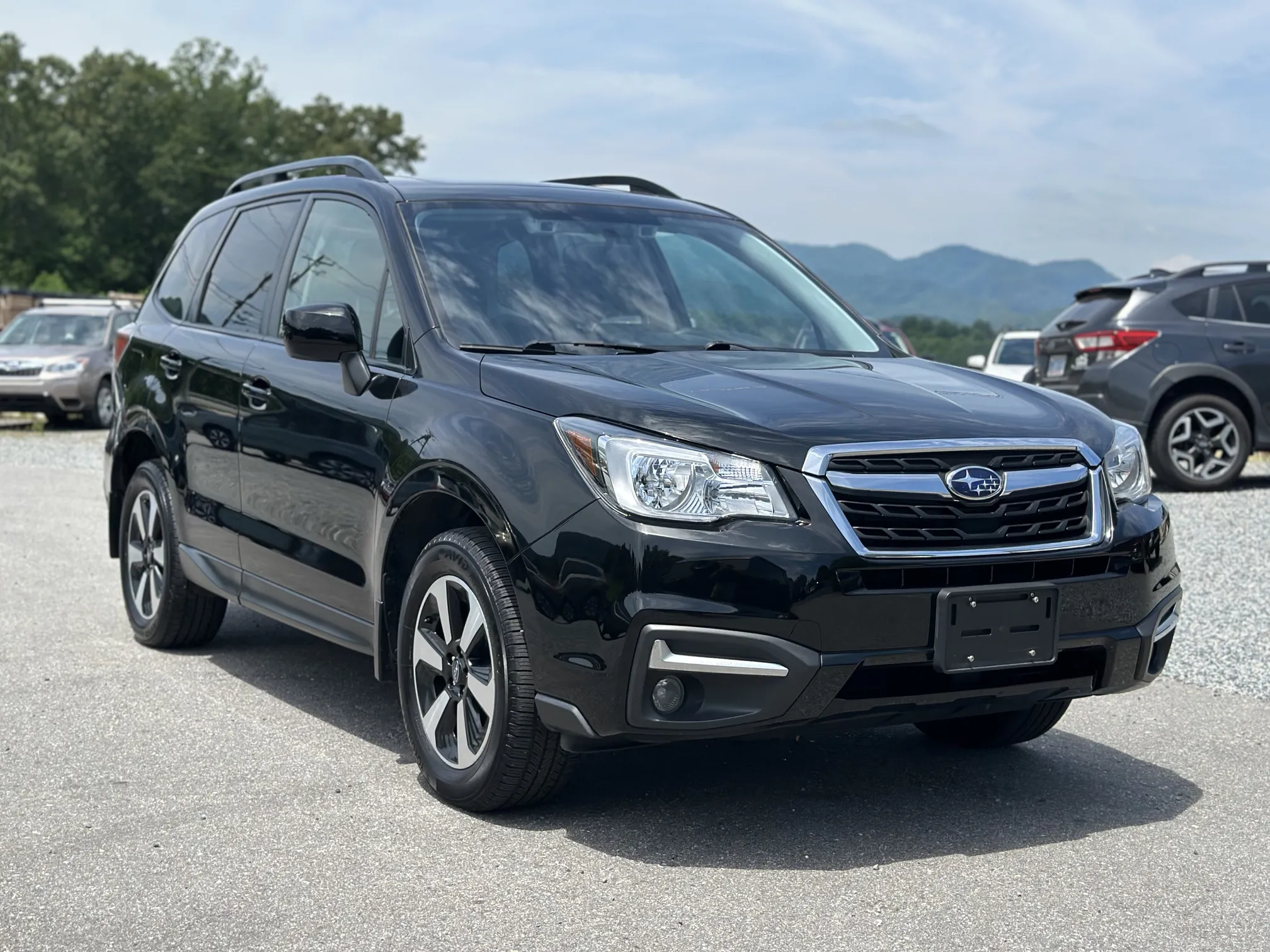
The 2018 Forester is frequently praised for its "greenhouse" design—large windows and thin pillars that provide nearly 360-degree visibility. This design choice also translates to a spacious interior that maximizes vertical room.
Cargo and Seating
The Forester offers 34.4 cubic feet of cargo space behind the rear seats, which expands to a substantial 74.7 cubic feet when the 60/40 split-folding rear seats are lowered. It is important to note that models equipped with the panoramic moonroof have slightly less interior volume (approximately 31.5 / 68.5 cubic feet) due to the mechanism housed in the ceiling.
Ground Clearance and Towing
All 2018 Foresters boast 8.7 inches of ground clearance. This specification is a major selling point, as it exceeds the clearance of many "soft-roaders" and allows for confident travel over deep snow or unmaintained fire roads. The towing capacity is rated at a modest 1,500 lbs, which is sufficient for a small utility trailer or a bike rack but limits its use for heavy hauling.
Safety Technology and EyeSight
By 2018, Subaru’s EyeSight Driver Assist Technology had become a benchmark in the industry. This system uses dual color cameras mounted near the rearview mirror to monitor traffic movement and optimize cruise control.
The EyeSight suite includes:
- Pre-Collision Braking: Can apply full braking force in emergency situations to reduce or prevent impact.
- Adaptive Cruise Control: Maintains a set distance from the vehicle ahead.
- Lane Departure and Sway Warning: Alerts the driver if the vehicle begins to drift out of its lane.
- Lane Keep Assist: Provides gentle steering inputs to help stay centered.
In addition to active safety, the 2018 Forester performed exceptionally well in crash tests. It earned high marks from the Insurance Institute for Highway Safety (IIHS), particularly for its roof strength and side-impact protection.
2018 Subaru Forester Specifications Table
The following table summarizes the key technical specifications for the primary 2018 Forester configurations.
| Feature | 2.5i (Base/Premium/Ltd) | 2.0XT (Premium/Touring) |
|---|---|---|
| Engine Type | 2.5L 4-Cyl Boxer (Naturally Aspirated) | 2.0L 4-Cyl Boxer (Turbocharged) |
| Horsepower | 170 hp @ 5,800 rpm | 250 hp @ 5,600 rpm |
| Torque | 174 lb-ft @ 4,100 rpm | 258 lb-ft @ 2,000–4,800 rpm |
| Transmission | 6-Speed Manual / CVT | High-Torque CVT |
| Fuel Economy (EPA City/Hwy) | 26 / 32 MPG (CVT) | 23 / 27 MPG |
| Fuel Tank Capacity | 15.9 Gallons | 15.9 Gallons |
| Max Cargo Volume | 74.7 cu. ft. | 68.5 cu. ft. |
| Ground Clearance | 8.7 Inches | 8.7 Inches |
| Curb Weight | ~3,300 - 3,500 lbs | ~3,600 - 3,700 lbs |
Trim Level Breakdown
Choosing a 2018 Forester involves understanding the tiered feature sets. Subaru offered several trims, plus a few special editions for this final year.
- 2.5i (Base): Includes power windows/locks, a 6.2-inch Starlink touchscreen, and a rearview camera. It is the most utilitarian option.
- 2.5i Premium: Adds 17-inch alloy wheels, a panoramic moonroof, and a 10-way power driver’s seat. The optional Black Edition package on this trim adds dark exterior accents and paddle shifters to the 2.5L engine.
- 2.5i Limited: Stepping up to the Limited adds leather-trimmed upholstery, a power rear gate, and automatic climate control. Blind-spot detection and rear cross-traffic alert become standard here.
- 2.5i Touring / 2.0XT Touring: The top-tier luxury trims. They include 18-inch wheels, a heated steering wheel, a premium Harman Kardon sound system, and LED steering-responsive headlights.
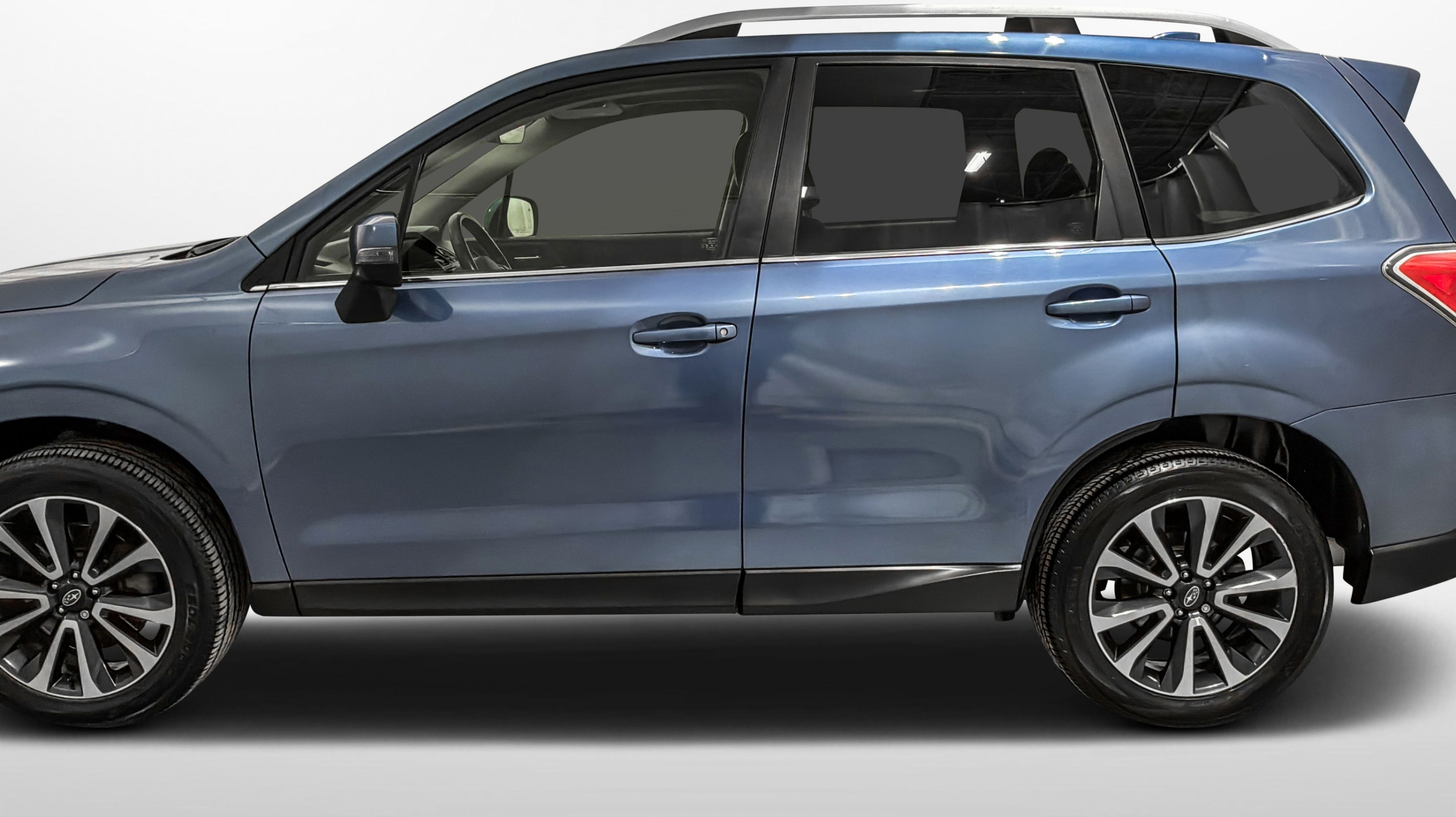
- 50th Anniversary Edition: A special edition for 2018 featuring Heritage Blue paint, unique silver exterior trim, and anniversary-badged seats/mats.
Maintenance and Reliability in 2026
As of 2026, many 2018 Foresters have transitioned into the "high mileage" category (over 100,000 miles). Prospective owners should focus on a few key maintenance areas specific to this model year.
CVT Fluid Maintenance
While Subaru originally marketed the CVT fluid as a "lifetime" fill under normal conditions, many mechanics and enthusiasts recommend a drain-and-fill every 60,000 miles, especially if the vehicle is used for towing or mountain driving. Ensuring the CVT is serviced is vital for long-term transmission health.
Oil Control and Consumption
While 2018 models are significantly better than the 2014–2015 versions, the Boxer engine still requires regular oil level checks. Boxer engines naturally consume small amounts of oil over time due to the horizontal layout of the pistons.
Infotainment Longevity
The Subaru Starlink system in the 2018 model lacks the wireless Apple CarPlay and Android Auto found in newer vehicles. While wired versions are available on the 7-inch screens, some owners in 2026 opt to upgrade the head unit to a modern aftermarket solution to maintain smartphone connectivity.
Frequently Asked Questions
Does the 2018 Subaru Forester have a timing belt or a timing chain?
Both the 2.5L and 2.0L engines in the 2018 Forester use a timing chain. Unlike the timing belts found in older Subaru models (pre-2011/2012), timing chains are designed to last the life of the engine and do not require the standard 105,000-mile replacement.
Can the 2018 Forester tow a camper?
The 2018 Forester has a maximum towing capacity of 1,500 pounds. This is sufficient for a small pop-up camper or an aluminum teardrop trailer, but it is not recommended for standard travel trailers. Exceeding this limit can cause significant strain on the CVT.
Is the 2018 Forester good in the snow?
Yes, the 2018 Forester is widely considered one of the best vehicles in its class for winter driving. The combination of 8.7 inches of ground clearance and the Symmetrical AWD system allows it to navigate deep snow that often strands other crossovers.
What are the most common problems with the 2018 Forester?
Commonly reported issues include premature wear of the rear wheel bearings and occasional failures of the rear hatch power liftgate motor. Additionally, the original battery was often criticized for having a low Cold Cranking Amp (CCA) rating, leading many owners to upgrade to a more powerful battery.
Does it have Apple CarPlay or Android Auto?
In 2018, Subaru began rolling out CarPlay and Android Auto across its lineup, but the Forester did not receive it as a standard factory feature until the 2019 redesign. The 2018 model relies on the Starlink app suite or Bluetooth for connectivity.
Final Recommendations
The 2018 Subaru Forester remains a premier choice for those who value mechanical reliability, visibility, and authentic off-road capability in a compact package. When shopping for one in 2026, prioritize vehicles with a documented service history, specifically looking for CVT fluid changes and cooling system maintenance. If you prefer a more spirited driving experience, seek out the 2.0XT; however, for maximum long-term simplicity, the 2.5i Premium with a manual or CVT remains the most balanced option for the average driver.
Image Gallery