Understanding the Types of Auto Insurance and What They Cover
Navigating auto insurance requires understanding how different coverage types protect you financially against accidents, theft, and liability. A standard policy typically combines liability coverage for damages you cause to others, col...
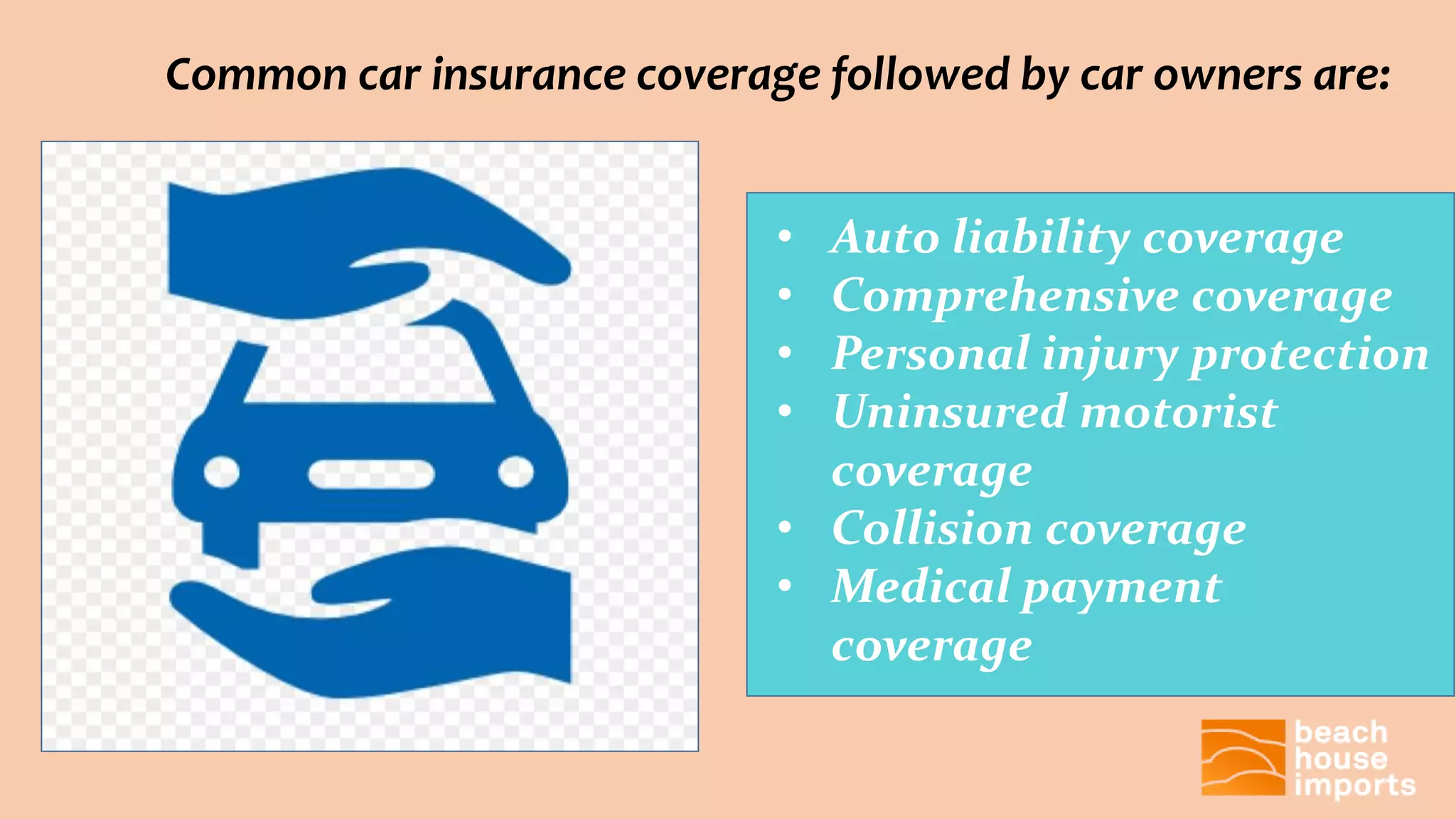
Navigating auto insurance requires understanding how different coverage types protect you financially against accidents, theft, and liability. A standard policy typically combines liability coverage for damages you cause to others, collision and comprehensive coverage for your own vehicle, and personal injury protection for medical expenses.
Contents
Choosing the right auto insurance policy is one of the most significant financial decisions a vehicle owner makes. Beyond being a legal requirement in almost all jurisdictions, a well-structured insurance policy acts as a vital shield against catastrophic financial loss. However, insurance contracts are notoriously dense, filled with legal jargon, exclusions, and variable limits that can confuse even the most diligent consumers. To build an effective policy, you must look past the monthly premium and examine the underlying mechanics of what each coverage type actually entails. This guide breaks down the core components of auto insurance, detailing how different coverages function, what they protect, and how to select the right limits for your needs.
The Core Foundations of Auto Insurance
Auto insurance is not a single monolithic product; rather, it is a bundle of distinct coverages designed to address specific types of risk. When you purchase a policy, you are essentially customizing a package of protections. Some components are mandated by state or national law, while others are entirely optional and depend on whether you finance your vehicle or wish to protect yourself from out-of-pocket expenses.
To understand auto insurance, one must first recognize the fundamental split between liability coverage (which protects others from you) and first-party coverage (which protects you, your passengers, and your vehicle). Grasping this distinction is crucial for evaluating whether your current policy leaves you exposed to significant financial liabilities.
Liability Coverage: Bodily Injury and Property Damage
Liability insurance is the legal bedrock of nearly every auto insurance system. If you cause an accident that injures another person or damages someone else's property, liability coverage pays for the costs up to your policy limits. It is typically split into two primary categories:
- Bodily Injury Liability: This covers medical bills, rehabilitation costs, pain and suffering, and lost wages of third parties injured in an accident where you are at fault. It also frequently covers legal defense costs if you are sued as a result of the collision.
- Property Damage Liability: This pays to repair or replace physical property damaged in an accident you cause. While this is most commonly another person's car, it also includes public infrastructure like guardrails, utility poles, and private property such as fences and buildings.
Liability limits are traditionally expressed as a series of three numbers (e.g., 50/100/25). In this standard example, the numbers represent:
- $50,000 maximum payout for bodily injury per person.
- $100,000 maximum payout for total bodily injury per accident.
- $25,000 maximum payout for property damage per accident.
Failing to carry adequate liability limits can be devastating. If a court awards damages that exceed your policy limits, your personal assets—including your home, savings, and future earnings—can be seized to pay the balance.
Protecting Your Own Vehicle: Collision and Comprehensive
While liability insurance protects other drivers, it does nothing to fix your own car if you are involved in a wreck. To cover your own vehicle, you must look to physical damage coverages: collision and comprehensive. These are almost universally required if you have an active auto loan or lease, as the lender wants to protect its collateral.
Collision Coverage
Collision coverage pays to repair or replace your vehicle if it is damaged in a crash with another vehicle or a stationary object, such as a tree, guardrail, or building. It also covers single-vehicle accidents, such as rollovers, as well as damage sustained from hitting a massive pothole.
Collision coverage operates on a deductible basis. The deductible is the amount you agree to pay out-of-pocket before your insurance kicks in. For example, if you carry a $500 deductible and incur $3,500 worth of repair work after hitting a wall, you pay the first $500, and your insurer pays the remaining $3,000. Choosing a higher deductible lowers your monthly premium, but it increases your immediate financial burden if an accident occurs.
Comprehensive Coverage (Other Than Collision)
Often misunderstood due to its broad name, comprehensive coverage protects your vehicle from perils other than traditional traffic collisions. It is often referred to as "other than collision" coverage. Incidents typically covered under comprehensive policies include:
- Theft or attempted theft of the vehicle.
- Vandalism and malicious mischief.
- Animal strikes (e.g., hitting a deer or livestock).
- Weather events, including hail, windstorms, hurricanes, and tornadoes.
- Natural disasters such as floods or earthquakes.
- Falling objects, such as tree branches or structural debris.
- Glass damage, such as a cracked windshield kicked up by a passing truck.
Like collision coverage, comprehensive insurance requires a deductible, which you select when purchasing the policy.
| Coverage Type | What It Protects | Mandatory vs. Optional | Typical Deductible Application |
|---|---|---|---|
| Bodily Injury Liability | Third-party medical bills, legal fees, and lost wages | Mandatory in most regions | None (Insurer pays up to policy limit) |
| Property Damage Liability | Third-party vehicles and physical infrastructure | Mandatory in most regions | None (Insurer pays up to policy limit) |
| Collision | Your vehicle after a crash with another car or object | Optional (Mandatory if financed) | Yes (e.g., $250, $500, or $1,000) |
| Comprehensive | Your vehicle against theft, weather, fire, and animals | Optional (Mandatory if financed) | Yes (e.g., $250, $500, or $1,000) |
| Personal Injury Protection | Your medical bills and lost wages regardless of fault | Mandatory in "no-fault" states | Varies (May include a small deductible) |
Personal Injury Protection (PIP) and Medical Payments
Medical costs stemming from auto accidents can escalate rapidly. Depending on the state or country in which you reside, insurance systems are categorized as either "tort" (fault-based) or "no-fault." In no-fault jurisdictions, specialized medical coverages are heavily emphasized or legally mandated.
Personal Injury Protection (PIP)
Personal Injury Protection goes beyond standard medical coverage. In addition to medical and hospital bills for you and your passengers, PIP can cover essential non-medical expenses resulting from an accident, such as:
- Replacement services, such as hiring someone to clean your house or mow your lawn if you are temporarily disabled.
- Lost wages if you cannot work due to your injuries.
- Childcare expenses incurred because of your recovery period.
PIP applies regardless of who caused the accident, allowing you to access funds immediately without waiting for liability investigations to conclude.
Medical Payments (MedPay)
Medical Payments coverage is a more streamlined version of PIP. It pays strictly for reasonable and necessary medical and funeral expenses incurred by you, your family members, or your passengers following an accident. Unlike PIP, MedPay does not cover lost wages or replacement services. It acts as a helpful supplement to your health insurance, often covering health insurance deductibles or copays associated with auto accident injuries.
Uninsured and Underinsured Motorist Coverage
One of the most sobering realities of driving is that a significant percentage of motorists operate vehicles without valid insurance, while many others carry only the legal minimums—which are often entirely inadequate for severe accidents.
Uninsured Motorist (UM) Coverage
If you are hit by a driver who lacks insurance entirely, uninsured motorist coverage steps in to pay for your medical bills, lost wages, and, in some jurisdictions, vehicle repairs. Without UM coverage, recovering damages from an uninsured driver requires private civil litigation, which frequently yields little financial return if the at-fault party lacks assets.
Underinsured Motorist (UIM) Coverage
Underinsured motorist coverage protects you when an at-fault driver has insurance, but their policy limits are too low to cover the full extent of your damages. For example, if another driver hits you, causing $75,000 in medical bills, but their property damage and bodily injury liability limit caps out at $25,000, your UIM coverage can bridge the $50,000 gap, up to your own policy's UIM limit.
Common Misconceptions About Auto Insurance Coverages
Navigating auto insurance involves clearing up several pervasive myths that can lead to severe financial vulnerability.
One common misconception is that full coverage means you are protected against every conceivable financial loss. In reality, "full coverage" is an industry shorthand—not an official legal term—that typically means a policy includes liability, collision, and comprehensive. It does not automatically include rental car reimbursement, roadside assistance, GAP insurance, or high limits for uninsured motorists.
Another frequent error is assuming that your personal auto policy covers you if you use your vehicle for commercial purposes, such as driving for rideshare companies or delivering food. Standard personal auto insurance policies contain explicit exclusions for commercial use. If you are involved in an accident while working without a commercial endorsement or rideshare rider, your claim may be denied entirely.
Frequently Asked Questions About Auto Insurance
Is collision coverage required by law?
No government entity legally requires collision coverage. However, if you finance or lease your vehicle, your lender or leasing company will contractually require you to carry both collision and comprehensive insurance until the loan is fully paid off.
What is GAP insurance and do I need it?
Guaranteed Asset Protection (GAP) insurance covers the difference between what your car is currently worth (its actual cash value) and what you still owe on your auto loan. If your car is totaled or stolen, standard insurance only pays market value. If you owe more than that value, GAP insurance pays the remainder, preventing you from paying off a loan for a car you no longer possess. It is highly recommended if you made a small down payment or hold a long-term loan.
Does auto insurance follow the car or the driver?
In most jurisdictions, auto insurance follows the vehicle, not the driver. If you lend your car to a friend and they cause an accident, your insurance policy is typically primary, meaning your rates may be impacted, and your coverage handles the claim. However, exceptions exist if the driver is explicitly excluded from your policy.
How does a deductible affect my monthly premium?
Your deductible and your monthly premium share an inverse relationship. Choosing a higher deductible—such as raising it from $500 to $1,000—reduces your insurance company's financial risk in a claim, resulting in a lower monthly premium. Conversely, a lower deductible raises your premium.
Will my insurance rates go up if I file a comprehensive claim?
Comprehensive claims are generally classified as "not-at-fault" incidents because they involve events outside your control, such as weather, animal strikes, or theft. While some insurers may adjust rates based on overall regional risk or claim frequency, a single comprehensive claim typically causes less severe rate increases than an at-fault collision claim.
Summary and Next Actions
Selecting the right auto insurance requires balancing your legal obligations, financial exposure, and risk tolerance. Start by reviewing your current policy declarations page to verify your liability limits, deductibles, and whether you carry adequate uninsured motorist and physical damage protections. If you own a newer car or carry a balance on an auto loan, ensure your collision, comprehensive, and GAP coverages are fully active. For personalized guidance tailored to your specific driving habits, vehicle valuation, and local regulatory environment, consult with an independent insurance agent or licensed broker to audit your coverage and secure appropriate protection.
Image Gallery