How Whole Foods Market Supply Chain Adapts to New Demands
Whole Foods Market’s supply chain adapts to evolving consumer expectations, market volatility, and operational challenges through a combination of localized sourcing, advanced inventory management technology, strict quality standards,...
Whole Foods Market’s supply chain adapts to evolving consumer expectations, market volatility, and operational challenges through a combination of localized sourcing, advanced inventory management technology, strict quality standards, and deep integration with its parent company, Amazon. By balancing centralized distribution efficiency with decentralized supplier relationships, the grocer maintains its commitment to natural and organic products while scaling to meet modern retail demands.
Contents
The Evolution of Grocery Logistics and Retail Expectations
The modern grocery supply chain is subject to intense pressures, ranging from shifting consumer preferences toward fresh, local, and organic foods to unpredictable disruptions in global transportation. For an enterprise like Whole Foods Market, these challenges are compounded by a rigorous product acceptance policy. Unlike conventional supermarkets, the retailer prohibits hydrogenated fats, artificial colors, flavors, sweeteners, and high-fructose corn syrup, as well as over 100 common preservatives and ingredients.
Adapting the supply chain to new demands requires maintaining this uncompromising quality framework while accelerating delivery timelines. Consumers increasingly expect rapid fulfillment, whether they are shopping in-store, ordering delivery via Prime, or utilizing curbside pickup. To bridge the gap between strict ingredient curation and rapid, large-scale distribution, Whole Foods Market relies on a hybrid supply chain model. This model blends traditional large-scale warehousing with localized supplier networks, enabling the retailer to respond dynamically to regional tastes, seasonal availability, and sudden shifts in purchasing behavior.
Integrating Regional Sourcing with Centralized Distribution
One of the defining characteristics of the Whole Foods Market supply chain is its dual-track sourcing strategy. The company manages a network of specialized distribution centers while simultaneously cultivating close relationships with local and regional producers.
- Centralized Distribution
- High-volume staples
- Non-perishable goods
- Amazon-optimized logistics
- Localized Producer Network
- Fresh produce & bakery
- Regional craft beverages
- Reduced transit emissions
Centralized Distribution Centers
To handle high-volume non-perishables, pantry staples, and specialized body care items, Whole Foods Market utilizes regional distribution centers (RDCs). These facilities act as consolidation hubs where inventory from major manufacturers is received, sorted, and dispatched to individual retail stores. By leveraging automated inventory tracking and forecasting algorithms, these centers minimize stockouts and reduce the dwell time of perishable goods.
Local Forager Program and Regional Networks
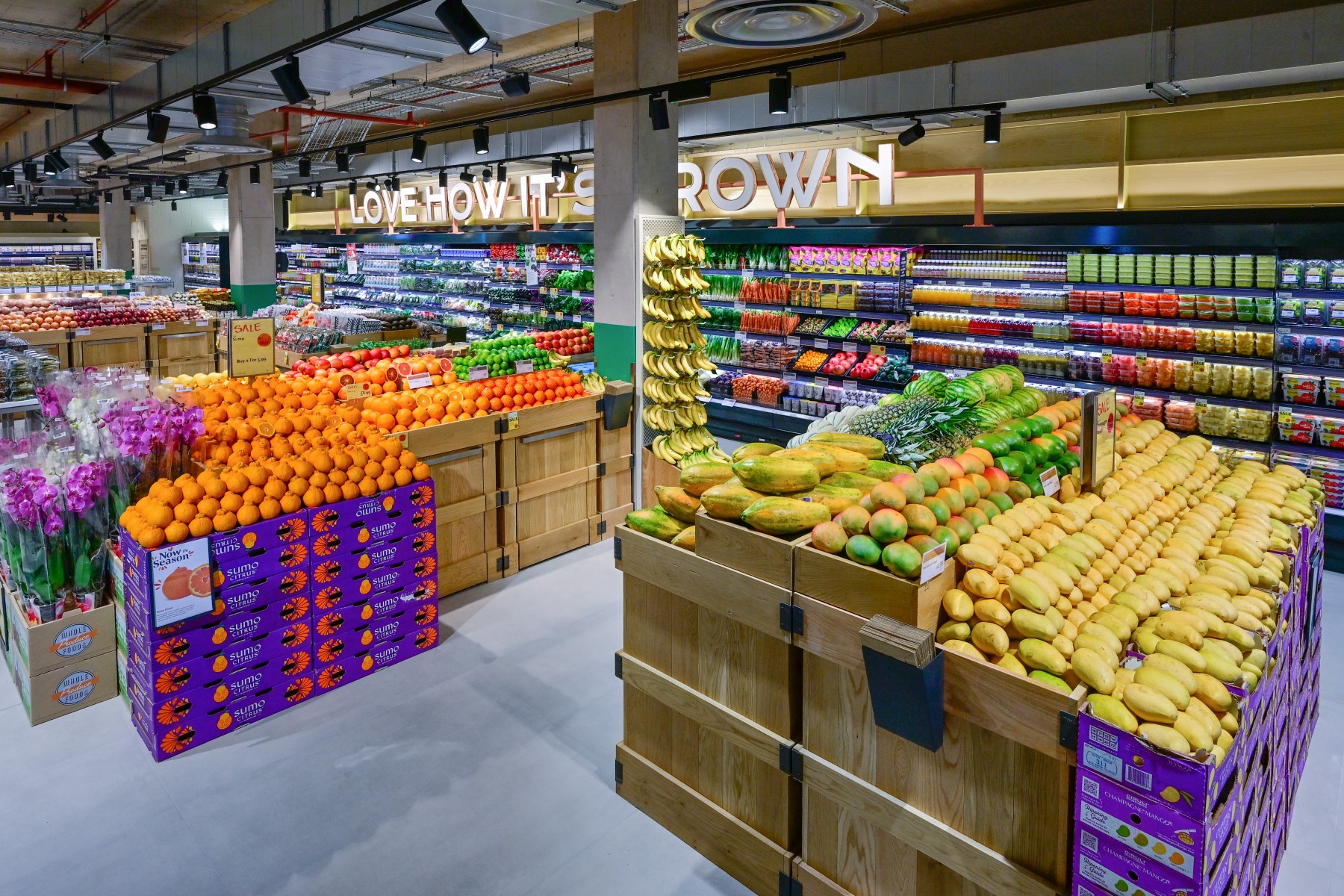
To support the core mission of providing natural and organic food, Whole Foods Market operates a dedicated Local Forager program. Regional foragers scour local communities for independent farmers, bakers, cheese makers, and craft beverage producers. Integrating these hyper-local suppliers requires a flexible supply chain capable of handling smaller batch sizes, direct-to-store deliveries, and decentralized invoicing. This approach not only ensures high freshness standards for items like produce and bakery goods but also insulates the supply chain from broader macroeconomic shocks that impact long-haul transport.
Technology, Data Analytics, and Amazon Synergy
The acquisition of Whole Foods Market by Amazon in 2017 catalyzed a significant technological modernization of the grocer’s supply chain. While Whole Foods maintains its distinct brand identity and product integrity standards, it has integrated several operational efficiencies from its parent company.
- Predictive Inventory Analytics: Advanced machine learning models analyze historical sales data, local weather patterns, and regional events to forecast product demand accurately. This reduces food waste—a critical operational and environmental metric for organic grocers.
- Warehouse Management Systems (WMS): Upgraded digital tracking tools provide end-to-end visibility from the supplier's loading dock to the store shelf. Real-time tracking allows logistics managers to reroute shipments in response to traffic delays, port congestion, or severe weather events.
- Omnichannel Fulfillment Infrastructure: Stores are equipped with dedicated packing areas and optimized layouts to support online ordering and rapid delivery through Amazon Prime. Inventory is dynamically partitioned to ensure that in-store shoppers and online fulfillment teams draw from accurate, real-time stock levels.
Key Supply Chain Strategies and Operational Mechanics
| Strategy Dimension | Traditional Grocery Approach | Whole Foods Market Adaptation |
|---|---|---|
| Sourcing Priority | Lowest cost and highest volume from mega-manufacturers. | Strict ingredient standards combined with local/regional producer partnerships. |
| Inventory Management | Periodic manual counts and reactive replenishment. | Data-driven predictive analytics to balance stock levels and minimize perishables waste. |
| Fulfillment Channels | Primarily physical brick-and-mortar checkout. | Integrated omnichannel model supporting in-store retail, curbside pickup, and Prime delivery. |
| Quality Control | Basic safety and regulatory compliance checks. | Rigorous vetting against a banned-ingredient list and third-party organic certifications. |
Overcoming Operational Limitations and Challenges
Despite advanced technological integration and structured supplier networks, managing a specialty grocery supply chain involves persistent hurdles. Understanding these limitations highlights the complexity behind keeping store shelves stocked.
Perishability and Cold Chain Integrity
Organic and natural foods often lack synthetic preservatives, making them inherently more perishable than conventional counterparts. Maintaining an unbroken cold chain from farm to shelf is paramount. Whole Foods Market enforces strict temperature-monitoring protocols during transit and storage. Any failure in refrigeration can lead to rapid spoilage, financial loss, and inventory deficits.
Balancing Scale with Strict Quality Standards
As consumer demand for organic food grows, scaling supply chains without compromising core values is difficult. Large-scale agricultural operations can meet volume requirements but may struggle with sustainable farming practices or labor standards. Conversely, small local farms offer exceptional quality and traceability but frequently lack the production capacity to supply national retail chains. Whole Foods continuously manages this tension by scaling its supplier base horizontally—adding more regional partners rather than relying on a few monolithic agribusinesses.
Labor and Transportation Pressures
Like the broader logistics sector, the grocery supply chain faces fluctuations in driver availability, fuel costs, and warehouse labor markets. To adapt, Whole Foods Market utilizes route-optimization software to minimize fuel consumption and transit times, while investing in warehouse automation to streamline material handling inside distribution centers.
Frequently Asked Questions
How does Whole Foods Market ensure its suppliers meet quality standards?
Suppliers must submit detailed product formulations, ingredient lists, and sourcing documentation for rigorous review against the company’s prohibited ingredients list. Many products also require independent third-party certifications, such as USDA Organic or Non-GMO Project Verification, before they are approved for distribution.
What role does Amazon play in the Whole Foods supply chain?
Amazon provides technological infrastructure, including advanced data analytics, demand forecasting tools, and cloud-based inventory management systems. This integration enhances the efficiency of order routing and supports seamless omnichannel fulfillment for Prime members without altering Whole Foods' core product curation standards.
How does the Local Forager program function within the broader logistics network?
The Local Forager program employs regional experts who identify, vet, and onboard independent local producers. These suppliers often bypass massive distribution centers through Direct-Store-Delivery (DSD) agreements, allowing them to ship smaller quantities directly to nearby stores for maximum freshness.
How does Whole Foods manage food waste within its supply chain?
Whole Foods utilizes predictive analytics to align ordering quantities closely with actual consumer demand. Excess perishable food that cannot be sold is systematically redirected through food rescue programs, composted, or utilized in prepared foods departments to minimize landfill waste.
Can customers track where their food originates in the supply chain?
While end-to-end public tracking varies by product category, Whole Foods emphasizes product transparency. Signage in stores, particularly in meat, seafood, and produce departments, frequently highlights specific farms, ranches, and cooperatives to provide shoppers with clear origin information.
Practical Next Actions for Supply Chain Professionals
For industry professionals examining modern retail logistics, observing how Whole Foods Market balances centralized efficiency with decentralized sourcing offers a valuable blueprint. To apply these insights:
- Audit current inventory visibility tools to identify blind spots between central warehouses and retail endpoints.
- Evaluate opportunities for regional supplier diversification to build resilience against long-distance transport disruptions.
- Invest in demand-sensing analytics designed specifically to handle high-turnover, perishable inventory without driving up waste metrics.
Image Gallery