Understanding Danbury Auto Insurance Costs and Common Myths
Navigating auto insurance in Danbury, Connecticut, involves balancing state-mandated coverage minimums with local pricing factors like commuter traffic and regional accident rates, while separating expensive myths from reality. Vehicle...
Navigating auto insurance in Danbury, Connecticut, involves balancing state-mandated coverage minimums with local pricing factors like commuter traffic and regional accident rates, while separating expensive myths from reality.
Contents
Vehicle owners in Danbury, Connecticut, often find themselves searching for ways to balance the cost of mandatory coverage with the realities of local driving conditions. Located in Fairfield County, Danbury presents unique underwriting variables for insurance providers, ranging from busy commercial corridors like Federal Road to winter weather challenges along the Interstate 84 corridor. Drivers frequently encounter confusing advice regarding what drives up their premiums, how credit scores affect rates, and whether moving to a different zip code within the city will instantly slash their bills. Understanding the actual mechanics of regional auto insurance pricing requires looking past common misconceptions and examining how insurers evaluate risk.
The Regulatory Framework of Connecticut Auto Insurance
Every driver operating a registered vehicle in Danbury must comply with Connecticut state insurance mandates enforced by the Connecticut Insurance Department. These regulations dictate the absolute minimum liability limits a motorist can carry legally, but choosing only the minimum leaves significant financial exposure in the event of an accident.
Connecticut law requires the following minimum liability coverage limits:
- Property Damage Liability: $25,000 per accident.
- Bodily Injury Liability: $25,000 per person and $50,000 per accident.
- Uninsured/Underinsured Motorist Coverage: Equivalent to the liability limits chosen, ensuring protection if struck by a motorist with insufficient or no insurance.
While these numbers represent the legal threshold to drive on public roads, insurance professionals universally recommend higher limits—such as 100/300/100—to protect personal assets from high litigation costs and medical expenses. Relying solely on state minimums can lead to severe out-of-pocket liabilities if an at-fault accident involves multiple vehicles or serious injuries.
Key Factors Influencing Danbury Auto Insurance Rates
Insurance companies do not pull premium prices out of a hat; they rely on actuarial tables and geographic risk assessments. When an underwriter evaluates a Danbury policy, several distinct variables interact to determine the final monthly or semi-annual cost.
| Pricing Factor | How It Impacts Danbury Policies |
|---|---|
| Geographic Location | Urban density, local traffic volume, and regional crime rates |
| Driving Record | Speeding tickets, at-fault accidents, and DUI history |
| Vehicle Make and Model | Repair costs, safety ratings, and theft frequency |
| Coverage Selections | Deductible amounts and optional add-ons like comprehensive |
| Credit-Based Score | Allowed in Connecticut; correlates statistically with risk |
Geographic and Traffic Density Risks
Danbury is a major economic hub in western Connecticut, drawing thousands of daily commuters and commercial traffic. Roadways such as Interstate 84, Route 7, and US-202 experience heavy congestion during peak hours. Insurers analyze accident frequency data specific to Fairfield County to price policies. Higher traffic density naturally correlates with a higher statistical probability of fender-benders and multi-car collisions, influencing base rates across the city compared to more rural parts of the state.
Personal Driver Profiles
An individual’s driving history remains one of the most heavily weighted pricing metrics. A clean record featuring zero moving violations or claims over a three-to-five-year period qualifies a driver for preferred tier pricing. Conversely, single infractions like speeding or running a red light can increase premiums by 20% to 40% depending on the carrier. Major violations, such as driving under the influence, trigger severe surcharges and can require filing an SR-22 financial responsibility form.
Vehicle Specifications
The type of car parked in a Danbury driveway directly affects comprehensive and collision insurance costs. Vehicles equipped with advanced driver-assistance systems (ADAS), expensive aluminum body panels, or high theft rates cost more to insure. Standard commuter sedans with high safety crash-test ratings from the Insurance Institute for Highway Safety (IIHS) generally secure more affordable physical damage rates than high-performance sports cars or luxury SUVs.
Debunking Common Auto Insurance Myths
Misinformation regarding auto insurance spreads quickly through word-of-mouth and outdated internet forums. Believing these myths can cause Danbury residents to miss out on discounts or purchase improper coverage.
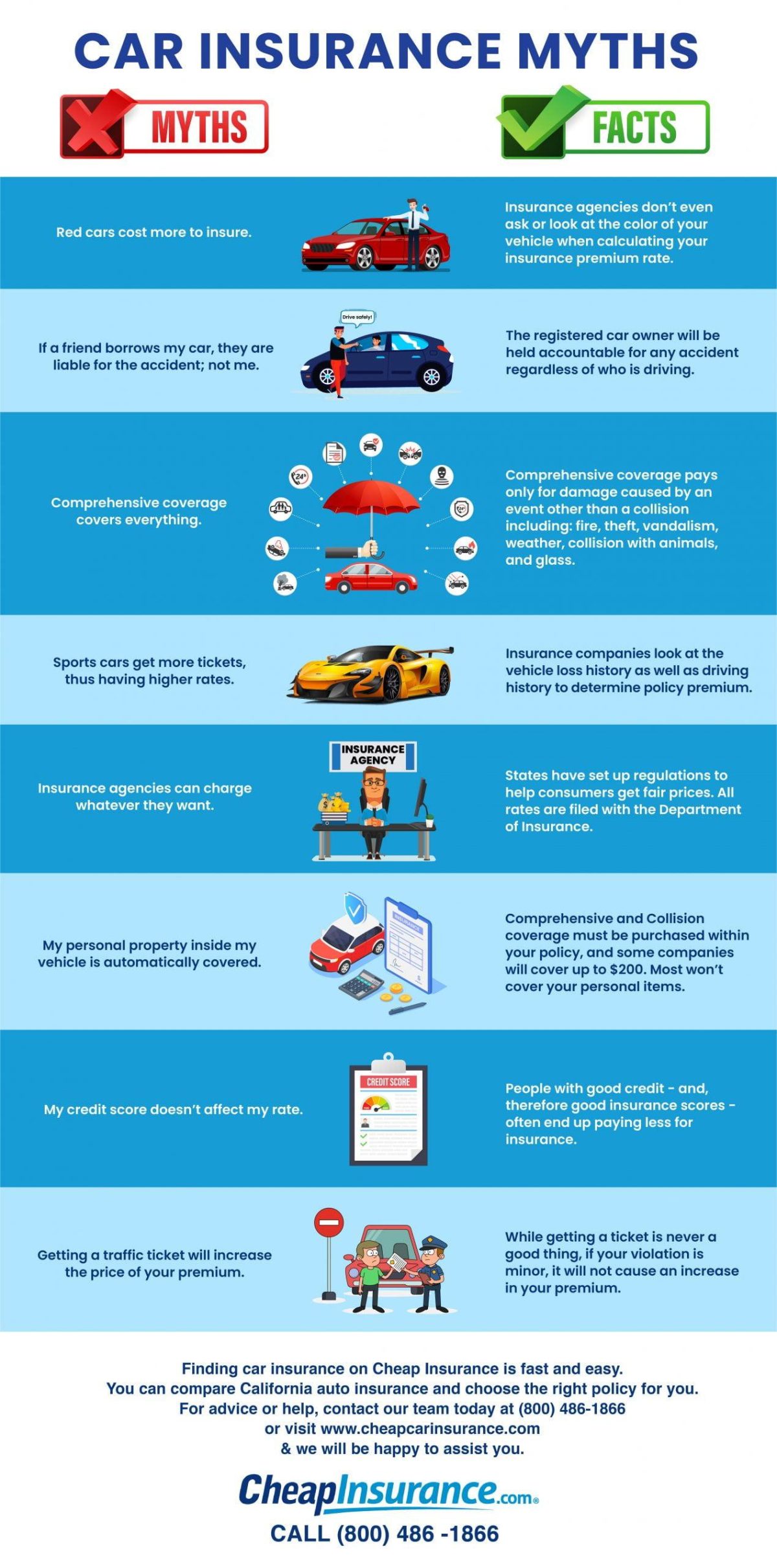
Myth 1: Red Cars Always Cost More to Insure
A persistent urban legend claims that painting a vehicle red automatically raises insurance premiums because it supposedly attracts police attention or implies speeding. In reality, insurance companies do not care about the paint color. An underwriter looks at the Vehicle Identification Number (VIN), which dictates the car's make, model, year, engine size, body style, and safety features. A red Honda Civic costs the same to insure as a silver Honda Civic of the exact same trim level.
Myth 2: Minimum State Coverage is Always the Cheapest Option
While buying the bare minimum required by Connecticut law results in the lowest immediate premium payment, it frequently proves more expensive over the long term. If a driver carrying only minimum limits causes a major accident with extensive property damage or severe medical bills, the policy limits will exhaust quickly. The driver then becomes personally liable for the remaining balance, risking lawsuits, wage garnishment, or asset seizure. Adequate liability limits provide a financial safety net that outweighs the minor monthly savings of bare-minimum coverage.
Myth 3: Credit Scores Do Not Affect Auto Insurance in Connecticut
Some motorists believe that credit history has no bearing on insurance rates. In Connecticut, insurance companies are legally permitted to use credit-based insurance scores as a rating factor, provided they comply with state insurance department guidelines. Actuarial studies have demonstrated a statistical correlation between financial credit management and the likelihood of filing insurance claims. Maintaining a healthy credit profile directly helps lower insurance costs in Danbury.
Myth 4: Comprehensive Coverage Covers Everything That Happens to a Car
Despite its name, comprehensive insurance does not cover every possible scenario. Comprehensive coverage protects against specific non-collision events, such as theft, vandalism, fire, windshield cracks from flying road debris, hitting an animal (like a deer on rural Danbury roads), or storm damage from falling tree branches. It does not cover damage sustained from colliding with another vehicle or a stationary object; that scenario requires collision coverage.
Strategies to Lower Auto Insurance Costs in Danbury
Managing auto insurance expenses without sacrificing necessary protection requires proactive steps. Drivers in Danbury can utilize several practical methods to reduce their premiums.
- Bundle Policies: Insurance providers frequently offer multi-policy discounts ranging from 10% to 25% for customers who bundle their auto insurance with homeowners, renters, or umbrella policies through the same carrier.
- Raise Deductibles Safely: Increasing comprehensive and collision deductibles from $500 to $1,000 lowers the recurring premium. Drivers must ensure they keep that $1,000 in an emergency savings account to cover out-of-pocket costs if a claim occurs.
- Inquire About Specialized Discounts: Ask carriers about low-mileage discounts for telecommuters, good student discounts for young drivers, paperless billing incentives, and defensive driving course completions.
- Maintain Good Credit and Driving Habits: Paying bills on time and avoiding traffic infractions remains the most reliable long-term method to secure the lowest rates available in the insurance market.
Frequently Asked Questions
Does my credit score impact my Danbury auto insurance rate?
Yes. Connecticut law allows insurance companies to use credit-based insurance scores as one of the underwriting factors when calculating premiums. Drivers with higher credit scores generally qualify for lower rates because statistical models link financial stability with lower claim frequencies.
Are insurance rates in Danbury higher than the national average?
Insurance rates in Fairfield County tend to be comparable to or slightly higher than national averages due to regional population density, commuter congestion, and higher vehicle repair costs in the New York metropolitan surrounding area. Exact rates vary significantly based on individual driver profiles.
What happens if I drive in Danbury without insurance?
Operating an uninsured vehicle in Connecticut is illegal and carries severe penalties. Consequences include heavy fines, suspension of your driver’s license and vehicle registration, the requirement to file an SR-22 form for future coverage, and potential impoundment of your automobile.
Will moving to a different neighborhood in Danbury change my insurance rate?
Yes. Insurance companies divide cities into specific rating territories based on zip codes. Moving from a densely populated commercial area to a quieter residential street can alter your premium based on local theft statistics, vandalism rates, and historical accident claims filed from that specific zip code.
Does my auto insurance cover me if I rent a car while traveling?
Many standard personal auto insurance policies extend your liability and physical damage coverages to temporary rental cars within the United States. However, it is vital to verify policy specifics with your agent before declining the rental agency's collision damage waiver (CDW), as certain exclusions or high deductibles may apply.
Next Steps for Danbury Drivers
Reviewing current auto insurance declarations pages against actual family driving habits helps ensure appropriate protection. Danbury motorists should request multiple quotes from licensed independent agents or direct carriers to compare rate tiers, verify policy limits, and confirm that all applicable local discounts are applied correctly.
Image Gallery