Understanding the Shifts Between Gen X, Gen Y, and Gen Z
Generational shifts mark profound transformations in societal norms, economic conditions, technological landscapes, and workplace dynamics. Understanding the differences between Generation X, Generation Y (Millennials), and Generation...
Generational shifts mark profound transformations in societal norms, economic conditions, technological landscapes, and workplace dynamics. Understanding the differences between Generation X, Generation Y (Millennials), and Generation Z requires examining the distinct historical markers, formative events, and behavioral patterns that define each cohort. These groups do not merely represent age brackets; they reflect evolving human adaptations to structural shifts in global communication, financial stability, and cultural expectations.
Contents
Defining the Generational Cohorts: Boundaries and Demographics
Demographers, sociologists, and market researchers categorize generations based on birth years, though these boundaries remain fluid rather than rigid lines. Generation X generally encompasses individuals born between 1965 and 1980, following the massive post-World War II baby boom. Generation Y, widely known as Millennials, typically includes those born from 1981 to 1996. Following them, Generation Z spans individuals born from 1997 through 2012, setting the stage for the subsequent generation, often referred to as Generation Alpha.
Each cohort enters a world shaped by the technological and economic remnants of the previous era, creating continuous cycles of cultural friction and adaptation. Generation X grew up during the transition from an industrial economy to an information-based one, experiencing the rise of personal computing in its adolescence. Millennials came of age alongside the commercialization of the internet, witnessing the shift from analog to digital paradigms. Generation Z represents the first true digital natives, born into a world saturated with smartphones, high-speed wireless connectivity, and ubiquitous social media platforms.
Technological Evolution and Digital Literacy
The relationship with technology serves as one of the sharpest dividers between Gen X, Gen Y, and Gen Z. For Generation X, technology was an acquired tool. They remember rotary phones, card catalogs in libraries, and the distinct sound of dial-up modems. This foundational experience fostered a sense of technological independence and pragmatic problem-solving. Gen X professionals adapted readily to enterprise software and office automation because they learned how systems operated mechanically before automation abstracted those processes.
Generation Y experienced technology as an expanding frontier. Millennials watched the internet evolve from static, text-heavy web pages to dynamic, user-generated ecosystems. They were the primary drivers of early social networking platforms like Friendster, MySpace, and early Facebook during their college and young adult years. This transitional positioning makes Millennials comfortable with both legacy analog systems and modern digital platforms, though they frequently retain memories of a pre-digital childhood.
Generation Z perceives technology not as a tool or a frontier, but as an ambient environment. Having never known a world without ubiquitous internet access, smartphones, and algorithmic content delivery, Gen Z approaches digital platforms with native fluency. Their communication relies heavily on visual media, short-form video, and instant messaging rather than email or voice calls. This constant connectivity shapes their expectations for speed, transparency, and instant feedback in all aspects of life, including employment and consumer interactions.
Workplace Culture, Expectations, and Economic Realities
Economic conditions during formative young adult years profoundly influence how each generation approaches labor, compensation, and career progression. Generation X entered the workforce during periods of economic restructuring, corporate downsizing, and the decline of traditional pension systems. These realities bred a culture of self-reliance, skepticism toward institutional loyalty, and a strong preference for work-life balance. Often labeled the "latchkey kids" of societal shifts, Gen X values autonomy, direct communication, and efficiency in professional environments.
Millennials entered the workforce around the turn of the millennium and faced compounding economic crises, notably the 2008 Great Recession. This financial instability delayed traditional milestones such as homeownership, marriage, and family formation. Consequently, Millennials redefined professional values, prioritizing purpose-driven work, continuous professional development, feedback loops, and corporate social responsibility. They challenged the traditional 9-to-5 office paradigm, paving the way for remote work flexibility and mental health advocacy in the workplace.
Generation Z entered the labor market during a period marked by the COVID-19 pandemic, rapid inflation, and the normalization of hybrid and remote employment structures. Gen Z workers exhibit high pragmatism and financial caution, often prioritizing job security, competitive compensation, and clear pathways for upward mobility over vague promises of corporate culture. They leverage digital entrepreneurship, side hustles, and freelance economies with greater frequency than previous generations at similar ages, reflecting a desire to insulate themselves from traditional corporate vulnerabilities.
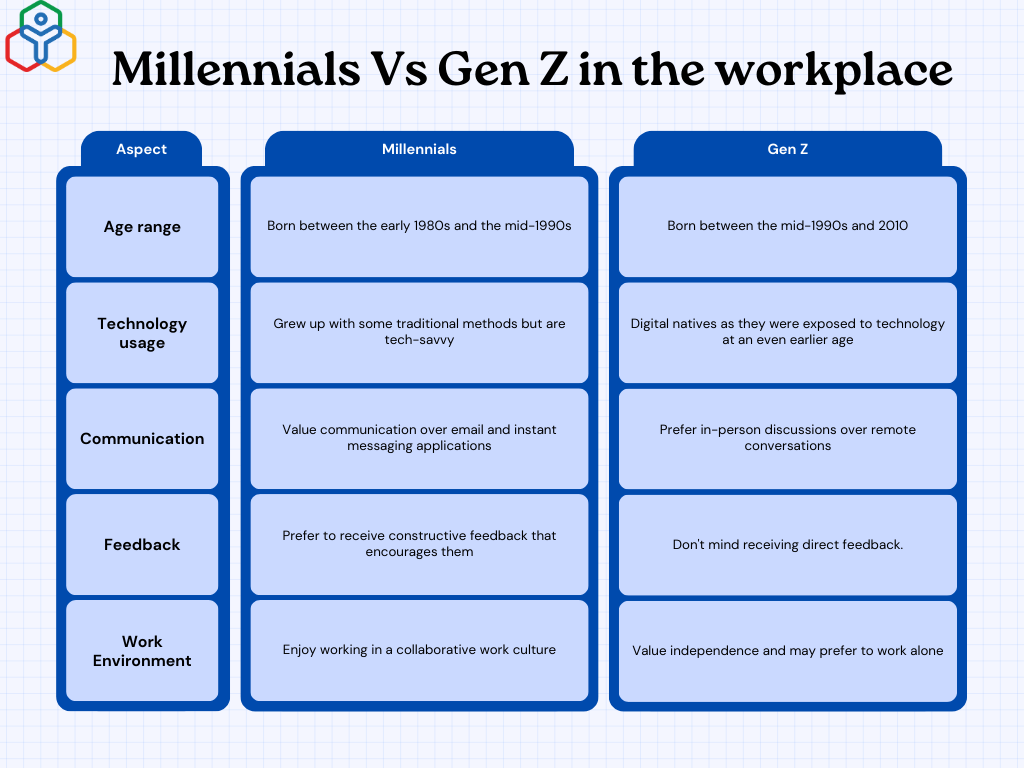
| Generational Attribute | Generation X (1965–1980) | Generation Y / Millennials (1981–1996) | Generation Z (1997–2012) |
|---|---|---|---|
| Formative Technology | Personal computers, cable television, dial-up internet | Web browsers, early social media, smartphones in young adulthood | Smartphones, cloud computing, social video algorithms from childhood |
| Workplace Priorities | Autonomy, work-life balance, direct communication | Purpose, flexibility, mentorship, professional development | Job security, compensation, transparency, mental health support |
| Communication Style | Direct, phone calls, concise email | Collaborative, structured messaging, email | Visual, instant, short-form video, chat-based apps |
| Economic Context | Corporate restructuring, rise of 401(k) plans | Great Recession, student debt burden, gig economy growth | Pandemic disruption, inflation, digital entrepreneurship |
Consumer Behavior, Brand Loyalty, and Media Consumption
Commercial markets continuously adapt to the shifting purchasing habits of these three cohorts. Generation X consumers value product durability, brand reputation, and practical utility. They conduct independent research before making significant purchases and maintain relatively high brand loyalty if a product consistently meets their standards. Advertising campaigns targeting Gen X typically emphasize quality, reliability, and straightforward value propositions without excessive emotional manipulation.
Millennials revolutionized retail and service industries through their demand for experiential consumption over material accumulation. They favor brands that align with their personal values, sustainability goals, and ethical standards. Online reviews, peer recommendations, and seamless e-commerce experiences heavily influence Millennial purchasing decisions. Subscription models, direct-to-consumer brands, and mobile payment solutions gained widespread adoption primarily due to Millennial consumer demand.
Generation Z approaches consumerism through a lens of extreme skepticism and hyper-personalization. Influenced by peer creators on platforms like TikTok and YouTube rather than traditional celebrity endorsements, Gen Z demands authenticity and transparency from brands. If a company's public actions contradict its advertised values, Gen Z consumers readily mobilize digital campaigns to hold them accountable. Furthermore, second-hand shopping, resale markets, and sustainable manufacturing practices resonate strongly with Gen Z's environmental consciousness and economic pragmatism.
Frequently Asked Questions
What are the exact birth year ranges for Gen X, Gen Y, and Gen Z?
Demographers generally define Generation X as individuals born between 1965 and 1980. Generation Y, commonly referred to as Millennials, spans birth years from 1981 to 1996. Generation Z includes those born from 1997 through 2012. These boundaries serve as analytical guidelines rather than rigid biological or cultural borders.
How do Gen X, Gen Y, and Gen Z differ in their use of technology?
Gen X treats technology as a practical tool acquired during adulthood, utilizing it efficiently for productivity and communication. Gen Y experienced the transition to a digital world, bridging analog and digital habits. Gen Z consists of digital natives who view technology as an ambient, invisible environment essential for daily life, socialization, and media consumption.
What caused Millennials to prioritize work-life balance differently than Gen X?
Millennials entered the workforce during severe economic downturns, such as the 2008 financial crisis, which disrupted traditional career trajectories and job security. Witnessing older generations experience corporate layoffs despite long hours led Millennials to reject overwork in favor of flexibility, mental health support, and purpose-driven employment.
Why is Gen Z considered more financially cautious than Millennials?
Growing up during economic instability, including the disruptions of the COVID-19 pandemic and inflationary pressures, shaped Gen Z's financial outlook. They prioritize financial stability, emergency savings, and direct compensation, often avoiding high-risk debt and seeking out practical, secure employment models.
How do marketing strategies need to change between these three generations?
Marketing to Gen X requires emphasizing reliability, practical utility, and product quality. For Millennials, brands must highlight experiential value, ethical alignment, and social responsibility. For Gen Z, marketing efforts must focus on authentic peer recommendations, transparency, visual storytelling, and swift digital engagement.
Practical Guidance for Intergenerational Collaboration
Navigating relationships across Generation X, Generation Y, and Generation Z in professional, educational, and domestic settings requires recognizing that communication preferences and core motivations differ. Leaders and organizers should avoid defaulting to a single communication channel. While Gen X often appreciates scheduled meetings or direct emails, Millennials prefer structured collaborative platforms, and Gen Z leans toward rapid, informal messaging or visual briefs. Acknowledging these variations prevents friction and fosters inclusive environments where diverse perspectives strengthen organizational output.
Image Gallery