Period 7 APUSH Review: Key Themes, Events, and Strategies for Success
AP US History Period 7 (1890–1945) covers a transformative era defined by industrial expansion, progressive reform, global conflict, and economic collapse. Mastering this period requires understanding how the United States transitioned...
AP US History Period 7 (1890–1945) covers a transformative era defined by industrial expansion, progressive reform, global conflict, and economic collapse. Mastering this period requires understanding how the United States transitioned from an isolationist, rapidly industrializing nation into a dominant global superpower actively engaged in world affairs.
Contents
Understanding the Chronological and Thematic Scope of Period 7
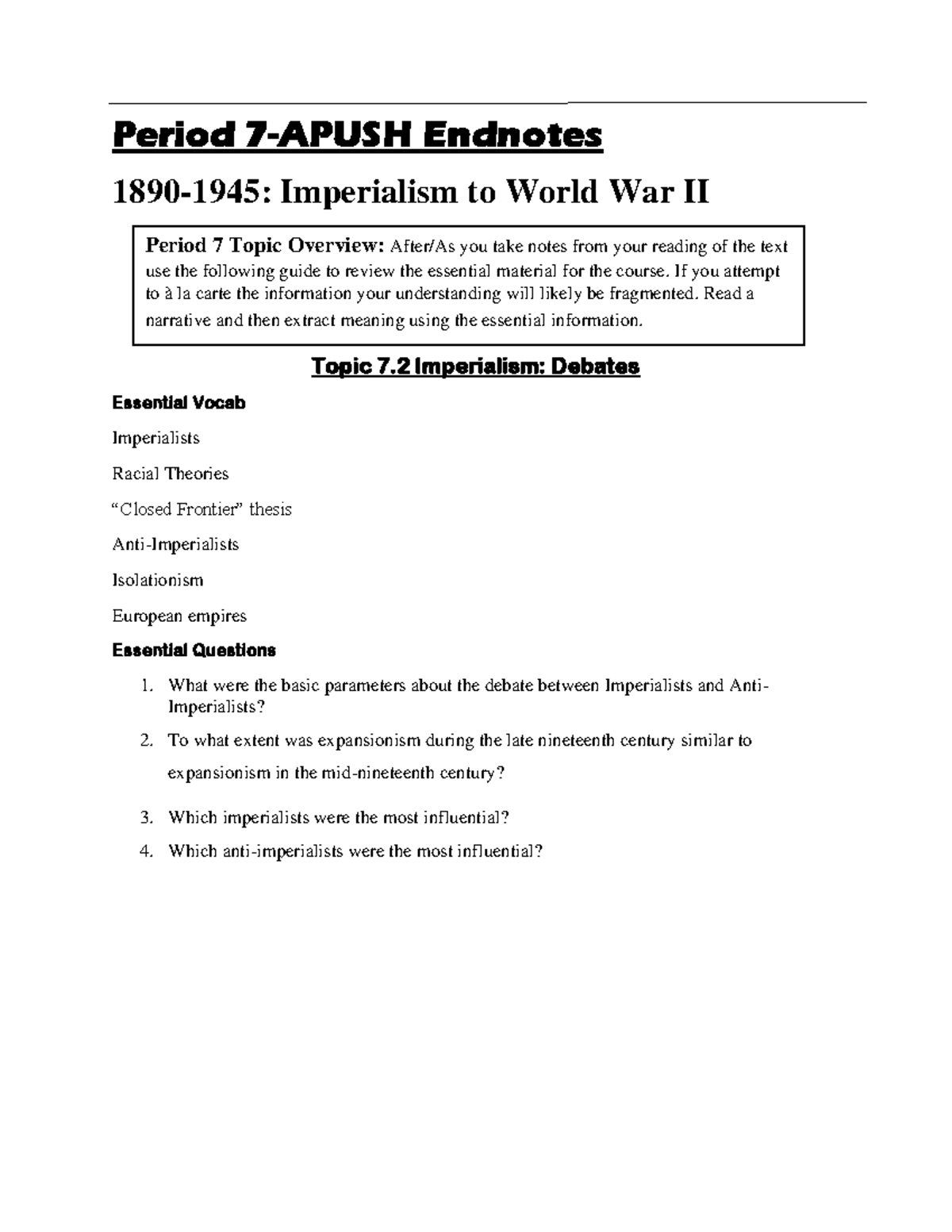
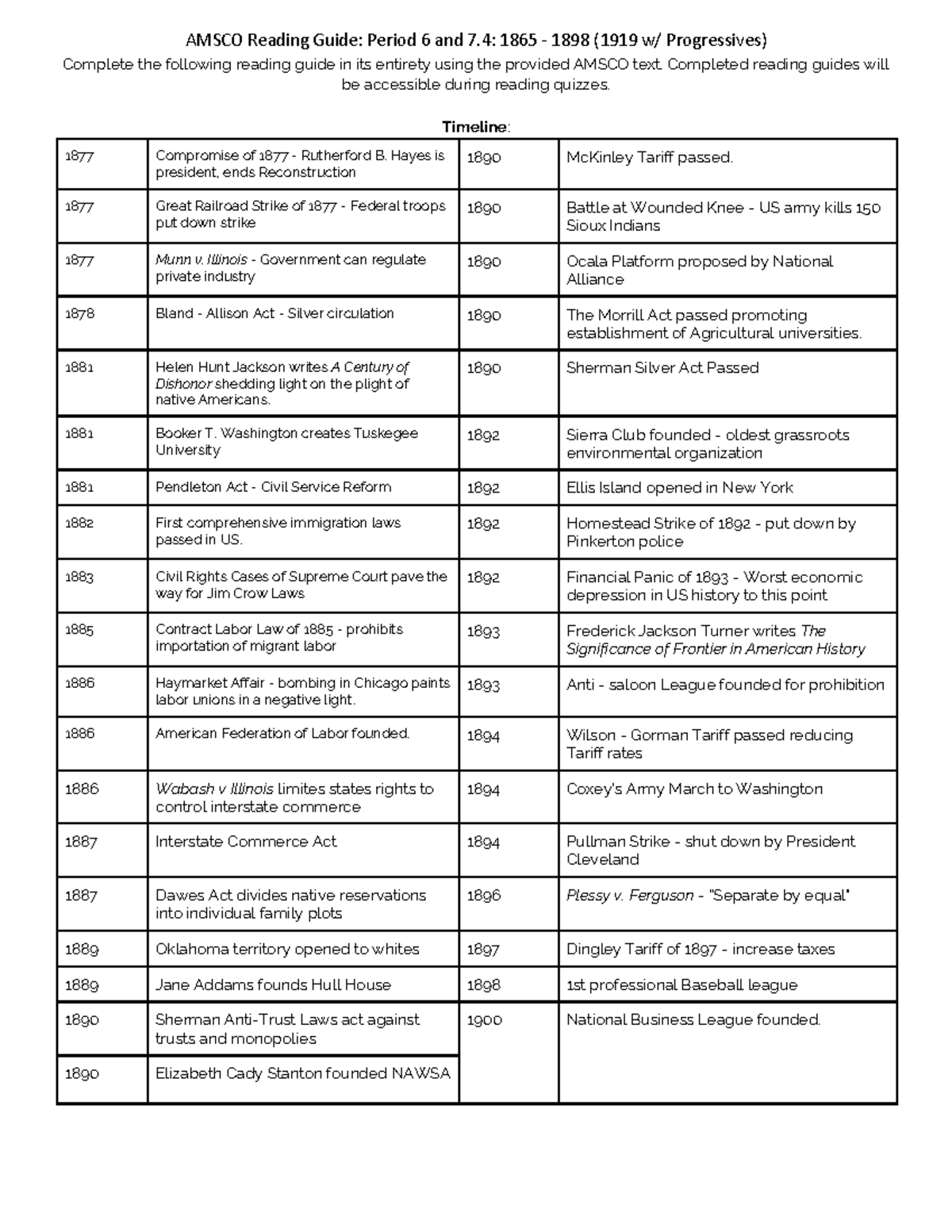
Period 7 spans from roughly 1890 to 1945, capturing monumental shifts in American domestic policy, foreign relations, and societal structure. The period opens with the closing of the frontier and the rise of American imperialism, moves through the reform-minded Progressive Era, details the cataclysm of World War I, addresses the cultural clashes and economic devastation of the Interwar Period and the Great Depression, and concludes with the nation's mobilization for and victory in World War II.
To succeed on the AP exam, students must connect overarching themes to specific historical evidence. The College Board heavily emphasizes how industrial capitalism reshaped society, how reform movements sought to check corporate power, and how foreign policy shifted away from traditional neutrality toward international interventionism.
Major Turning Points and Historical Developments
Chronological literacy is vital for navigating stimulus-based multiple-choice questions and constructing sophisticated essay arguments. The primary eras within Period 7 build sequentially upon one another:
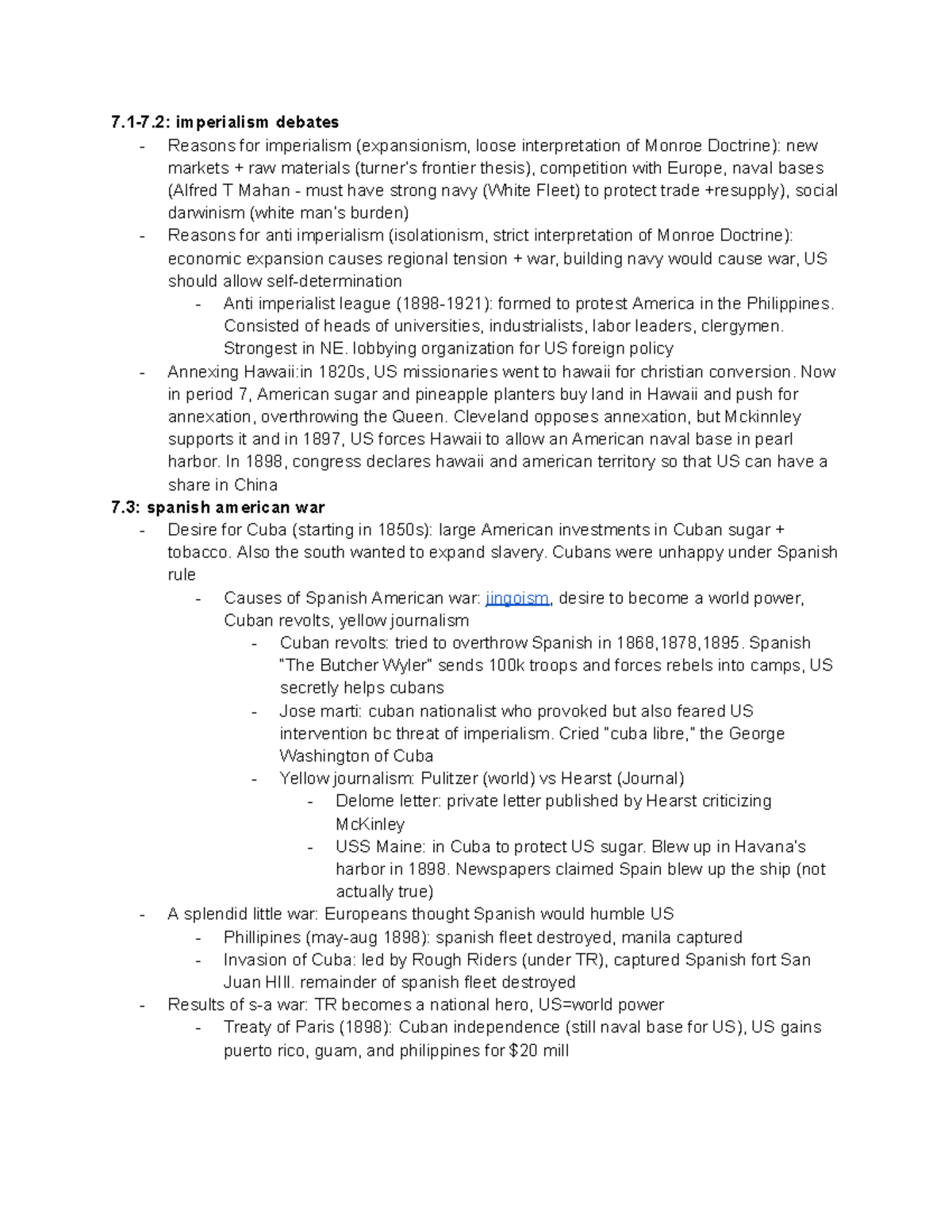
- The Gilded Age Overflow and Imperialism (1890–1914): Driven by overproduction and a desire for new markets, the United States acquired overseas territories such as Puerto Rico, Guam, and the Philippines following the Spanish-American War in 1898.
- The Progressive Era (1890–1920): Grassroots and national reformers attempted to regulate monopolies, eliminate political corruption, and improve urban living and working conditions through legislation like the Clayton Antitrust Act and constitutional amendments establishing the income tax (16th), direct election of senators (17th), prohibition (18th), and women's suffrage (19th).
- World War I and the Interwar Years (1914–1929): After entering the Great War in 1917, the U.S. mobilized its economy, restricting civil liberties under the Espionage and Sedition Acts. The 1920s brought mass consumer culture, economic prosperity, and severe social tensions, including the Red Scare and immigration quotas.
- The Great Depression and the New Deal (1929–1941): The 1929 stock market crash exposed deep structural weaknesses in the banking and agricultural sectors. Franklin D. Roosevelt's New Deal fundamentally altered the role of the federal government by establishing a social safety net, creating regulatory agencies, and redefining liberalism.
- World War II (1939–1945): Moving from neutrality to the "Arsenal of Democracy," the U.S. fought a two-front war, transformed its industrial capacity, integrated women and minorities into the workforce, and ultimately ushered in the atomic age.
Comparative Analysis of Major Foreign Policy Shifts
Foreign policy in Period 7 saw a radical departure from George Washington's traditional warnings against permanent foreign alliances. The debate between isolationism and internationalism defined multiple decades.
| Era / Doctrine | Core Objective | Major Actions or Treaties | Impact on Global Standing |
|---|---|---|---|
| Big Stick Diplomacy | Expand U.S. influence in Latin America using military readiness. | Construction of the Panama Canal, Roosevelt Corollary to the Monroe Doctrine. | Established the U.S. as an international police power in the Western Hemisphere. |
| Dollar Diplomacy | Use financial power to extend international influence, especially in Latin America and East Asia. | Loans to Caribbean nations, railroad investments in China. | Tied foreign policy goals directly to corporate and financial interests. |
| Moral Diplomacy | Promote human rights, national integrity, and opportunity abroad. | Intervention in the Mexican Revolution, hesitation to enter WWI initially. | Asserted ideological superiority while sometimes resulting in military entanglement. |
| Post-WWI Isolationism | Avoid European entanglements and maintain national sovereignty. | Rejection of the Treaty of Versailles, refusal to join the League of Nations, Washington Naval Conference. | Created a diplomatic vacuum while the U.S. pursued unilateral economic and naval policies. |
| Arsenal of Democracy / WWII | Defend global democracies and defeat totalitarian Axis powers. | Lend-Lease Act, Atlantic Charter, participation in the Grand Alliance. | Cemented the U.S. position as a global superpower and laid the foundation for the Cold War. |
Essential Vocabulary and Concepts to Master
Exam success relies on precise historical terminology. Memorizing definitions is insufficient; students must be able to use these concepts as evidence to support historical arguments.
- Yellow Journalism: Sensationalized news reporting by publishers like William Randolph Hearst and Joseph Pulitzer that deliberately provoked public support for the Spanish-American War.
- Muckrakers: Investigative journalists such as Ida Tarbell (exposing Standard Oil) and Upton Sinclair (exposing the meatpacking industry) who fueled Progressive Era reform.
- The Great Migration: The mass movement of millions of African Americans out of the rural Southern United States to urban centers in the North and West between 1910 and 1970, seeking economic opportunity and escaping Jim Crow violence.
- First Red Scare: A period of intense anti-communism and xenophobia in 1919–1920, fueled by the Bolshevik Revolution, labor strikes, and the Palmer Raids.
- The New Deal Coalition: A powerful political alliance formed by Democrats that brought together working-class urbanites, ethnic minorities, Southern whites, trade unionists, and farmers, dominating American politics for decades.
- Executive Order 9066: The 1942 order by FDR that authorized the forced relocation and incarceration of over 120,000 Japanese Americans, a constitutional violation upheld by the Supreme Court in Korematsu v. United States.
Step-by-Step Strategy for Tackling APUSH Exam Questions
Approaching stimulus-based questions and essay prompts requires a structured methodology to ensure maximum points.
Mastering Historical Thinking Skills Sourcing: Always evaluate the author's point of view, purpose, audience, and historical context before reading the question. Contextualization: Connect the specific document or prompt to broader historical trends occurring at the exact same time. Corroboration: Cross-reference multiple documents in the Document-Based Question (DBQ) to find similarities, contradictions, or thematic trends.
- Analyze the Prompt Carefully: Identify the historical reasoning skill required—whether the prompt asks for causation, comparison, or continuity and change over time.
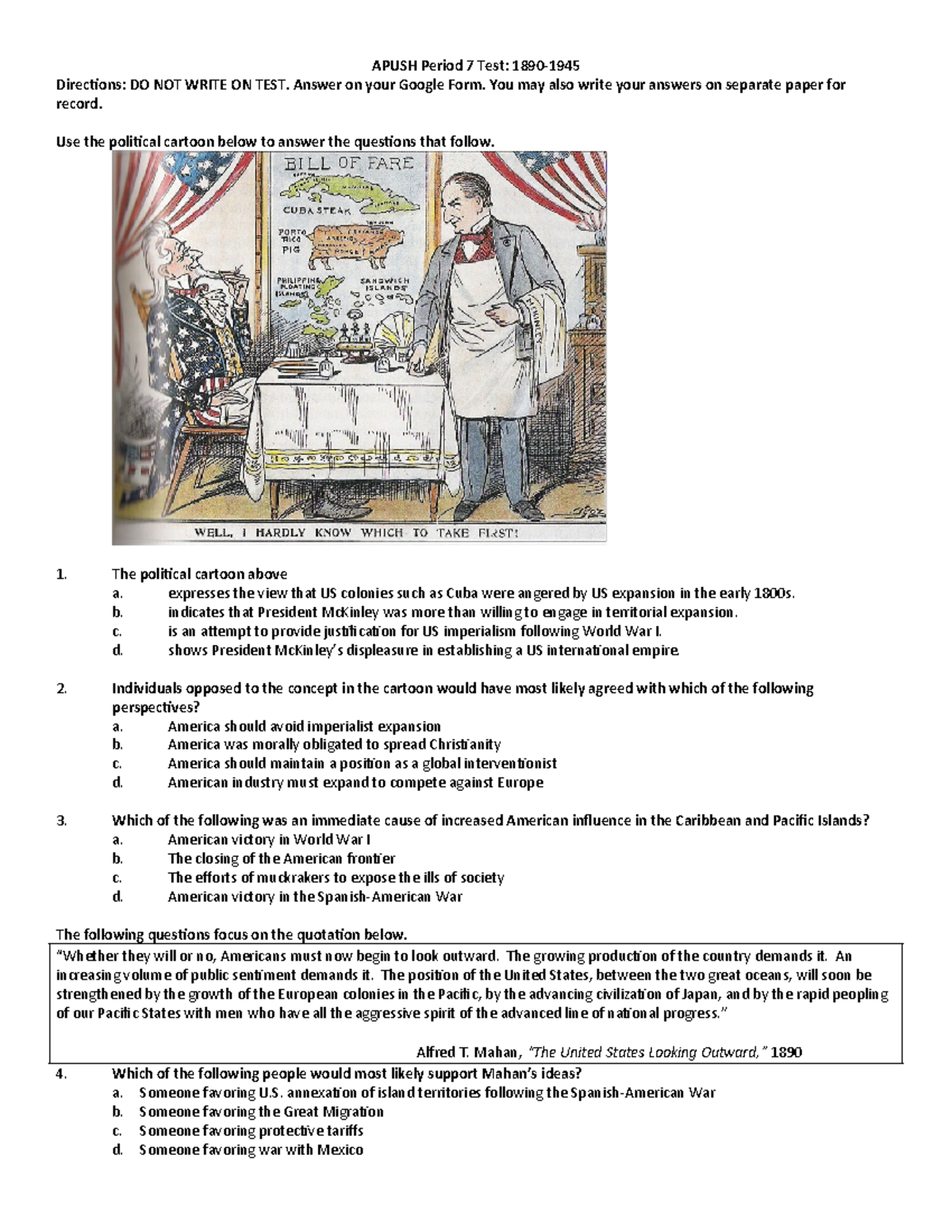
- Deconstruct the Stimulus: For multiple-choice and short-answer questions, underline key assertions in the text, chart, or political cartoon. Identify what the source implies rather than just what it literally states.
- Draft a Defensible Thesis: For essays, ensure your thesis goes beyond restating the prompt. It must take a clear, nuanced stand and establish a line of reasoning that addresses all parts of the prompt.
- Integrate Outside Evidence: For DBQs and Long Essay Questions (LEQs), do not rely solely on the provided documents. Bring in specific, accurate historical terminology and events not mentioned in the stimulus to demonstrate deep content mastery.
- Connect to the Broader Theme: Conclude your writing by explaining how your specific argument ties into larger overarching historical themes across multiple periods.
Frequently Asked Questions
What percentage of the AP US History exam covers Period 7?
Period 7 is one of the most heavily tested eras on the exam, accounting for approximately 15% to 20% of the multiple-choice, short-answer, and essay questions. Because it bridges the gap between 19th-century industrialization and the modern geopolitical landscape, questions frequently bridge Period 6 and Period 8 concepts.
How should I prepare for DBQ prompts related to the New Deal?
New Deal DBQs typically focus on evaluating the extent to which government intervention solved the Great Depression or altered constitutional balances of power. Focus your preparation on comparing relief, recovery, and reform programs, and be ready to argue both the economic successes and the criticisms raised by political opponents from both the left and the right.
Why is the shift from isolationism to interventionism a major exam focus?
The tension between isolationism and internationalism is a recurring core theme in American history. The AP exam frequently tests your understanding of why the U.S. rejected the League of Nations after World War I yet aggressively abandoned neutrality to enter World War II following the attack on Pearl Harbor.
What are the most common misconceptions about the Progressive Era?
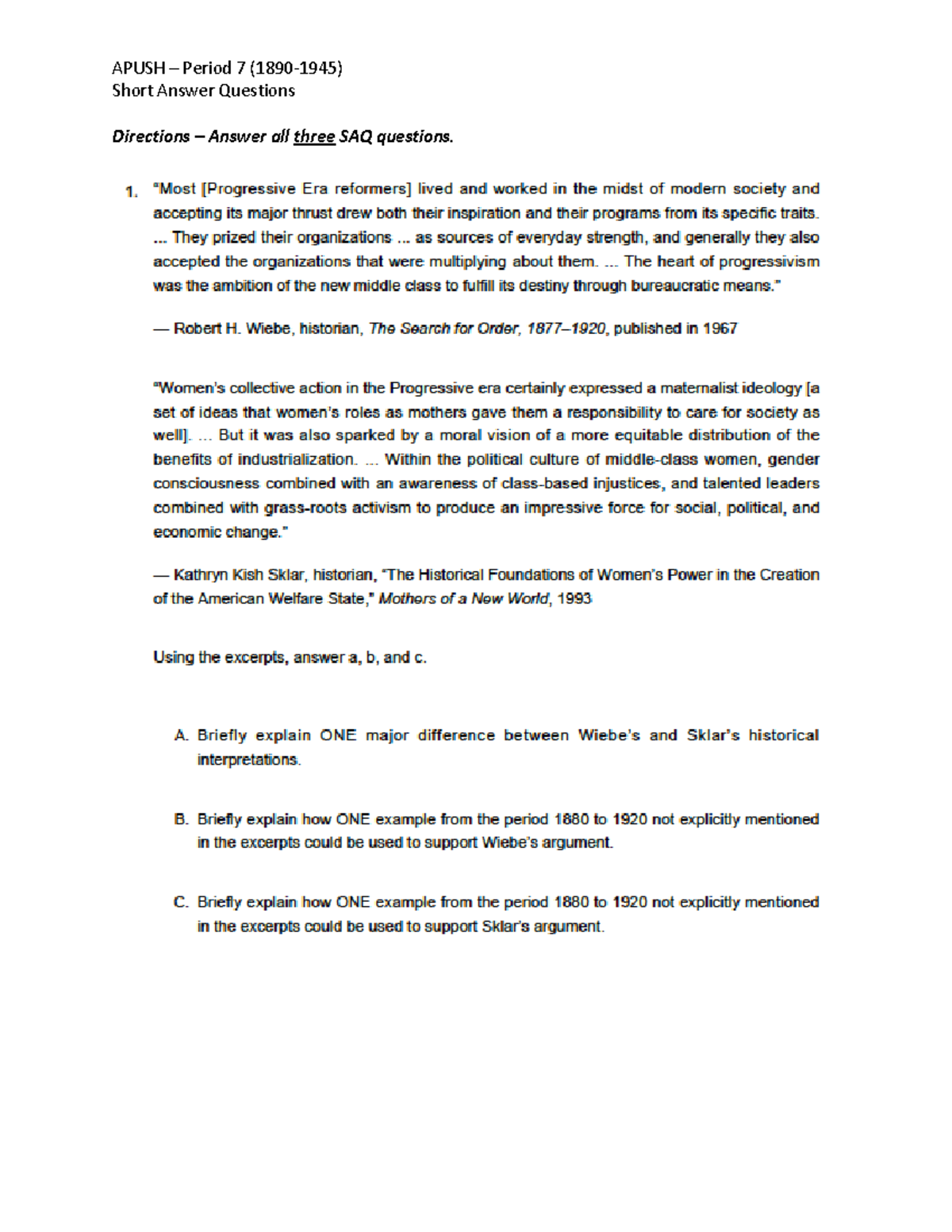
Many students mistakenly believe that the Progressive Era was a unified movement driven exclusively by the federal government. In reality, progressivism was a decentralized, urban-based grassroots movement driven by middle-class reformers, women, and labor activists who frequently disagreed on issues like civil rights and labor regulation.
How do I earn the complexity point on the DBQ for Period 7?
To earn the complexity point, your essay must demonstrate a sophisticated understanding of the historical material throughout the entire response. This is best achieved by qualifying your argument, explaining relevant counter-arguments, or drawing insightful connections across different chronological periods.
Conclusion and Final Exam Preparation Tips
Success on the AP US History exam requires more than rote memorization of dates; it demands analytical thinking and clear structural writing. Review your class notes, practice past exam prompts under timed conditions, and ensure you can trace major themes like industrial growth, federal expansion, and foreign policy transformations effortlessly. Consistent practice with stimulus-based questions will build the confidence needed to secure a top score.
Image Gallery