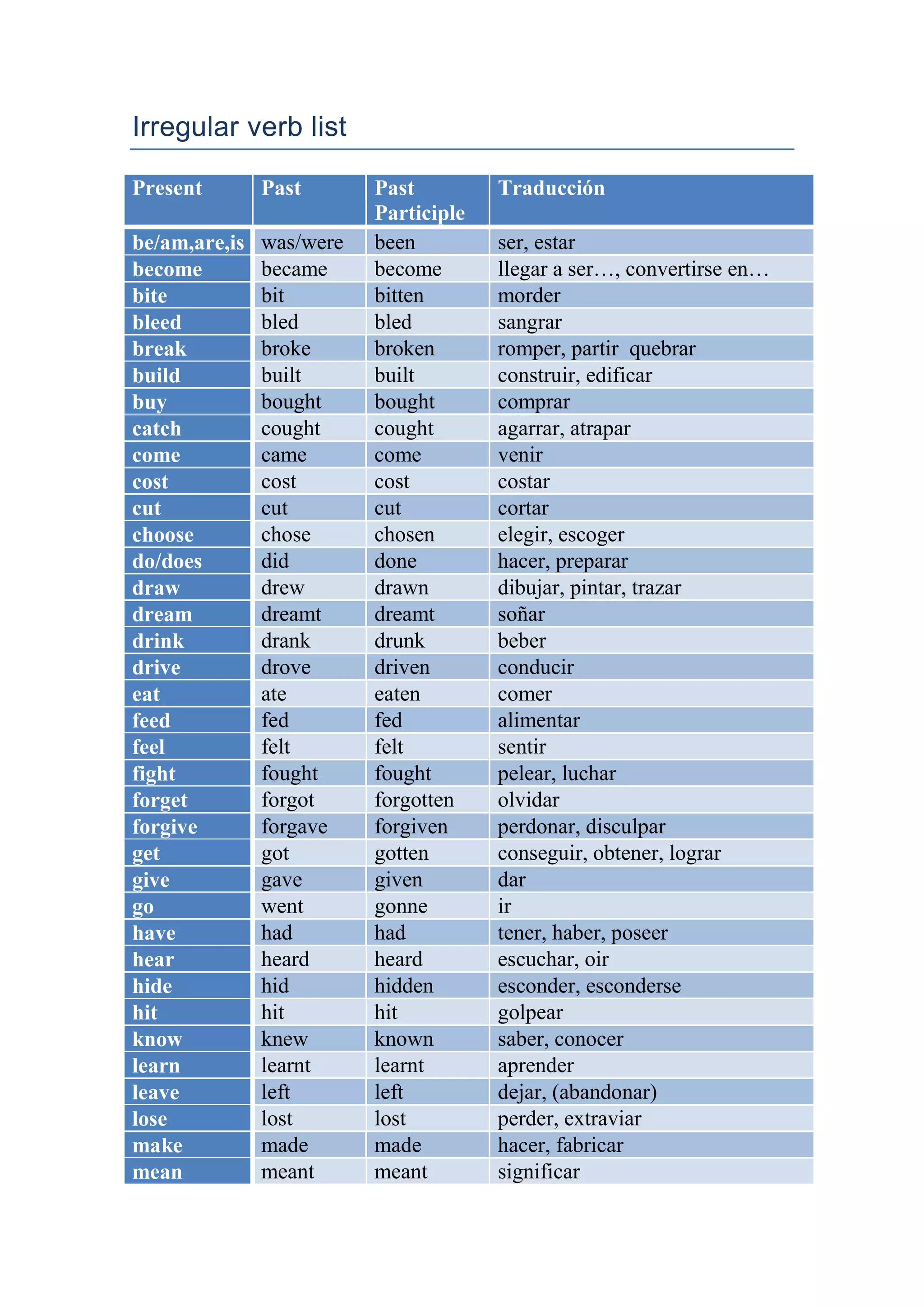
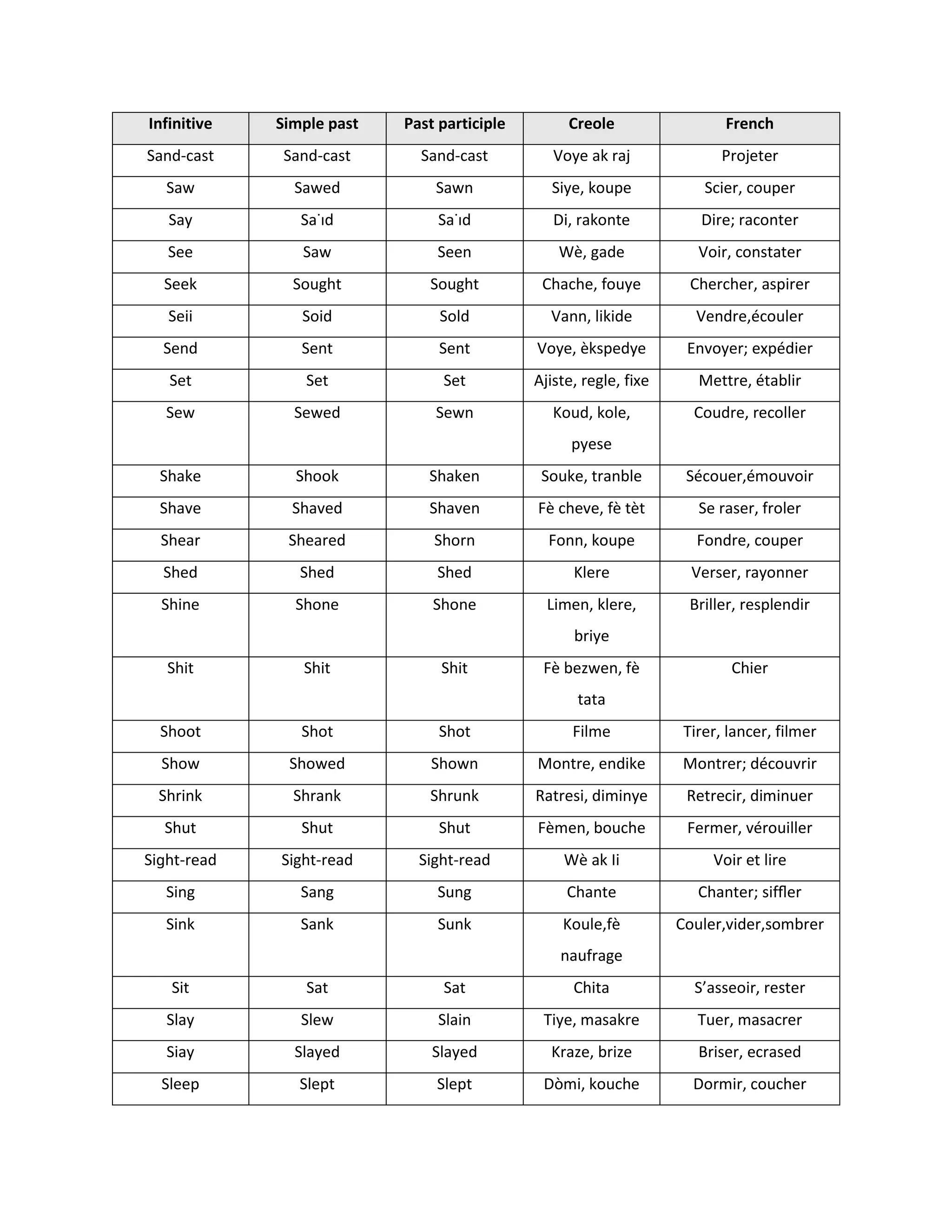
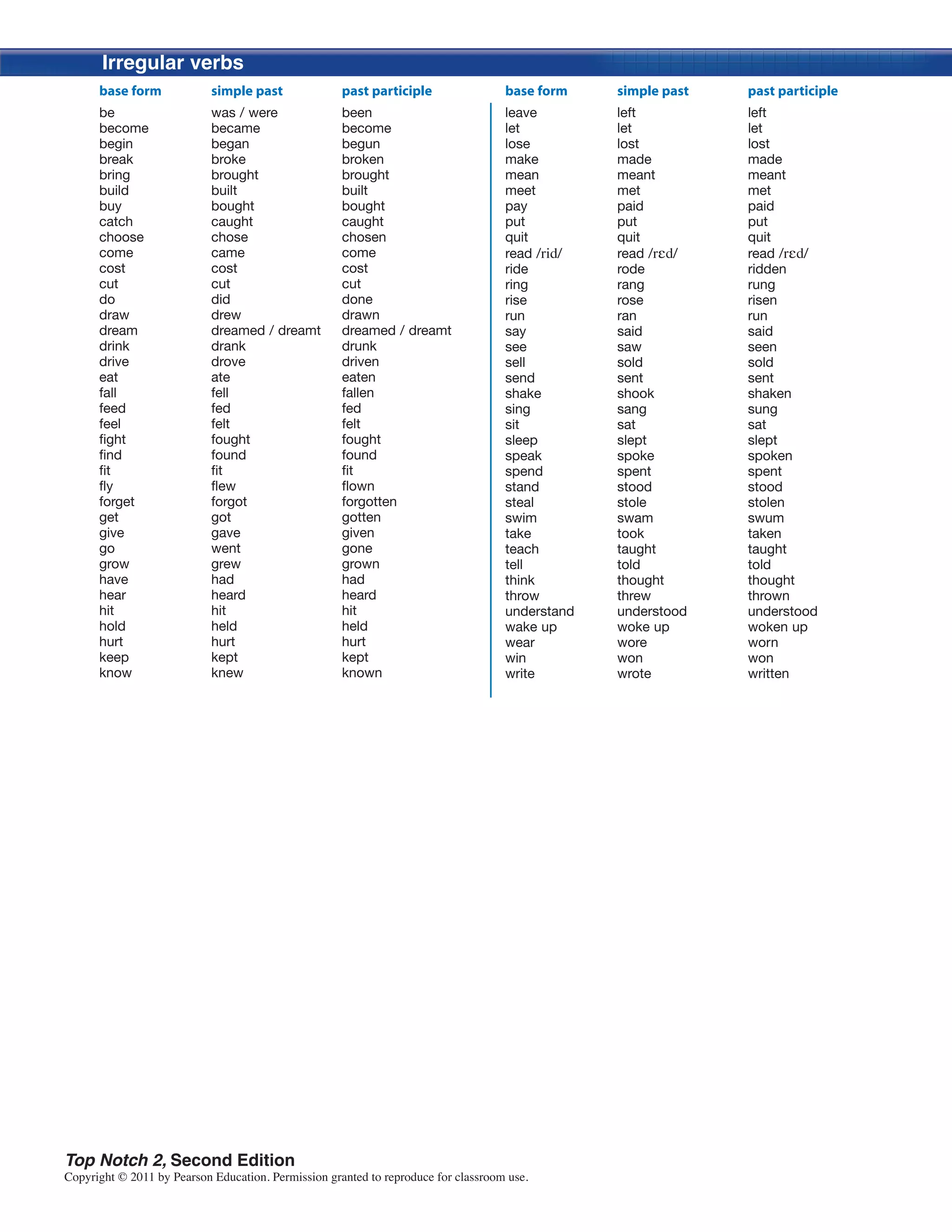
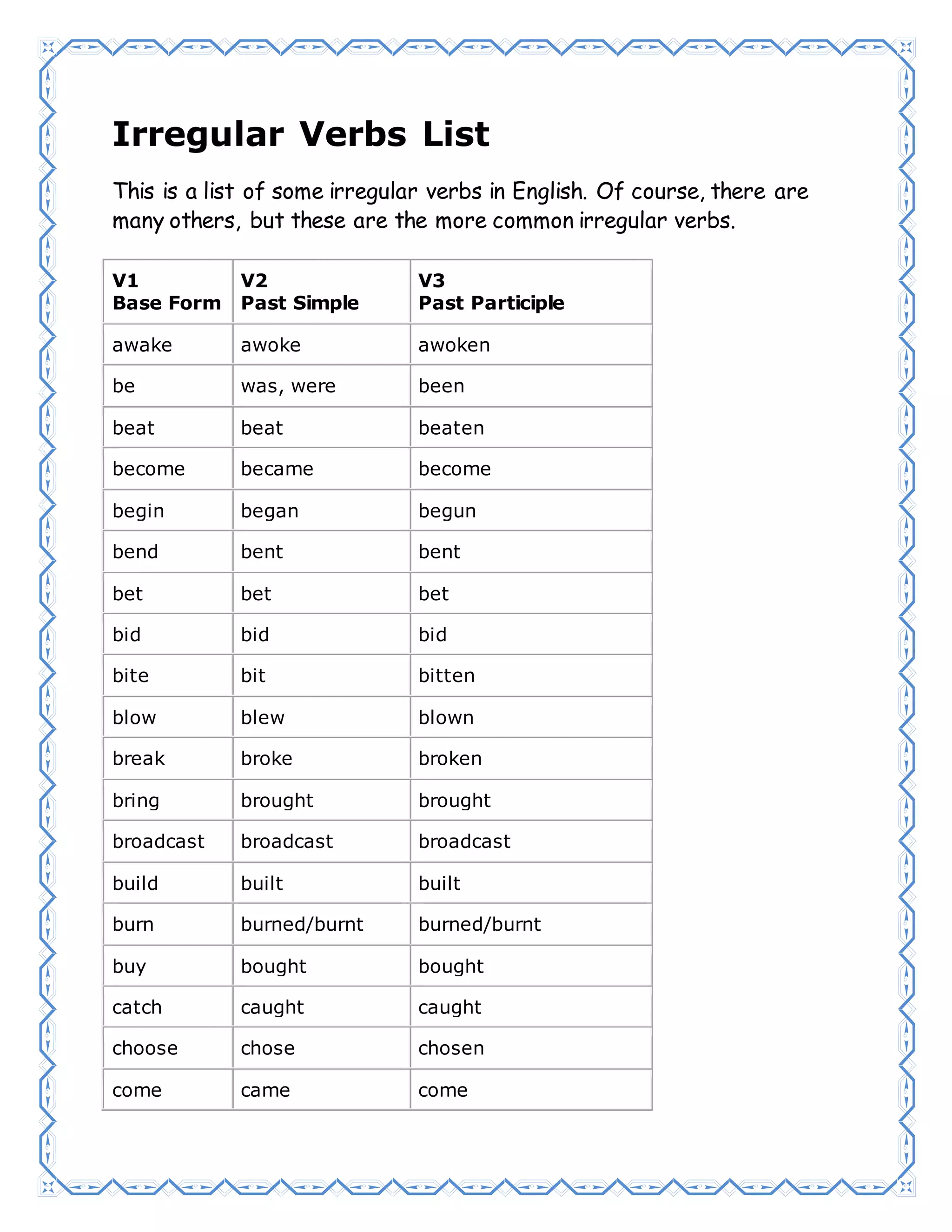
Comprehensive 1000 Irregular Verbs List PDF: A Complete Guide for 2026
An irregular verb list is a foundational reference document for English language learners, containing verbs that do not follow the standard "-ed" suffix rule for past tense and past participle forms. A comprehensive 1000 irregular verb...
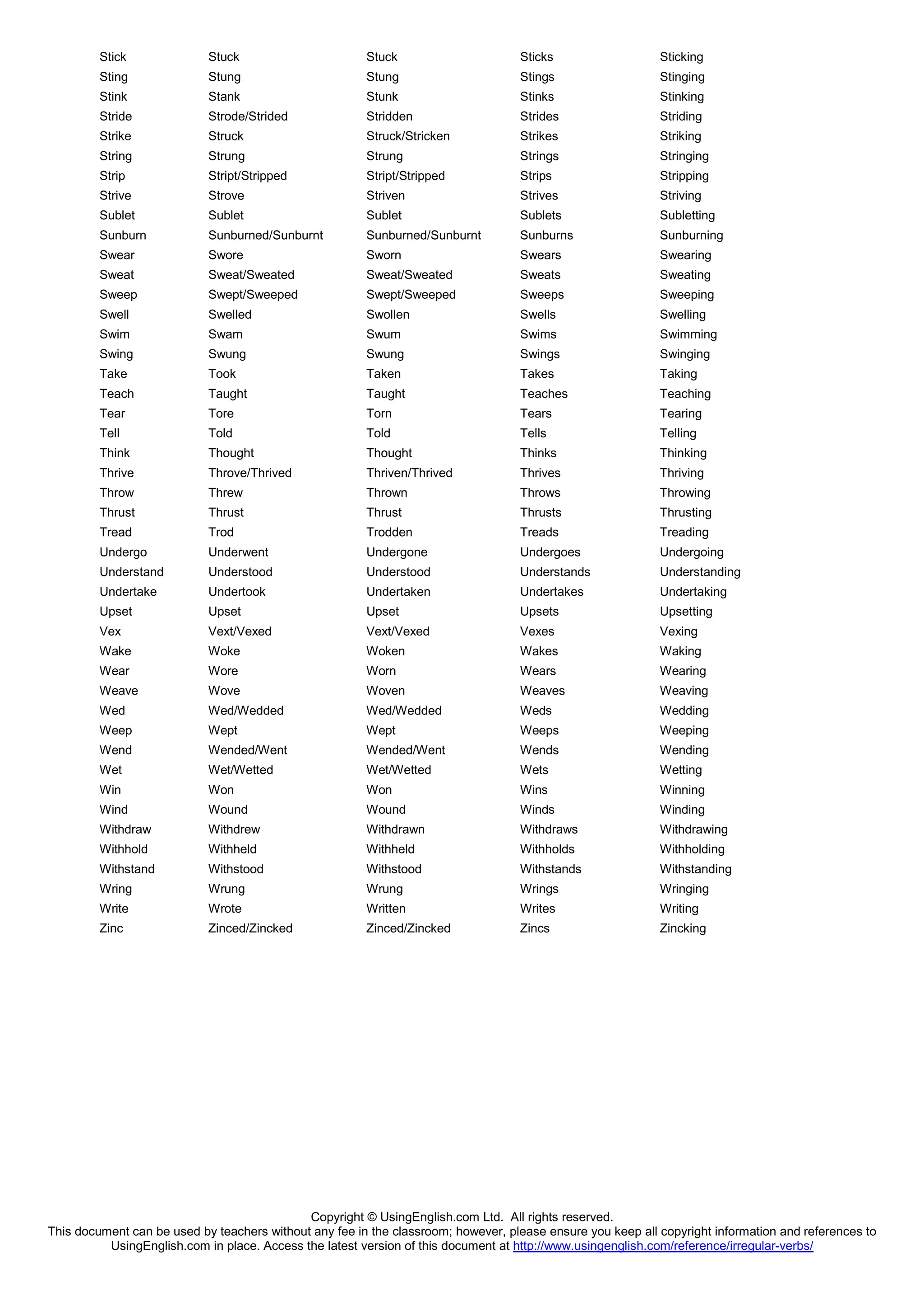
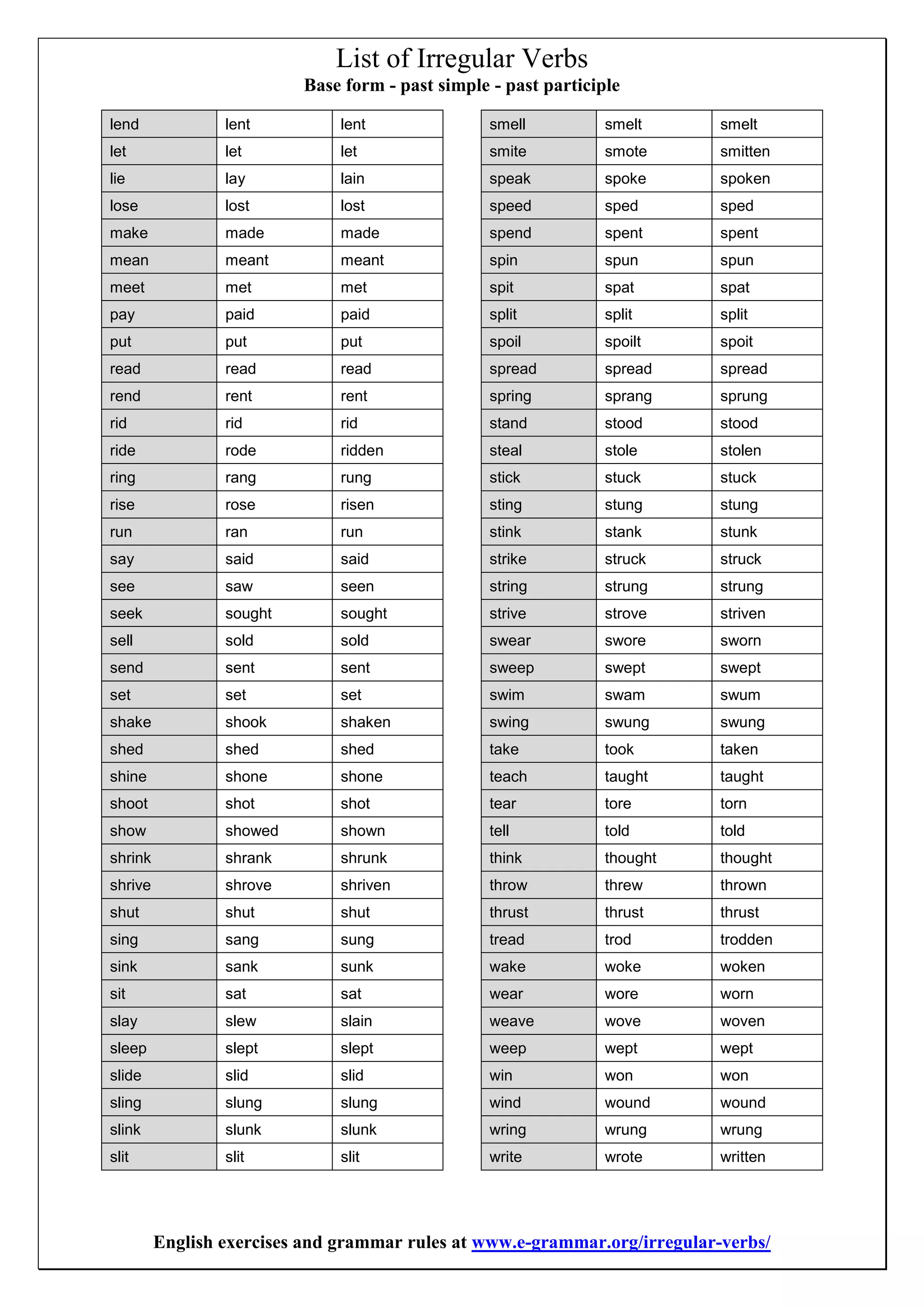
An irregular verb list is a foundational reference document for English language learners, containing verbs that do not follow the standard "-ed" suffix rule for past tense and past participle forms. A comprehensive 1000 irregular verbs list PDF serves as a vital resource for mastering advanced English syntax, including rare, archaic, and compound prefixed verbs that are often omitted from basic educational materials.
Contents
The Role of Irregular Verbs in Modern English (2026)
Irregular verbs are the remnants of older linguistic patterns in the English language, primarily originating from Germanic "strong verbs." While most new verbs added to the English lexicon follow regular conjugation rules (e.g., "to google" becomes "googled"), the most frequently used verbs in daily communication remain irregular. Mastering these is not merely a matter of memorization but a requirement for achieving fluency and professional competency.
In 2026, the demand for exhaustive lists—reaching up to 1,000 entries—is driven by academic research, advanced AI training datasets, and high-level proficiency exams like the IELTS, TOEFL, and Cambridge C2 Proficiency. While a standard learner might only encounter 200 common irregular verbs, a 1,000-verb list provides the technical depth needed to understand literary texts, legal documents, and historical archives.
The Three Pillars of Conjugation: V1, V2, and V3
Every irregular verb entry in a professional PDF list is categorized into three primary forms:
- V1 (Base Form/Infinitive): The dictionary form of the verb (e.g., Speak).
- V2 (Past Simple): Used to describe completed actions in the past (e.g., Spoke).
- V3 (Past Participle): Used in perfect tenses and passive voice constructions (e.g., Spoken).
Understanding the relationship between these three forms is essential for correct sentence structure. For instance, using the V2 form when a V3 form is required (e.g., "I have spoke" vs. "I have spoken") is one of the most frequent grammatical errors in English as a Second Language (ESL) contexts.
Why Seek a List of 1,000 Verbs?
It is often asked why a student would need a list of 1,000 verbs when only about 200 are in common daily use. The answer lies in the expansion of "root" verbs through prefixes and the inclusion of specialized or archaic terms.
Compound and Prefixed Verbs
Many irregular verbs are derivatives of a core root. For example, the verb stand (stood, stood) leads to several other variations:
- Understand (understood, understood)
- Withstand (withstood, withstood)
- Misunderstand (misunderstood, misunderstood)
- Overstand (overstood, overstood)
In a 1,000-verb list, these variations are listed individually. This helps learners recognize that if they know the conjugation of the root verb, they inherently know the conjugation of all its prefixed derivatives.
Archaic and Literary Verbs
To reach the 1,000-word milestone, a list must include verbs that are no longer common in spoken English but appear frequently in classical literature, religious texts, or legal historical records. Examples include:
- Smite (smote, smitten)
- Gird (girt, girt)
- Cleave (clove/cleft, cloven/cleft)
For scholars and students of English literature in 2026, having these documented in a portable PDF format allows for quick cross-referencing while reading complex texts.
Categorizing Verbs by Morphological Patterns
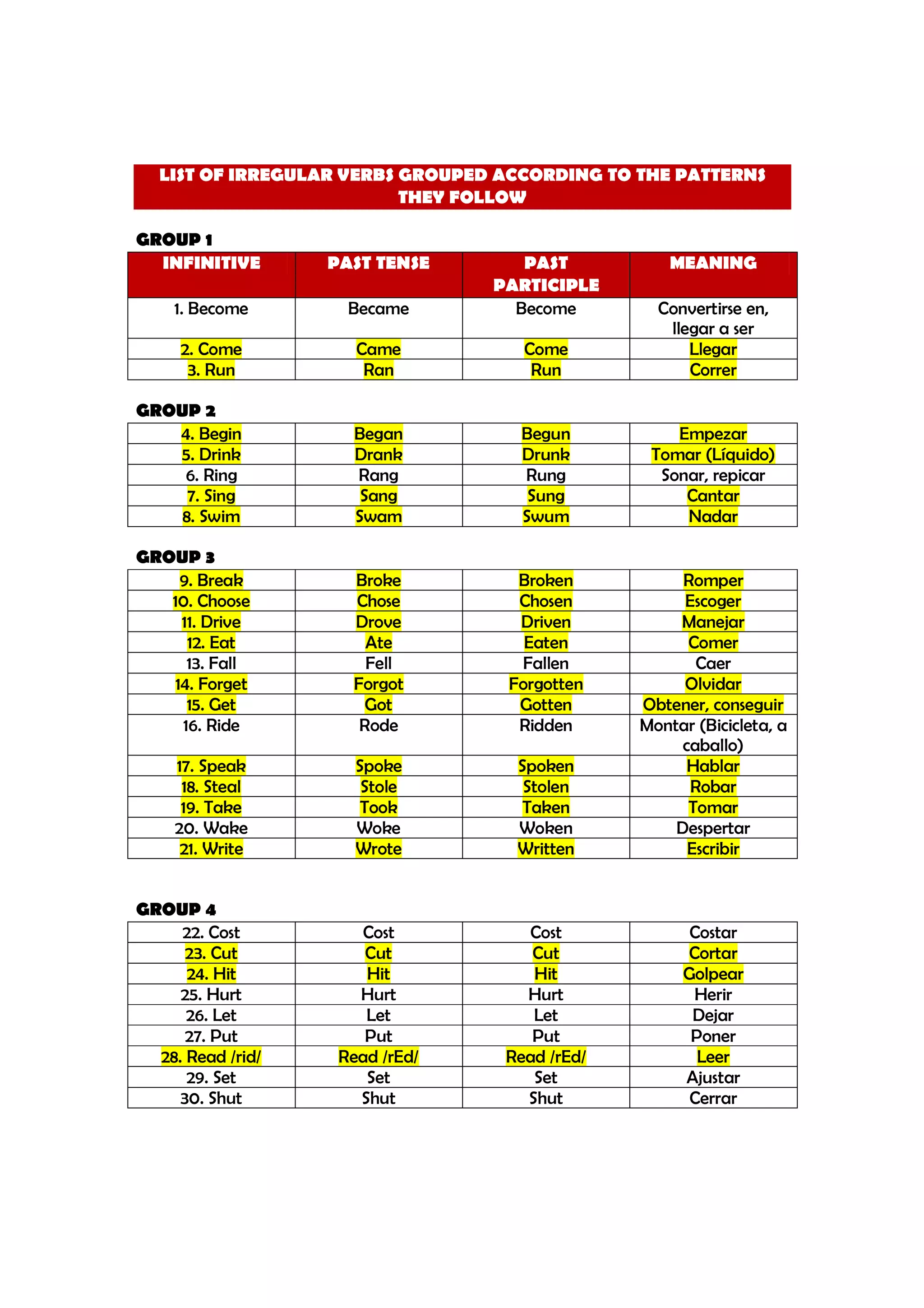
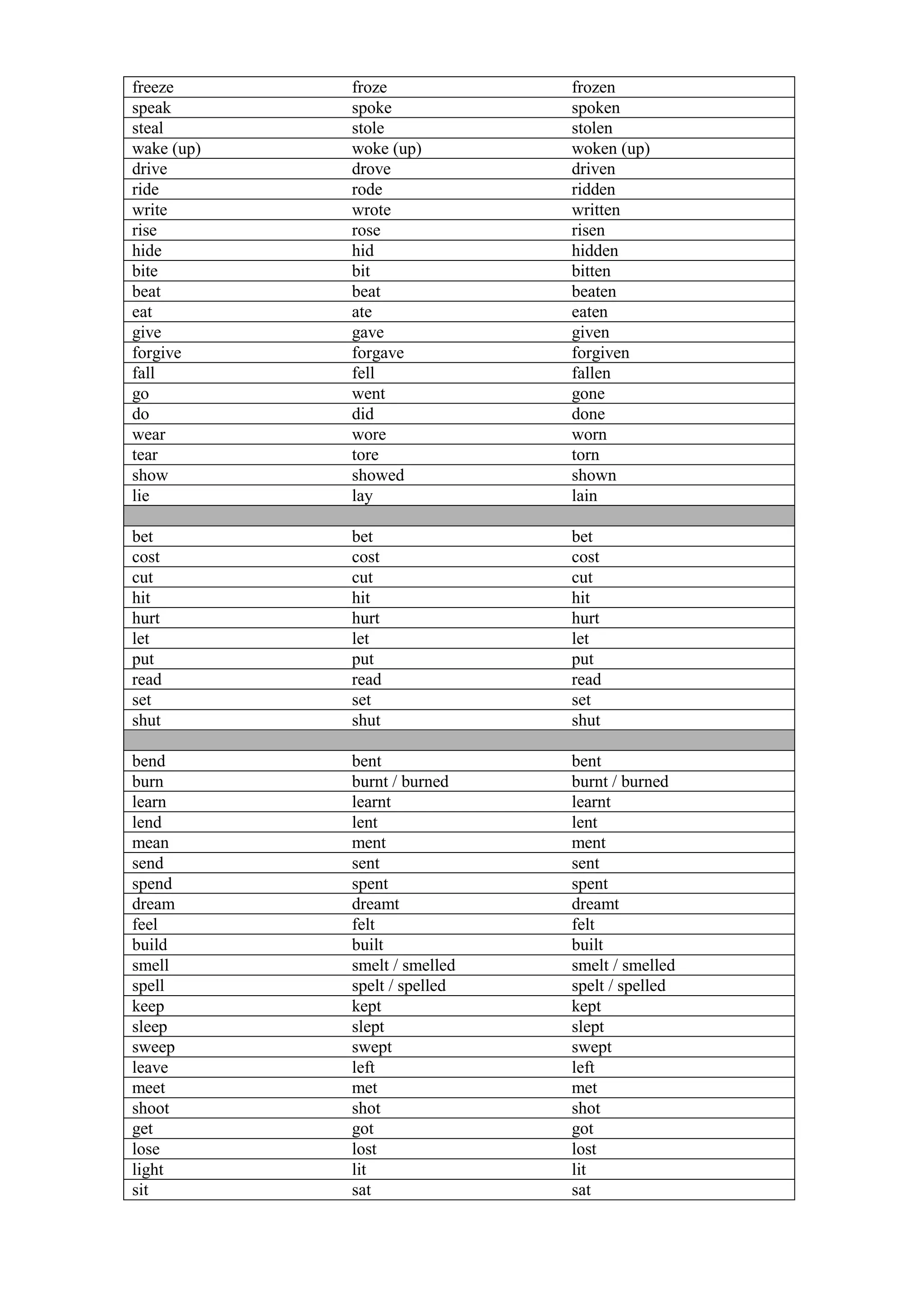
A high-quality 1000 irregular verbs list PDF should not simply be an alphabetical dump of words. Instead, it is most effective when grouped by phonetic or morphological patterns. This "pattern-based" learning is scientifically proven to improve retention rates compared to rote memorization.
The AAA Pattern
These are verbs where all three forms (V1, V2, V3) are identical. These are often the easiest to learn but the easiest to second-guess.
- Cost, Cost, Cost
- Let, Let, Let
- Shut, Shut, Shut
The ABA Pattern
In this group, the base form and the past participle are the same, while the past simple is different.
- Become, Became, Become
- Run, Ran, Run
The ABB Pattern
Here, the past simple (V2) and past participle (V3) are identical. This is the largest category of irregular verbs.
- Buy, Bought, Bought
- Find, Found, Found
- Spend, Spent, Spent
The ABC Pattern
These are the most complex verbs, where all three forms are distinct, often involving vowel shifts.
- Drink, Drank, Drunk
- Fly, Flew, Flown
- Write, Wrote, Written
Sample Irregular Verb Reference Table
The following table provides a snapshot of various patterns found in an exhaustive 1,000-verb document.
| Base Form (V1) | Past Simple (V2) | Past Participle (V3) | Pattern Category |
|---|---|---|---|
| Arise | Arose | Arisen | ABC |
| Beseech | Besought | Besought | ABB |
| Broadcast | Broadcast | Broadcast | AAA |
| Choose | Chose | Chosen | ABC |
| Cling | Clung | Clung | ABB |
| Dwell | Dwelt | Dwelt | ABB |
| Forsake | Forsook | Forsaken | ABC |
| Grind | Ground | Ground | ABB |
| Lean | Leant/Leaned | Leant/Leaned | ABB (Mixed) |
| Mistake | Mistook | Mistaken | ABC (Prefix) |
| Quit | Quit | Quit | AAA |
| Slink | Slunk | Slunk | ABB |
| Thrive | Throve/Thrived | Thriven/Thrived | ABC (Mixed) |
| Uphold | Upheld | Upheld | ABB (Prefix) |
| Weave | Wove | Woven | ABC |
Technical Requirements for an Effective PDF List
When searching for or creating a 1000 irregular verbs list PDF in 2026, certain technical and structural features are non-negotiable for professional use.
Searchability and Indexing
A PDF with 1,000 entries can be cumbersome. The file must be "text-searchable" (OCR enabled) so that a user can quickly hit Ctrl+F to find a specific verb. Additionally, an internal hyperlinked index organized by the first letter or by conjugation pattern significantly enhances usability on tablets and smartphones.
Print Optimization
Despite the shift to digital, many learners prefer physical copies for highlighting. A well-formatted list should use a "clean" font (such as Arial or Inter) at a minimum size of 10pt, with sufficient margins for hole-punching into a binder. Landscape orientation is often preferred for verb lists to allow for a "Notes" or "Example Sentence" column.
Phonetic Transcriptions
Advanced learners benefit from the inclusion of the International Phonetic Alphabet (IPA) next to each form. Since the vowel shifts in irregular verbs (e.g., read /riːd/ vs. read /rɛd/) are not always intuitive from the spelling, phonetic guides are crucial for avoiding pronunciation errors.
Advanced Study Strategies for 2026
Simply downloading a PDF is not enough; the information must be internalized. Educational technology in 2026 emphasizes "Spaced Repetition Systems" (SRS) and contextual immersion.
- Flashcard Integration: Use the 1,000-verb list as a data source for apps like Anki or Quizlet. Instead of learning 1,000 at once, import them in batches of 20, focusing on the most common ABB and ABC patterns first.
- Contextual Sentence Construction: For every new irregular verb found in the PDF, write three sentences: one in the past simple, one in the present perfect, and one in the passive voice. This solidifies the V2 and V3 distinctions.
- Audio-Visual Syncing: Many PDF readers now include text-to-speech functionality. Listening to the "rhythm" of the conjugation (e.g., Begin, Began, Begun) helps utilize auditory memory.
- Prefix Decomposition: When you encounter a long list of prefixed verbs (e.g., rebind, unbind, outbound), focus on the root (bind). This reduces the mental load of the 1,000-verb list by roughly 40%.
Common Mistakes When Using Irregular Verb Lists
Even with a comprehensive resource, learners frequently fall into specific traps.
- Over-regularization: This occurs when a learner applies the "-ed" rule to an irregular verb (e.g., saying "swimmed" instead of "swam"). This is common in both children and adult ESL learners.
- V2/V3 Confusion: Using the past participle for the past simple (e.g., "I seen it" instead of "I saw it"). While common in some dialects, it is considered grammatically incorrect in standard and professional English.
- Ignoring Regional Variations: Some verbs are irregular in British English but regular in American English (e.g., learnt vs. learned, spelt vs. spelled). A high-quality PDF should note these distinctions clearly.
- Neglecting Rare Verbs: Learners often skip the "rare" section of the 1,000-verb list, assuming they will never need them. However, verbs like tread (trod, trodden) or weave (wove, woven) are essential for nuanced storytelling and journalistic writing.
FAQ
Is there really a list of 1,000 different irregular verbs?
Technically, there are about 200 "unique" irregular roots in modern English. However, when you include archaic forms, obsolete verbs found in historical texts, and the hundreds of prefixed variations (like undo, redo, overdo, outdo), the list easily surpasses 1,000 entries. A "1000-verb list" is typically an exhaustive reference for scholars rather than a beginner's tool.
Where can I find a reliable 1000 irregular verbs list PDF?
Reliable lists are usually published by university presses (like Oxford or Cambridge) or specialized ESL resource sites. When downloading, ensure the source is an educational institution or a recognized linguistic authority to avoid lists containing typos or "invented" irregulars.
Why do some irregular verbs have two versions for the past tense?
This is usually due to the evolution of the language or regional differences. For example, burn can be burned (regular) or burnt (irregular). In 2026, both are often accepted, but burnt remains more common in British English, while burned is the standard in American English.
How often should I review the 1000-verb list?
Consistency is more important than duration. Reviewing the list for 10 minutes a day using a "randomizer" or flashcard method is more effective than a single five-hour study session. Focus on 10 new verbs per week while maintaining those you have already mastered.
Should I memorize archaic irregular verbs?
Unless you are studying English literature, law, or historical linguistics, you do not need to prioritize archaic verbs like beget or smite. However, being aware of them helps you understand classical references and "elevated" styles of writing often used in formal speeches or high-end journalism.
Final Recommendation
For students, educators, and language professionals in 2026, a 1000 irregular verbs list PDF is an indispensable tool for achieving a master-level command of English. To get the most out of such a resource, prioritize learning by morphological patterns (AAA, ABB, ABC) rather than alphabetical order. Use digital tools to make the PDF searchable and integrate the entries into a Spaced Repetition System (SRS) for long-term retention. By focusing on the root verbs and understanding how prefixes modify them, the daunting task of mastering 1,000 verbs becomes a manageable and rewarding linguistic journey.
Image Gallery