The Longest Piece of English Literature Ever Written: A Comprehensive 2026 Analysis
As of 2026, the longest piece of English literature ever written is the fanfiction epic "The Loud House: Revamped" by James Dean, which has surpassed 35 million words. In the realm of traditionally published canonical fiction, Samuel R...
As of 2026, the longest piece of English literature ever written is the fanfiction epic "The Loud House: Revamped" by James Dean, which has surpassed 35 million words. In the realm of traditionally published canonical fiction, Samuel Richardson’s 1748 epistolary novel "Clarissa, or, the History of a Young Lady" remains the standard-bearer with approximately 969,000 words.
Contents
Defining Length in the Evolution of English Literature
To identify the longest piece of English literature, one must first establish the parameters of "literature" and "length." In a classical sense, literature refers to published works of high artistic merit, often vetted by editorial boards. However, the digital era has introduced "megafiction"—unvetted, self-published works—that dwarf traditional novels by several orders of magnitude.
Length is measured by word count rather than page count, as formatting, font size, and margins vary significantly between editions. For perspective, a standard novel is roughly 80,000 to 100,000 words. The works discussed here are anomalies that challenge the limits of human composition and digital storage.
The Phenomenon of "The Loud House: Revamped"
The current record-holder for the longest continuous work of fiction in the English language is a fanfiction project based on the Nickelodeon animated series The Loud House. Started in 2017 by an author writing under the pseudonym James Dean (also known as the King of Fanfiction), "The Loud House: Revamped" reached a staggering 32 million words by late 2023 and has continued to grow through 2026.
This work is hosted primarily on platforms like FanFiction.net. To understand the sheer scale of 35 million words, consider that it is approximately 60 times the length of Leo Tolstoy’s War and Peace. The narrative functions as a "mega-crossover," incorporating thousands of characters from various media franchises. While critics debate its literary merit compared to the Western Canon, its existence as a linguistic artifact is undeniable. It represents a new category of literature: the iterative digital epic, where the act of writing becomes a lifelong performance rather than a path to a finished product.
Traditional Giants: The Longest Published Novels
When restricting the search to traditionally published literature, the landscape changes. These works underwent rigorous editing and were intended for mass distribution in print.
Samuel Richardson’s "Clarissa"
For centuries, "Clarissa" was undisputed. At nearly 1,000,000 words, Richardson used the epistolary format—a series of letters—to explore the psychological depth of his characters. The length was necessary to capture the "real-time" emotional shifts of the protagonist. Even today, it is a staple of academic study, representing the peak of the 18th-century "large" novel.
Xavier Herbert’s "Poor Fellow My Country"
Often cited as the longest novel in Australian literature and a major contender globally, "Poor Fellow My Country" contains approximately 850,000 words. Published in 1975, Herbert’s work is an expansive critique of Australian society and the treatment of Indigenous populations. Unlike the repetitive nature of some digital epics, this work maintains a structured, albeit massive, narrative arc.
Madison Smartt Bell’s "All Souls’ Rising" Trilogy
While often broken into three volumes, some scholars view cohesive trilogies as single literary units. Bell’s work on the Haitian Revolution is a monumental achievement in historical fiction, though it typically falls behind Richardson when word counts are strictly tallied for single-volume editions.
Experimental Literature and the "Nonsense" Threshold
The quest for length occasionally crosses into experimentalism where the narrative is sacrificed for the record itself.
"The Blah Story" by Nigel Tomm is frequently mentioned in these discussions. Spanning 23 volumes and over 11 million words, it technically outpaces traditional novels. However, the work is largely composed of the word "blah" repeated millions of times. Most bibliographers and the Guinness World Records distinguish between "creative prose" and "repetitive text." While "The Blah Story" exists in the physical world, it is often classified as conceptual art rather than literature.
Technical Comparisons of Linguistic Behemoths
The following table provides a breakdown of the most significant long-form works in English as of 2026, categorized by their publication style and approximate word count.
| Work Title | Author | Approx. Word Count | Publication Type | Genre |
|---|---|---|---|---|
| The Loud House: Revamped | James Dean | 35,000,000+ | Digital Fanfiction | Crossover/Fanfic |
| Ambience | Rick Romancito | 4,000,000+ | Digital/Self-Pub | Experimental |
| The Blah Story | Nigel Tomm | 11,000,000 | Print/Experimental | Conceptual Art |
| Clarissa | Samuel Richardson | 969,000 | Traditional Print | Epistolary Novel |
| Poor Fellow My Country | Xavier Herbert | 850,000 | Traditional Print | Historical Fiction |
| Sironia, Texas | Madison Cooper | 840,000 | Traditional Print | Social Realism |
| A Suitable Boy | Vikram Seth | 591,552 | Traditional Print | Modern Realism |
The Challenges of Reading and Preserving Megafiction
Works of extreme length present unique challenges for both readers and digital platforms. For a reader, finishing "The Loud House: Revamped" at an average reading speed of 250 words per minute would take approximately 2,333 hours—nearly 97 days of non-stop reading.
Digital Infrastructure Limits
Platforms like FanFiction.net and Archive of Our Own (AO3) were not originally designed to host single stories exceeding 10 million words. These works often push the limits of database indexing. In some cases, authors must split their work into multiple "books" or volumes within a series to prevent page-load failures.
The Role of AI in 2026
By 2026, the emergence of generative AI has complicated the "longest literature" title. AI can generate millions of words in hours. However, the literary community and record-keeping bodies generally exclude AI-generated content from these rankings, prioritizing human-authored efforts. The distinction lies in the intent and the manual labor involved in the composition.
Why Do Authors Write at This Scale?
The motivation behind writing millions of words often transcends the desire for profit.
- World-Building Obsession: In the case of fanfiction, authors are often deeply immersed in a universe and seek to document every possible interaction and "what-if" scenario.
- Psychological Catharsis: Many authors of megafiction describe the writing process as a daily necessity or a therapeutic habit.
- Historical Record: Writers like Samuel Richardson were attempting to capture the totality of a human life, which they felt could not be truncated without losing essential truth.
Frequently Asked Questions
Is "In Search of Lost Time" the longest book?
Marcel Proust’s À la recherche du temps perdu (In Search of Lost Time) is often cited by Guinness World Records as the longest novel ever written, containing roughly 1.2 million words. However, it was originally written in French. When translated into English, it remains one of the longest works available in the language, but it does not hold the record for a work originally written in English.
Does fanfiction count as "literature"?
In a technical sense, yes. Literature is a body of written work. While fanfiction is usually not published commercially due to copyright restrictions on the characters, it utilizes the same narrative structures, linguistic tools, and emotional engagement as traditional fiction.
What is the longest single-volume book ever printed?
For many years, Sironia, Texas by Madison Cooper held this distinction for English fiction. It was published in two massive volumes but is often treated as a single unit. Because of binding technology limits, works much longer than 1,000,000 words are physically difficult to produce as a single handheld book.
Has anyone actually read the longest fanfiction?
There is no verified data of a single individual reading "The Loud House: Revamped" in its entirety from start to finish. Most readers engage with these works in segments or follow them as they are updated over several years.
What is the longest sentence in English literature?
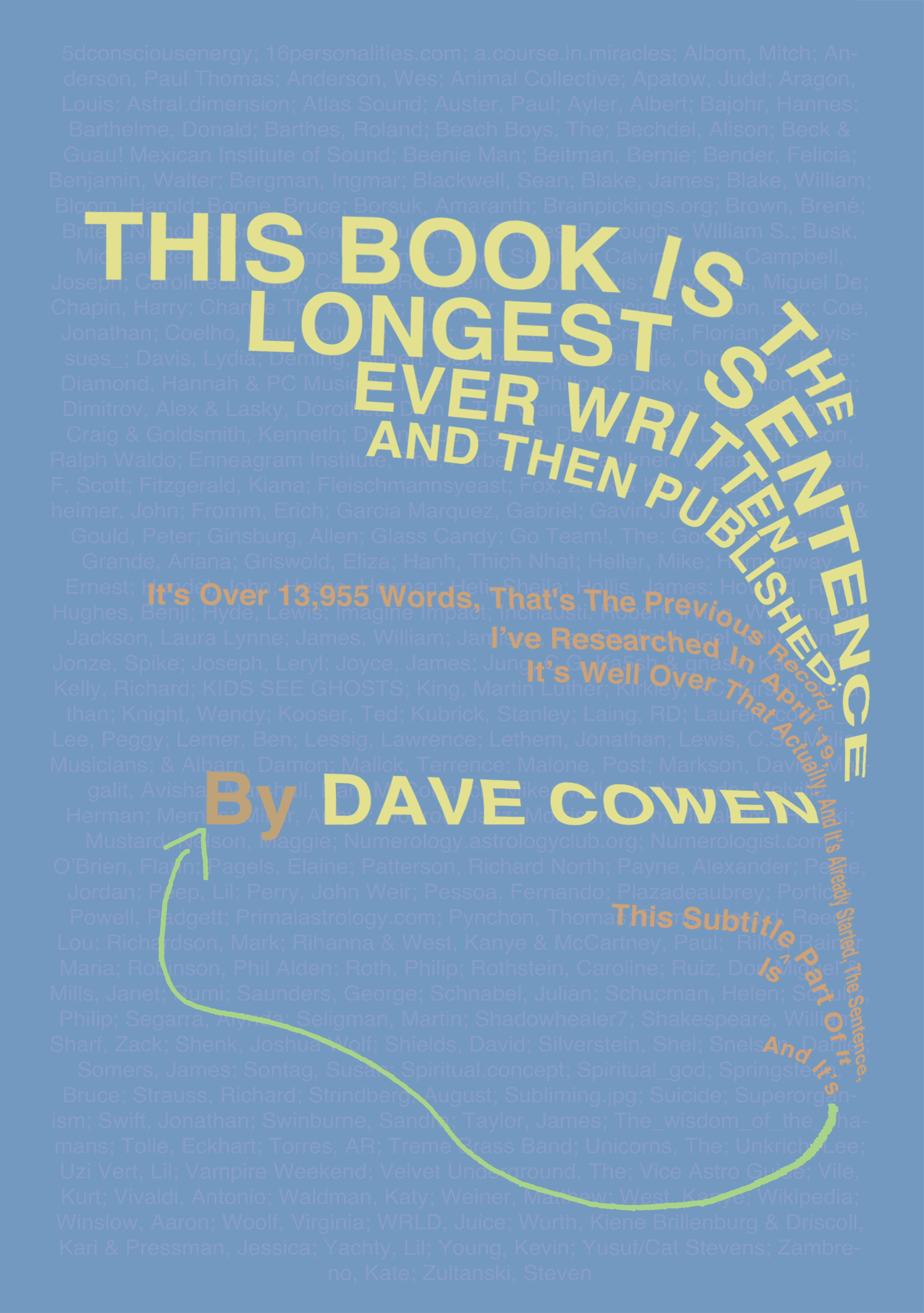
While length is usually measured by word count of the whole work, the "longest sentence" is a popular sub-category. Jonathan Coe’s The Rotters' Club contains a sentence of 13,955 words. However, Lucy Ellmann’s 2019 novel Ducks, Newburyport is essentially one continuous 426,100-word sentence (with some breaks), making it the modern record-holder for syntactic length.
Practical Recommendation for Readers
If you are interested in exploring the giants of English literature, start with "Clarissa" or Vikram Seth’s "A Suitable Boy." These works offer a balance of extreme length and editorial structure that ensures a cohesive narrative experience. For those interested in the sociological phenomenon of digital megafiction, browsing the long-form archives on Archive of Our Own or Project Gutenberg provides a fascinating glimpse into the limits of human productivity and the persistence of the written word.
Image Gallery