Exploring the Modern Library of Alexandria: Architecture, Collections, and Global Impact
The modern Library of Alexandria, formally known as the Bibliotheca Alexandrina, is a major cultural center and library commemorating the ancient Library of Alexandria. Located on the Mediterranean coast in Alexandria, Egypt, it functi...
The modern Library of Alexandria, formally known as the Bibliotheca Alexandrina, is a major cultural center and library commemorating the ancient Library of Alexandria. Located on the Mediterranean coast in Alexandria, Egypt, it functions as a vast research hub, digital archive, planetarium, and complex of specialized museums serving scholars and visitors worldwide.
Contents
Introduction and Historical Background
The ancient Library of Alexandria was the largest and most significant library of the ancient world, dedicated to the Muses, the nine goddesses of the arts. Established in the 3rd century BCE under the reign of Ptolemy I Soter or Ptolemy II Philadelphus, it grew into a universal repository of human knowledge before its gradual, multi-stage destruction. For centuries, the loss of this ancient institution remained a profound symbol of the fragility of human knowledge.
The idea of reviving the ancient library was formally proposed in 1974 by a group of professors from the University of Alexandria. The project gained international momentum in the late 1980s when the United Nations Educational, Scientific and Cultural Organization (UNESCO) and the United Nations Development Programme (UNDP) endorsed the initiative. The Egyptian government embraced the vision, allocating a prime site along the Alexandria corniche near the historic location of the ancient royal quarters.
An international architectural design competition launched in 1988 yielded a winning concept by the Norwegian architectural firm Snøhetta. Construction began in the 1990s, financed by international donations, Arab world contributions, and Egyptian state funding. The complex officially opened to the public on October 16, 2002. Today, the Bibliotheca Alexandrina stands not as a literal reconstruction of the ancient building, but as a technologically advanced, 21st-century institution bridging the Mediterranean region, Africa, and the global scholarly community.
Architectural Design and Engineering Marvels
The architecture of the Bibliotheca Alexandrina is widely celebrated as a masterclass in modern design, blending symbolic meaning with functional brilliance. Designed by Snøhetta in collaboration with Christoph Kapeller and Martin Gran, the building’s shape immediately commands attention along the Alexandrian coastline.
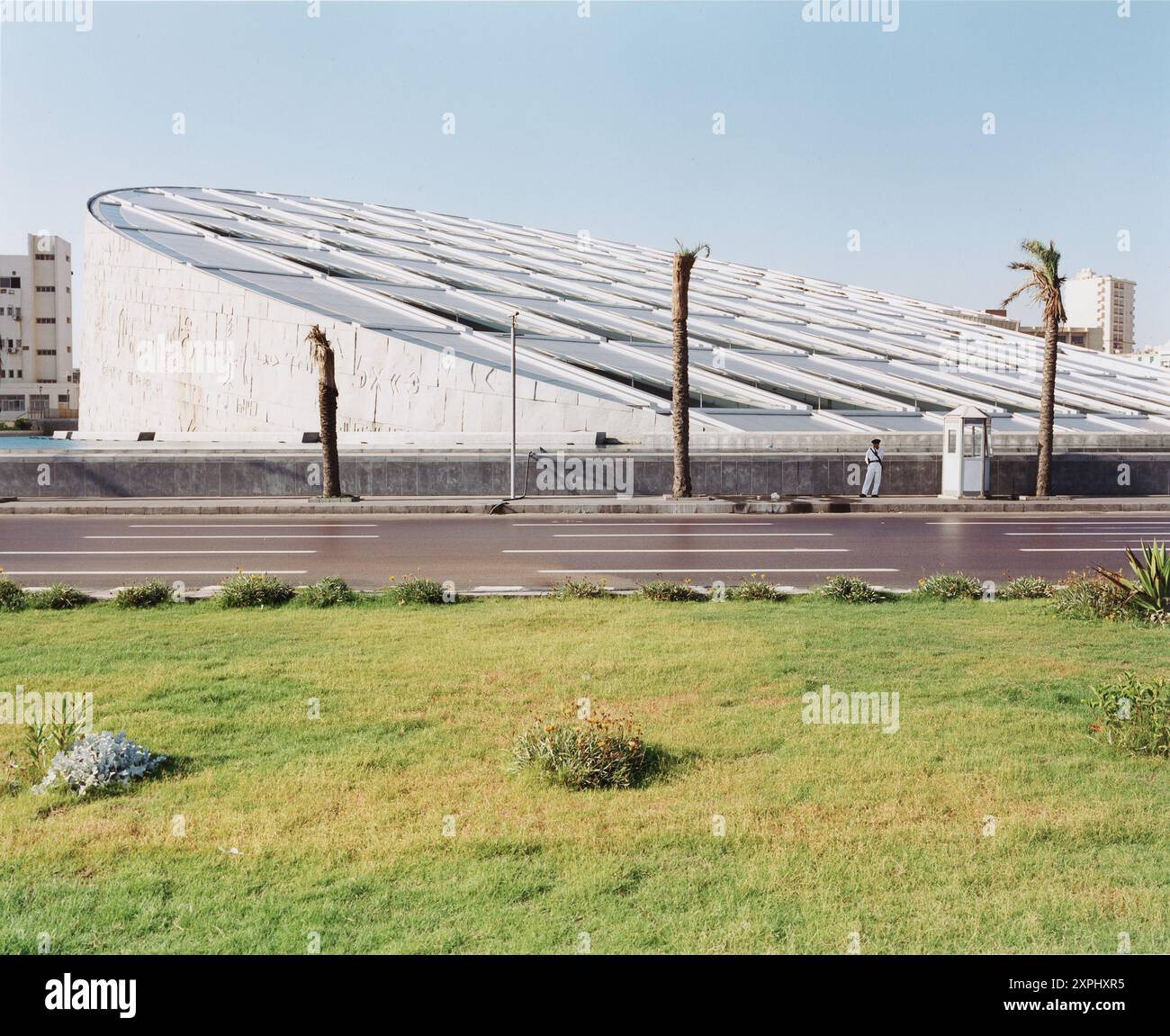
The main reading room sits beneath a massive, tilted circular roof that measures 160 meters in diameter. This translucent glass and aluminum panel structure resembles a giant sundial or a rising sun tilting toward the Mediterranean Sea. The roof paneling is engineered with complex louvers designed to filter harsh Egyptian sunlight, transforming direct desert glare into soft, diffused daylight that illuminates the sprawling reading interior.
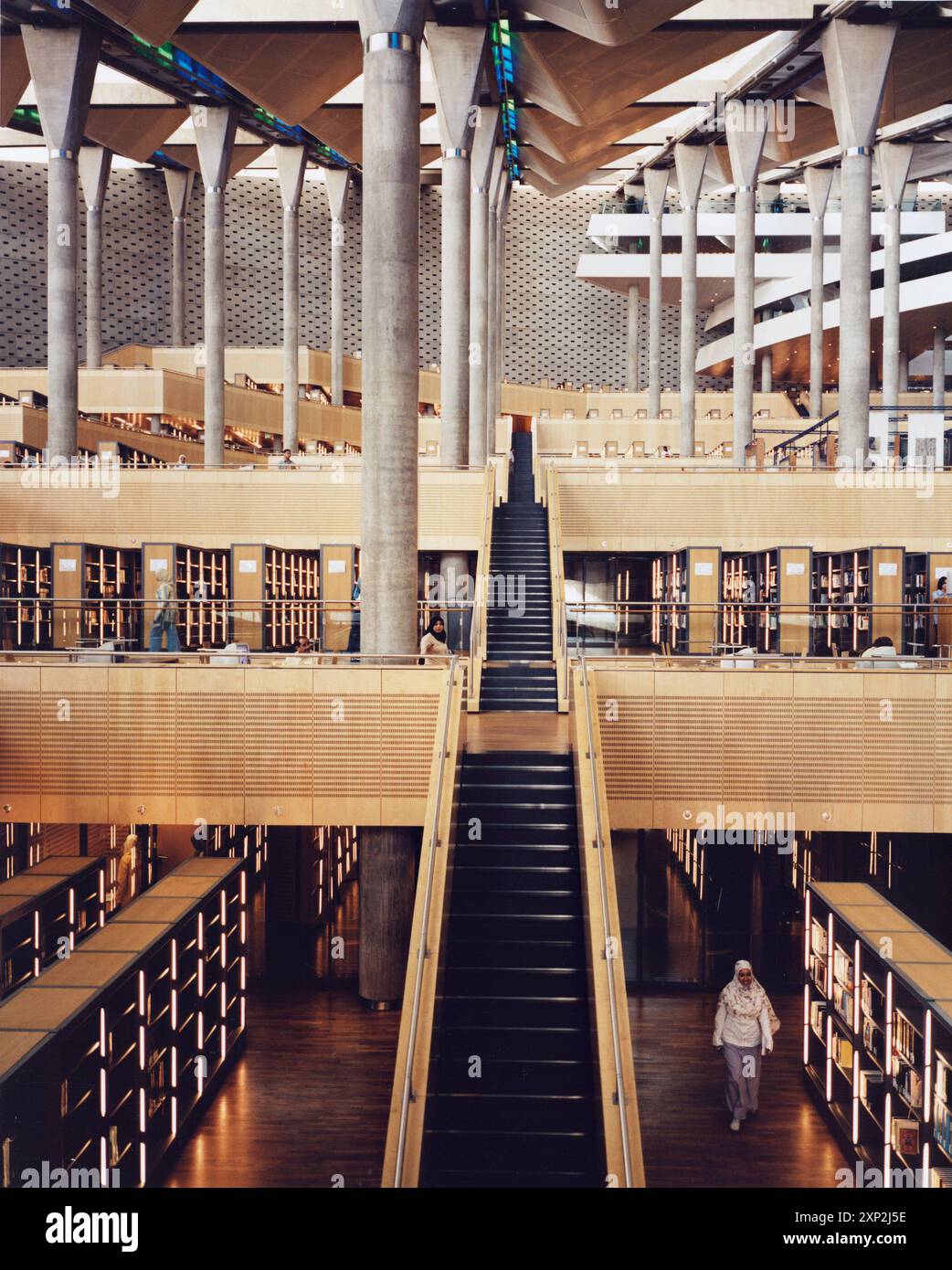
Beneath this striking roof canopy lies a tiered, multi-level reading room that can accommodate up to 2,000 readers simultaneously. The open-plan layout fosters an environment of collaborative research and quiet study.
The exterior walls of the complex are clad in gray Aswan granite blocks, inscribed with characters from more than 120 human scripts and writing systems. This monumental stonework honors the ancient library's mission as a universal repository of global languages and communication systems. The building also incorporates sophisticated engineering techniques to withstand seismic activity and the corrosive maritime environment of the Mediterranean shore.
Collections, Research Centers, and Specialized Facilities
While the visual impact of the building is striking, the true heart of the Bibliotheca Alexandrina lies in its vast collections, specialized libraries, and research centers. The complex is much more than a book repository; it is a multidisciplinary campus dedicated to science, humanities, and arts.
The Main Library and Book Collections
The main library is designed to hold millions of volumes. Its acquisitions span numerous languages, with a strong focus on Arabic, English, and French texts. The collection covers a broad spectrum of academic disciplines, including history, philosophy, science, literature, and social sciences. Special collections include rare books, historic maps, antique manuscripts, and archival documents that preserve the literary heritage of Egypt and the broader Mediterranean basin.
Specialized Libraries
To cater to diverse demographics and research needs, the complex houses several specialized divisions:
- The Taha Hussein Library: Specifically designed for the visually impaired, utilizing Braille systems and advanced text-to-speech software.
- The Arts and Multimedia Library: Houses extensive audio and visual collections, sheet music, films, and multimedia learning tools.
- The Children’s Library: Tailored for young readers aged six to twelve, encouraging literacy and curiosity through interactive exhibits and age-appropriate literature.
- The Young People’s Library: Dedicated to teenagers, providing modern study spaces and digital resources geared toward secondary education.
Research Institutes and Museums
The Bibliotheca Alexandrina also hosts several independent research institutes and permanent cultural museums:
- The Alexandria Center for Hellenistic Studies: Focuses on the history and archaeology of the Hellenistic period in Egypt and the Mediterranean.
- The International School of Information Studies (ISIS): Conducts advanced research in digital archiving and information science.
- The Antiquities Museum: Displays artifacts unearthed during the construction of the library and excavations across Egypt, spanning Pharaonic, Greek, Roman, Coptic, and Islamic eras.
- The Manuscript Museum: Houses rare manuscripts and codices, complemented by a restoration laboratory that employs state-of-the-art conservation techniques.
- The Sadat Museum: Dedicated to the life and legacy of Egyptian President Anwar El Sadat, featuring personal belongings, documents, and historical recordings.
Digital Initiatives and Preservation
In alignment with its modern identity, the Bibliotheca Alexandrina has pioneered major digital archiving and preservation initiatives. Recognizing that paper and physical bindings are vulnerable to decay, fire, and political instability, the institution has invested heavily in digital infrastructure to safeguard human knowledge for future generations.
The library partnered with the Internet Archive to host mirror servers of the Wayback Machine, making vast tranches of global internet history accessible to researchers in Africa and the Middle East who might otherwise face bandwidth limitations or restrictive institutional paywalls.
Furthermore, the library operates its own digitization labs, scanning thousands of rare books, historical newspapers, and fragile manuscripts. These digital assets are integrated into open-access online portals, allowing scholars from around the world to examine high-resolution images of priceless historical documents without handling fragile physical originals. This commitment to open access ensures that the modern library continues the ancient tradition of universal knowledge sharing in a digital format.
Comparative Overview of the Ancient and Modern Libraries
To understand the scope and evolution of the institution, it is helpful to contrast the ancient Library of Alexandria with its modern successor across key operational dimensions.
| Feature | Ancient Library of Alexandria | Modern Bibliotheca Alexandrina |
|---|---|---|
| Operational Era | 3rd Century BCE to 4th/5th Century CE | 2002 to Present |
| Primary Medium | Papyrus scrolls, parchment rolls, and handwritten codices | Printed books, digital archives, microforms, and multimedia |
| Access Policy | Restricted primarily to royal scholars, philosophers, and elite members of the Mouseion | Open to the public, students, international researchers, and tourists |
| Architectural Form | Part of the royal palace precinct (Mouseion), exact layout lost | Contemporary tilt-roof complex clad in Aswan granite with 120 scripts |
| Global Integration | Focused primarily on the Hellenistic and Mediterranean worlds | Global network partner, digital mirror host, and international research hub |
Practical Visitor and Researcher Information
Planning a visit or initiating a research collaboration with the Bibliotheca Alexandrina requires understanding its operational structure, ticketing policies, and access requirements.
Access and Ticketing
While strolling the expansive plaza and exterior courtyards is free, accessing the main reading room and the specialized museums requires a paid entry ticket or an official research pass. Daily passes are available for tourists and casual visitors, while students, academics, and long-term researchers can apply for extended library membership cards that grant borrowing privileges and access to specialized database terminals.
Operating Hours
The library generally operates from Sunday through Thursday, with adjusted hours on Saturdays. It typically remains closed on Fridays (the holy day in Egypt) and official national holidays. Because hours for specialized museums and planetarium shows can vary seasonally, consulting the official Bibliotheca Alexandrina website before planning a trip is strongly recommended.
Location and Transportation
Situated along the Eastern Harbor on Soter Street in the Shatby district of Alexandria, the library is easily accessible via local taxis, microbuses, and regional transit. Visitors arriving from Cairo can travel to Alexandria via the efficient rail network or intercity bus lines, completing the journey to the Mediterranean coast in approximately two and a half to three hours.
Frequently Asked Questions
What is the primary purpose of the modern Library of Alexandria?
The Bibliotheca Alexandrina serves as a comprehensive cultural, educational, and research center. Its mission is to recapture the spirit of openness and scholarship of the original ancient library by acting as a bridge between Egypt and the world, providing open access to digital and physical information resources.
Can anyone visit the reading room of the Bibliotheca Alexandrina?
Yes, members of the general public can visit the main reading room. However, casual visitors must purchase an entrance ticket and register at the welcome desk. Serious researchers and students can apply for specialized library cards that provide access to extended academic collections and digital research workstations.
How many books can the library hold?
The main reading room and underground storage stacks are designed to house millions of books. While the initial open-shelf capacity at its 2002 opening was set at approximately four million volumes, continuous acquisitions and digital storage expansions allow the institution to support vast national and international collections.
Is the Bibliotheca Alexandrina affiliated with the University of Alexandria?
While the library cooperates closely with the University of Alexandria and other academic institutions across Egypt and the globe, it operates as an independent, autonomous institution under the umbrella of the Egyptian state and receives oversight from international advisory boards.
What languages are supported by the library's collections?
The library’s holdings are multilingual, with extensive collections in Arabic, English, and French. Additionally, specialized research materials, rare manuscripts, and digital archives include texts in Greek, Latin, Coptic, and various other classical and modern languages.
Conclusion and Next Actions
The modern Library of Alexandria stands as a triumph of international cooperation, architectural ambition, and dedication to global scholarship. By combining a physical sanctuary for millions of books with cutting-edge digital archiving, the Bibliotheca Alexandrina bridges antiquity and the digital age.
For scholars, researchers, and curious travelers planning to engage with the institution, the recommended next step is to visit the official Bibliotheca Alexandrina website to review current admission fees, research application prerequisites, and exhibition schedules before organizing a trip to the Mediterranean coast.
Image Gallery