Brendese Funeral Home in Waterford, NY: Services, Costs, and Planning Guide
Brendese Funeral Home—officially known as Philip J. Brendese Funeral Home—is an established, family-owned deathcare provider located at 133 Broad Street in Waterford, New York. Serving Saratoga, Albany, and Rensselaer counties, the fir...
Brendese Funeral Home—officially known as Philip J. Brendese Funeral Home—is an established, family-owned deathcare provider located at 133 Broad Street in Waterford, New York. Serving Saratoga, Albany, and Rensselaer counties, the firm specializes in traditional burials, direct cremations, memorial celebrations, and New York State-compliant pre-need trust planning for families across the Capital District.
Contents
Operational Overview and Local Heritage in the Capital District
Choosing a funeral provider during a period of bereavement requires clarity, regulatory transparency, and an understanding of regional logistics. Situated along the historic Erie Canal corridor in Saratoga County, Philip J. Brendese Funeral Home has anchored end-of-life care for residents of Waterford, Cohoes, Troy, Halfmoon, and Latham for decades. Operating within New York State's strictly monitored mortuary framework, the home provides comprehensive funeral directing services tailored to multi-denominational rites, secular celebrations, and veteran honors.
Geographic positioning heavily influences local deathcare logistics. Brendese Funeral Home operates in close proximity to major regional healthcare networks, including Samaritan Hospital and St. Peter’s Health Partners facilities in Troy and Albany, as well as the Saratoga Hospital system. This enables rapid, professional transfer services when a passing occurs in an institutional setting. Furthermore, the facility coordinates directly with historic regional burial grounds such as St. Joseph's Cemetery in Waterford, Oakwood Cemetery in Troy, St. Mary’s Cemetery in Halfmoon, and the Gerald B.H. Solomon Saratoga National Cemetery in Schuylerville for qualifying military veterans.
New York funeral homes function under distinct state-level administrative guidelines supervised by the New York State Department of Health (NYSDOH) Bureau of Funeral Directing. Under these regulations, consumers are afforded comprehensive statutory protections regarding pricing transparency, the handling of human remains, and the strict fiduciary segregation of advance funeral funds.
Funeral and Cremation Arrangements Offered
Families coordinating arrangements through Brendese Funeral Home can select from modular or bundled packages aligned with their spiritual convictions, scheduling requirements, and budgetary considerations.
Traditional Burial Services
A standard traditional arrangement typically encompasses:
- Immediate transfer of the deceased from the place of death to the mortuary facility.
- Professional embalming, restorative art, cosmetology, and dressing for public viewing.
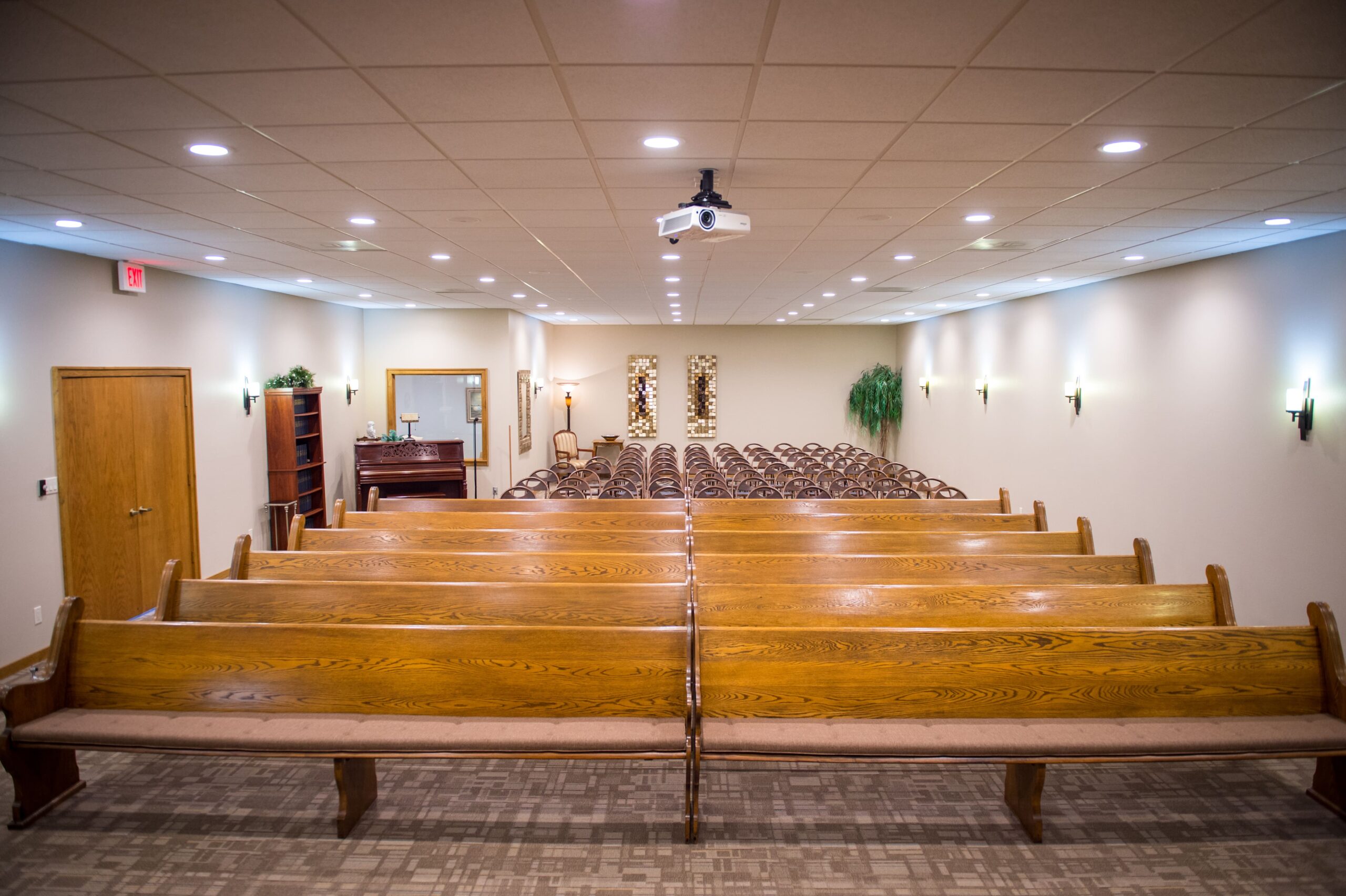
- Calling hours and visitation services held within the Waterford chapel facilities.
- Religious or humanist funeral ceremonies held on-site or at regional houses of worship, such as St. Mary of the Assumption Church in Waterford or Holy Trinity Parish in Cohoes.
- Formal funeral processionals utilizing specialized automotive equipment, including funeral coaches (hearses), lead cars, and family limousines.
- Graveside committal ceremonies with coordinate committal vault placements.
Cremation Dispositions and Ceremonial Variants
Cremation is a method of final disposition rather than a substitute for a memorial gathering. Brendese Funeral Home facilitates several cremation tiers:
- Direct Cremation: The disposition occurs without prior public visitation or formal services. The deceased is transferred into an approved alternative container, sheltered until required local permits are granted, and transported to a licensed regional crematory.
- Cremation with Memorial Gathering: Cremation proceeds first, followed by a scheduled service where the urn containing the cremated remains is present for visitation and ceremonial remembrance.
- Traditional Service Followed by Cremation: Families hold standard calling hours, an open-casket viewing, and a formal service using a specialized ceremonial rental casket, with cremation occurring immediately afterward rather than earth burial.
Veteran Honors and Fraternal Ceremonies
For deceased members of the United States Armed Forces, the funeral home coordinates military honors under Department of Defense regulations. This includes securing the burial flag, coordinating an official branch honor guard for the folding and presentation of the colors, sounding "Taps," and scheduling committal ceremonies at national or state veterans' cemeteries with perpetual care privileges.
Navigating the FTC Funeral Rule and New York Price Disclosures
Arranging funeral services involves federal and state consumer safeguards designed to prevent mandatory bundling and hidden surcharges. The Federal Trade Commission (FTC) enforces the Funeral Rule, which requires every licensed mortuary to provide an itemized General Price List (GPL) at the beginning of any face-to-face arrangement discussion.
Regulatory Consumer Notice
In New York, the State Department of Health enforces consumer pricing rules that go beyond standard federal baselines. Consumers have the legal right to purchase caskets, urns, and outer burial containers from third-party vendors without paying handling fees or surcharges to the funeral provider. Every price list must explicitly itemize non-declineable basic service charges separately from optional merchandise and transportation.
General Price List (GPL) Breakdown
When evaluating service costs at Brendese Funeral Home or competing Capital Region facilities, total expenditures fall into four distinct operational categories:
- Basic Services of Funeral Director and Staff: This represents the only non-declinable professional fee on the GPL. It covers initial arrangement conferences, coordinating with cemeteries or crematories, filing vital statistics with town or city clerks, securing official certified death certificates, and maintaining state regulatory licensure.
- Preparation of Remains: Line-item fees for professional embalming, sanitary washing, casketing, and restorative reconstruction. Embalming is not required by New York law except under certain operational parameters, such as extended open-casket public visitations or transport across state lines by common carrier.
- Facilities, Staff, and Automotive Equipment: Dedicated fees for the use of visitation rooms, funeral ceremony staffing, transfer vehicles, and funeral coaches within a defined operational mileage radius (typically 25 to 35 miles).
- Cash Advance Items: Third-party charges paid by the funeral director on the family's behalf. These pass-through expenses are billed at exact cost and commonly include newspaper obituary insertions, certified death certificate transcripts issued by municipal registrars, clergy honorariums, crematory processing fees, and cemetery opening/closing fees.
| Service or Merchandise Component | Direct Cremation Arrangement | Traditional Earth Burial | Notes on Regional Disclosures |
|---|---|---|---|
| Basic Professional Staff Fee | Included (Reduced Scope) | Included (Full Scope) | Non-declinable base fee under federal law |
| Embalming & Restorative Prep | Not Applicable | Included / Line Item | Optional unless mandated by public health rules |
| Chapel Visitation Facilities | Excluded | Included (1 or 2 Sessions) | Tailored by hours of facility utilization |
| Transfer of Remains | Included (Local Radius) | Included (Local Radius) | Regulated by regional transit boundaries |
| Outer Burial Container / Vault | Not Applicable | Mandatory per Cemetery Rules | Required by most regional cemeteries, not NY state law |
| Crematory Fees & Permits | Added Cash Advance | Not Applicable | Mandated town clerk transfer permits apply |
| Third-Party Casket Acceptance | Permitted | Permitted | Funeral homes cannot charge vendor handling fees |
Step-by-Step Arrangement Protocol
The logistical checklist immediately following a death requires sequential execution to ensure compliance with vital statistics registration and health code compliance.
- Pronouncement and Facility Notification: If the death occurs at home under hospice supervision, contact the hospice agency immediately so a registered nurse or physician can perform the formal pronouncement. If unattended, emergency services (911) must be contacted. If the death occurs within an inpatient healthcare facility, the institutional staff typically initiates the pronouncement and contacts the mortuary specified by next of kin.
- Initial Mortuary Transfer: Brendese Funeral Home deploys professional transport personnel to transfer the deceased into their care. The transfer team verifies initial identification tags and gathers primary contact information from the family.
- The Arrangement Conference: Next of kin meet with the licensed funeral director to establish the nature of the ceremonies. Family members must furnish biographical details for municipal vital statistics filings, including the decedent's social security number, parental birth names, educational history, and military discharge papers (Form DD-214) if applicable.
- Document Filing and Permits: The funeral director completes the electronic death registry filing through the New York State Department of Health Electronic Death Registration System (EDRS). After receiving the certifying physician’s or medical examiner's medical cause of death, the local municipal registrar issues burial or transit permits.
- Service Execution and Committal: The mortuary coordinates chapel setups, printed memorial materials, floral arrangements, transport coordination, and burial plot excavation schedules with the designated cemetery sextons or crematory managers.
Advance Planning and New York Pre-Need Trust Laws
Pre-planning funeral arrangements allows individuals to define their post-mortem wishes in advance, relieving surviving family members from emotional decision-making during acute grief.
New York funeral pre-funding operates under some of the most stringent consumer security laws in the United States. While many other states permit insurance-funded arrangements with commingled funds, New York State General Business Law requires that 100% of consumer funds paid toward pre-need funeral agreements must remain the property of the purchaser and be deposited directly into an independent, interest-bearing, government-insured trust account.
Revocable Pre-Need Accounts
Standard advance arrangements are structured as revocable trusts. The consumer maintains absolute control over the principal and accrued interest. At any point, the purchaser can modify the specified services, transfer the trust to a different licensed funeral home without financial penalty, or close the account and receive a complete refund of all deposited principal and accrued interest.
Irrevocable Pre-Need Trusts for Medicaid Spend-Down
When an individual prepares to qualify for long-term health assistance under New York Medicaid or Supplemental Security Income (SSI), personal assets must be systematically reduced to meet statutory resource ceilings. Under New York law, individuals may shelter assets without incurring a look-back transfer penalty by establishing an irrevocable pre-need funeral trust.
- The funds deposited in an irrevocable trust are strictly non-refundable and can only be distributed to satisfy legitimate funeral and burial expenses upon death.
- Any remaining balances within an irrevocable trust after all funeral, committal, and memorial charges have been settled must, by state law, revert directly to the county department of social services or the New York State Department of Health.
- Even though irrevocable trusts cannot be converted back into liquid cash, the account remains fully portable. The account holder retains the legal authority to transfer the service contract to any other certified funeral home at any point prior to death.
Practical Considerations and Arrangement Comparisons
Families evaluating end-of-life options in Waterford and the broader Capital District face practical decisions regarding service formats.
Independent Family Ownership vs. Corporate Consolidation
A central consideration in the deathcare sector involves provider governance. Brendese Funeral Home operates as an independent, family-managed entity.
Independent providers generally feature consistent staffing, local community presence, and arrangement flexibility without corporate sales quotas. By contrast, corporate consolidators and national funeral conglomerates may centralize their administrative, embalming, and livery operations away from the community location. This centralization can occasionally lead to detached communication and higher pricing markups on caskets, vaults, and base service charges.
Earth Burial vs. Direct Cremation Logistics
Cost discrepancies and land availability heavily influence final disposition selections across upstate New York.
- Earth Burial Considerations: Families must account for the purchase of the cemetery plot, the mandatory cemetery endowment care fund, opening and closing fees charged by cemetery management, a casket, and an outer burial container (vault) required by most private and religious cemeteries to prevent ground settling.
- Direct Cremation Considerations: Cremation significantly limits real estate and equipment costs by eliminating the necessity of an outer burial vault, public embalming procedures, and a high-cost protective casket. However, families must still account for the local crematory processing fee, municipal disposition permits, and the selection of an urn or ossuary space.
Common Mistakes to Avoid When Planning Funeral Services
Navigating funeral arrangements during acute bereavement often leads to avoidable financial strain and logistical complications.
- Omitting Direct Verification of Certified Death Certificate Counts: Certified copies are required by life insurance carriers, banks, investment brokerages, real estate title offices, and the Department of Veterans Affairs. Ordering too few copies initially requires ordering supplemental copies through the municipal registrar or the New York State Department of Health vital records office, often resulting in prolonged administrative delays.
- Misunderstanding Cemetery Vault Mandates: Many families assume outer burial vaults are mandated by New York state law. While state statutes do not require them, almost all modern, manicured cemeteries mandate an outer concrete or steel container through their private operational bylaws to withstand the weight of heavy mowing machinery.
- Delaying Medicaid Pre-Need Planning: Establishing an irrevocable pre-need funeral trust should occur during the formal Medicaid spend-down application phase. Attempting to organize these accounts after resource limits have been triggered can complicate eligibility dates and administrative reviews by local county departments of social services.
- Failing to Locate Veteran Separation Documents Early: A certified copy of the deceased veteran's DD-214 or honorable discharge certificate is required to schedule honors and secure a burial plot at the Gerald B.H. Solomon Saratoga National Cemetery. Waiting to locate these records until after passing can delay the committal schedule by several days.
Frequently Asked Questions
Where is Brendese Funeral Home located, and what communities does it serve?
Brendese Funeral Home is located at 133 Broad Street, Waterford, NY 12188. The facility primarily serves families throughout Waterford, Cohoes, Troy, Halfmoon, Clifton Park, Mechanicville, and surrounding municipalities within Saratoga, Albany, and Rensselaer counties.
Is embalming legally required in New York State?
No, New York State law does not legally mandate embalming for all human remains. However, embalming is typically required by funeral home policy if the family selects a public visitation with an open casket, or when required by health officials or transportation carriers moving remains over long distances. Refrigeration or immediate direct burial/cremation serves as an acceptable legal alternative.
How does New York law protect funds placed into a pre-need funeral agreement?
Under the New York State General Business Law, 100% of all funds deposited for pre-need funeral arrangements must be held in an independent, federally insured, interest-bearing trust account. The funeral director cannot access these funds until the death has occurred and a certified death certificate is presented to the financial institution.
Can an irrevocable Medicaid funeral trust be transferred to another funeral home?
Yes, an irrevocable Medicaid funeral trust established in New York remains entirely portable by law. While the funds cannot be refunded to the individual as liquid cash, the beneficiary or their legal power of attorney has the right to reassign the trust and its accrued interest to any other certified funeral establishment at any time.
What is the purpose of an outer burial container or vault?
An outer burial container lines the excavated grave plot and encloses the casket to prevent the weight of the earth and maintenance equipment from collapsing the ground above. Although not required by New York health law, nearly all modern cemeteries require vaults to preserve ground stability and landscaping safety.
For families experiencing an immediate loss or seeking to establish an advance funeral trust under New York consumer protection laws, direct communication with a licensed funeral director ensures that administrative, religious, and logistical needs are met with professional care. Connect directly with the staff at Philip J. Brendese Funeral Home at (518) 237-8296 or visit their offices at 133 Broad Street, Waterford, NY to review a complete, itemized General Price List and assess your options.
Image Gallery