The Role of German Military Vehicles WWII in Combat
German military vehicles during World War II played a pivotal role in operational mobility, logistical support, and direct firepower delivery across European, North African, and Eastern fronts. These platforms ranged from light reconna...
German military vehicles during World War II played a pivotal role in operational mobility, logistical support, and direct firepower delivery across European, North African, and Eastern fronts. These platforms ranged from light reconnaissance cars and halftracks to heavily armored self-propelled guns and main battle tanks, serving as the mechanical backbone of the Wehrmacht's blitzkrieg doctrine and subsequent defensive engagements.
Contents
Evolution of German Automotive and Armored Doctrine
The development of German military vehicles before and during World War II was heavily influenced by the lessons of the First World War and the Treaty of Versailles. Initially prohibited from possessing heavy armored forces, the Reichswehr and later the Wehrmacht engaged in clandestine research and joint development programs with foreign nations, notably the Soviet Union, to design tractors and agricultural vehicles that could easily be converted into military chassis.
By the late 1930s, this doctrine matured into the Schnelle Truppen (Fast Troops), which emphasized speed, coordination, and armored protection. The core philosophy required vehicles that could support fast-moving infantry formations and exploit breakthroughs made by armor. This led to a bifurcated development path: wheeled vehicles for high-speed reconnaissance and communications, and tracked or halftracked vehicles for cross-country towing, troop transport, and heavy combat support.
As the war progressed from lightning campaigns in Poland and France to the grueling attrition of the Eastern Front and the defense of the Reich, German automotive doctrine shifted. Simplicity and ease of production were initially sacrificed for high mechanical complexity and engineering precision. Later in the conflict, resource shortages and constant bombing forced a drastic consolidation of designs, resulting in simplified steel hulls and standardized automotive components.
Categories of German Military Vehicles
To understand the scope of German motorization, military historians divide the inventory into distinct functional categories. Each category fulfilled specialized operational demands, from deep reconnaissance to heavy infantry support and logistics hauling.
Wheeled Reconnaissance and Command Vehicles (Kfz. Series)
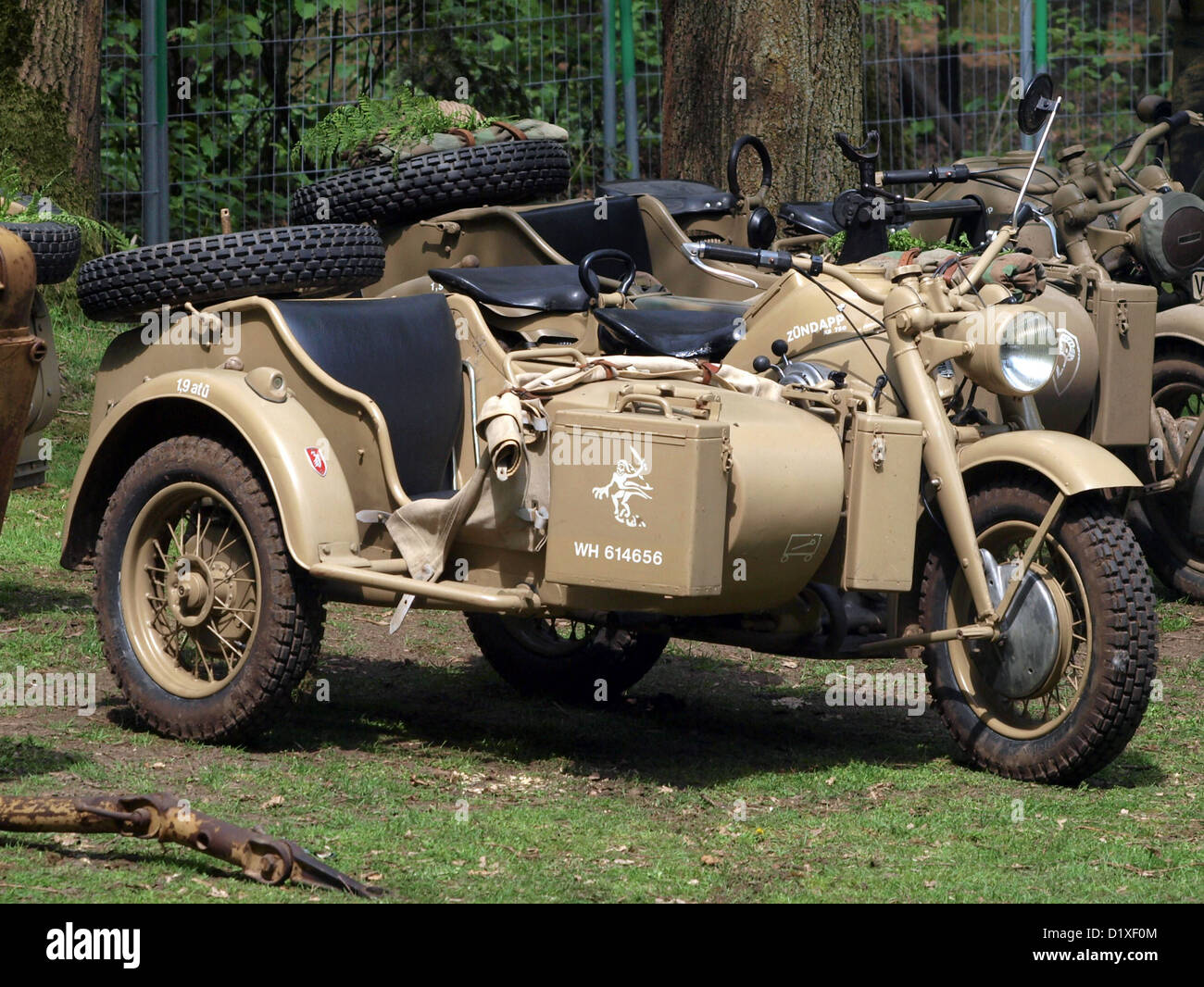
Wheeled vehicles, such as the Kraftfahrzeug (Kfz.) series and various heavy armored cars (Schwerer Panzerspähwagen), were tasked with scouting, route security, and maintaining communication lines ahead of primary combat columns.
- Horch and Adler Sedans: Modified civilian chassis used extensively by staff officers for command and control at the tactical and operational levels.
- Sd.Kfz. 221 and 222: Light, four-wheel-drive armored cars equipped with MG 34 machine guns or 2cm KwK 38 autocannons, designed for rapid reconnaissance.
- Sd.Kfz. 231 and 234 Series: Heavy eight-wheel drive reconnaissance vehicles offering superior off-road capability and heavier armament, including the 7.5cm KwK L/24 or anti-tank guns in later variants.
Halftracks (Sonderkraftfahrzeug)
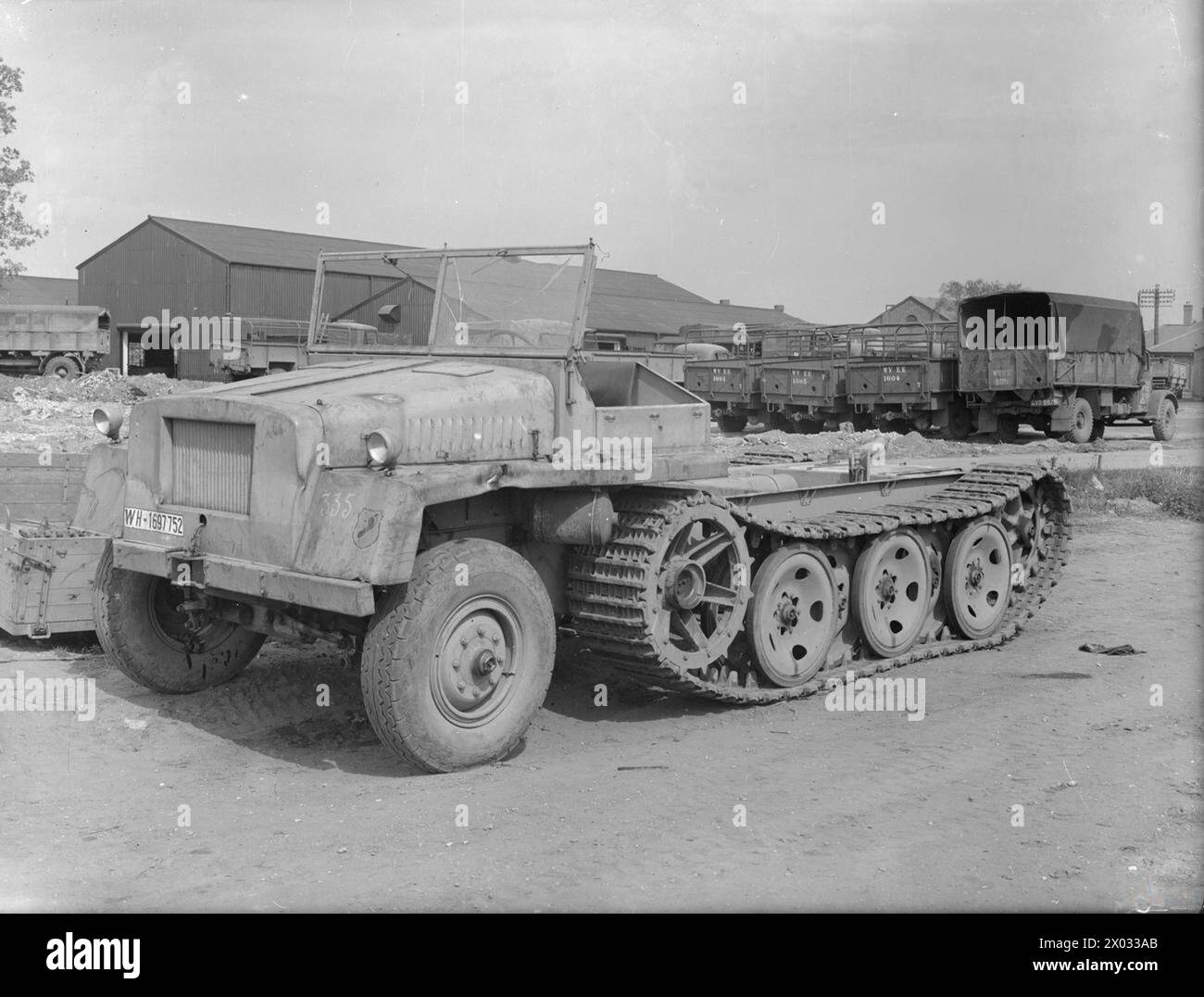
Halftracks represented a vital compromise between wheeled steering agility and tracked cross-country traction. They became the workhorses of the Panzer divisions, towing artillery, carrying mechanized infantry (Panzergrenadiere), and mounting specialized anti-aircraft and anti-tank weaponry.
- Sd.Kfz. 10 and Sd.Kfz. 11: Light tractors designed to pull anti-tank guns like the PaK 36 and light field howitzers.
- Sd.Kfz. 251 (Mittlerer Schützenpanzerwagen): The iconic armored personnel carrier that transported infantry squads directly into combat zones under ballistic protection.
- Sd.Kfz. 7: A heavy artillery tractor capable of towing the formidable 8.8 cm Flak gun or 15 cm sFH 18 howitzer through deep mud and snow.
Fully Tracked Armored Combat Vehicles
While tanks (Panzer) formed the tip of the spear, a vast array of fully tracked chassis were repurposed into assault guns (Sturmgeschütz), tank destroyers (Panzerjäger), and self-propelled artillery (Selbstfahrlaube). These vehicles provided direct fire support to infantry and countered opposing armor without requiring complex rotating turret mechanisms.
Tactical Employment in Offensive Operations
During the opening phases of World War II, German military vehicles were utilized to execute rapid encirclements through the Blitzkrieg method. The synergy between motorized reconnaissance units, halftrack-mounted infantry, and tank divisions allowed the Wehrmacht to bypass strongpoints, paralyze enemy command networks, and advance dozens of kilometers per day.
In these operations, armored cars spearheaded advances, locating enemy weak points and reporting resistance. Following them, infantry carried in vehicles like the Sd.Kfz. 251 secured flanks and cleared secondary pockets of resistance, allowing the heavy tanks to push deeper into enemy territory. Logistics vehicles maintained fuel and ammunition flows, though the German army remained heavily reliant on railway networks and draft horses for overall supply chain movement, a vulnerability that became apparent during the invasion of the Soviet Union.
Comparative Overview of Key German Vehicle Classes
| Vehicle Class | Primary Examples | Main Operational Role | Key Strengths | Critical Vulnerabilities |
|---|---|---|---|---|
| Light Armored Cars | Sd.Kfz. 222, Sd.Kfz. 234 | Reconnaissance, screen security | High road speed, good communications gear | Poor off-road performance in deep mud, thin armor |
| Halftracks | Sd.Kfz. 251, Sd.Kfz. 7 | Infantry transport, artillery towing | Excellent towing capacity, cross-country mobility | Complex mechanical maintenance, open-topped exposure |
| Assault Guns | StuG III, StuG IV | Infantry support, direct fire anti-tank | Low silhouette, cost-effective production, heavy frontal armor | Lack of a rotating turret limited engagement arcs |
| Main Battle Tanks | Panzer IV, Panther, Tiger | Breakthrough, armored combat | Superior firepower and optics, thick armor on later models | High mechanical breakdown rate, extreme production resource cost |
Combat Challenges and Operational Limitations
Despite their technological sophistication and initial tactical successes, German military vehicles faced severe systemic limitations that worsened as the war dragged on.
Mechanical Complexity and Reliability
German engineering prioritized tight tolerances, high performance, and sophisticated transmission systems. While this produced formidable combat machines, it made field repairs exceptionally difficult. Vehicles such as the Panther and Tiger tanks suffered from frequent final drive failures, transmission breakdowns, and engine overheating. Recovery of disabled heavy vehicles required multiple specialized towing tractors, straining maintenance battalions.
Industrial and Resource Bottlenecks
Unlike the Allied nations, which mass-produced standardized designs in automated factories, German manufacturing relied heavily on semi-artisanal production methods well into the war. Shortages of critical alloy metals such as tungsten, nickel, and rubber forced compromises in armor quality and tire durability. As Allied strategic bombing intensified, production plants were repeatedly targeted, leading to declining output numbers just as front-line demands peaked.
Fuel and Logistical Constraints
The German war machine operated on a perpetually constrained fuel supply. Synthetic fuel plants and captured oil fields could not keep pace with the consumption rates of thousands of armored cars, trucks, and tanks. During defensive campaigns, units were frequently forced to abandon functional vehicles simply because they ran out of fuel or lacked spare parts.
Frequently Asked Questions
What was the most produced German armored vehicle of World War II?
The Sturmgeschütz III (StuG III) assault gun was the most produced fully tracked armored fighting vehicle built by Germany during the conflict, with over 10,000 units manufactured across various modifications. Its low profile, enclosed casemate, and powerful 75mm main gun made it an exceptionally cost-effective weapon for both infantry support and anti-tank defense.
How did German halftracks differ from standard trucks in combat?
Halftracks combined front wheels for steering with rear continuous rubber-and-steel tracks for propulsion. This hybrid design provided significantly better traction in mud, snow, and rough terrain compared to standard wheeled trucks, allowing combat engineers and infantry to accompany armor across off-road environments.
Why did Germany rely on horses if they had advanced military vehicles?
Despite the propaganda image of a fully mechanized army, the vast majority of German infantry divisions relied on horse-drawn transport for logistical support, artillery towing, and supply hauling throughout the war. Germany lacked the petroleum resources and industrial capacity to fully motorize its entire armed forces, forcing a hybrid approach where only elite Panzer and motorized divisions received advanced vehicles.
What caused the high mechanical breakdown rates in late-war German tanks?
Late-war German vehicles like the Tiger and Panther were heavily rushed into production before all engineering flaws were resolved. Their immense weight placed unprecedented stress on gearboxes, suspension components, and Maybach engines, while shortages of high-grade alloy steels led to premature mechanical failure under combat stress.
Conclusion and Historical Legacy
The role of German military vehicles in World War II remains a profound study in the intersection of tactical innovation, engineering ambition, and logistical reality. While platforms like the Sd.Kfz. 251 halftrack and the StuG III revolutionized mobile warfare concepts, structural limitations in manufacturing, fuel supply, and mechanical reliability ultimately undermined their strategic utility. Analyzing these systems provides vital context into the mechanics of 20th-century warfare, highlighting that tactical superiority alone cannot overcome long-term industrial and resource attrition.
Image Gallery