What Does a Kissing Bug Look Like? Identification Guide and Lookalikes
A kissing bug (Triatominae) is a dark brown or black blood-sucking insect measuring between 0.5 and 1.5 inches long, characterized by a cone-shaped head, long slender legs, and a distinctive pattern of orange, red, or yellow stripes al...
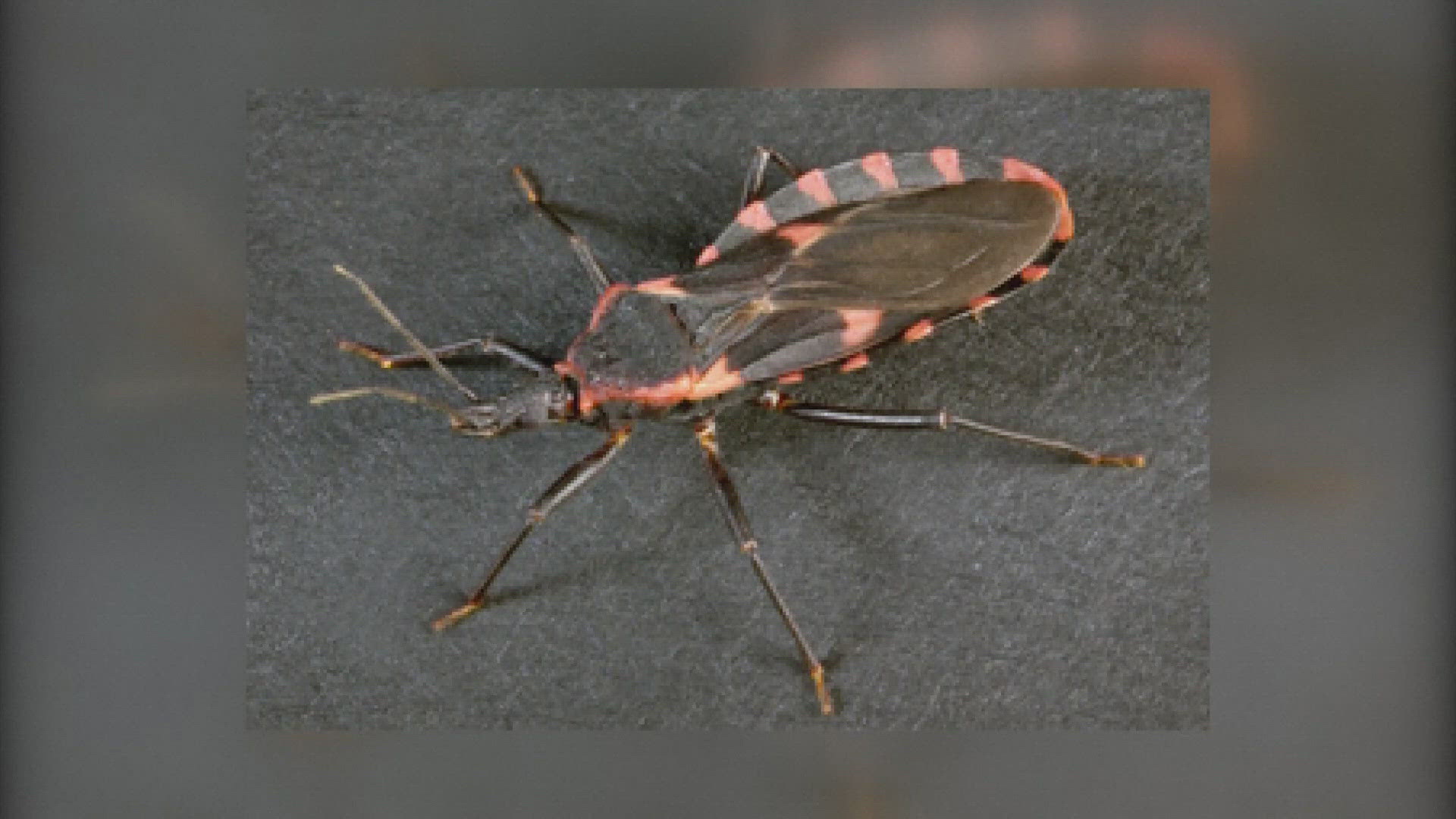
A kissing bug (Triatominae) is a dark brown or black blood-sucking insect measuring between 0.5 and 1.5 inches long, characterized by a cone-shaped head, long slender legs, and a distinctive pattern of orange, red, or yellow stripes along the flared edges of its abdomen.
Contents
Key Anatomical Features of a Kissing Bug
Kissing bugs, scientifically known as triatomines or triatomine bugs, belong to the assassin bug family (Reduviidae). Often called "cone-nosed bugs" or "kissing beetles," these insects earn their common name from their habit of biting humans around the face and mouth during sleep. Accurately identifying a kissing bug requires looking beyond general shape and observing specific anatomical traits that distinguish them from harmless garden insects.
[Cone-Shaped Head] -------- Long, straight 3-segmented beak underneath | (Antennae Inserted) ------ Midway between eyes and snout tip | [Dark Thorax] | [Wings Folded Flat] ------ Overlap to form an "X" pattern | [Connexivum Margins] ------ Alternating dark and red/orange/yellow stripes | [Slender Legs] ---------- Uniformly thin, no leaf-like flares or spikes
1. Distinctive Cone-Shaped Head and Beak
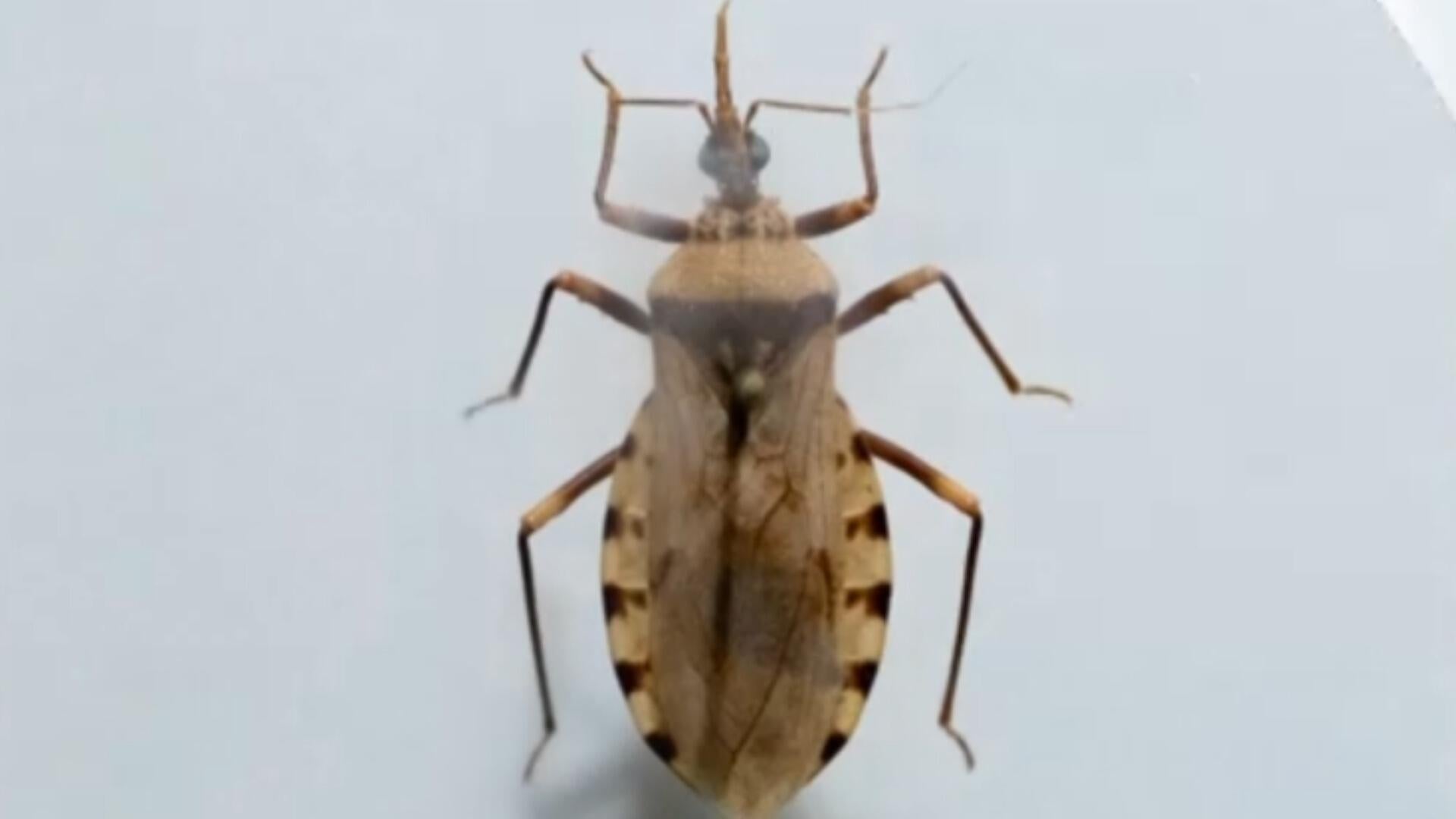
The head of a kissing bug is noticeably elongated, narrow, and cone-shaped. Extending from the front of the head is a specialized, three-segmented mouthpart called a rostrum or proboscis.
When the bug is not feeding, it folds this beak completely straight beneath its head and thorax. Unlike predatory assassin bugs that possess a short, thick, strongly curved beak used to pierce hardshelled prey, a kissing bug’s beak is long, slender, and straight. This adaptation allows the insect to pierce mammal skin gently without immediately triggering a pain response.
2. Antennae Insertion Point
Antennae placement is one of the most reliable diagnostic features used by entomologists to verify a triatomine bug:
- Kissing Bugs: Antennae attach to the sides of the head midway between the compound eyes and the tip of the snout.
- Other Assassin Bugs: Antennae typically originate very close to the compound eyes.
- Plant Bugs & Leaf-Footed Bugs: Antennae originate at the very tip of the head or front of the face.
3. Connexivum Pattern (Abdominal Margins)
The outer edge of a kissing bug’s abdomen, known as the connexivum, extends beyond the sides of its folded wings. This exposed margin displays a prominent, striped pattern featuring alternating bands of dark brown or black and bright coloration—usually orange, red, or light yellow. While some species have muted tan markings, the presence of distinct colored diagonal or rectangular blocks along the outer rim of the flat body is a key signature.
4. Wing Structure and Coloration
Adult kissing bugs possess two pairs of wings lying flat over their back when at rest. The upper wings are leathery at the base and membranous at the tips, creating a subtle "X" pattern where the membranous portions overlap across the lower back. The wings are dark brown, charcoal, or black, sometimes featuring lighter tan or reddish vein lines depending on the species, such as Triatoma sanguisuga or Triatoma gerstaeckeri.
5. Slender, Uniform Legs
All six legs of a kissing bug are long, dark, and uniformly thin. They do not possess enlarged, muscular hind thighs, nor do they feature widened, leaf-like flares or prominent spines on their lower legs. If an insect has wide, flattened expansions on its back legs, it is not a kissing bug.
Kissing Bug vs. Lookalikes: How to Tell the Difference
Many common insects share a similar elongated body shape or dark color scheme with kissing bugs. Homeowners frequently misidentify harmless plant-feeding bugs or beneficial garden predators as triatomines. Understanding the visual differences prevents unnecessary panic while ensuring true safety threats are recognized.
Leaf-Footed Bugs (Coreidae)
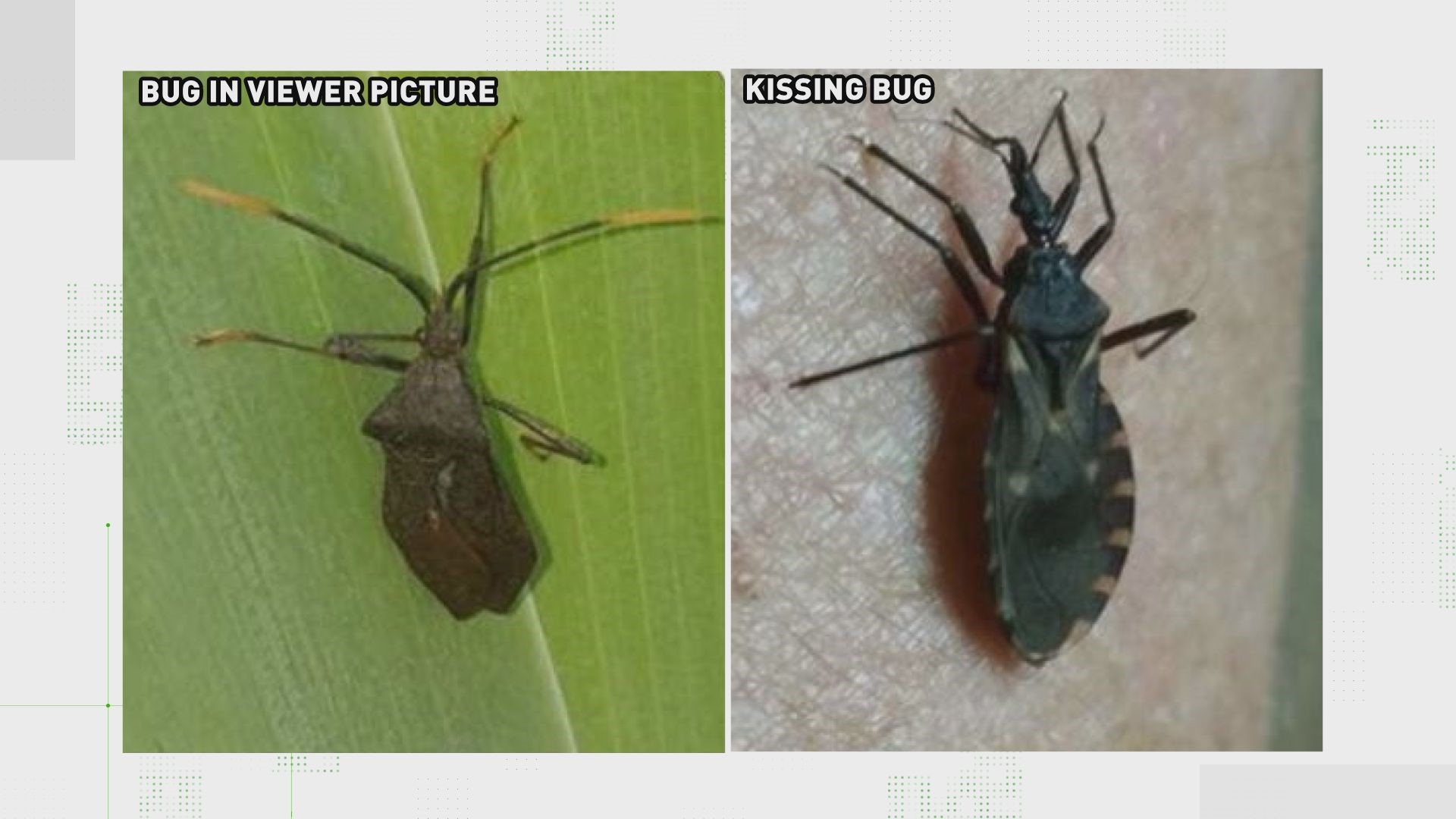
Leaf-footed bugs are among the most frequent lookalikes. While similar in size and brown coloration, leaf-footed bugs have distinct expanded, leaf-like plates on their hind tibia (lower back legs). Additionally, many species, such as the western conifer seed bug (Leptoglossus occidentalis), feature a thin white or cream-colored zig-zag line running horizontally across their wings. Kissing bugs never have leaf-like leg expansions or horizontal white wing lines.
Wheel Bugs (Arilus cristatus)
The wheel bug is a large, predatory assassin bug native to North America. While it belongs to the same family as kissing bugs (Reduviidae), the wheel bug is easily identified by a prominent, semicircular, cog-like crest raised on top of its thorax (chest). Wheel bugs are uniformly dark gray or brown, lack bright colored abdominal stripes, and possess a thick, curved beak capable of inflicting a painful defensive bite.
Boxelder Bugs (Boisea trivittata)
Boxelder bugs are considerably smaller than adult kissing bugs, typically reaching only about 0.5 inches (12 mm) in length. While they display red or orange markings, these lines are located primarily along the edges of the thorax and wing veins rather than as blocky stripes along a flattened abdominal border. Boxelder bugs also have shorter, blunt heads rather than elongated cone snouts.
Squash Bugs (Anasa tristis)
Squash bugs are dull, grayish-brown agricultural pests commonly found on pumpkin and melon plants. Their body shape is flatter and somewhat broader at the rear, but their head is short and triangular without an extended cone nose. They lack the bright red or orange abdominal edge stripes seen on most kissing bugs and smell strongly when crushed.
Predatory Assassin Bugs (Non-triatomine Reduviids)
Generalist assassin bugs like the masked hunter (Reduvius personatus) or leafhopper assassin bugs (Zelus species) feed on other insects. They share the elongated body plan of kissing bugs, but their beaks are distinctly curved and thick, and their antennae attach directly adjacent to their compound eyes.
Comparison Table: Kissing Bug vs. Common Lookalike Insects
| Insect | Average Size | Head & Beak Shape | Key Identifying Markings | Leg Structure |
|---|---|---|---|---|
| Kissing Bug (Triatominae) | 0.5 – 1.5 in (12–38 mm) | Elongated cone head; long, straight 3-segmented beak | Alternating dark and red/orange/yellow stripes on abdominal edges (connexivum) | Long, uniformly thin; no spines or flares |
| Leaf-Footed Bug (Coreidae) | 0.75 – 1.0 in (19–25 mm) | Short head; straight beak for piercing plants | Often has a faint white zig-zag band across wings; dull brown/gray | Leaf-like flattened expansions on hind legs |
| Wheel Bug (Arilus cristatus) | 1.0 – 1.5 in (25–38 mm) | Stout head; thick, strongly curved beak | Prominent raised cog-like crest on top of thorax; uniform gray | Long, thick legs without leaf-like expansions |
| Boxelder Bug (Boisea trivittata) | 0.5 in (12 mm) | Short, blunt head; short beak | Red/orange lines outlining thorax and wing veins; smaller size | Short, thin black legs |
| Squash Bug (Anasa tristis) | 0.6 in (15 mm) | Short, broad head; plant-piercing beak | Mottled gray and brown body; no bright abdominal margins | Uniform brown legs |
Kissing Bug Life Stages: Nymphs vs. Adults
Recognizing a kissing bug at different life stages is essential, as juvenile bugs look markedly different from mature adults.
[Egg] ---> [Nymph Instars 1–5] ---> [Winged Adult] - Wingless / Wing pads - Fully developed wings - Lighter tan/brown - Dark with bright connexivum - Smaller (2–10 mm) - Full size (12–38 mm)
Eggs
Kissing bug eggs are oval, smooth, and roughly 1.5 to 2 mm long. When laid, they are pearly white or light yellow, darkening to a reddish-pink shade as the embryo matures inside. Females deposit eggs in hidden crevices, animal nests, or cracks near sleeping areas.
Nymphs (Imatures)
Kissing bugs undergo incomplete metamorphosis, passing through five nymphal instars before becoming adults:
- Size and Color: Nymphs range from 2 mm (first instar) to around 10–12 mm (fifth instar). They start as light pinkish-tan or yellow-brown and turn darker brown as they grow.
- Lack of Wings: Nymphs do not have functional wings. Older instars develop visible wing pads on their thorax, but their abdomen remains exposed.
- Abdominal Border: Younger nymphs may lack the vivid orange or red connexivum stripes seen in adults, making them harder to identify without examining the head structure under magnification.
Adults
Adult kissing bugs feature fully developed wings that cover the center of their abdomen, complete coloration, and mature reproductive organs. Only adult kissing bugs can fly toward outdoor security lights or porch lamps.
Geographic Distribution and Preferred Habitats
Kissing bugs are widely distributed throughout the Americas, from South America through Central America and into the southern United States.
United States Distribution
According to research coordinated by the CDC Chagas Disease Vector Information, at least 11 species of triatomine bugs are established across the southern and southwestern U.S. States with the highest documented sightings include:
- Texas, Arizona, and New Mexico
- California, Nevada, and Utah
- Florida, Georgia, Alabama, Louisiana, and Mississippi
- Missouri, Virginia, and Maryland
Preferred Outdoor Habitats
In nature, kissing bugs are nest parasites. They settle close to vertebrate hosts to maintain a reliable blood meal source. Common outdoor harborages include:
- Rodent dens, packrat nests, and hollow trees
- Rock piles, brush heaps, and firewood stacks
- Outdoor dog houses, chicken coops, and livestock barns
- Cracks in concrete foundations or beneath stone porches
Indoor Entry and Nocturnal Behavior
Kissing bugs are nocturnal and are attracted to artificial lights at night. They can enter homes through unscreened windows, gaps under exterior doors, worn weatherstripping, or chimney flues. Indoors, they hide during the daytime in dark crevices, under mattresses, behind furniture, or near pet bedding, emerging late at night to feed.
Health Risks: Why Correct Identification Matters
Accurate identification of kissing bugs is critical because they are the biological vectors of Trypanosoma cruzi, the protozoan parasite that causes Chagas disease (American trypanosomiasis).
How Chagas Disease Is Transmitted
Unlike mosquitoes or ticks, kissing bugs do not transmit the parasite directly through their saliva while biting. Instead, transmission occurs through fecal contamination:
- The bug feeds on a human or animal host, usually while the host is asleep.
- As its abdomen fills with blood, the bug defecates on or near the skin.
- The host inadvertently rubs the parasite-laden feces into the bite wound, eyes, mouth, or broken skin during sleep or scratching.
Pets, particularly dogs, can also contract Chagas disease by eating infected kissing bugs.
Health Limitations Notice
This article is for informational purposes and insect identification only. It does not replace medical advice, clinical diagnosis, or professional pest control inspections. If you suspect you have been bitten by a kissing bug or exposed to Chagas disease, consult a licensed healthcare provider or your local health department immediately.
Safe Handling and Submission Procedures
If you locate an insect that matches the visual description of a kissing bug, follow these safety steps to capture and report it without exposing yourself to potential parasites:
[Do Not Touch Bare-Handed] ---> [Trap in Container] ---> [Clean Surface] ---> [Submit for Testing]
- Do Not Touch directly: Never crush or handle the bug with bare hands. Parasites can be present on the bug’s body or in its feces.
- Trap the Insect: Place a glass jar, clear plastic container, or pill bottle over the bug. Slide a piece of stiff cardboard underneath to trap it, then seal the lid securely.
- Disinfect the Area: Clean any surface where the bug was found using a 10% bleach solution or an alcohol-based disinfectant.
- Preserve the Specimen: Keep the bug intact. You can freeze it in its sealed container or submerge it in rubbing alcohol.
- Contact Experts: Send clear photos or bring the specimen to your state public health laboratory, county extension office, or specialized research institution, such as the Texas A&M Kissing Bug Citizen Science Program, for species confirmation and free T. cruzi parasite testing.
Frequently Asked Questions
Do kissing bugs leave visible bite marks?
Bites from kissing bugs are generally painless and may leave small red welts or localized swelling similar to mosquito or bed bug bites. However, some individuals experience allergic reactions ranging from mild itching to severe swelling or anaphylaxis.
Can kissing bugs fly?
Yes, adult kissing bugs have functional wings and are capable fliers. They frequently fly toward porch lights, lighted windows, or outdoor lamps at night. Nymphs (juveniles) lack full wings and can only crawl.
Are kissing bugs the same as bed bugs?
No. While both are blood-sucking insects that bite sleeping humans, bed bugs (Cimex lectularius) are much smaller (about the size of an apple seed, 4–5 mm), reddish-brown, oval, completely wingless, and lack the long cone-shaped head and colored connexivum stripes of kissing bugs.
What colors are on the edge of a kissing bug's body?
The outer edges of a kissing bug's abdomen (the connexivum) feature alternating dark brown/black blocks paired with bright orange, red, or light yellow stripes.
Where do kissing bugs hide inside a house?
Indoors, kissing bugs prefer cool, dark places close to sleeping hosts. Common daytime hiding spots include underneath mattresses, inside bed frames, behind picture frames, beneath pet beds, and within deep wall cracks.
Practical Steps to Prevent Kissing Bugs Around Your Home
To protect your household from kissing bug encounters, implement these IPM (Integrated Pest Management) precautions:
- Seal Entry Points: Install durable weatherstripping under exterior doors, repair torn window screens, and caulk gaps around plumbing penetrations, foundation cracks, and window frames.
- Modify Exterior Lighting: Turn off unnecessary outdoor porch lights at night, or switch to warm yellow LED bulbs, which attract significantly fewer nocturnal insects.
- Clear Yard Debris: Move firewood stacks, leaf piles, rock debris, and brush piles at least 20 feet away from the home foundation.
- Protect Pets: Keep pet kennels elevated, bring dog beds indoors at night, and inspect outdoor dog houses regularly for insect activity.
- Inspect Bedding: If you live in an area with known kissing bug activity, inspect bedding and mattresses periodically, especially during late spring and summer when adult bug activity peaks.
Image Gallery