The Evolution of the Screaming Chud Meme in 2026 Digital Discourse
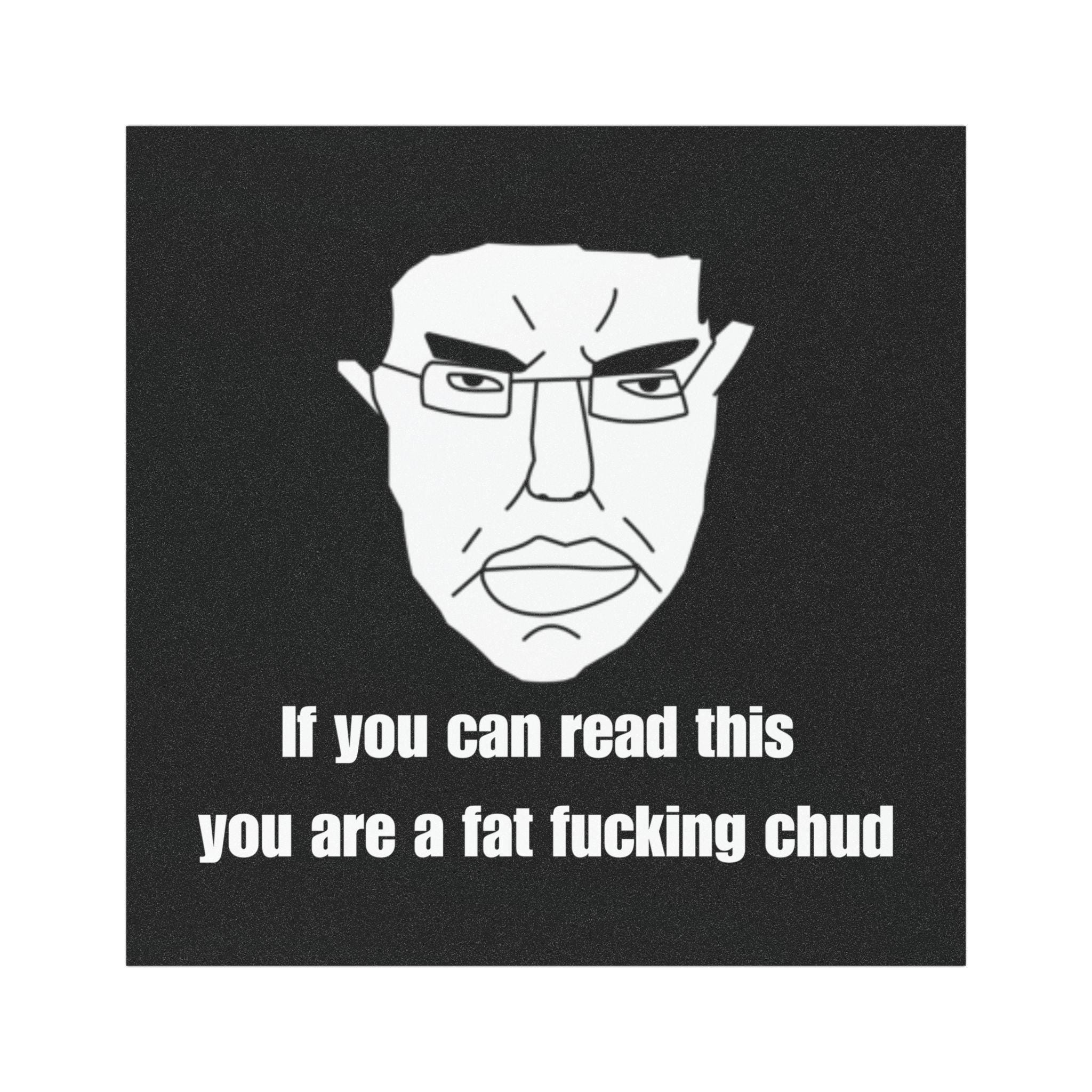
A screaming chud is a visual meme archetype, typically represented by a specific Wojak variant, used to satirize individuals perceived as hyper-reactionary, angry, or ideologically rigid. In 2026, the term serves as a cornerstone of in...
A screaming chud is a visual meme archetype, typically represented by a specific Wojak variant, used to satirize individuals perceived as hyper-reactionary, angry, or ideologically rigid. In 2026, the term serves as a cornerstone of internet shorthand, categorizing aggressive online behavior within political and social subcultures to dismiss or provoke an opponent's perceived outrage.
Contents
While the "chud" label has roots in mid-20th-century cinema, its current iteration is purely a product of the digital age's obsession with classification and visual mockery. To understand the screaming chud, one must analyze its etymological shift, its visual semiotics, and its role in the polarized communication cycles that define 2026 social media. This analysis explores the technical and sociological layers of the meme, providing a framework for identifying its influence on modern rhetoric.
Etymology and the Historical Roots of the "Chud" Archetype
The term "chud" is an acronym derived from the 1984 horror film C.H.U.D., which stands for "Cannibalistic Humanoid Underground Dwellers." In the original cinematic context, these were mutated humans living in the sewers of New York City. The transition from a niche horror reference to a widespread political pejorative occurred in the late 2010s, primarily through leftist internet circles and podcasts.
By the early 2020s, the term had evolved to describe a specific profile: a person, usually male, who holds reactionary views and is perceived as being "uncouth" or intellectually stagnant. The addition of "screaming" to the moniker refers to the visual representation of this character in meme culture—usually depicted with a wide, distorted mouth and bulging eyes, signifying a loss of emotional control.
Historical Context and Shift
The 1984 Origin The film C.H.U.D. established the aesthetic of the "hidden monster" living beneath society, which became a metaphorical template for later internet usage.
The 2018 Pivot Online communities began using the term to describe "flyover state" reactionaries, stripping the word of its literal horror meaning and replacing it with a sociopolitical one.
The 2026 Status Today, "chud" is no longer just a label for a person; it is a standardized aesthetic category used by AI image generators and algorithmic sentiment trackers to identify specific types of confrontational content.
Visual Semiotics: The Anatomy of the Screaming Chud Wojak
In 2026, memes are the primary unit of cultural currency. The screaming chud is almost always portrayed through the "Wojak" medium—a simple, MS Paint-style line drawing. However, unlike the "Feel Guy" or the "Doomer," the screaming chud is defined by its exaggerated distress.
The visual markers are highly specific and intended to signify a lack of "cool" or "composed" argument:
- The Facial Expression: An unnaturally large, gaping mouth, often revealing teeth or a red interior, symbolizing a loud, incoherent yell.
- Physical Features: The character is often drawn with stubble, glasses, or specific clothing items (like a tactical vest or a red baseball cap) that act as "props" to identify their ideological leaning.
- The Background: Frequently placed against "wall of text" backgrounds, suggesting that the chud is reacting to a complex argument with simple, loud anger.
This visual shorthand allows users to "win" an argument without engaging in substantive debate. By posting a screaming chud image in response to a comment, the poster implies that the opponent is not having a rational discussion but is simply "screaming" in an unhinged manner.
Comparative Archetypes in 2026 Meme Culture
To understand where the screaming chud fits, it is essential to compare it to other prevailing internet archetypes. The digital landscape of 2026 relies on these "shortcuts" to categorize vast amounts of social data.
| Archetype | Primary Visual Marker | Intended Insult/Meaning | Target Audience |
|---|---|---|---|
| Screaming Chud | Gaping mouth, angry eyes, stubble | Reactionary, unhinged, "triggered" | Left-leaning / Centrist posters |
| Soyjak | Open-mouthed, glasses, thinning hair | Low testosterone, over-excited, weak | Right-leaning / Edge-lord circles |
| Gigachad | Defined jawline, hyper-masculine | Idealized, correct, uncompromising | General (Used ironically or sincerely) |
| Doomer | Beanie, dark circles under eyes | Nihilistic, exhausted by society | Gen Z / Gen Alpha |
| The NPC | Grey, expressionless face | Lacking original thought, "programmed" | Counter-culture / Anti-establishment |
This table illustrates the symmetrical nature of modern meme warfare. For every "Soyjak" used by one side of the political spectrum to mock "liberal" excitement, there is a "Screaming Chud" used by the other side to mock "conservative" outrage.
The Psychological and Sociological Impact of "Chud" Labeling
The use of the screaming chud meme is more than just a joke; it is a tool of de-individualization. When a person is labeled a "chud" and represented by a distorted, screaming cartoon, their specific arguments are erased. In the technical SEO and digital marketing space of 2026, we see this reflected in sentiment analysis algorithms that struggle to differentiate between genuine political discourse and meme-based harassment.
The Mechanics of Digital Dismissal
Dehumanization through Abstraction By reducing an opponent to a simplified, ugly drawing, the user removes the need for empathy or engagement. This is a core feature of the "echo chamber" effect seen in 2026 social platforms.
Signaling Group Loyalty Posting a screaming chud meme isn't just about the person being mocked; it’s a signal to the poster's own "in-group" that they share the same values and recognize the same enemies.
The Polarization Feedback Loop The more a group feels mocked by the "chud" label, the more they lean into the characteristics being satirized, often adopting the label ironically, which further accelerates the linguistic drift.
Usage and Context in 2026 Online Communities
The screaming chud meme does not exist in a vacuum. Its usage varies significantly depending on the platform's architecture and the community's moderation standards.
- Imageboards (4chan, etc.): In these spaces, the meme is often used "meta-ironically." Users may post screaming chud variants to mock themselves or to bait newcomers into arguments.
- Short-Form Video (TikTok/Reels/X): The screaming chud is frequently used as a green-screen overlay. A creator will play a clip of a political commentator and then "cut" to the screaming chud image to signify that the commentator's points are invalid.
- Algorithmic Gaming Communities: The term has bled into gaming culture to describe players who are overly aggressive in voice chat or who express "anti-woke" sentiments regarding game design.
In 2026, the technical reality is that "screaming chud" has become a high-volume search term within meme databases. Content creators optimize for these terms to ensure their reaction images appear first in GIF keyboards and integrated social media search tools.
Technical Analysis: Meme Proliferation and AI Synthesis
A significant development in 2026 is the role of Generative AI in the lifecycle of the screaming chud. Unlike 2020, where memes were manually drawn in MS Paint, today's memes are often synthesized.
- Prompt-Based Iteration: Users can now input prompts like "screaming chud wearing a cyber-punk visor in a 2026 neon city" to generate hyper-specific variants of the meme in seconds.
- Deepfake Integration: Some advanced (and controversial) uses involve "chud-ifying" real video footage, where AI filters warp a person's face into the screaming chud archetype in real-time during a live stream.
- Metadata Tagging: Search engines now use computer vision to identify the screaming chud visual pattern. If a website hosts a large number of these images, it may be categorized by certain algorithms as "political satire" or "low-quality UGC" (User Generated Content), affecting its SEO standing.
Navigating Meme Literacy: How to Identify and Deconstruct "Screaming Chud" Content
For researchers, marketers, and average users, meme literacy is essential in 2026. Identifying a screaming chud post is the first step in understanding the underlying intent of the communication.
Step 1: Identify the Visual Cue Look for the exaggerated, wide-mouthed Wojak. Is it being used to represent the speaker, or the person the speaker is attacking?
Step 2: Analyze the Context Is the meme being used to shut down a conversation? If the "chud" image is the only response to a detailed argument, the intent is dismissal rather than dialogue.
Step 3: Check for AI Distortion In 2026, many screaming chud memes are generated to look like real people. Check for the tell-tale signs of AI—distorted ears, melting backgrounds, or inconsistent lighting—to determine if the image is a synthesized "attack" meme.
Step 4: Evaluate the Source Is the image coming from a verified satire account, an anonymous bot, or a genuine user? The source often dictates whether the "chud" label is being used as a lighthearted joke or as part of a coordinated harassment campaign.
Frequently Asked Questions
What does "chud" mean in 2026?
In 2026, "chud" is a slang term used to describe a person with reactionary, right-wing, or perceived "un-progressive" views. It is almost always used as a pejorative to imply the person is unintelligent or overly angry.
The term has evolved from its horror movie origins into a broad cultural bucket for anyone who expresses outrage against modern social shifts, particularly on platforms like X, Reddit, and decentralized social networks.
Is "screaming chud" considered a slur?
While "screaming chud" is a pejorative and intended to be insulting, it does not meet the legal or platform-specific definitions of a "slur" related to protected characteristics like race, religion, or orientation. It is generally categorized as "political insult" or "harsh satire."
However, its use is often monitored by moderation AI in 2026 because it is frequently associated with "dogpiling" or coordinated harassment of individuals in public digital spaces.
Why is the screaming chud meme so popular?
Its popularity stems from its efficiency. In a fast-paced digital environment, it is easier to post an image of a screaming character than to write a rebuttal. It provides an "instant win" sensation for the poster and their followers.
Furthermore, the visual of a screaming, distorted face triggers a strong emotional response, which helps the content bypass algorithmic filters that prioritize "high-engagement" (i.e., controversial) posts.
How do I stop people from calling me a chud?
In the landscape of 2026 internet culture, the most effective way to neutralize the label is to avoid "feeding the troll." Since the "chud" label is based on the perception of anger, responding with calm, reasoned, or indifferent language invalidates the "screaming" part of the archetype.
Some users have also adopted "reclamation" strategies, using the chud imagery ironically to show that the insult no longer has power over them, though this often leads to further meme-cycles.
Is there a "female" version of the screaming chud?
Yes, within the Wojak ecosystem, there are several variants, often referred to as "Tradwife" variants or specific "Screaming Karen" archetypes, though "chud" remains a largely male-coded term. The female equivalents usually focus on different perceived social failings but use the same "screaming" visual shorthand.
In 2026, meme archetypes are increasingly fluid, and the screaming chud face is often superimposed onto various character models regardless of gender to signify the same "reactionary rage."
Summary of Meme Impact
The screaming chud is more than a fleeting internet joke; it is a symptom of a highly polarized, visually-driven communication era. As we navigate the digital corridors of 2026, understanding these archetypes is crucial for anyone involved in media, politics, or social technology. By recognizing the mechanics of the "chud" label, we can better understand how digital discourse is being shaped, narrowed, and manipulated through the power of the meme.
To stay ahead of these trends, users should focus on high-level media literacy and recognize that in the world of 2026, the person who screams the loudest—even in the form of a digital drawing—is often the one trying to hide the weakest argument.
Image Gallery