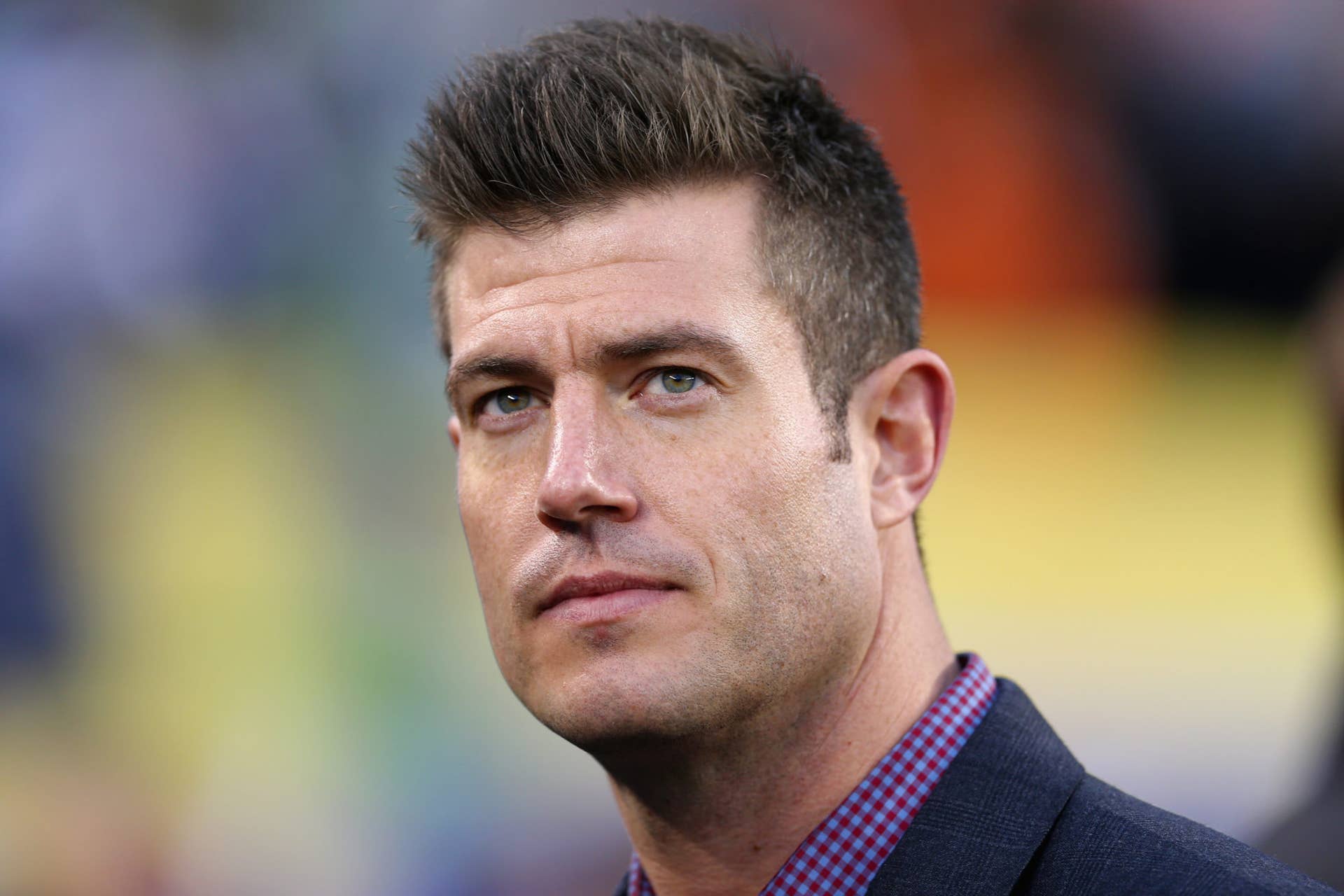
The Professional Football Career of Jesse Palmer: Giants, 49ers, and Alouettes
Jesse Palmer is widely recognized today as a prominent television personality, but his professional foundation was built on the gridiron as a quarterback. His career trajectory included stints in the National Football League (NFL) with...
Jesse Palmer is widely recognized today as a prominent television personality, but his professional foundation was built on the gridiron as a quarterback. His career trajectory included stints in the National Football League (NFL) with the New York Giants and the San Francisco 49ers, followed by a transition to the Canadian Football League (CFL) with the Montreal Alouettes.
Contents
Early Football Career and NFL Entry
Before entering the professional ranks, Jesse Palmer played collegiate football for the University of Florida Gators. Under the tutelage of head coach Steve Spurrier, Palmer developed into a capable quarterback, showing the poise and passing mechanics that eventually drew the attention of NFL scouts. Following his graduation, Palmer entered the 2000 NFL Draft.
The New York Giants selected Palmer in the fourth round with the 125th overall pick. His arrival in New York marked the beginning of a four-season tenure with the franchise from 2002 to 2005. During his time with the Giants, Palmer served primarily as a backup quarterback, providing stability in the quarterback room while learning under veteran leadership. His most significant playing time occurred during the 2003 season, where he saw action in multiple games due to injuries and performance shifts on the roster.
While his statistical output in the NFL was limited compared to elite starters, his time in New York allowed him to operate within a high-pressure media market, an experience that would later prove invaluable during his transition to broadcast media.
Transitions to San Francisco and Montreal
After his contract with the New York Giants concluded, Palmer sought opportunities to continue his professional development. In 2005, he signed with the San Francisco 49ers. The move to the West Coast presented a different set of challenges, as he joined a team that was undergoing significant personnel changes. Although he spent time with the organization, he did not appear in a regular-season game for the 49ers, as the team utilized other options at the quarterback position throughout that campaign.
Following his brief tenure in San Francisco, Palmer transitioned to the Canadian Football League. In 2006, he signed with the Montreal Alouettes. The CFL, which utilizes a wider field, three downs, and a different set of tactical requirements, provided a distinct environment for Palmer to test his abilities as a starter.
His experience in Montreal was characterized by the adjustment to the Canadian game’s pacing. Playing in a league where the passing game is often more aggressive due to the three-down rule, Palmer provided depth to the Alouettes roster. However, his professional playing career drew to a close shortly thereafter, as he opted to move away from the field and toward the media career that would define his public profile in the decades to follow.
Comparative Overview of Professional Stints
The following table summarizes the primary professional football organizations Jesse Palmer was associated with during his tenure in the NFL and CFL.
| Organization | League | Tenure | Role/Status |
|---|---|---|---|
| New York Giants | NFL | 2002–2005 | Backup Quarterback |
| San Francisco 49ers | NFL | 2005 | Pre-season/Practice Squad |
| Montreal Alouettes | CFL | 2006 | Quarterback |
The Impact of Professional Play on Media Career
The transition from the gridiron to the broadcast booth is a path taken by many former athletes, but Palmer’s specific background across three distinct organizations—the Giants, 49ers, and Alouettes—offered him a broad perspective on the game.
Playing in New York required navigating the intense scrutiny of one of the world's largest media markets. This baptism by fire ensured that Palmer was well-prepared for the pressures of live television. Whether analyzing game tape or interviewing players, his ability to speak from the perspective of someone who had navigated the locker room dynamics of an NFL organization provided viewers with authentic insights.
His brief foray into the CFL with the Montreal Alouettes added another layer to his expertise. Understanding the nuances of a different ruleset and playing style allowed him to offer a more holistic view of football, moving beyond just the standard NFL narrative. By the time he transitioned to high-profile roles with major networks, Palmer had already established a reputation for reliability and articulateness, attributes he initially cultivated while wearing a team jersey.
Navigating the Challenges of a Backup Quarterback
The role of a backup quarterback in the NFL is arguably one of the most demanding positions in professional sports. For a player like Palmer, the requirement was to remain constantly prepared to step into a starting role without the benefit of consistent first-team repetitions during practice.
- Preparation: Backup quarterbacks must study the game plan with the same intensity as the starter, despite the low probability of entering the game.
- Adaptability: Palmer had to learn multiple offensive schemes, moving from the systems in New York to the changing environments in San Francisco.
- Resilience: The ability to handle the mental toll of limited game-day participation is essential for sustaining a professional career.
These challenges define the trajectory of many athletes who do not reach "franchise quarterback" status but manage to sustain a career in professional leagues. It is through these experiences that Palmer developed the professional discipline that remains a hallmark of his career in the media industry today.
Frequently Asked Questions
Did Jesse Palmer start for the New York Giants? Yes, Jesse Palmer started several games during his tenure with the New York Giants. Notably, during the 2003 NFL season, he filled in as the starter, providing the team with necessary experience at the position during a period of roster transitions.
Why did Jesse Palmer leave the NFL for the CFL? After his tenure with the Giants and his time with the 49ers, Palmer looked to the Canadian Football League as an opportunity to secure more consistent playing time. The CFL has historically been a secondary destination for talented quarterbacks looking to extend their professional careers outside the United States.
What was the nature of his move to the Montreal Alouettes? Palmer joined the Montreal Alouettes in 2006. While he participated in the team's training camps and roster rotations, his time in Canada was brief. It served as the final chapter of his active playing career before he fully committed to a transition into broadcast television.
How did playing in the NFL affect his current career? His background as a professional athlete allowed him to offer a unique, first-hand perspective during his tenure as a football analyst. Having been inside NFL locker rooms and having dealt with the pressures of the New York media market, Palmer brought a level of credibility to his broadcast work that distinguishes him from journalists without professional experience.
Was his time with the San Francisco 49ers successful? His time with the 49ers was limited. He signed with the organization in 2005 but did not see regular-season action. This period is generally viewed as a brief interval between his tenure in New York and his move to the Canadian Football League.
Conclusion and Next Steps
For those interested in the history of professional football, Jesse Palmer’s career serves as an interesting case study in the longevity of professional athletes. While he is now a well-known media figure, the foundation of his public life was built through his time with the New York Giants, the San Francisco 49ers, and the Montreal Alouettes. To learn more about his specific statistical performance during his 2003 stint with the Giants, researchers should consult the official NFL record archives for game-by-game logs. Those interested in his media career can review his professional filmography, which documents his evolution from athlete to commentator.
Image Gallery