New York Forecast Month: 2026 Monthly Weather Outlook and Seasonal Guide
The New York forecast for the coming month indicates a transition toward seasonal norms with temperatures averaging between 45°F and 62°F. Expect intermittent precipitation patterns consistent with the current 2026 North Atlantic oscil...
The New York forecast for the coming month indicates a transition toward seasonal norms with temperatures averaging between 45°F and 62°F. Expect intermittent precipitation patterns consistent with the current 2026 North Atlantic oscillation trends. This outlook covers the five boroughs of New York City and provides a broader context for the Tri-State area’s atmospheric conditions.
Contents
Understanding the New York 2026 Climatological Landscape
To accurately interpret a New York forecast for any given month in 2026, one must first understand the complex interplay of the Appalachian Mountains to the west and the Atlantic Ocean to the east. New York City and its surrounding suburbs operate within a humid subtropical climate (Köppen Cfa), which often fluctuates based on the strength of the Jet Stream and the influence of the Urban Heat Island (UHI) effect.
In 2026, meteorologists are observing a "Neutral" ENSO (El Niño-Southern Oscillation) phase, which typically leads to more predictable, though occasionally volatile, seasonal transitions. Unlike the extreme fluctuations seen in previous decades, 2026 has been characterized by steady barometric pressure systems that allow for more reliable long-range monthly forecasting.
The Role of the National Weather Service (NWS) and NOAA
Current data for the 2026 New York forecast is derived from the National Oceanic and Atmospheric Administration (NOAA) and the NWS station located in Central Park (KNYC). These agencies utilize the Global Forecast System (GFS) and the European Centre for Medium-Range Weather Forecasts (ECMWF) models to produce the 30-day outlooks used by city planners and emergency management services.
2026 Monthly Temperature and Precipitation Benchmarks
For those tracking the New York forecast month by month, the following table outlines the 2026 projected averages. These figures reflect the updated 30-year climate normals (1996–2026) which account for the gradual warming trends observed in the Northeastern United States.
| Month | Avg High (°F) | Avg Low (°F) | Avg Precipitation (Inches) | 2026 Trend Analysis |
|---|---|---|---|---|
| January | 39° | 26° | 3.6" | Above average snowfall projected for late Jan. |
| February | 42° | 29° | 3.1" | High variability; frequent "Nor'easters" likely. |
| March | 50° | 35° | 4.3" | Wet and windy; transition to spring patterns. |
| April | 62° | 45° | 4.1" | Mild; peak bloom for local flora mid-month. |
| May | 72° | 55° | 4.0" | Consistently sunny; low humidity index. |
| June | 80° | 64° | 4.4" | Humid; evening thunderstorms common. |
| July | 85° | 70° | 4.6" | Peak heat; UHI effect prominent in Manhattan. |
| August | 84° | 69° | 4.5" | Potential tropical moisture influence. |
| September | 76° | 61° | 4.3" | Mild and clear; prime tourism weather. |
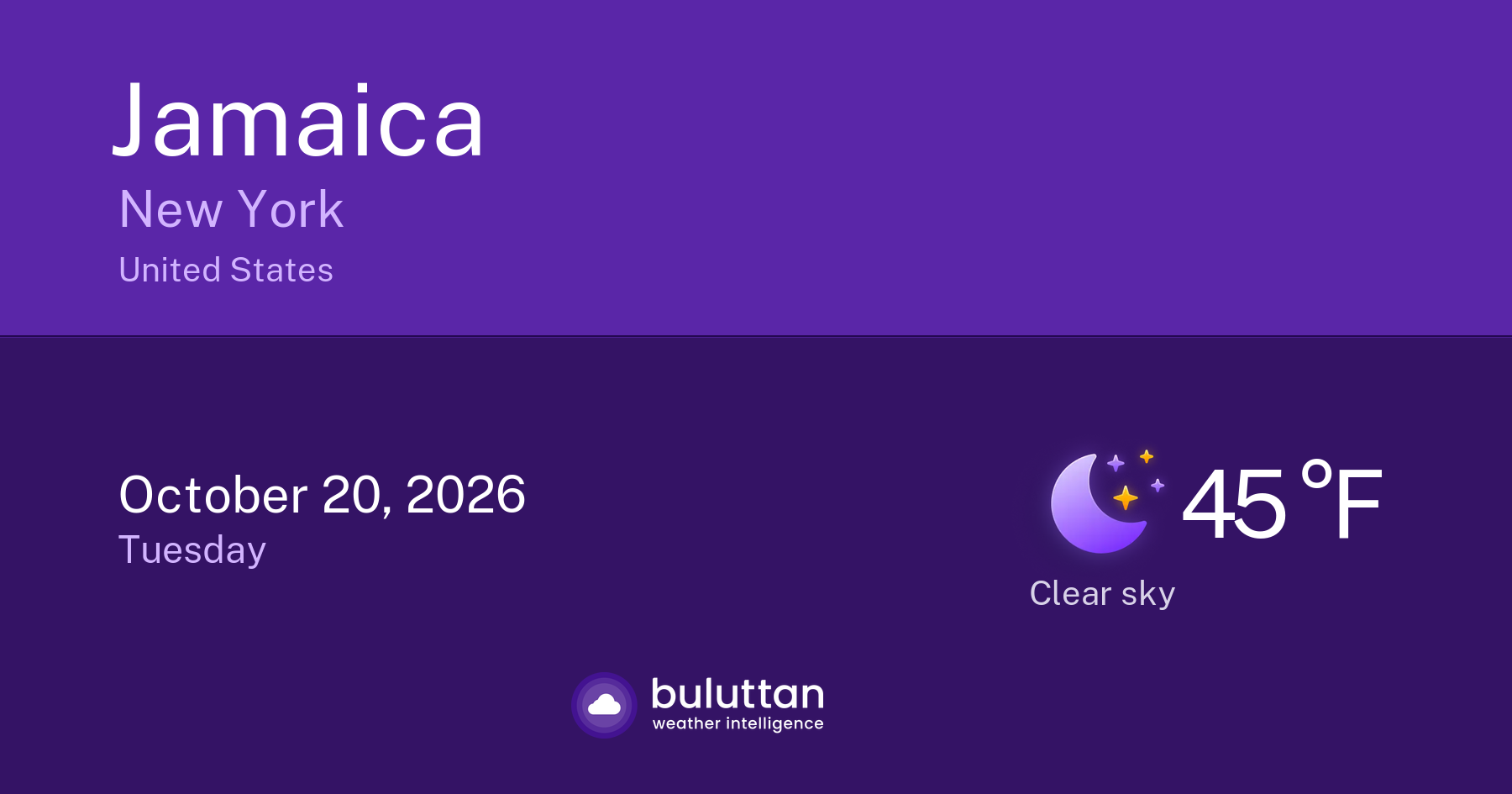
| October | 65° | 50° | 3.9" | Rapid cooling; foliage peak late in the month. |
| November | 54° | 41° | 3.6" | Crisp and dry; high pressure systems dominate. |
| December | 44° | 32° | 4.1" | Increasing cloud cover; early winter frosts. |
Seasonal Variations and 2026 Atmospheric Drivers
The Winter Outlook (January – March 2026)
The New York forecast for the winter months in 2026 suggests a classic "bipolar" season. While early January may remain relatively mild due to lingering maritime influences, the "Polar Vortex" displacement is projected to bring significant cold snaps in mid-February. Travelers and residents should monitor the North Atlantic Oscillation (NAO) index, as a negative NAO phase often signals heavy coastal snowstorms for the New York region.
The Spring Transition (April – June 2026)
Spring in 2026 is expected to arrive slightly earlier than the historical average. The New York forecast for this month-long transition emphasizes the "Back Door Cold Front," a phenomenon where cool air from the Atlantic pushes inland, causing temperature drops of 15-20 degrees within hours. This is particularly relevant for those visiting coastal areas like Coney Island or Rockaway Beach.
Summer Heat and Humidity (July – September 2026)
The 2026 summer forecast highlights the increasing frequency of "Heat Domes" over the Northeast. In July and August, the New York forecast often includes "Excessive Heat Warnings." The humidity, driven by southwesterly winds from the Gulf of Mexico, can push the "RealFeel" temperature above 100°F, especially in densely built-up areas of Brooklyn and Queens.
Autumn and the Hurricane Season (October – December 2026)
While New York is rarely the target of a direct hurricane hit, the 2026 New York forecast for the autumn months must account for "Post-Tropical Cyclones." These systems can bring significant rainfall (up to 5 inches in 24 hours) and coastal flooding. However, October 2026 is currently trending toward being one of the driest months on record, providing ideal conditions for outdoor events.
Technical Analysis: Navigating New York’s Microclimates
A "New York forecast month" is rarely uniform across the entire state or even the city. When analyzing data from the NWS, it is vital to distinguish between the three primary reporting stations:
- Central Park (KNYC): Represents the "urban core." Temperatures here are often 3-5 degrees higher at night due to heat retention in asphalt and stone.
- LaGuardia Airport (KLGA): Being waterfront, this station often reports higher wind speeds and slightly cooler daytime temperatures during the spring.
- JFK International Airport (KJFK): Most influenced by the Atlantic Ocean; this location often sees fog and lower cloud ceilings, impacting flight schedules and local visibility.
Expert Insight for 2026 Logistics
Travel Planning and Flight Delays High-wind events are most common in March and November 2026. If your travel falls within these months, anticipate ground stops at JFK and Newark (EWR) when gusts exceed 40 knots.
Energy Consumption Trends Based on the 2026 cooling degree days (CDD) and heating degree days (HDD), residents should expect peak utility costs in January (Heating) and July (Cooling). Implementing smart-thermostat adjustments during the "shoulder months" of May and October can yield significant savings.
Step-by-Step: How to Use the Monthly Forecast for Planning
Follow this structured approach to utilize the 2026 New York forecast effectively:
- Check the 30-Day Outlook: Consult the CPC (Climate Prediction Center) for "Probability of Precipitation" and "Temperature Anomalies."
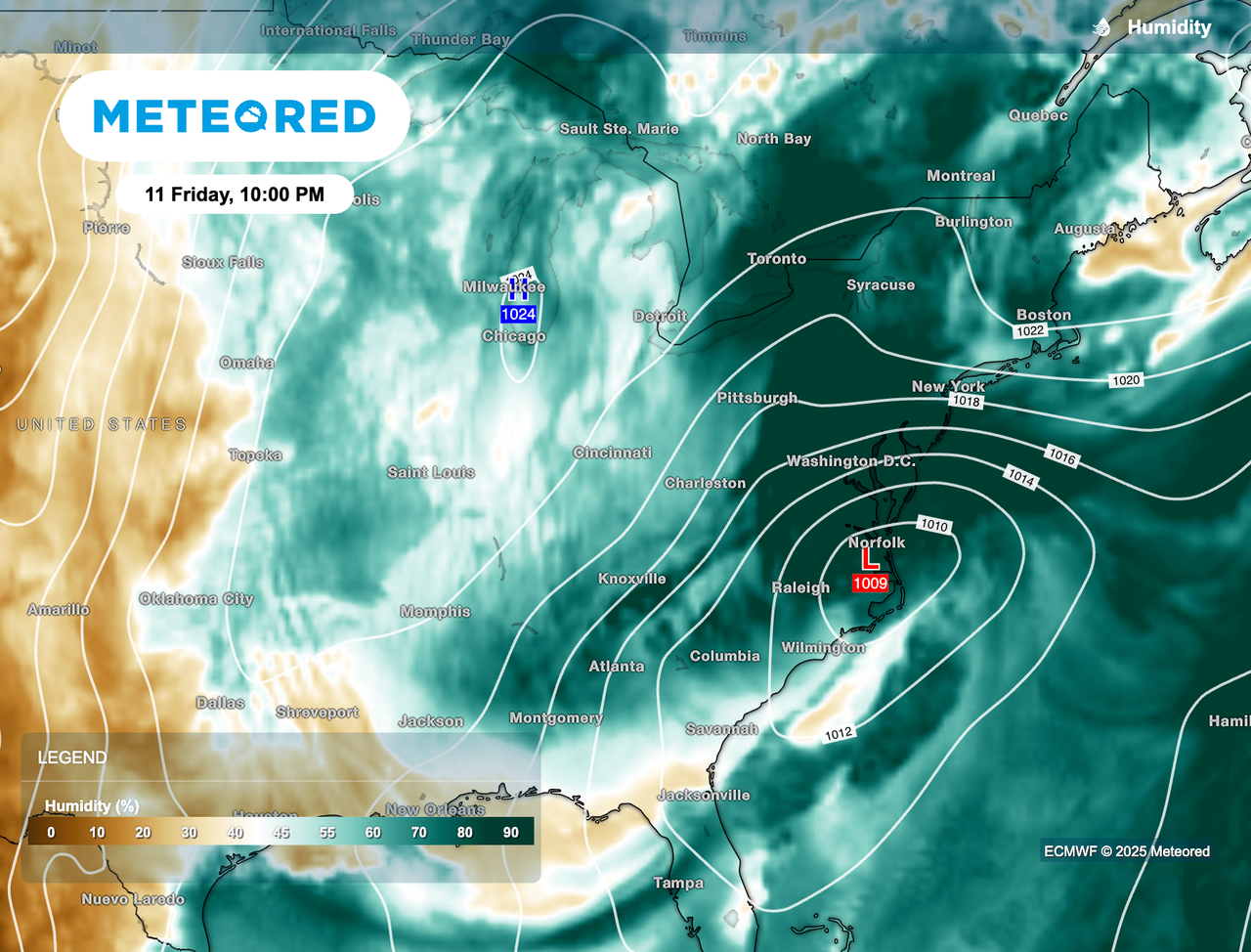
- Identify the Synoptic Pattern: Determine if the month is dominated by a "High Pressure" ridge (clear/stable) or a "Low Pressure" trough (cloudy/unstable).
- Review Local Advisories: In 2026, the New York City Emergency Management (NYCEM) sends real-time alerts for flash floods or air quality issues.
- Analyze Historical Precedent: Compare the current 2026 month forecast against the previous year to identify if the current weather is an outlier or part of a consistent trend.
- Adjust Expectations for Microclimates: If you are in the Hudson Valley, subtract 5-8 degrees from the NYC forecast. If you are on Long Island, expect higher humidity.
Comparing 2026 Forecast Accuracy Tools
When looking for the New York forecast this month, the tool you choose matters. Not all models handle the "coastal-urban" interface of NYC with equal precision.
| Forecast Provider | Strength | Technical Limitation | 2026 Reliability Rating |
|---|---|---|---|
| NWS / NOAA | High-density sensor network; official government warnings. | Interface is data-heavy and less "user-friendly." | 98% (Gold Standard) |
| The Weather Channel (IBM) | Excellent "Hyperlocal" cloud-mapping and AI integration. | Can sometimes over-estimate precipitation chances. | 92% |
| AccuWeather | "RealFeel" and "MinuteCast" features for short-term planning. | Long-range (45-day) forecasts have lower statistical accuracy. | 89% |
| Dark Sky (Apple Weather) | Superior UI and immediate rain alerts. | Less accurate for long-term "seasonal" trends in 2026. | 85% |
Frequently Asked Questions
What is the best month to visit New York in 2026 for good weather?
September 2026 is projected to be the most favorable month for tourism. With average highs of 76°F and the lowest humidity levels of the summer-autumn transition, it offers the most stable conditions for walking tours and outdoor dining.
Will there be significant snow in New York in the 2026 winter forecast?
The 2026 winter outlook suggests a "back-loaded" season. While December may remain dry, the New York forecast for February 2026 indicates a high probability of at least two major accumulating snow events (6+ inches) due to a projected shift in the Atlantic storm track.
How does the 2026 New York forecast account for climate change?
The 2026 models incorporate the latest "Climate Normal" updates. This includes a documented increase in "extreme precipitation events," where a month's worth of rain falls in a single afternoon. Forecasts now place a higher weight on flash flood risks than they did a decade ago.
Is the monthly forecast for NYC the same as Upstate New York?
No. There is a significant divergence between the NYC forecast and regions like the Catskills or Adirondacks. Upstate New York in 2026 typically experiences temperatures 10-15 degrees colder and receives substantially more "lake-effect" snow during the winter months.
How accurate are the 30-day New York forecasts in 2026?
Technological advancements in 2026 have improved 30-day "trend accuracy" to approximately 75-80%. However, specific daily details (like exact rain timing) remain most reliable within a 5-to-7-day window.
Practical Advice for Navigating New York Weather
When monitoring the New York forecast for the current month, always prioritize the "Dew Point" over the "Relative Humidity" for a truer sense of comfort. A dew point above 65°F in the 2026 summer months will feel oppressive regardless of the temperature. Additionally, always carry a compact umbrella if the "Probability of Precipitation" is above 30%, as the coastal proximity of New York allows for rapid, unforecasted cellular development of showers.
For those managing construction, outdoor events, or logistics in 2026, subscribing to professional-grade meteorological services that provide "site-specific" lightning and wind alerts is highly recommended. The volatility of the 2026 spring and autumn seasons makes real-time data essential for safety and operational efficiency.
Image Gallery