Master List of Sanskrit Phrases: Meanings, Transliteration, and Everyday Usage
Sanskrit phrases carry deep philosophical, spiritual, and conversational significance across classical literature and modern spoken usage. Understanding these expressions requires examining both their Devanagari script, International A...
Sanskrit phrases carry deep philosophical, spiritual, and conversational significance across classical literature and modern spoken usage. Understanding these expressions requires examining both their Devanagari script, International Alphabet of Sanskrit Transliteration (IAST) representation, literal English translations, and cultural context—ranging from daily greetings like Namaste to profound Vedic aphorisms like Vasudhaiva Kutumbakam.
Contents
The Structure of Sanskrit Expressions: Grammar, Sandhi, and Pronunciation
Sanskrit is an Indo-European language renowned for its precise grammatical architecture, codified primarily by the ancient grammarian Pāṇini in his treatise, the Aṣṭādhyāyī. When analyzing Sanskrit phrases, readers encounter three essential structural concepts: script visualization, phonetic combination (sandhi), and morphological declension.
Devanagari and Transliteration (IAST)
Classical Sanskrit is predominantly written in the Devanagari script, an abugida writing system where each character represents a consonant combined with an inherent vowel sound. To make these phrases accessible globally, scholars use the International Alphabet of Sanskrit Transliteration (IAST). IAST uses diacritical marks to distinguish between distinct phonetic values:
- Macrons (ā, ī, ū): Indicate long vowels held for twice the duration of short vowels (a, i, u).
- Dots Below (ṭ, ḍ, ṇ, ṣ, ṛ): Represent retroflex consonants, pronounced by curling the tip of the tongue back against the roof of the mouth.
- Aspirated Consonants (kh, gh, ch, jh, th, dh, ph, bh): Pronounced with an explicit burst of air following the consonant sound.
The Mechanics of Sandhi (Euphonic Combination)
A defining trait of Sanskrit phrases is sandhi (literally "joining" or "union"). When words are joined into a continuous phrase, the terminal sound of one word alters based on the initial sound of the subsequent word. For example, combining sat (truth) and chit (consciousness) yields sacchit. Because of sandhi, single compound words in Sanskrit often represent complete English sentences. Deconstructing a phrase into its constituent words (pada-chheda) is therefore the necessary first step toward accurate translation.
Case Endings (Vibhakti) and Verb Roots (Dhātu)
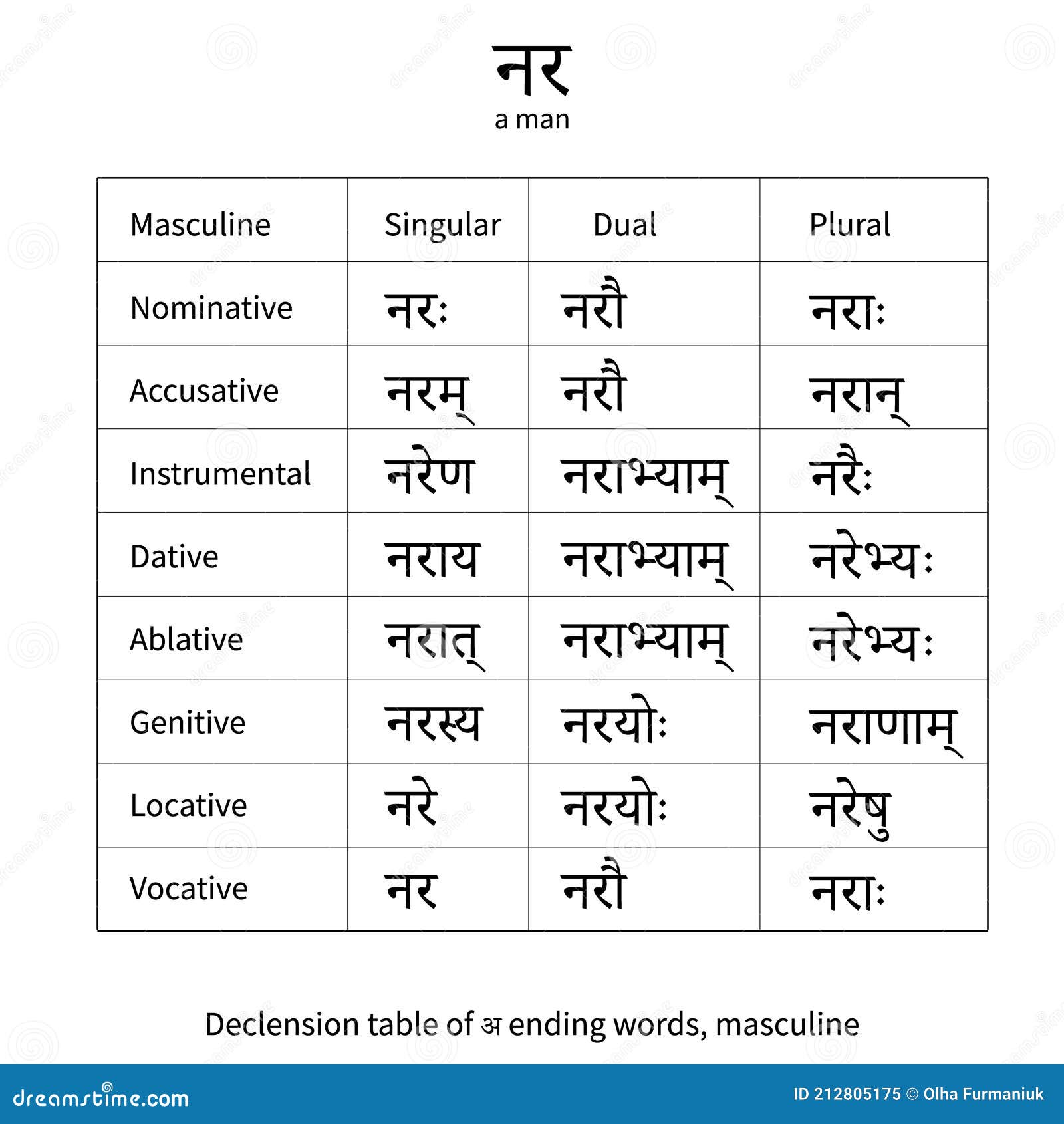
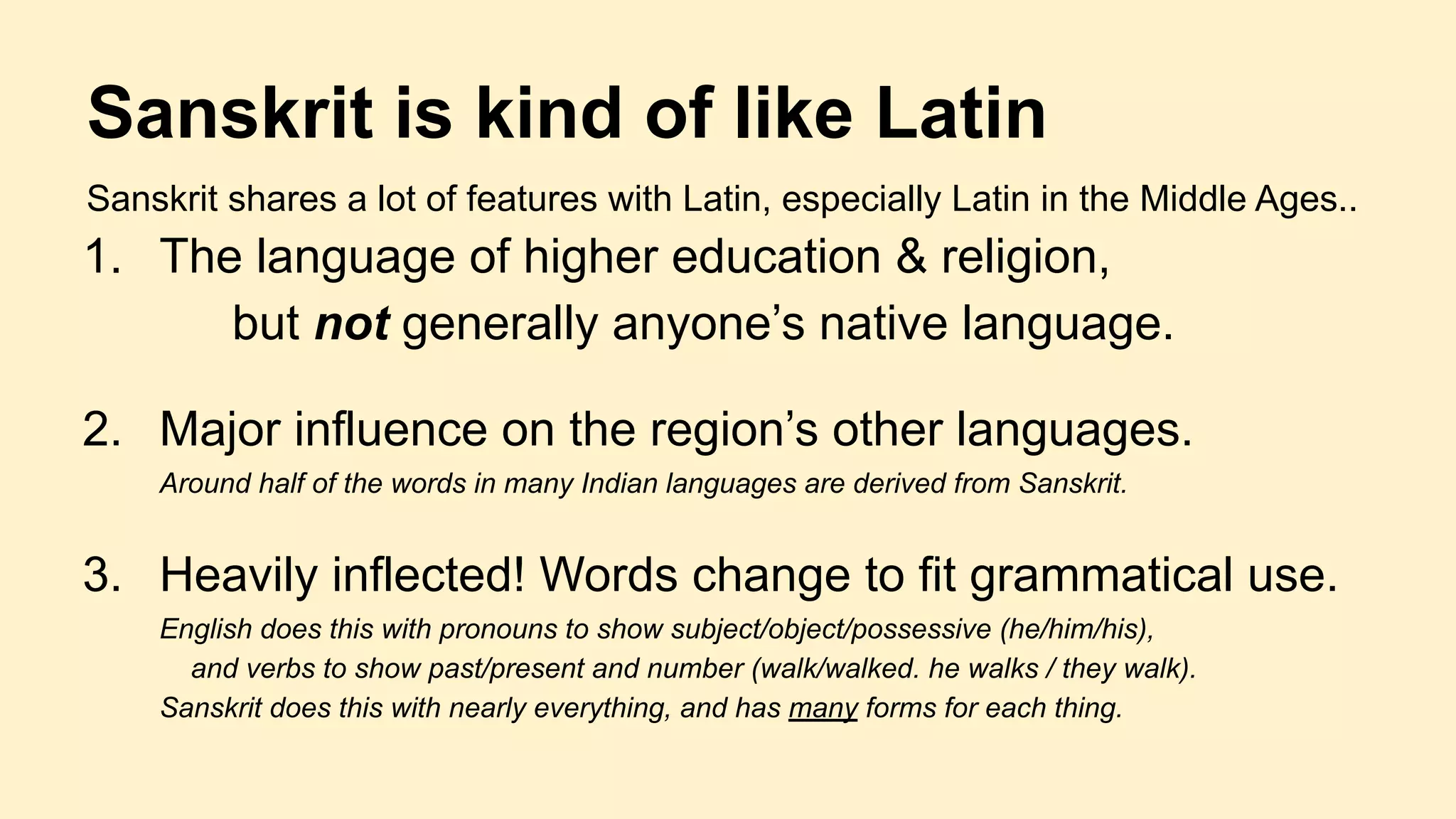
Sanskrit is a highly inflected language featuring eight grammatical cases for nouns (vibhakti) and three grammatical numbers (singular, dual, and plural). Word order in a Sanskrit phrase is flexible because noun endings explicitly denote grammatical roles such as subject, object, instrument, or locative context. Verbs derive from core semantic roots called dhātu, conjugated for person, number, tense, and mood.
Essential Everyday Greetings and Conversational Sanskrit Phrases
While Sanskrit is widely associated with ancient texts, modern revival movements such as Samskrita Bharati have popularized spoken Sanskrit (Saṃskṛta-sambhāṣaṇam) worldwide. The following table and explanations outline standard everyday expressions used in conversational contexts.
| Devanagari | IAST Transliteration | English Translation | Practical Usage |
|---|---|---|---|
| नमस्ते | Namaste | I bow to you | Standard Greeting |
| सुप्रभातम | Suprabhātam | Good morning | Morning Greeting |
| शुभरात्रिः | Śubharātriḥ | Good night | Evening Leave-taking |
| धन्यवादः | Dhanyavādaḥ | Thank you | Expression of Thanks |
| कृपया | Kṛpayā | Please | Polite Request |
| कथमस्ति? | Katham asti? | How are you? | General Inquiry |
| अस्तु | Astu | Let it be so / Okay | Acknowledgment |
| पुनः मिलामः | Punar milāmaḥ | We shall meet again | Farewell |
| स्वागतम् | Svāgatam | Welcome | Hospitality |
| क्षम्यताम् | Kṣamyatām | Forgive me / Excuse me | Apology |
Conversational Phrase Breakdown
1. Namaste (नमस्ते) / Namaskāraḥ (नमस्कारः)
Derived from namas (bow/reverence) and te (to you), Namaste literally translates to "reverence to you." In philosophical terms, it signifies recognizing the divine spark or consciousness within another person. Namaskāraḥ serves as a more formal variant used in respectful discourse.
2. Suprabhātam (सुप्रभातम)
Composed of su (good/auspicious) and prabhāta (morning/dawn), this phrase is used as a morning salutation across India and within classical study circles.
3. Dhanyavādaḥ (धन्यवादः)
Formed from dhanya (blessed/worthy of praise) and vāda (statement/expression), Dhanyavādaḥ expresses gratitude, literally meaning "an expression of blessedness or appreciation."
4. Katham asti? (कथमस्ति?) / Bhavān katham asti? (भवान् कथमस्ति?)
Katham means "how," and asti means "is." When addressing a male respectfully, one asks Bhavān katham asti? ("How are you, sir?"). When addressing a female, the form changes to Bhavatī katham asti? due to gender-specific pronouns.
5. Punar milāmaḥ (पुनर्मिलामः)
A compound of punar (again) and milāmaḥ (we meet—first-person plural present tense of the root mil). It serves as the functional equivalent of "see you later" or "until we meet again."
Philosophical, Ethical, and Vedantic Expressions
Classical Sanskrit contains aphorisms (sūtras and mottoes) that synthesize complex moral, metaphysical, and spiritual philosophies into concise statements. These phrases originate from foundational texts including the Upanishads, the Bhagavad Gītā, the Mahābhārata, and ancient Puranas.
1. Satyameva Jayate (सत्यमेव जयते)
- Origin: Muṇḍaka Upaniṣad (3.1.6)
- Literal Translation: Truth alone triumphs.
- Linguistic Breakdown: Satyam (truth) + eva (alone/indeed) + jayate (triumphs/conquers, third-person singular present middle voice of root ji).
- Context: Adopted as the national motto of India, this phrase asserts that ultimate reality and righteousness prevail over falsehood in the cosmic order.
2. Vasudhaiva Kutumbakam (वसुधैव कुटुम्बकम्)
- Origin: Mahā Upaniṣad (6.71–72) and Hitopadeśa
- Literal Translation: The world is indeed one family.
- Linguistic Breakdown: Vasudhā (the Earth) + eva (indeed) + kuṭumbakam (family).
- Context: Emphasizes universal humanitarian responsibility, urging individuals to transcend tribalism, nationalism, and parochial divisions.
3. Ahimsa Paramo Dharmaḥ (अहिंसा परमो धर्मः)
- Origin: Mahābhārata (Anuśāsana Parva 116.37)
- Literal Translation: Non-violence is the highest duty (or virtue).
- Linguistic Breakdown: Ahiṃsā (non-harming) + paramaḥ (supreme/highest) + dharmaḥ (duty/righteousness/moral law).
- Context: A core ethical precept shared across Hinduism, Buddhism, and Jainism, designating intentional non-injury as the primary moral obligation.
4. Tamaso mā jyotir gamaya (तमसो मा ज्योतिर्गमय)
- Origin: Bṛhadāraṇyaka Upaniṣad (1.3.28)
- Literal Translation: From darkness, lead me toward light.
- Linguistic Breakdown: Tamasah (from darkness, ablative singular) + mā (me) + jyotiḥ (light) + gamaya (lead/cause to go, imperative causative).
- Context: Part of the famous Pavamāna Mantra, praying for the transition from ignorance (tamas) to knowledge (jyotiḥ), and from mortality to immortality.
5. Aham Brahmāsmi (अहं ब्रह्मास्मि)
- Origin: Bṛhadāraṇyaka Upaniṣad (1.4.10)
- Literal Translation: I am the Supreme Ultimate Reality (Brahman).
- Linguistic Breakdown: Aham (I) + Brahma (the Ultimate Cosmic Principle) + asmi (am, first-person singular present of root as).
- Context: One of the four primary Mahāvākyas (Great Sayings) of Advaita Vedānta philosophy, expressing the essential identity of individual consciousness with universal existence.
6. Sarve bhavantu sukhinaḥ (सर्वे भवन्तु सुखिनः)
- Origin: Traditional Śānti Mantra (Peace Prayer)
- Literal Translation: May all beings be happy.
- Linguistic Breakdown: Sarve (all) + bhavantu (may they be, third-person plural imperative of root bhū) + sukhinaḥ (happy/devoid of suffering).
- Context: A universal invocation for health, happiness, and freedom from misery for all sentient life.
Comparative Analysis of Sanskrit Maxims and Official Mottoes
Many prominent institutions across the globe select classical Sanskrit phrases as their organizational mottoes due to their timeless brevity and gravitas.
| Organization / Context | Sanskrit Motto | IAST Transliteration | Translation | Primary Source Text |
|---|---|---|---|---|
| Republic of India | सत्यमेव जयते | Satyameva jayate | Truth alone triumphs | Muṇḍaka Upaniṣad |
| Indian Air Force | नभः स्पृशं दीप्तम् | Nabhaḥ spṛśaṁ dīptam | Touching the sky with glory | Bhagavad Gītā (11.24) |
| Life Insurance Corp of India | योगक्षेमं वहाम्यहम् | Yogakṣemaṁ vahāmyaham | I carry the burden of their welfare | Bhagavad Gītā (9.22) |
| Indian National Science Academy | हव्यवाहा हव्यानाम् | Havyavāhā havyānām | The bearer of offerings | Ṛgveda |
| Supreme Court of India | यतो धर्मस्ततो जयः | Yato dharmastato jayaḥ | Where there is righteousness, there is victory | Mahābhārata |
| Civil Services of India (LBSNAA) | शीलम् परम् भूषणम् | Śīlaṁ param bhūṣaṇam | Character is the highest virtue | Classical Subhāṣita |
Technical Considerations: Avoid Mistakes in Sanskrit Tattoos and Inscriptions
Sanskrit phrases are popular choices for tattoos, stone carvings, architectural inscriptions, and personal branding. However, errors in script formatting, sandhi rules, and case inflections occur frequently when modern translators rely on automated tools.
- Common Mistakes in Writing Sanskrit Phrases
- Incorrect Font Rendering (Broken Devanagari Conjuncts)
- Sandhi Over-Application (Fusing Words Incorrectly)
- Grammatical Gender Mismatch (Subject-Adjective Disagree)
- Case Ending Errors (Using Nominative instead of Ablative/Locative)
Key Technical Guidelines for Accurate Rendering
- Verify Ligatures and Conjunct Consonants (Saṃyuktākṣara): Devanagari relies heavily on combined characters when consonants appear sequentially without intervening vowels. For example, combining k and ṣ creates kṣ (क्ष). Standard word processors sometimes misrender these conjuncts into separated, grammatically incorrect characters if proper font rendering engines (such as HarfBuzz or Unicode-compliant OTF fonts) are not active.
- Maintain Proper Case Endings (Vibhakti): Changing a single vowel at the end of a Sanskrit word completely alters its role. For example, shanti (peace) in the nominative case is śāntiḥ. In the locative case ("in peace"), it becomes śāntau. Using an incorrect case ending distorts the intended meaning.
- Distinguish Between Masculine, Feminine, and Neuter Agreement: Adjectives in Sanskrit must agree with their modifying nouns in gender, case, and number. Translating a modern phrase into Sanskrit requires verifying whether the target subject is grammatically masculine, feminine, or neuter.
- Do Not Transliterate Word-for-Word from English: Direct word-for-word translation fails in Sanskrit due to its synthetic grammar. Idiomatic English phrases must be reframed into Sanskrit root concepts (dhatu) and correct nominal declensions.
How to Learn and Verify Sanskrit Phrases Accurately
For students, researchers, and language enthusiasts seeking to verify Sanskrit phrases or build conversational competence, following a structured methodology ensures accuracy.
Step 1: Master the Devanagari Alphabet and Phonetic Chart
Begin by learning the sound positions (sthāna) of the Sanskrit alphabet. Sounds are organized strictly according to where they are articulated in the vocal tract:
- Gutturals (Kaṇṭhya): Pronounced at the throat (a, ā, k, kh, g, gh, ṅ).
- Palatals (Tālavya): Pronounced at the hard palate (i, ī, c, ch, j, jh, ñ).
- Retroflexes (Mūrdhanya): Pronounced with the tongue tip curled back (ṛ, ṝ, ṭ, ṭh, ḍ, ḍh, ṇ).
- Dentals (Dantya): Pronounced with the tongue touching the upper teeth (t, th, d, dh, n).
- Labials (Oṣṭhya): Pronounced using the lips (u, ū, p, ph, b, bh, m).
Step 2: Utilize Standard Reference Lexicons
Avoid generic digital translation engines for classical Sanskrit. Instead, consult authoritative scholarly dictionaries and digital databases:
- Monier-Williams Sanskrit-English Dictionary: The foundational 19th-century reference dictionary for classical literature, available online through the Cologne Digital Sanskrit Dictionaries project maintained by the University of Cologne.
- Apte Practical Sanskrit-English Dictionary: Highly regarded for its clear syntax examples and idiomatic phrase listings.
- Dātukoṣa (Verb Root Dictionaries): Essential for understanding verb origins and derivative nominal forms.
Step 3: Practice Deconstruction (Pada-chheda)
When encountering a complex phrase in classical literature, break down combined words by reversing sandhi transformations. Identify the base noun root (prātipadika) or verb root (dhātu), then analyze the suffixes applied to establish the exact contextual meaning.
Frequently Asked Questions (FAQ)
What is the difference between spoken Sanskrit and Classical Vedic Sanskrit?
Vedic Sanskrit is the older archaic form of the language found in texts like the Ṛgveda, featuring a richer accent system (pitch accent), unique grammatical inflections, and distinct vocabulary. Classical Sanskrit refers to the standardized language codified by Pāṇini around the 4th century BCE. Modern Spoken Sanskrit (Sambhāṣaṇa Saṃskṛtam) uses Classical Sanskrit grammar but employs simplified sentence structures suitable for daily communication.
Why do some Sanskrit phrases end with a colon-like symbol (ḥ)?
The two vertical dots at the end of a word (ः) represent the visarga, an unvoiced breathing sound that echoes the preceding vowel. In IAST transliteration, it is rendered as an h with a dot underneath (ḥ). For instance, dharmaḥ is pronounced with a subtle, soft breath echoing the short a sound at the end.
Are Sanskrit phrases written only in Devanagari?
No. Historically, Sanskrit was written in various regional scripts across Asia, including Grantha, Śāradā, Newari, Bengali, and Malayalam scripts. Today, Devanagari is the standard script used for printed editions, alongside IAST transliteration for global study.
What is the meaning of "Lokāḥ samastāḥ sukhino bhavantu"?
This phrase translates to "May all beings everywhere be happy and free, and may the thoughts, words, and actions of my own life contribute in some way to that happiness and to that freedom for all." While widely chanted in modern yoga communities, it is a traditional Subhāṣita (blessing/aphorism) compiled from classical liturgical sources.
Is Sanskrit a dead language?
Sanskrit is classified as a classical language rather than a extinct one. It remains actively used in liturgical traditions, academic research, literary composition, and modern conversational communities such as Mattur village in Karnataka, India, alongside educational institutions globally.
Practical Next Steps for Learners
To further expand your understanding of Sanskrit phrases, consider implementing these concrete steps:
- Read Dual-Language Texts: Acquire critical editions of classical works like the Hitopadeśa, Panchatantra, or Bhagavad Gītā that feature original Devanagari, word-by-word IAST transliteration, and grammatical breakdowns.
- Audit University-Level Courses: Access open-courseware materials provided by institutions such as the Central Sanskrit University or Sanskrit departments at major research universities.
- Use Digital Pronunciation Guides: Verify phonetic accuracy using audio resources recorded by traditional scholars to ensure precise articulation of aspirated and retroflex consonants.
Image Gallery