2003 Isuzu Ascender Overview: Features, Specs, and Buyer Guide
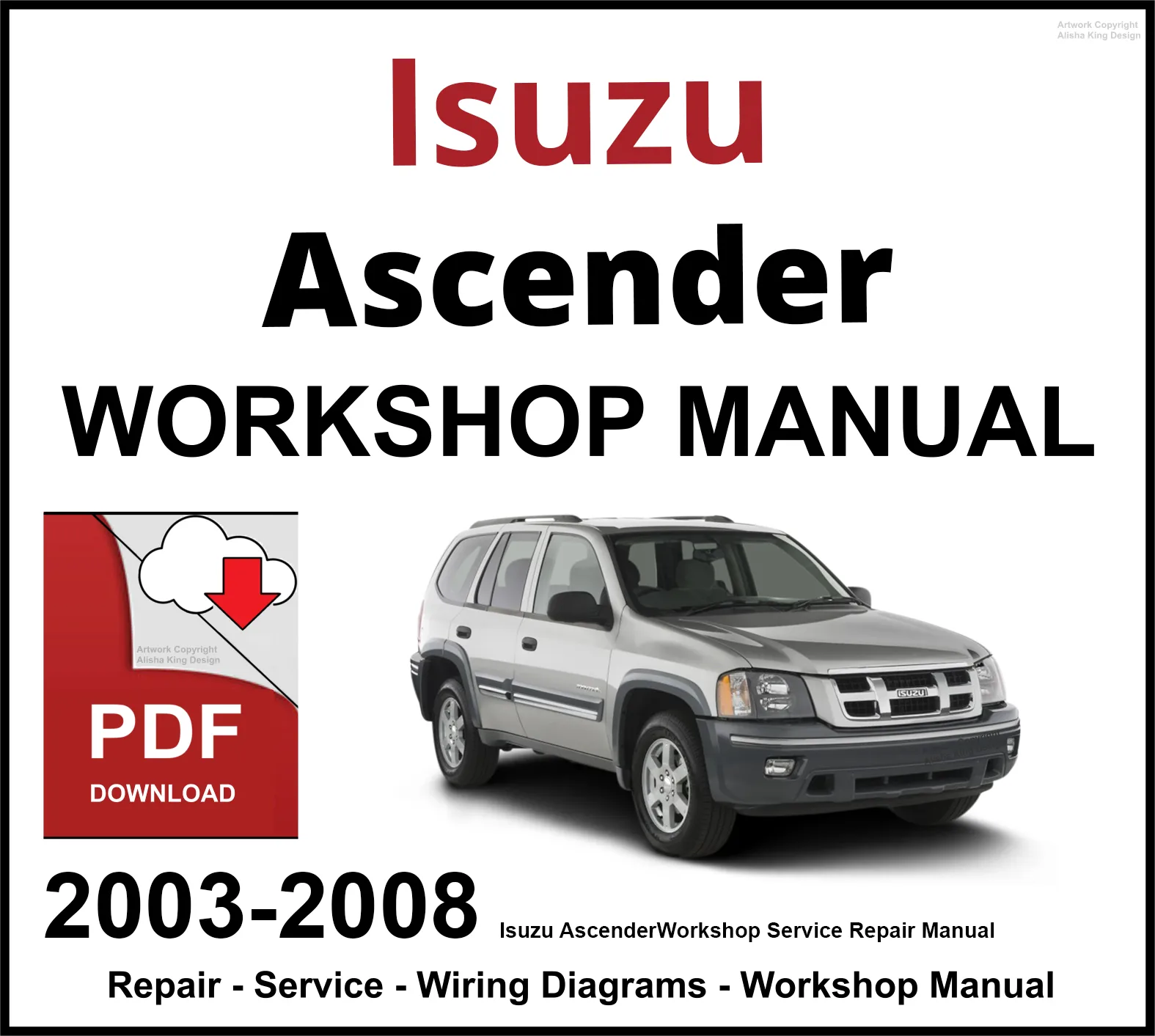
The 2003 Isuzu Ascender is a mid-to-full-size body-on-frame SUV built on General Motors' GMT370 platform as the replacement for the long-running Isuzu Trooper. Offered exclusively as a 7-passenger extended-wheelbase model for its inaug...
The 2003 Isuzu Ascender is a mid-to-full-size body-on-frame SUV built on General Motors' GMT370 platform as the replacement for the long-running Isuzu Trooper. Offered exclusively as a 7-passenger extended-wheelbase model for its inaugural year, the 2003 Ascender features a choice between an inline-six or V8 engine, rear- or four-wheel drive, and impressive towing capability.
Contents
Background and Platform Origins
When Isuzu discontinued its flagship Trooper SUV after 2002, the Japanese automaker needed a robust vehicle to serve as its top-tier utility offering in North America. Rather than designing a new vehicle from the ground up, Isuzu partnered with General Motors. The result was the 2003 Isuzu Ascender, a corporate sibling to the GMC Envoy XL, Chevrolet TrailBlazer EXT, and Buick Rainier.
Manufactured at GM's Moraine, Ohio assembly plant, the 2003 model year Ascender was strictly produced on the extended GMT370 chassis. This long-wheelbase platform stretched the vehicle's total length to 207.8 inches with a 129.0-inch wheelbase—16 inches longer than standard mid-size GMT360 SUVs. This extra length allowed Isuzu to fit a functional third-row seat capable of accommodating adult passengers, a key selling point in the competitive early-2000s family SUV market.
To differentiate the Ascender from its GM counterparts, Isuzu fitted unique exterior styling cues. These included a signature five-slot Isuzu front grille, modified front fascia, distinctive alloy wheel designs, and Isuzu badging throughout the interior and exterior. Additionally, Isuzu sought to outpace GM competitors by offering superior warranty coverage when new, including a 7-year/75,000-mile powertrain warranty.
Powertrains and Performance Metrics
For the 2003 model year, Isuzu offered two distinct General Motors engines, both paired exclusively with a smooth-shifting GM Hydra-Matic 4L60-E four-speed automatic transmission.
| 4.2L Vortec 4200 Inline-6 (LL8) | 5.3L Vortec 5300 V8 (LM7) |
|---|---|
| 275 hp / 275 lb-ft Torque | 285 hp / 325 lb-ft Torque |
| Standard on S and LS | Standard on Limited, Optional LS |
4.2-Liter Vortec Inline-Six (LL8)
The standard powerplant for the 2003 Ascender S and LS trims was the advanced 4.2-liter dual-overhead-cam (DOHC) inline-six engine. Producing 275 horsepower at 6,000 RPM and 275 lb-ft of torque at 3,600 RPM, this engine featured an aluminum block and cylinder head, variable valve timing (VVT) on the exhaust side, and electronic throttle control. The inline configuration naturally balanced primary and secondary engine forces, giving the base Ascender exceptionally smooth operation and competitive acceleration.
5.3-Liter Vortec V8 (LM7)
Standard on the top-tier Limited trim and optional on the LS trim was GM’s 5.3-liter overhead-valve (OHV) V8 engine. While its peak output of 285 horsepower was only 10 horsepower higher than the base inline-six, the V8 delivered significantly more low-end grunt with 325 lb-ft of torque at 4,000 RPM. This extra torque made the V8 variant preferred for heavy-duty towing, hauling full passenger loads, or navigating steep mountain grades.
Drivetrain Options and Towing Capacity
Both engine configurations could be paired with standard Rear-Wheel Drive (2WD) or an optional four-wheel-drive system (4WD). The 4WD system featured GM's Autotrac transfer case, providing four distinct operational modes selected via a dash-mounted knob:
- 2HI: Pure rear-wheel drive for optimal fuel efficiency on dry pavement.
- Auto 4WD: Automatically engages front-wheel drive when rear wheel slip is detected.
- 4HI: Locks the transfer case into a 50/50 front/rear torque split for snow, gravel, or slippery conditions.
- 4LO: Engages low-range reduction gearing for severe off-road driving or launching heavy boats up steep ramps.
When properly equipped with the V8 engine and factory towing package, the 2003 Ascender boasts a maximum towing capacity of 7,200 pounds (6,400 pounds for 4WD models), while the inline-six model manages up to 5,700 pounds.
Trim Levels, Interior Layout, and Equipment
The 2003 Isuzu Ascender was marketed across three primary trim levels: S, LS, and Limited. Because all 2003 models utilized the extended chassis, three-row 7-passenger seating was standard across the lineup.
- S Trim (Base): Cloth seating, 16" alloy wheels, dual-zone AC
- LS Trim: Power driver seat, upgraded cloth, keyless entry
- Limited Trim: Leather, V8 engine, rear air suspension, Bose sound
Interior Space and Cargo Versatility
The cabin of the 2003 Ascender focuses on utility and passenger volume. Rear side doors on the extended chassis are wider than standard SUV doors, making entry and exit into the third row relatively easy.
Cargo volume is impressive across all trim levels:
- Behind Third Row: 22.0 cubic feet
- Behind Second Row (Third Row Folded): 62.0 cubic feet
- Maximum Cargo Volume (2nd & 3rd Rows Folded): 100.2 cubic feet
Both the 60/40-split second-row and 50/50-split third-row seats fold flat into the floor, creating a uniform, level loading deck suitable for bulky cargo.
Feature Breakdown by Trim
S (Base Trim)
- Exterior: 16-inch aluminum alloy wheels, roof side rails, black body-side moldings, automatic headlights.
- Interior: Dual-zone manual climate control with separate rear-seat passenger climate controls, tilt steering wheel, power windows, power locks, and keyless entry.
- Audio: Premium AM/FM CD stereo system with six speakers.
LS Trim
- Exterior: Body-color exterior trim, fog lights, heated power side mirrors.
- Interior: 8-way power adjustable driver's seat, upgraded plush cloth upholstery, auto-dimming rearview mirror with integrated compass and outside temperature display, leather-wrapped steering wheel with audio controls.
- Options: Power sunroof, rear-seat DVD entertainment system, Bose sound system.
Limited Trim
- Exterior: 17-inch polished aluminum wheels, chrome grille accents, standard rear load-leveling air suspension.
- Interior: Full leather seating surfaces, heated front seats with 8-way power adjustment for both driver and front passenger, driver-seat memory settings, dual-zone automatic climate control.
- Audio: Premium 275-watt Bose 6-speaker audio system with rear audio control controls and headphone jacks.
2003 Isuzu Ascender Technical Specifications
The following table details key specifications for the 2003 Isuzu Ascender across its two main powertrain configurations:
| Specification / Feature | 4.2L Inline-6 (2WD / 4WD) | 5.3L V8 (2WD / 4WD) |
|---|---|---|
| Engine Architecture | DOHC 24-Valve Inline-6 (LL8) | OHV 16-Valve V8 (LM7) |
| Displacement | 4,195 cc (256 cu in) | 5,328 cc (325 cu in) |
| Horsepower @ RPM | 275 hp @ 6,000 RPM | 285 hp @ 5,200 RPM |
| Torque @ RPM | 275 lb-ft @ 3,600 RPM | 325 lb-ft @ 4,000 RPM |
| Transmission | 4-Speed Automatic (GM 4L60-E) | 4-Speed Automatic (GM 4L60-E) |
| Overall Length | 207.8 in | 207.8 in |
| Wheelbase | 129.0 in | 129.0 in |
| Curb Weight | 4,770 lbs (2WD) / 4,970 lbs (4WD) | 4,890 lbs (2WD) / 5,090 lbs (4WD) |
| Max Towing Capacity | 5,700 lbs | 7,200 lbs (2WD) / 6,400 lbs (4WD) |
| Fuel Tank Capacity | 25.0 gallons | 25.0 gallons |
| EPA Fuel Economy (City/Hwy) | 15 / 19 MPG (2WD) | 14 / 18 MPG (4WD) | 14 / 18 MPG (2WD) | 13 / 17 MPG (4WD) |
Safety Ratings and Mechanical Systems
Safety Equipment and Crash Test Performance
The 2003 Isuzu Ascender comes equipped with multi-stage driver and front-passenger air bags, four-wheel anti-lock disc brakes (ABS), child seat lower anchors and tethers (LATCH), and three-point seatbelts for all seven seating positions. Front side-impact airbags were available as optional equipment.
In National Highway Traffic Safety Administration (NHTSA) crash testing conducted on equivalent GMT370 platform models, the vehicle achieved:
- Frontal Driver Impact: 4 out of 5 stars
- Frontal Passenger Impact: 4 out of 5 stars
- Side Barrier Impact (Front/Rear): 5 out of 5 stars
- Rollover Resistance: 3 out of 5 stars (typical for high-center-of-gravity SUVs from this era)
Chassis and Suspension Architecture
The Ascender relies on a boxed steel ladder frame, offering high torsional rigidity for towing and light off-roading. Up front, it features an independent short/long arm (SLA) suspension with coil-over shocks and a stabilizer bar. At the rear, it utilizes a 5-link solid axle with coil springs.
Limited models came standard with an electronically controlled rear air suspension system. Air springs replaced rear coil springs, while an onboard air compressor automatically adjusted vehicle ride height based on cargo load or trailer tongue weight.
Known Common Reliability Issues and Weak Points
Purchasing or maintaining a 2003 Isuzu Ascender requires awareness of recurring technical issues common to early GM GMT360/370 platform vehicles.
| Issue Description | Symptoms / Impact |
|---|---|
| Fuel Level Sending Unit Failure | Inaccurate or erratic fuel gauge |
| HVAC Blend Door Actuator Failure | Clicking noises, wrong temp air |
| Rear Air Suspension Leak (Limited) | Sagging rear end, compressor run |
| Electro-Viscous Fan Clutch Fault | Engine overheating, loud fan noise |
| Instrument Cluster Stepper Motors | Dead or stick speedometer/gauges |
1. Fuel Level Sending Unit Failure
A frequent point of failure across GMT360 vehicles is the fuel pump module's internal level sensor resistor track. Sulphur buildup or wear causes the fuel gauge to read empty continuously or jump erratically between full and empty, triggering a Check Engine light (P0463 code). Replacing the sender or entire fuel pump assembly resolves the issue.
2. HVAC Actuator Failures
The climate control system uses several small electronic blend door actuators underneath the dashboard. These plastic-geared motors regularly strip or break, resulting in a persistent clicking noise behind the dash or an inability to switch air temperature between hot and cold.
3. Rear Air Suspension Leaks (Limited Trim)
On Limited models, the rubber air bladders of the rear air suspension rot and develop pinhole leaks over time. This causes the air compressor to run continuously, eventually burning out the compressor motor and leaving the rear suspension resting low on its bump stops. Many owners choose to replace worn air bladders with standard steel coil springs using aftermarket conversion kits.
4. Electro-Viscous Fan Clutch
The 4.2L engine uses an electronically controlled, viscous-coupled cooling fan clutch. Early iterations were prone to internal electrical failure or mechanical lockup. Symptoms include severe engine roaring, degraded acceleration, decreased fuel economy, or engine overheating at low speeds.
5. Instrument Cluster Stepper Motor Failures
The gauge cluster in 2003 models utilizes mechanical stepper motors for speedometer, tachometer, temperature, and oil pressure needles. These motors frequently fail, causing individual gauges to lock up, read inaccurately, or freeze completely.
Comparison: 2003 Isuzu Ascender vs. Siblings and Competitors
To evaluate the 2003 Ascender's market placement, it helps to contrast it with both its GM corporate siblings and mid-size 3-row rivals from the same era, such as the Ford Explorer 7-passenger and Dodge Durango.
2003 Isuzu Ascender
- 129.0" Wheelbase
- 275 hp I-6 / 285 hp V8
- Max Towing: 7,200 lbs
2003 Ford Explorer 7-Pass
- 113.7" Wheelbase
- 210 hp V6 / 239 hp V8
- Max Towing: 7,000 lbs
2003 Dodge Durango
- 116.2" Wheelbase
- 235 hp V6 / 245-250 hp V8
- Max Towing: 7,550 lbs
Versus GMC Envoy XL & Chevrolet TrailBlazer EXT: Mechanically identical under the body panels. The Ascender stood out primarily due to Isuzu's extended warranty terms when sold new, subtle front-end aesthetic changes, and lower resale pricing in the secondary market.
Versus Ford Explorer (7-Passenger): The Explorer offered an independent rear suspension, providing a smoother ride on highway pavement, but the extended Ascender delivered substantially more adult legroom in the third row and a more powerful standard inline-six engine compared to Ford's base 210-hp 4.0L V6.
Versus Dodge Durango: The 2003 Durango featured heavy V8 options and high towing capacity, but suffered from poorer interior packaging, tight third-row seating, and lower fuel economy than the 4.2L Ascender.
Buying Advice and Used Market Checklist
When inspecting a 2003 Isuzu Ascender, verify key platform-specific mechanical areas to avoid unexpected repair costs.
- Check frame and rocker panels for excessive rust
- Verify Autotrac 4WD switches smoothly into 2HI, Auto, 4HI, 4LO
- Inspect rear air suspension height on Limited models
- Scan OBD-II system for pending P0463 (Fuel Sender) or HVAC codes
- Test all instrument cluster gauges for smooth operation
- Listen for fan clutch roar during cold engine starts
- Inspect Underbody and Chassis Rust: Pay careful attention to frame rails, suspension mounting points, and brake/fuel lines underneath. GMT370 vehicles driven in cold-weather salt-belt regions are vulnerable to chassis corrosion.
- Test the 4WD System: Rotate the dash selector knob between 2HI, Auto 4WD, 4HI, and 4LO with the vehicle idling or moving at low speeds. Listen for smooth transfer case motor engagement and verify that the front axle disconnects properly without clunking.
- Check Maintenance Records for Transmission Service: The 4L60-E four-speed transmission is reliable when fluid change intervals (every 30,000 to 50,000 miles) are maintained. Check the transmission dipstick for burnt fluid or metal particles.
- Evaluate Electronics: Verify that all instrument cluster needles move smoothly, test dual climate control functions across all vents, and ensure the power window regulators operate without grinding.
Frequently Asked Questions
Is the 2003 Isuzu Ascender standard with 7 seats?
Yes. For the 2003 model year, the Isuzu Ascender was offered exclusively on the extended GMT370 long-wheelbase platform, which included 3-row, 7-passenger seating as standard across all trims (S, LS, and Limited). Isuzu introduced the shorter 5-passenger version for the 2004 model year.
Who built the 2003 Isuzu Ascender?
The 2003 Isuzu Ascender was built by General Motors at its Moraine Assembly plant in Ohio, USA. It shares engine options, chassis architecture, transmission components, and electrical systems with the GMC Envoy XL and Chevrolet TrailBlazer EXT.
What engine options are available in the 2003 Isuzu Ascender?
The 2003 Ascender comes with two engine choices: a standard 4.2-liter DOHC Vortec inline-six producing 275 horsepower and 275 lb-ft of torque, or an optional 5.3-liter OHV Vortec V8 producing 285 horsepower and 325 lb-ft of torque.
What is the towing capacity of a 2003 Isuzu Ascender?
When equipped with the 5.3-liter V8 engine and factory towing package, the 2-wheel-drive 2003 Ascender can tow up to 7,200 pounds (6,400 pounds for 4WD V8 models). Models with the 4.2-liter inline-six engine carry a maximum towing rating of 5,700 pounds.
How do I fix the rear suspension sagging on a 2003 Ascender Limited?
Rear suspension sagging on the Limited trim is caused by leaking rubber air springs or a failed self-leveling compressor. You can replace the air springs and compressor with OEM-style components, or install an aftermarket rear coil spring conversion kit to permanently eliminate the air system.
Practical Recommendation
The 2003 Isuzu Ascender is a solid choice for buyers seeking a heavy-duty, traditional body-on-frame 7-passenger SUV. Its shared GM platform means replacement parts—such as brake rotors, suspension linkages, and powertrain components—remain inexpensive and widely available through auto parts retailers and GM service outlets.
For maximum long-term durability and lower maintenance complexity, prioritize an LS trim with the 4.2-liter inline-six engine and traditional rear coil springs. This setup avoids the air suspension issues of the Limited trim while delivering dependable performance, adult-capable third-row seating, and strong towing capability.
Image Gallery