Navigating Amazon Remote Careers: Official Portals, Job Search Strategies, and Application Workflows for 2026
Securing an official remote position through amazon remote careers org requires utilizing Amazon's verified recruitment channels, specifically the Amazon Jobs portal, to filter for virtual positions while avoiding widespread third-part...
Securing an official remote position through amazon remote careers org requires utilizing Amazon's verified recruitment channels, specifically the Amazon Jobs portal, to filter for virtual positions while avoiding widespread third-party recruitment scams. This guide details the exact application workflows, technological requirements, and strategic resume optimizations necessary to successfully land a distributed role at Amazon in 2026.
Contents
Understanding Amazon's Official Remote Work Ecosystem
Amazon operates one of the largest distributed workforces globally, encompassing customer service, software engineering, cloud architecture, digital marketing, and project management. However, navigating this landscape requires distinguishing between fully remote roles, hybrid positions requiring occasional office attendance, and work-from-home customer service positions that require candidates to reside within specific geographic regions or states.
The primary hurdle applicants face is navigating domain spoofing and fraudulent job boards that mimic official branding. Official recruitment operations are exclusively hosted on verified corporate domains such as amazon.jobs, amazon.workday.com, and internal employee referral portals. Understanding these distinctions ensures applicants direct their time and telemetry data only to legitimate hiring pipelines.
Geographic and Regional Eligibility Rules
Even when a position is classified as remote, specific compliance frameworks dictate who can apply:
- Tax Nexus Compliance: Amazon must comply with the local, state, and national tax laws of the employee's primary residential address. Consequently, job postings frequently specify eligible states or countries.
- Home Office Security Standards: Remote corporate and technical roles require a secure, dedicated workspace with a hardwired ethernet connection meeting minimum broadband upload and download speeds, typically enforced via mandatory network speed tests during the onboarding phase.
- Equipment Provision: Amazon typically supplies core hardware, including encrypted laptops, monitors, and necessary peripherals, while the employee remains responsible for maintaining high-speed internet infrastructure.
Essential Prerequisites and Technical Readiness
Before initiating an application on amazon remote careers org or the core jobs portal, candidates must prepare their professional profiles to pass automated applicant tracking systems (ATS). Amazon relies heavily on specialized internal parsing tools that scan resumes for technical competencies, leadership principles alignment, and quantifiable career achievements.
Core Technical Competencies by Department
Different organizational verticals demand distinct technical foundations. Aligning your resume to these requirements directly impacts your conversion rate from applicant to initial recruiter screen:
| Department | Primary Technical Stack | Core Experience Benchmarks | Equipment/Infrastructure Requirements |
|---|---|---|---|
| Customer Service (VSS) | CRM software, VoIP routing tools, ticketing systems | 1+ years in client-facing support or high-volume issue resolution | Dedicated quiet room, hardwired broadband (minimum 50 Mbps down / 10 Mbps up) |
| Software Development Engineering | Java, Python, C++, AWS, distributed microservices | 3+ to 8+ years designing scalable cloud infrastructure | High-performance developer workstation (provided), secure VPN access |
| Cloud Support / Solutions Architecture | AWS IAM, EC2, S3, Kubernetes, Terraform, Linux | AWS Certifications (Solutions Architect Associate/Professional) | Enterprise-grade broadband, multi-monitor configuration |
| Project & Program Management | Agile, Scrum, Jira, Confluence, SQL data querying | 4+ years managing cross-functional technical launches | Standard corporate laptop setup, advanced spreadsheet proficiency |
Aligning with Amazon Leadership Principles
Technical competence alone is insufficient. Amazon's corporate culture evaluates every candidate against its 16 Leadership Principles, which include Customer Obsession, Ownership, Invent and Simplify, and Bias for Action. Applications and interviews must explicitly demonstrate these principles through the STAR method (Situation, Task, Action, Result), detailing how past projects delivered measurable business value.
Step-by-Step Guide to Applying for Remote Roles
Executing a structured search and application workflow prevents wasted effort and maximizes visibility to hiring managers.
Step 1: Accessing the Verified Portal
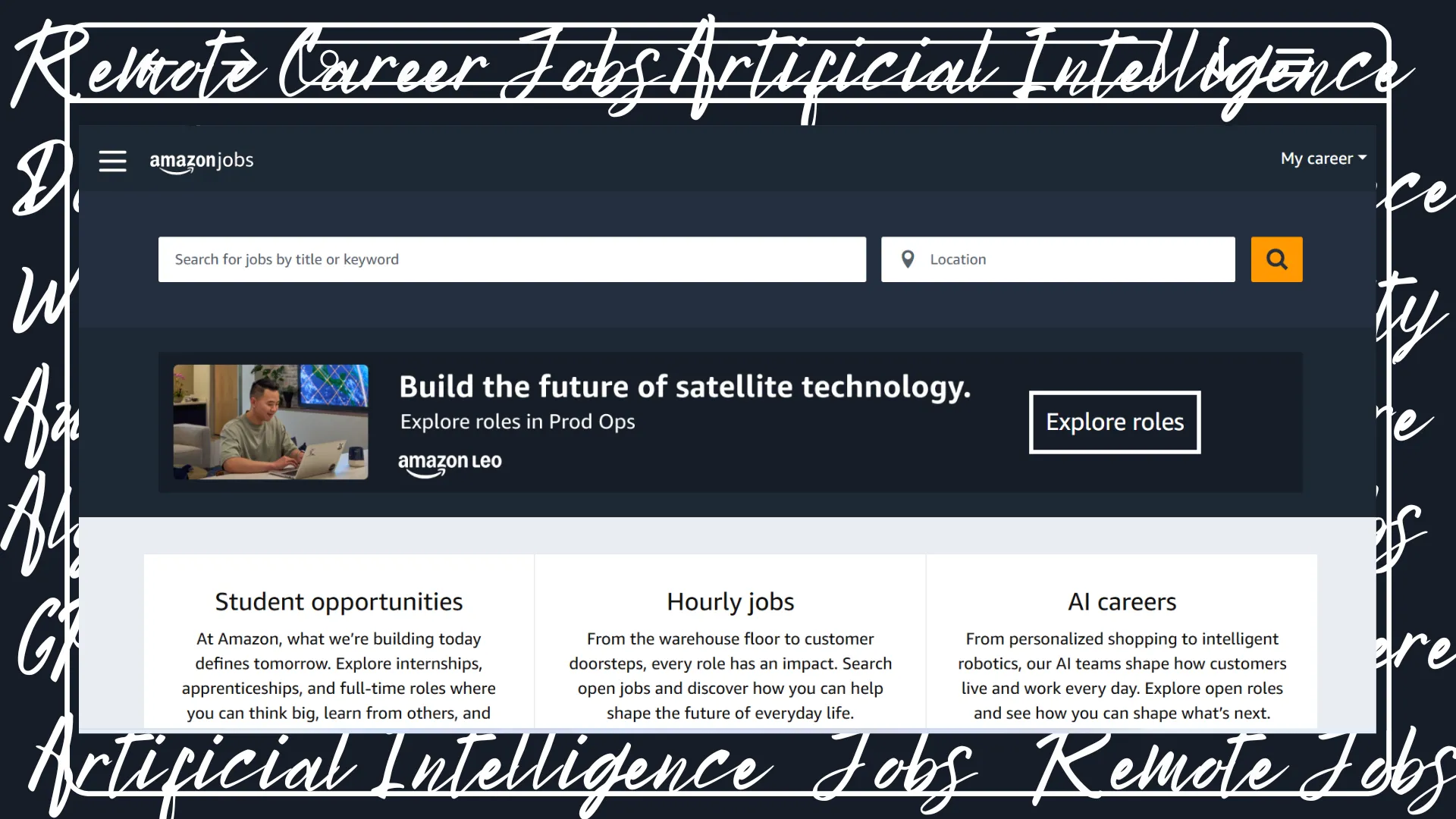
Navigate directly to the official Amazon Jobs search engine. Avoid clicking links from unsolicited email notifications or unverified social media postings that claim to offer direct-hire positions without an interview loop.
Step 2: Applying Advanced Filters
Utilize the granular filtering tools on the job board to isolate distributed opportunities:
- Enter broad keywords matching your expertise (e.g., "Software Engineer," "Customer Service," "Solutions Architect").
- Locate the "Workplace Type" filter panel on the left sidebar.
- Select the checkbox designated for Virtual or Remote.
- Filter further by country and state/province to ensure your physical residence aligns with the compliance parameters of the opening.
Step 3: Optimizing Your Resume for the ATS
Before uploading, tailor your curriculum vitae to mirror the language found in the job description:
- Integrate exact phrasing for required tools, programming languages, or operational methodologies.
- Remove complex graphics, tables, or multi-column layouts that disrupt text parsing engines.
- Quantify achievements (e.g., "Reduced cloud infrastructure latency by 24% using optimized caching strategies").
Step 4: Submitting and Tracking the Application
Complete the profile creation process, upload your tailored resume, and answer any required supplemental assessment questions. Once submitted, monitor your candidate dashboard on the portal for status updates, which progress from "Application Submitted" to "Under Review" or "Interviewing."
Comparing Amazon Remote Career Verticals
Evaluating which division best matches your background helps prevent application fatigue and ensures focused interview preparation.
Corporate & Technical vs. Customer Service Operations
- Corporate & Technical Roles: Typically involve rigorous, multi-stage interview loops including online coding assessments, system design evaluations, and multiple behavioral rounds. Compensation packages include competitive base salaries, sign-on bonuses, and Restricted Stock Units (RSUs).
- Customer Service (Virtual Customer Service - VCS): Focuses on empathetic problem-solving, rapid ticket navigation, and adherence to quality assurance metrics. These roles often feature structured hourly pay, predictable scheduling, and internal career progression pathways into operational management or technical support.
Pros and Cons of Working Remotely at Amazon
Distributed employment offers significant lifestyle adjustments alongside distinct corporate challenges.
Advantages
- Geographic Flexibility: Eliminates daily commuting overhead, allowing professionals to work from approved home environments while earning metropolitan-tier compensation.
- Comprehensive Benefits: Full-time remote employees receive robust health insurance, 401(k) matching programs, parental leave, and developmental resources on par with on-site corporate staff.
- Scale of Impact: Distributed teams collaborate on global infrastructure, touching millions of consumer and enterprise touchpoints daily.
Disadvantages
- High Performance Expectations: Amazon's metrics-driven culture holds remote staff to rigorous performance benchmarks, tracking operational velocity and output closely.
- Asynchronous Communication Demands: Working across multiple global time zones often requires managing communication flows outside traditional local business hours.
- Onboarding Autonomy: Initial training requires strong self-motivation to navigate complex internal systems with minimal physical oversight.
Troubleshooting Common Application and Assessment Roadblocks
Applicants frequently encounter technical barriers or automated rejections during the recruitment cycle. Applying targeted troubleshooting fixes resolves these friction points.
- Immediate Automated Rejection: If your resume is rejected within hours of submission, it typically indicates a mismatch with baseline keyword requirements or geographic eligibility. Review the job posting's required location and ensure your resume explicitly highlights mandatory technical prerequisites.
- Assessment Glitches: Technical coding assessments or virtual work simulations are hosted on third-party platforms. Ensure your browser disables ad-blockers, uses a hardwired internet connection, and operates in an updated environment to prevent unexpected timeouts during timed evaluations.
- Communication Delays: Amazon's hiring volume can cause scheduling bottlenecks. If your status remains unchanged for more than three weeks after an initial recruiter phone screen, utilize the contact mechanism within your candidate portal to request a professional status update.
Frequently Asked Questions
How do I verify if a job posting for Amazon remote work is legitimate?
Legitimate remote positions are exclusively listed on official domains ending in amazon.jobs or hosted via Amazon's enterprise Workday portal. Amazon recruiters will never request financial payment, purchase of home equipment out-of-pocket via unverified wire services, or conduct formal interviews exclusively through encrypted instant messaging apps without a video component.
Do Amazon remote employees need to live in specific locations?
Yes. Due to state and international tax nexus laws, as well as data privacy regulations, remote employees must maintain their primary residence within approved states or countries explicitly listed on the individual job requisition at the time of application.
What equipment does Amazon provide for remote workers?
For corporate and technical roles, Amazon supplies an encrypted laptop, security tokens, and necessary monitors. Virtual customer service representatives typically receive a company-issued laptop and headset, while the employee must supply high-speed broadband internet that meets strict minimum speed thresholds.
Are all Amazon customer service jobs remote?
No. While Amazon employs thousands of Virtual Customer Service (VCS) agents, it also operates physical customer service and fulfillment centers globally. Applicants must filter specifically for "Virtual" designations when browsing customer support openings.
How long does the Amazon remote interview process take?
The timeline varies widely based on seniority and department. Entry-level customer service roles may complete hiring loops within one to two weeks, whereas senior software engineering or cloud architecture positions can involve a four-to-eight-week process spanning recruiter screens, technical assessments, and a multi-person virtual "onsite" panel.
Can I work remotely from outside my home country for Amazon?
Generally no. Permanent cross-border remote work is constrained by international labor laws, immigration statutes, tax compliance, and data security mandates. Temporary workations are subject to strict internal corporate compliance approvals and limited duration windows.
Secure Your Remote Future with Amazon Today
Finding success within amazon remote careers org requires diligence, adherence to verified application portals, and careful alignment with Amazon's cultural and technical expectations. Review current virtual openings on the official jobs portal, tailor your resume to reflect targeted technical proficiencies and leadership principles, and take the first step toward a rewarding distributed career today.
Meta:
Image Gallery