How to Jump Start a Hyundai Elantra: Step-by-Step Safety Guide
To jump start a standard Hyundai Elantra, connect the red cable clamp to the dead Elantra battery’s positive (+) terminal, then to the donor battery’s positive terminal. Connect the black cable clamp to the donor battery’s negative (-)...
To jump start a standard Hyundai Elantra, connect the red cable clamp to the dead Elantra battery’s positive (+) terminal, then to the donor battery’s positive terminal. Connect the black cable clamp to the donor battery’s negative (-) terminal, and clamp the remaining black cable to an unpainted metal ground on the Elantra’s engine block. Start the booster vehicle, wait several minutes, and start the Elantra.
Contents
Preparing to Jump-Start Your Hyundai Elantra: Safety & Tools
A dead car battery is one of the most common causes of unexpected vehicle breakdown. Jump-starting a Hyundai Elantra requires basic preparation to protect both your safety and your vehicle’s sensitive onboard computer systems. Modern vehicles contain delicate electronic control units (ECUs), sensor networks, and infotainment systems that can be damaged by sudden voltage spikes or reverse polarity if cables are connected improperly.
Before attempting a jump-start, verify that you have the proper tools on hand:
- Jumper Cables: Use heavy-duty jumper cables that are at least 10 to 12 feet long to allow comfortable reach between two vehicles. Cables rated at 4-gauge or 6-gauge are preferred because thicker wire copper conductors carry higher cranking current with less internal resistance and heat generation than flimsy 10-gauge consumer cables.
- Eye Protection and Gloves: Lead-acid car batteries contain sulfuric acid electrolyte and emit flammable hydrogen gas during discharge and rapid charging. Wearing safety glasses and heavy work gloves prevents chemical burns or injury from accidental sparks.
- Portable Lithium Jump Starter (Alternative): A standalone lithium-ion jump-starter pack provides a self-contained power source, eliminating the need for a second "donor" vehicle.
Before connecting any cables, position the booster vehicle close enough to the Elantra so the jumper cables reach comfortably without being stretched taut, but ensure the two cars do not touch each other. Set the parking brake firmly on both vehicles, shift automatic transmissions into Park (or Neutral for manual transmissions), turn off the ignition switches in both cars, and switch off all electrical accessories including headlights, air conditioning, seat heaters, and radio equipment.
Gas vs. Hybrid Hyundai Elantra Battery Locations
The jump-starting procedure for a Hyundai Elantra depends on the powertrain design of your specific model year, particularly whether you drive a conventional gasoline-powered Elantra or an Elantra Hybrid.
Gasoline Models (Conventional 12-Volt Lead-Acid/AGM Battery)
For standard gasoline-powered Hyundai Elantra models, the 12-volt battery is located directly under the hood in the engine bay on the driver’s side, positioned between the engine air filter assembly and the main power distribution fuse box.
The positive (+) terminal is covered by a red plastic protective cap that flips open to expose the lead post and terminal clamp. The negative (-) terminal is exposed or marked with a black plastic cover or minus sign nearby.
Elantra Hybrid Models (2021 and Newer)
Beginning with the 2021 model year, the Hyundai Elantra Hybrid does not use a traditional lead-acid battery under the hood. Instead, Hyundai integrated a 12-volt lithium-ion accessory battery directly into the main high-voltage lithium-ion polymer hybrid battery pack beneath the rear passenger seats.
To handle a discharged 12-volt system in these hybrid vehicles, Hyundai engineered a dedicated 12V Battery Reset button located on the lower instrument panel to the left of the steering wheel. Pressing this button connects the high-voltage hybrid battery to instantly recharge the internal 12-volt system without requiring external jumper cables.
If the hybrid high-voltage pack is also depleted, or if the system requires external power, remote jump-starting terminals are provided under the hood inside the engine compartment fuse box rather than directly on a physical battery.
Step-by-Step Guide: How to Jump Start a Standard Hyundai Elantra
Follow these sequential instructions carefully to safely jump-start a standard gasoline Hyundai Elantra using a booster car with a healthy 12-volt battery.
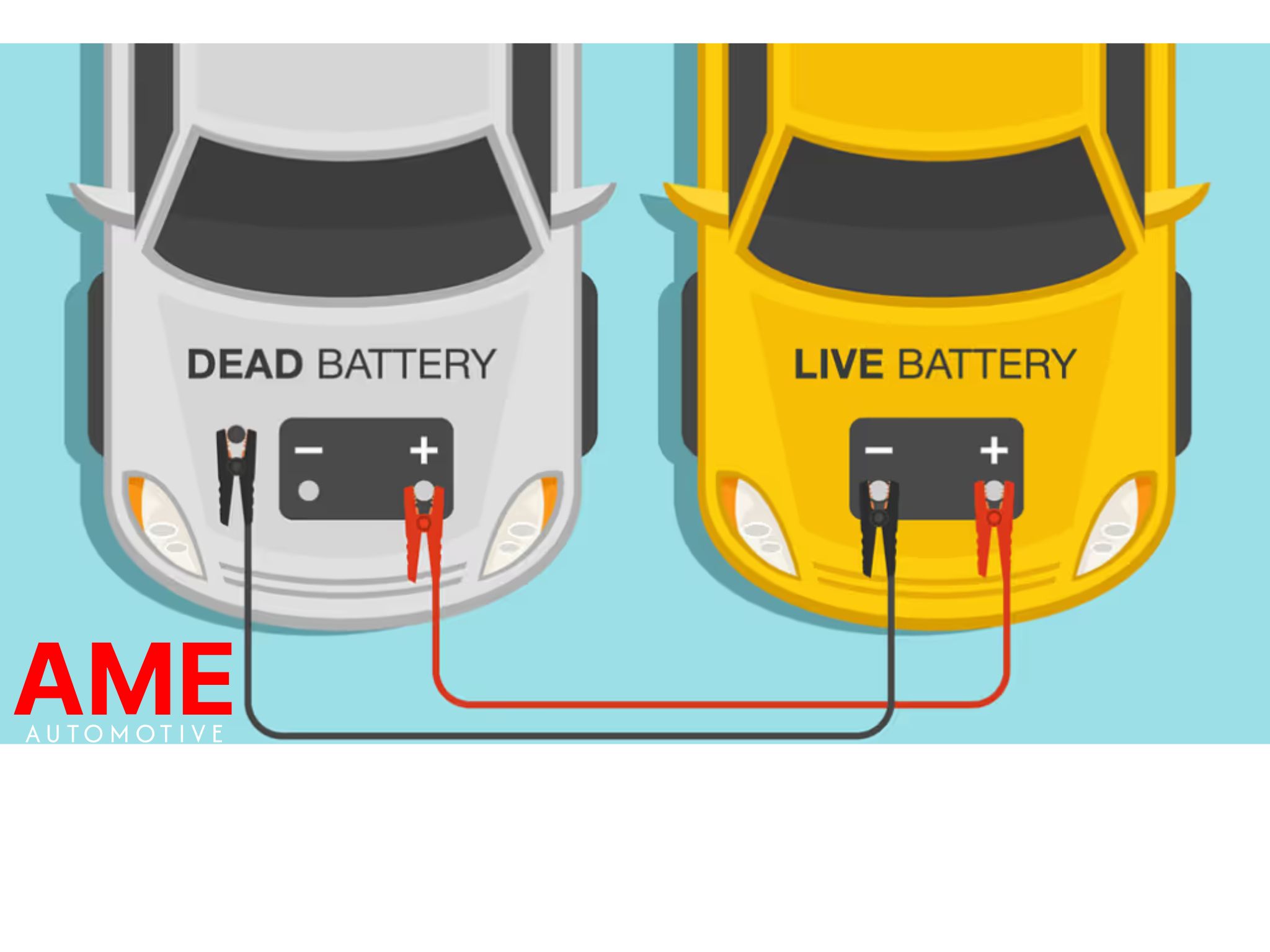
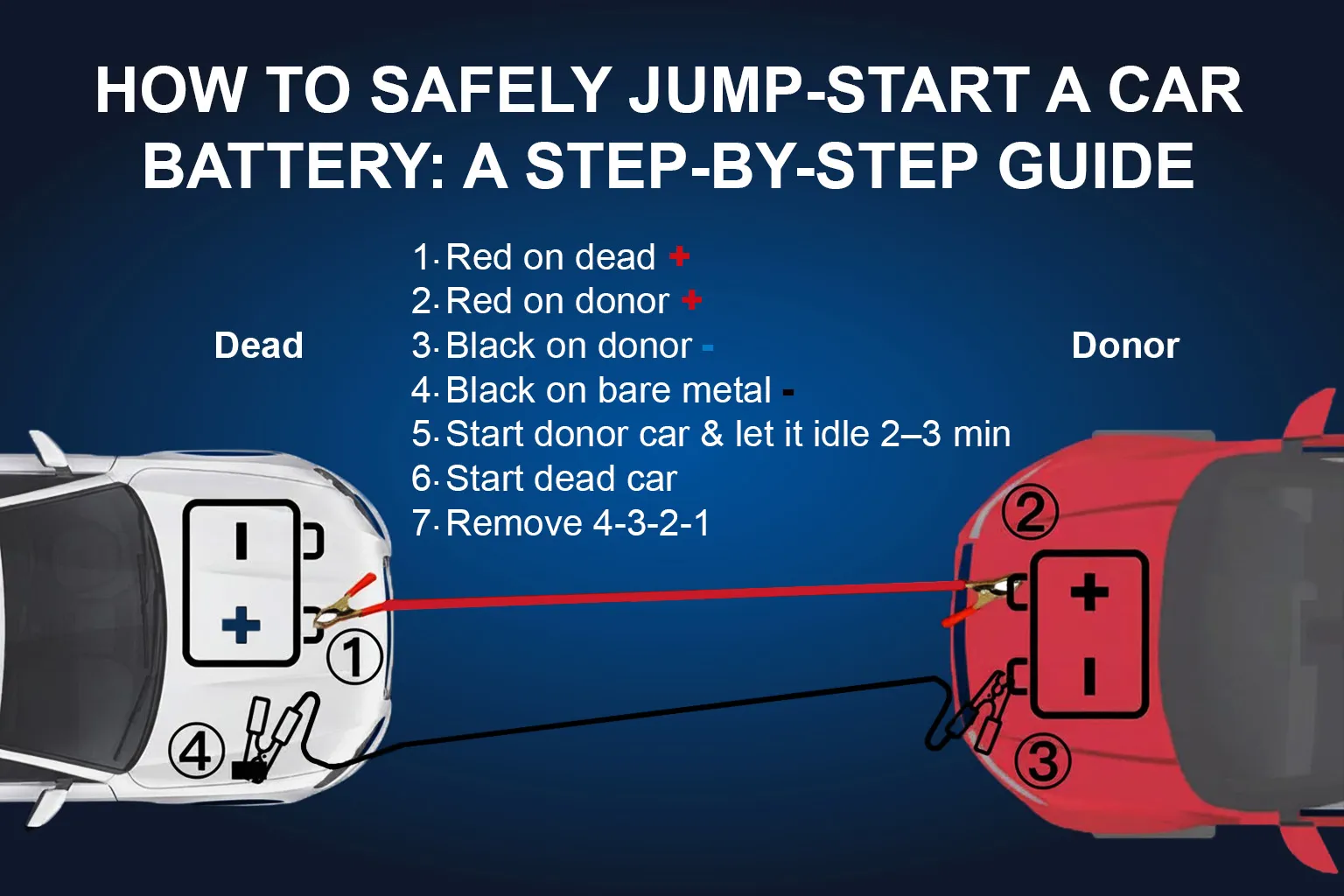
- Donor Vehicle:
- (+) Positive [Red #2]
- (-) Negative [Black #3]
- Dead Hyundai Elantra:
- (+) Positive [Red #1]
- Engine Ground [Black #4]
- Cable Connections:
- Red Cable connects Positives
- Black Cable connects Neg to Ground
Step 1: Open the Hood and Remove Protective Covers
Pop the hood latch inside the Elantra cabin, release the safety catch under the front grille, and secure the hood prop rod. Locate the 12-volt battery on the left side of the engine bay. Flip up the red plastic protective cover shielding the positive (+) battery terminal. Inspect the terminals for heavy white or blue corrosion powder; if severe buildup exists, brush it off with a dry rag before attaching clamps.
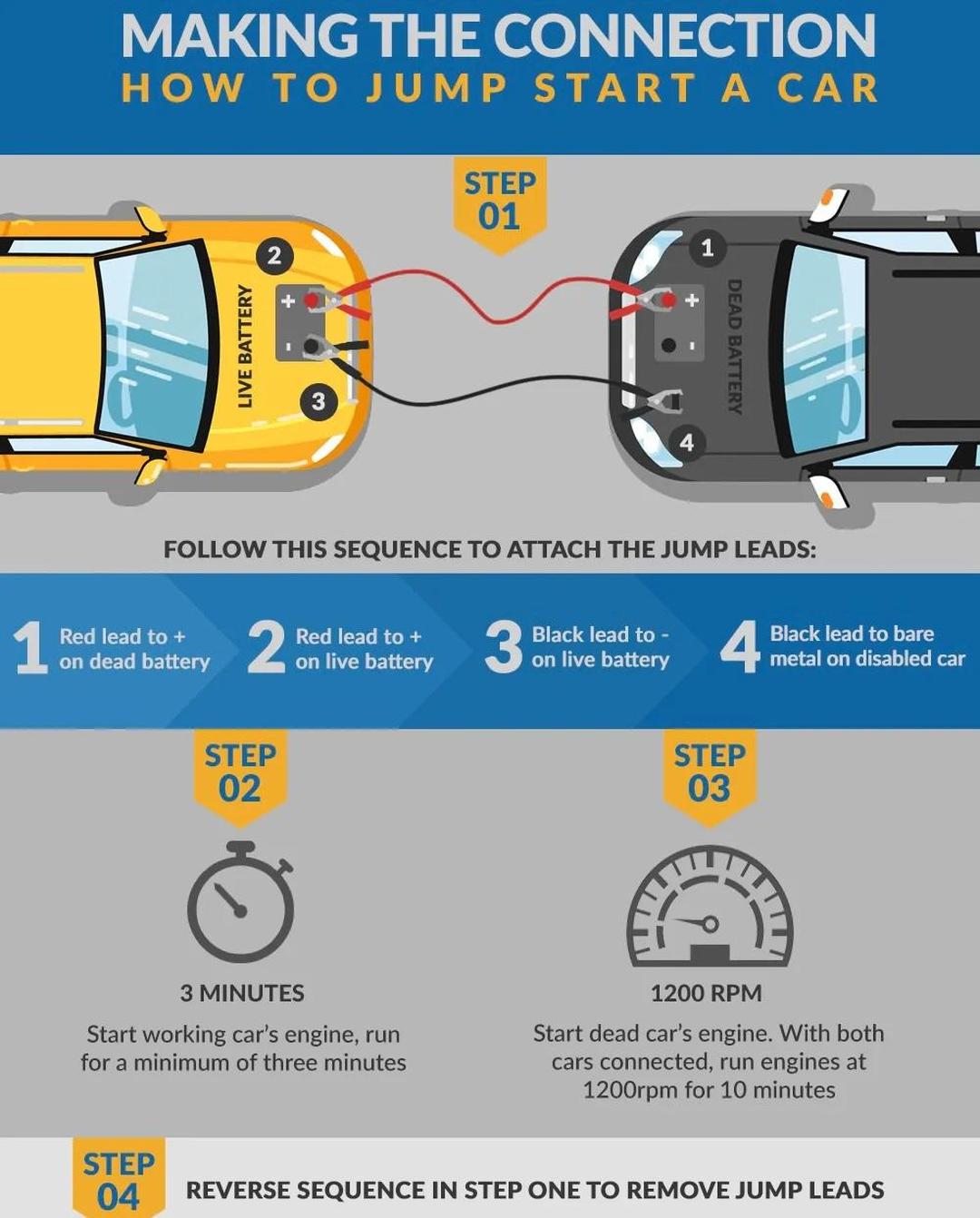
Step 2: Connect the First Positive (Red) Clamp
Take the red (positive) jumper cable clamp and attach it firmly to the positive (+) terminal of the dead Hyundai Elantra battery. Ensure the teeth grab securely onto the metal terminal bolt to establish solid electrical contact.
Step 3: Connect the Second Positive (Red) Clamp
Take the remaining red (positive) clamp on the opposite end of the cable assembly and attach it to the positive (+) terminal of the donor vehicle’s healthy 12-volt battery.
Step 4: Connect the First Negative (Black) Clamp
Attach the black (negative) clamp on the same end as the donor vehicle to the negative (-) terminal of the donor vehicle’s battery.
Step 5: Connect the Final Negative (Black) Clamp to Engine Ground
Do not attach the final black clamp to the dead Elantra battery’s negative post. Attaching the final clamp creates a small electrical arc (spark). Because discharged lead-acid batteries vent flammable hydrogen gas, sparking near the battery cover can trigger an explosion.
Instead, connect the second black (negative) clamp to a solid, unpainted metal structural surface on the Hyundai Elantra's engine block or chassis, such as an unpainted engine bracket, strut tower bolt, or heavy metal frame piece located at least 18 inches away from the battery.
Step 6: Start the Booster Vehicle and Charge
Start the engine of the donor vehicle and let it idle smoothly for 1 to 2 minutes. Then gently elevate the donor engine speed to roughly 1,500 to 2,000 RPM for 3 to 5 minutes. This allows the donor alternator to supply initial surface charge into the depleted Elantra battery.
Step 7: Attempt to Start the Hyundai Elantra
Turn the ignition key or press the Engine Start/Stop button on the Hyundai Elantra. If the engine cranks normally and starts, let both vehicles idle together with the cables attached for approximately 1 to 2 minutes to stabilize system voltage.
If the Elantra starter motor clicks rapidly or cranks slowly without starting, turn off the key, verify that all four jumper clamps are making tight metal-to-metal contact, wait an additional 5 minutes while the donor car runs, and try again.
Step 8: Disconnect the Jumper Cables in Exact Reverse Order
Disconnect the jumper cables in the exact reverse order in which they were attached, being careful never to let the metal clamps touch each other while connected to any power source:
- Remove the black (negative) clamp from the Elantra's engine ground point.
- Remove the black (negative) clamp from the donor battery's negative (-) terminal.
- Remove the red (positive) clamp from the donor battery's positive (+) terminal.
- Remove the red (positive) clamp from the Elantra's positive (+) terminal.
- Snap the red protective plastic cover back over the Elantra positive terminal.
How to Reset a Hyundai Elantra Hybrid Dead Battery
If your Elantra Hybrid (2021+) displays no power when you press the Start button, do not panic or immediately search for jumper cables. The integrated 12V battery protection system automatically disconnects the accessory battery when voltage drops below a safe threshold to prevent deep discharge.
Hyundai Elantra Hybrid 12V Reset:
- Press "12V Battery Reset" switch (left of steering wheel)
- Depress brake pedal within 15 seconds
- Press Start/Stop button
- System enters "READY" mode; High-voltage pack recharges 12V battery
Using the 12V Battery Reset Button
- Ensure the transmission is in Park.
- Locate the 12V Battery Reset button on the dashboard control panel located to the lower left of the steering wheel.
- Press the 12V Battery Reset switch once. This temporarily reconnects the internal 12V lithium accessory battery to the high-voltage traction pack.
- Within 15 seconds of pressing the reset button, firmly depress the brake pedal and press the engine Start/Stop button.
- The dashboard green "READY" indicator light will illuminate, indicating the hybrid system is active and the high-voltage pack is now actively charging the 12-volt system.
- Drive the vehicle normally for at least 30 minutes to allow the high-voltage converter to restore the 12V system's charge state.
Note: If you do not start the engine within 15 seconds of pressing the button, the protection circuit re-engages automatically, requiring you to repeat the process.
Cable Connection & Specification Reference Guide
| Parameter / Feature | Standard Gas Elantra | Elantra Hybrid (2021+) |
|---|---|---|
| Battery Location | Engine Bay (Driver Side) | Under Rear Seats (Integrated) |
| Battery Type | 12V Lead-Acid or AGM | 12V Lithium-Ion (Internal) |
| Primary Recovery Method | External Jumper Cables | Dashboard "12V Battery Reset" Button |
| Positive (+) Connection Point | Direct Battery Post under Red Cover | Dedicated Terminal in Engine Fuse Box |
| Negative (-) Ground Point | Unpainted Engine/Chassis Bolt | Unpainted Engine/Chassis Bolt |
| Recommended Cable Gauge | 4-Gauge or 6-Gauge Heavy Duty | N/A (Standard reset requires no cables) |
| Required Run Time After Jump | 20–30 Minutes Drive Time | 30 Minutes Drive Time (in READY mode) |
Common Jump-Starting Mistakes to Avoid
Avoiding operational errors prevents severe damage to your Hyundai Elantra’s electrical harness, alternator diode bridge, or central control modules.
- Reversing Cable Polarity: Connecting positive to negative or negative to positive will instantly blow major fuses—such as the high-amperage main alternator link fuse (ALT 150A/200A)—and can permanently fry electronic control units (ECU/PCM).
- Connecting Ground to the Dead Negative Terminal: Connecting the final black clamp directly to the discharged battery post significantly increases the risk of sparking adjacent to hydrogen gas venting, creating a battery explosion hazard.
- Allowing Clamps to Touch: Never let positive and negative cable clamps touch one another while attached to a live battery. Short-circuiting causes immediate extreme heating, melting wire insulation, and battery cell destruction.
- Turning off the Engine Immediately: Shutting down the Hyundai Elantra immediately after jump-starting it will leave you stranded again, as the alternator requires continuous engine running time to replenish the chemical charge in the battery.
- Using Damaged or Thin Cables: Inexpensive, thin 10-gauge cables cannot carry high starting currents without excessive heat buildup and severe voltage drop, often resulting in failed start attempts despite a good donor battery.
What to Do If Your Elantra Won't Start After a Jump
If your Hyundai Elantra fails to start even after proper jump-start procedures, evaluate the symptoms to pinpoint the underlying failure:
- Symptom: Engine Won't Start After Jump
- Rapid Clicking Sound:
- Loose/corroded clamp contact
- Insufficient donor charge time
- High contact resistance on ground
- Total Silence / No Lights:
- Blown main fusible link (ALT)
- Severely damaged 12V battery
- Blown ignition switch fuse
- Rapid Clicking Sound:
Rapid Clicking Noise During Cranking
A rapid click-click-click sound when hitting the Start button indicates that the starter solenoid is engaging, but insufficient electrical current is reaching the starter motor to turn the engine crank.
- Solution: Re-seat the jumper cable clamps to ensure they bite into bare metal through corrosion or paint. Allow the donor car to run at elevated idle for an extra 5 to 10 minutes to charge the dead battery further before trying again.
Complete Silence and No Dashboard Lights
If the dashboard remains completely dark despite connecting jumper cables, electrical current is not passing into the vehicle grid.
- Solution: Check the high-amperage main fuse link located inside the under-hood fuse box. If the clear window on the fuse link shows a broken wire, reverse polarity occurred, blowing the main fuse. The fuse link must be replaced before the car will operate.
Engine Cranks Strongly But Will Not Catch
If the engine turns over quickly and smoothly but fails to ignite, the problem is unrelated to 12V battery voltage.
- Solution: The vehicle may have an underlying fuel delivery issue, ignition coil fault, immobilizer key-recognition error, or crankshaft position sensor failure requiring diagnostic scanning by an automotive professional.
Next Actions: Post-Jump Maintenance and Battery Testing
Once your Hyundai Elantra is running safely after a jump-start, follow these immediate operational steps:
- Drive the Vehicle for at Least 30 Minutes: Do not immediately park or turn off the car. Drive at highway speeds for 20 to 30 minutes so the alternator delivers continuous current back to the 12-volt battery.
- Perform a Battery Load Test: A battery that has been fully discharged often suffers permanent plate sulfation, reducing its cold cranking amp (CCA) capability. Visit a local auto parts retailer or service center to get a free digital battery load test and alternator charge system test.
- Inspect Terminal Hardware: Check that the battery hold-down bracket and terminal clamp bolts are tight (typically 10mm bolt heads). Tighten loose connections to avoid intermittent starting problems.
- Plan for Battery Replacement: Lead-acid automotive batteries have a typical operational lifespan of 3 to 5 years depending on climate. If your Elantra battery is over three years old and experienced a deep discharge, replacing it proactively avoids future unexpected failures. For detailed maintenance specifications and battery replacement guidelines, consult the official Hyundai Owner's Manual.
Frequently Asked Questions
Can jump-starting damage the Hyundai Elantra’s electrical sensors or computer?
Jump-starting is safe as long as cable polarity is strictly observed (positive to positive, negative to ground) and high-quality jumper cables are used. However, incorrect connection (reverse polarity) or using ungrounded high-voltage commercial boost chargers can cause voltage spikes that destroy delicate onboard microcontrollers.
How long should I leave the Hyundai Elantra running after a jump-start?
Keep the engine running continuously for a minimum of 20 to 30 minutes, ideally while driving, to allow the alternator to recharge the battery. Idling in a parking space recharges the battery much more slowly than driving at normal speeds.
Where is the best ground point under the hood of a Hyundai Elantra?
The best ground point is an unpainted, solid metal component on the engine block, an unpainted strut tower bolt, or an exposed engine lifting bracket. Avoid connecting to fuel lines, intake manifolds, air conditioning tubing, or painted body panels that block electrical grounding.
What should I do if the 12V Battery Reset button does not work on my Elantra Hybrid?
If pressing the 12V Battery Reset button fails to restore power to an Elantra Hybrid, the high-voltage traction pack itself may be fully depleted or safety relays have tripped due to an electrical system fault. In this case, contact authorized Hyundai roadside assistance or an qualified service facility for professional diagnostic evaluation.
What size replacement battery does a gasoline Hyundai Elantra take?
Depending on the model year and trim level, gasoline Hyundai Elantras typically use a Group Size 47 (H5) or Group Size 121R battery with a minimum rating of 550 to 650 Cold Cranking Amps (CCA). Always verify the exact battery group size listed on the factory battery label or inside the owner’s manual before purchasing a replacement.
Image Gallery