How to Get Life Insurance Quotes on the Cheap Side
Securing low-cost life insurance requires comparing quotes across multiple providers, opting for term coverage over permanent policies, and optimizing your risk profile before applying. By accurately assessing your coverage needs, choo...
Securing low-cost life insurance requires comparing quotes across multiple providers, opting for term coverage over permanent policies, and optimizing your risk profile before applying. By accurately assessing your coverage needs, choosing non-smoker rates, and leveraging medical exam preparation, you can lock in robust financial protection at significantly reduced monthly premiums.
Contents
Finding affordable life insurance is one of the most effective steps you can take to protect your family’s financial future. However, navigating policy options, medical underwriting, and fluctuating rate charts can feel overwhelming. Premium prices for identical coverage amounts can vary by hundreds of dollars per year depending on the insurer, the policy structure, and how you apply.
Whether you are looking for digital comparison tools or consulting independent regional brokers, understanding how insurers price risk allows you to secure coverage on the cheap side without sacrificing policy quality or financial stability.
Policy Types: Choosing the Most Affordable Coverage
The single largest factor determining the price of a life insurance policy is the structure of the policy itself. Life insurance generally falls into two primary categories: term life insurance and permanent life insurance.
- LIFE INSURANCE POLICIES
- Term Life Coverage (Most Cost-Effective)
- Level Term
- Decreasing Term
- Permanent Policies (Higher Cost Margin)
- Whole Life
- Universal Life
- Term Life Coverage (Most Cost-Effective)
1. Term Life Insurance
Term life insurance covers you for a specified period, typically between 10 and 30 years. If you pass away during the term, the policy pays out a tax-free cash sum to your beneficiaries. If you outlive the policy term, coverage simply ends with no cash value payout.
- Level Term Insurance: The coverage amount (death benefit) and the monthly premium remain identical throughout the life of the policy. It represents the standard benchmark for budget-friendly coverage.
- Decreasing Term Insurance: The death benefit decreases over time, usually in step with a major repayment liability like a mortgage, while the premium remains fixed. Because the insurer's liability decreases over time, decreasing term policies are often cheaper than level term policies.
2. Permanent Life Insurance (Whole Life & Universal Life)
Permanent life insurance covers you for your entire lifetime, as long as premiums are paid. These policies include a cash-value savings component that grows over time on a tax-deferred basis.
Because permanent policies guarantee a payout and allocate part of your premium to an investment component, they are significantly more expensive than term policies—often costing five to ten times more for the same death benefit. For buyers prioritizing low monthly payments, term life insurance is almost always the right choice.
Key Factors That Influence Your Life Insurance Premiums
Insurance companies calculate premiums using actuarial science, assessing the statistical probability that they will need to pay out a claim during your policy term. Understanding these factors helps you manage your risk profile before requesting quotes.
- Age: Age is the single largest cost driver. Every year you delay purchasing coverage, your baseline premium increases by roughly 8% to 10%.
- Tobacco and Nicotine Use: Smokers, vapers, and users of nicotine replacement products pay up to 200% to 300% more for life insurance than non-users.
- Health and Medical History: Key metrics include Body Mass Index (BMI), blood pressure, cholesterol levels, personal medical history, and family medical history (specifically early-onset heart disease or cancer in parents or siblings).
- Occupation and Lifestyle: High-risk jobs (such as aviation, underground mining, or structural steelwork) and hobbies (scuba diving, rock climbing, or private piloting) trigger premium surcharges known as "flat extras."
- Coverage Amount and Term Duration: Requesting $1,000,000 in coverage for 30 years costs substantially more than securing $250,000 for 10 years.
Step-by-Step Guide to Getting Cheap Life Insurance Quotes
Securing the best rates requires a deliberate process rather than buying the first policy advertised online. Follow this systematic approach to optimize your policy costs.
- STEP 1: Calculate Exact Coverage Needs
- STEP 2: Compare Independent Brokers & Online Tools
- STEP 3: Select the Right Underwriting Path
- STEP 4: Optimize Health Metrics Prior to Medical Exam
- STEP 5: Choose Annual Billing & Lock In Rates
Step 1: Calculate Your Exact Coverage Needs
Over-insuring is a common reason policyholders overpay. Calculate your true financial obligations rather than picking an arbitrary dollar figure. Use the DIME method:
- Debt: Total outstanding non-mortgage debt (credit cards, personal loans, student loans).
- Income: Your annual income multiplied by the number of years your dependents need support (typically until children reach adulthood).
- Mortgage: Remaining balance on your primary residence.
- Education: Estimated future cost of college or vocational education for dependents.
Subtract existing liquid savings, existing employer-provided life insurance, and investments from this total to arrive at your net coverage requirement.
Step 2: Compare Quotes Across Multiple Distribution Channels
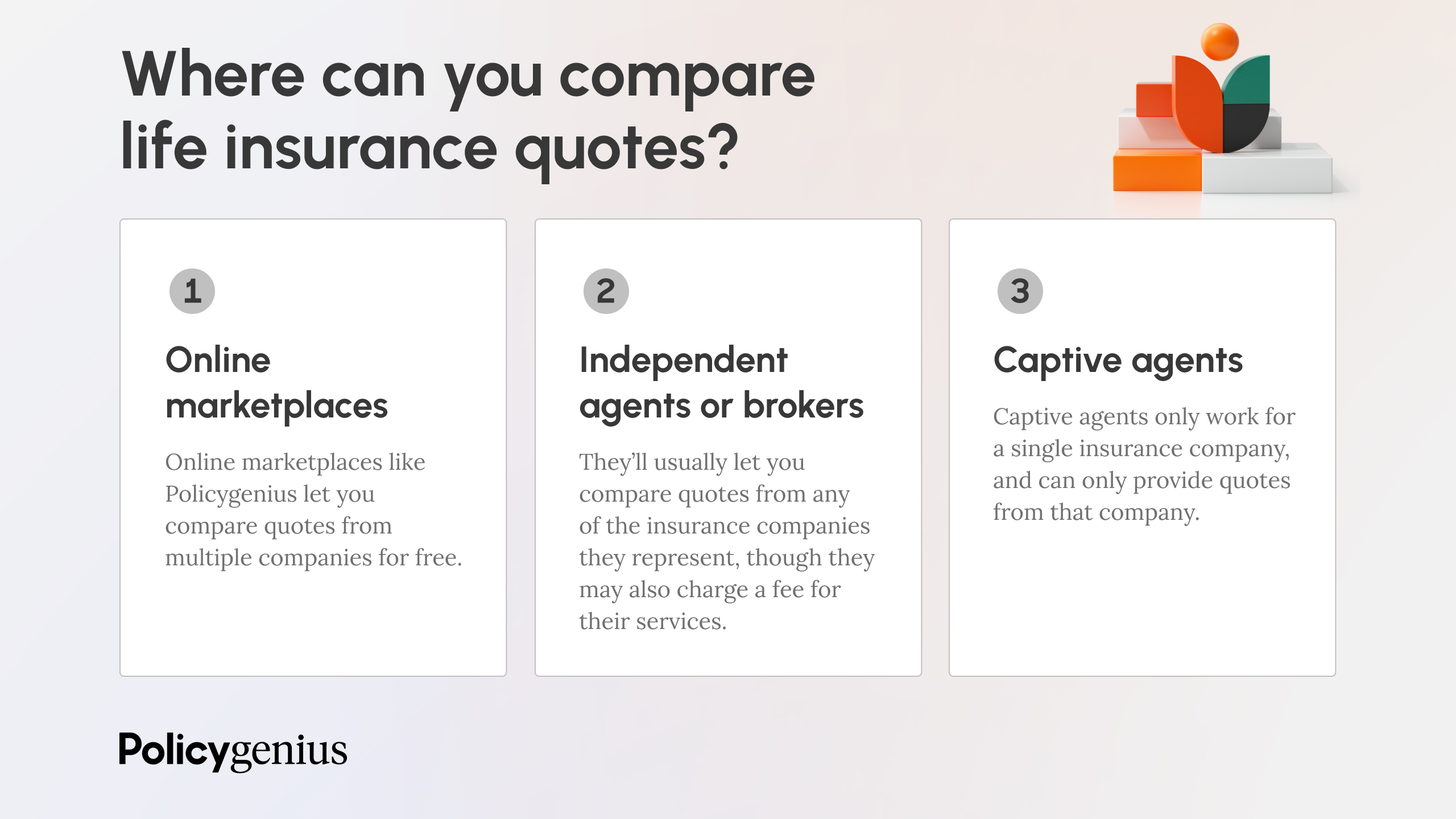
Do not rely solely on a single direct writer or insurance agent tied to one company (captives). Captive agents can only offer products from their parent firm, limiting your ability to shop the broader market.
- Online Aggregators: Offer quick comparison tools to establish a baseline price for your age and health tier.
- Independent Brokers: Independent brokers represent dozens of competing insurance carriers. They know which specific companies are lenient on certain health conditions (such as high cholesterol, asthma, or family history) and can direct your application to the carrier likely to offer the lowest rating class.
Step 3: Choose Between Fully Underwritten and Simplified Issue Policies
When getting quotes, pay close attention to the underwriting type:
- Fully Underwritten Policies: Require a detailed medical questionnaire and often a brief paramedical exam (blood draw, urine sample, blood pressure check). These policies yield the lowest premiums because the insurer gains complete clarity on your health profile.
- Simplified Issue / No-Exam Policies: Skip the physical medical exam and rely instead on medical databases (such as prescription histories and Motor Vehicle Reports). While convenient, these policies carry higher baseline premiums to compensate for the insurer's unverified risk.
- Guaranteed Issue Policies: Ask zero health questions and offer immediate approval. These are the most expensive policies per dollar of coverage and generally feature low coverage caps (e.g., $25,000) and graded death benefits. Avoid these unless severe health issues prevent you from qualifying elsewhere.
Step 4: Prepare for the Paramedical Exam
If taking a medical exam to unlock preferred pricing, properly preparing for the exam can improve your test results and lower your final premium classification:
- Schedule for the Morning: Fasting is easier overnight, preventing temporary spikes in blood sugar and triglycerides.
- Avoid High-Sodium Foods: Limit salt intake for 48 hours prior to prevent elevated blood pressure readings.
- Skip Strenuous Exercise: Avoid intense weightlifting or endurance workouts 24 hours before the exam, as heavy exertion can temporarily elevate protein or creatinine levels in urine samples.
- Hydrate Well: Drinking plenty of water clarifies urine samples and makes blood draws smoother.
- Avoid Caffeine and Alcohol: Refrain from drinking alcohol for 48 hours and avoid coffee or energy drinks on the morning of the exam to keep your resting heart rate low.
Step 5: Pay Premiums Annually Instead of Monthly
Most life insurance carriers charge a administrative processing fee (modal factor) if you pay premiums on a monthly or quarterly schedule. Opting for an annual lump-sum payment typically saves between 2% and 5% on total annual premium costs.
Comparing Policy Costs and Underwriting Types
The table below outlines common policy configurations, their relative price levels, and the medical screening required to qualify for baseline pricing.
| Policy Type | Typical Duration | Medical Exam Required? | Relative Cost Level | Ideal Candidate |
|---|---|---|---|---|
| Level Term (Fully Underwritten) | 10 to 30 Years | Yes (Standard Paramed) | Lowest | Healthy applicants seeking maximum coverage at minimum cost. |
| Decreasing Term | 15 to 30 Years | Yes / Varies | Low to Moderate | Homeowners seeking to cover a declining mortgage liability specifically. |
| Accelerated Underwriting Term | 10 to 30 Years | No (Database Check Only) | Low to Moderate | Young, healthy individuals wanting fast approval without exam hassle. |
| Simplified Issue Term | 10 to 20 Years | No | High | Applicants with mild health risks who wish to skip physical exams. |
| Whole Life Insurance | Lifetime | Yes / Varies | Very High | High-net-worth individuals seeking estate planning or permanent cash value. |
| Guaranteed Issue | Lifetime | No (No Questions) | Highest | Older applicants with severe health issues ineligible for standard policies. |
Strategic Ways to Lower Your Rates Long-Term
If your initial quotes are higher than expected, several targeted strategies can help lower your ongoing costs.
Re-evaluate Tobacco Status After One to Two Years
If you recently quit smoking or using nicotine products, applying for life insurance right away will result in high smoker rates. Most insurance carriers require you to be 12 to 24 months completely nicotine-free (verified by urine or blood tests checking for cotinine) before reclassifying you at non-smoker rates.
If you bought a policy while using nicotine, request a rate re-evaluation or re-apply through an independent broker once you reach the non-smoker milestone to slash your premium.
Apply for a Re-Rating After Health Improvements
If you were placed in a higher risk tier (such as Standard or Substandard) due to temporary medical issues—such as controlled hypertension, high BMI, or elevated cholesterol—you do not have to pay that higher rate forever.
Many life insurance companies allow policyholders to request a reconsideration or re-rating after maintaining improved health metrics for 12 consecutive months. Alternatively, if your health improves significantly, an independent broker can help you shop for a fresh policy with rival carriers at a lower rate class.
Ladder Your Policies (The Stacking Strategy)
Instead of buying one single $1,000,000 30-year policy, consider "laddering" multiple smaller policies with different expiration dates to match your actual liability timeline.
- Policy 1: $500,000 for 10 years (covers major short-term expenses like child daycare and immediate family needs).
- Policy 2: $300,000 for 20 years (covers mortgage payoff period).
- Policy 3: $200,000 for 30 years (provides income protection until retirement).
By structuring your insurance this way, your overall coverage decreases as your financial liabilities decline, saving you thousands of dollars in total premiums compared to maintaining a flat $1,000,000 policy for 30 full years.
Common Mistakes That Cause Premiums to Rise
Avoiding common traps ensures you do not end up overpaying for life insurance or risking claim denials later.
- COMMON PRICING MISTAKES
- Waiting Too Long (Age Multipliers)
- Adding Unneeded Riders (Rider Fee Creep)
- Hiding Medical History (Policy Voidance)
1. Delaying Purchase
Every year you wait increases your baseline rate. Purchasing a 20-year term policy at age 30 is dramatically cheaper than purchasing that same policy at age 40 or 45, even if your health remains identical.
2. Adding Unnecessary Policy Riders
Insurance companies offer various add-on benefits called riders, such as Child Term Riders, Accidental Death Benefit Riders, and Guaranteed Insurability Riders. While useful in specific situations, each rider adds a monthly fee to your base premium. Stick strictly to essential coverage if your goal is cheap pricing.
3. Misrepresenting Health History
Never lie or conceal medical history, tobacco habits, or dangerous hobbies on an application. Underwriters cross-reference your answers with the MIB Group database (Medical Information Bureau), prescription records, and motor vehicle departments.
Hiding information can cause your application to be declined outright or, worse, cause the insurer to deny a death claim made by your beneficiaries during the policy’s two-year contestability period.
Frequently Asked Questions
What is the single cheapest type of life insurance to buy?
Decreasing term life insurance and short-duration level term life insurance (such as a 10-year term) are the cheapest forms of individual life insurance available. They provide straightforward death benefits without cash-value accumulation or lifetime coverage guarantees, minimizing the insurer's financial risk and keeping premiums low.
Is it cheaper to buy life insurance through a broker or direct online?
Buying through an independent broker is often cheaper than going directly to a single brand-name carrier. Independent brokers can compare rates across dozens of top-rated insurance companies to match your specific health profile with the carrier offering the best rate tier. Premium prices for specific policy tiers are regulated by state and national authorities, meaning a broker cannot mark up the official rate of a policy.
Does no-exam life insurance cost more than a standard medical exam policy?
Yes. Accelerated or no-exam policies that skip physical testing typically cost more per dollar of coverage than fully underwritten policies. Because the insurer has less medical evidence regarding your long-term health, they build a risk margin into the pricing. If you are in good health, completing a brief paramedical exam yields lower monthly premiums.
How long do I have to stop smoking before getting non-smoker life insurance rates?
Most life insurance carriers require you to be completely free of tobacco and nicotine products—including cigarettes, cigars, chewing tobacco, e-cigarettes, and nicotine patches—for at least 12 months to qualify for standard non-smoker rates. To qualify for top-tier "Preferred Non-Smoker" rates, carriers typically require 3 to 5 years of complete nicotine abstinence.
Can I lower the premium on my existing life insurance policy?
Yes. You can lower your premium by applying for a policy re-rating if your health, weight, or smoking status has significantly improved since your original application. Alternatively, you can request a reduction in your policy's overall coverage amount (death benefit) or cancel unnecessary policy riders to reduce monthly costs without taking out a new policy.
Action Plan: Secure Your Optimal Coverage Today
To get the cheapest possible life insurance policy without sacrificing financial reliability, take action using these concrete steps:
- Determine Net Financial Need: Use the DIME formula (Debt, Income, Mortgage, Education) to calculate your precise coverage requirement.
- Choose Level Term Coverage: Select a term length matching your longest financial obligation (e.g., 20 years for a new mortgage or until children finish school).
- Engage an Independent Broker: Request quotes from an independent agent who represents multiple high-rated carriers.
- Complete Full Medical Underwriting: Opt for a fully underwritten policy and follow basic preparation guidelines (fasting, avoiding caffeine/salt, morning appointment) to secure a top-tier health classification.
- Select Annual Billing: Pay your annual premium in one lump sum to eliminate monthly administration surcharges.
Disclaimer: Life insurance products, underwriting guidelines, and regulatory requirements vary by region and individual health history. Consult a licensed financial planner or accredited insurance broker to select coverage appropriate for your circumstances.
Image Gallery