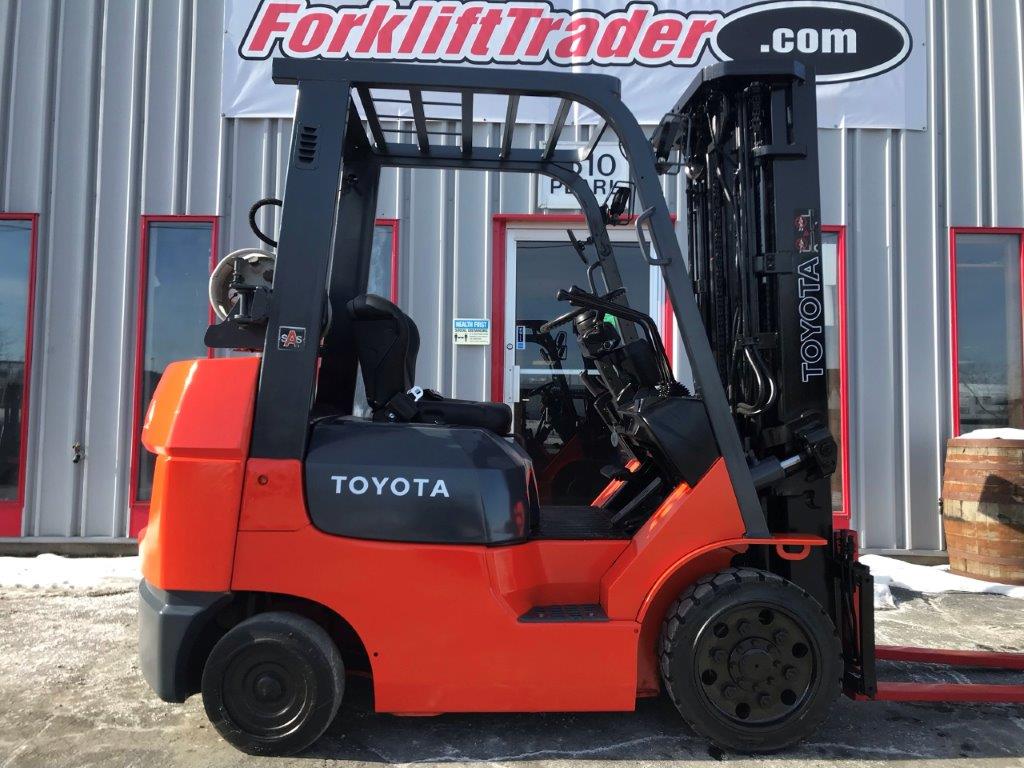
Understanding Conger Toyota Lift Solutions in Wisconsin: A Comprehensive Guide
For businesses operating in Wisconsin, the term "Conger Toyota lift" refers to the specialized material handling equipment and professional services provided by Conger Industries Inc., which serves as an authorized dealer for Toyota Ma...
For businesses operating in Wisconsin, the term "Conger Toyota lift" refers to the specialized material handling equipment and professional services provided by Conger Industries Inc., which serves as an authorized dealer for Toyota Material Handling. Whether you are looking to acquire a new Toyota forklift, service an existing fleet, or optimize your warehouse logistics, Conger provides the localized expertise, maintenance support, and equipment necessary for industrial operations throughout the state.
Contents
The Role of Conger Industries as a Toyota Dealer
Conger Industries Inc. occupies a significant position in the Wisconsin industrial landscape by acting as the primary regional partner for Toyota Material Handling. When a business searches for a "Toyota lift" in this region, they are effectively looking for a Toyota-branded forklift—widely regarded as the industry standard for durability and reliability—backed by the service infrastructure of a local integrator.
The relationship between Conger and Toyota means that Wisconsin companies have access to the full spectrum of Toyota products, including internal combustion cushion and pneumatic tire forklifts, electric counterbalanced trucks, reach trucks, and order pickers. Beyond just sales, Conger acts as the technical support arm for these machines. Operating in Wisconsin requires a partner who understands the specific environmental demands of the region, such as managing equipment performance in cold-storage environments or ensuring high-intensity operation within Wisconsin’s dense manufacturing corridors.
Types of Toyota Lifting Equipment Available
Toyota Material Handling produces a diverse array of lift equipment, and the inventory managed by Conger reflects the varied needs of Wisconsin’s economy, which ranges from food production and heavy manufacturing to distribution and warehousing.
- Electric Forklifts: Increasingly favored for indoor operations, Toyota’s electric line includes 3-wheel and 4-wheel models. These are engineered for low emissions and reduced maintenance cycles.
- Internal Combustion (IC) Forklifts: These machines are designed for heavy-duty outdoor and indoor-outdoor applications. They are highly valued for their torque and ability to handle uneven surfaces.
- Warehouse Solutions: This category includes reach trucks, pallet jacks, and order pickers. These machines are optimized for narrow-aisle efficiency, which is critical for maximizing vertical storage space in warehouse facilities.
- Automated Guided Vehicles (AGVs): Toyota’s foray into automation is supported locally by the integration experts at Conger. This represents a significant shift for Wisconsin businesses looking to modernize their facilities through controlled, autonomous material transport.
Service, Maintenance, and Technical Support
One of the most critical aspects of owning a Toyota lift is the long-term maintenance requirement. Industrial equipment must adhere to OSHA (Occupational Safety and Health Administration) standards, specifically 29 CFR 1910.178, which requires that powered industrial trucks be examined at least daily or after each shift if used around the clock.
Conger provides the specialized technical support required to keep these machines compliant and functional. Their service offerings typically include:
- Planned Maintenance (PM): Regularly scheduled intervals where technicians inspect hydraulic systems, mast integrity, tire wear, and safety features.
- Emergency Repair: Given the harsh Wisconsin winters and the high uptime requirements of manufacturing plants, rapid-response mobile service is a key component of the support structure.
- Parts Procurement: As an authorized Toyota dealer, Conger manages the supply chain for genuine Toyota parts. Using OEM (Original Equipment Manufacturer) parts is critical to maintaining the manufacturer’s warranty and ensuring the safety of the equipment.
Comparison Table: Toyota Lift Categories
The following table outlines the primary categories of Toyota equipment frequently serviced and supplied by regional dealers like Conger to help operators identify the correct machine for their specific industrial requirements.
| Equipment Class | Power Source | Primary Environment | Best For |
|---|---|---|---|
| Electric Rider | Electric (Battery) | Indoors | General warehousing, high-cycle use |
| IC Cushion Tire | LP Gas / Gasoline | Indoor (Smooth floor) | Manufacturing plants, loading docks |
| IC Pneumatic Tire | LP Gas / Diesel | Outdoor/Rough terrain | Lumber yards, outdoor storage, brick/block |
| Reach Truck | Electric | Indoors (Narrow aisle) | High-rack storage, maximizing vertical space |
| Electric Pallet Jack | Electric | Loading docks/Floor | Short-distance transport, loading trucks |
Evaluating Your Requirements Before Acquisition
Before initiating a procurement process for a Toyota lift in Wisconsin, leadership must conduct a thorough needs assessment. Acquisition is a capital-intensive decision, and selecting the wrong equipment can lead to operational bottlenecks or safety violations.
Operational Requirements to Consider:
- Load Capacity: Determine the maximum weight and the heaviest load frequency. Overloading a lift is a leading cause of mechanical failure and serious workplace accidents.
- Lift Height: Evaluate the highest rack or racking level. If your facility has tall storage, you must account for the mast type—specifically, whether you require a full-free lift mast for trailers with low entry heights.
- Floor Conditions: If the lift will operate outdoors, pneumatic tires are required to handle asphalt or gravel. Conversely, cushion tires are designed for the high-friction environment of indoor concrete floors.
- Fuel/Energy Strategy: Assess whether your facility has the infrastructure for battery charging/swapping (for electric units) or fuel tank storage (for LP gas units).
Training and Certification Standards
Acquiring a high-quality Toyota lift is only one half of the equation; the other is the operation of that equipment. In Wisconsin, as in all U.S. jurisdictions, employers are legally mandated to provide operator training. Conger and similar providers often offer operator training programs that align with OSHA requirements.
Training should not be a one-time event. It must be refreshed when an operator is observed driving unsafely, involved in an accident, or when the equipment type changes. Documentation of this training is essential for insurance purposes and for passing safety inspections by the Department of Workforce Development or federal OSHA auditors.
Troubleshooting Common Issues
When a lift malfunctions, downtime impacts the bottom line immediately. While some issues require a certified technician, others are common enough to recognize for initial assessment:
- Hydraulic Drift: If the forks lower slowly on their own while stationary, this typically indicates a seal failure in the hydraulic cylinder or a valve issue.
- Battery Performance: For electric models, reduced run-time is almost always a result of poor charging habits (e.g., "opportunity charging" without full cycles) or reaching the end of the battery's chemical life.
- Steering Difficulty: On pneumatic units, steering issues often trace back to tire wear or debris in the steering linkage. On electric units, it may be a motor or controller fault.
Always refer to the specific Toyota service manual provided with your machine. Modifying safety systems or attempting unauthorized internal repairs voids manufacturer warranties and creates extreme safety risks.
Frequently Asked Questions (FAQ)
1. Does Conger offer rentals for Toyota lifts in Wisconsin? Yes, most authorized Toyota dealers provide rental fleets to help businesses manage seasonal spikes in demand or to cover gaps while waiting for new equipment delivery. Renting is often the best way to determine if a specific Toyota model fits your unique warehouse layout before committing to a purchase.
2. What is the standard warranty on a new Toyota forklift? Toyota Material Handling typically offers a comprehensive warranty program, but specific terms depend on the model and the type of application. Always confirm the current warranty coverage at the time of your 2026 purchase, as terms can vary by equipment class and intensity of use.
3. How often should a Toyota forklift undergo service? Standard industrial practice follows a 250-to-500-hour service interval. However, Wisconsin’s environmental conditions—such as extreme cold in the winter or dust in specific manufacturing settings—may necessitate more frequent air filter, fluid, and battery maintenance to prevent long-term damage.
4. Can Conger provide parts for older Toyota models? Yes. Toyota has an extensive parts database that supports legacy equipment. Because Toyota forklifts are built for longevity, many machines remain in service for decades. Conger can typically source parts based on the specific serial number of your forklift to ensure compatibility.
5. How do I get an OSHA-compliant operator certification? You should contact the safety or service department at your local material handling dealer. They can provide or direct you to authorized training programs that include both classroom instruction and a hands-on performance evaluation, which are required for full certification.
Next Steps
If you are planning to add or replace a Toyota lift in your Wisconsin facility, the most effective next step is to schedule a site assessment with a professional representative. A dealer can walk your floor, measure your aisle widths, and calculate your load requirements to provide a tailored quote. Contact a local office to request a fleet analysis, ensuring that your 2026 operational goals are supported by the correct mechanical infrastructure.
Image Gallery