How Mortgage Brokers and Life Insurance Companies Collaborate: Models, Regulations, and Strategic Partnerships
Mortgage brokers and life insurance companies collaborate through strategic referral networks, digital API integrations, dual-licensing models, and co-branded marketing agreements. These partnerships ensure borrowers secure financial p...
Mortgage brokers and life insurance companies collaborate through strategic referral networks, digital API integrations, dual-licensing models, and co-branded marketing agreements. These partnerships ensure borrowers secure financial protection—such as term life or mortgage protection insurance—to cover their home loan in the event of death, disability, or critical illness, while creating diversified revenue streams for intermediaries.
Contents
The Core Rationale: Why Mortgage Brokers and Life Insurance Companies Partner
Securing a mortgage is frequently the largest financial commitment an individual or household undertakes. Because a mortgage creates long-term debt liabilities spanning 15 to 30 years, lenders and borrowers face significant exposure to life events that could disrupt income. The partnership between mortgage intermediaries and life insurance providers addresses this risk at the point of credit origination.
- Mortgage Broker (Identifies Loan)
- Referral / API to Life Insurance Carrier
- Commission / Service from Life Insurance Carrier
- Life Insurance Carrier (Issues Protection)
- Homeowner / Client
- Secures Home Financing + Asset Protection Against Default Risk
Financial Risk Mitigation for Borrowers and Lenders
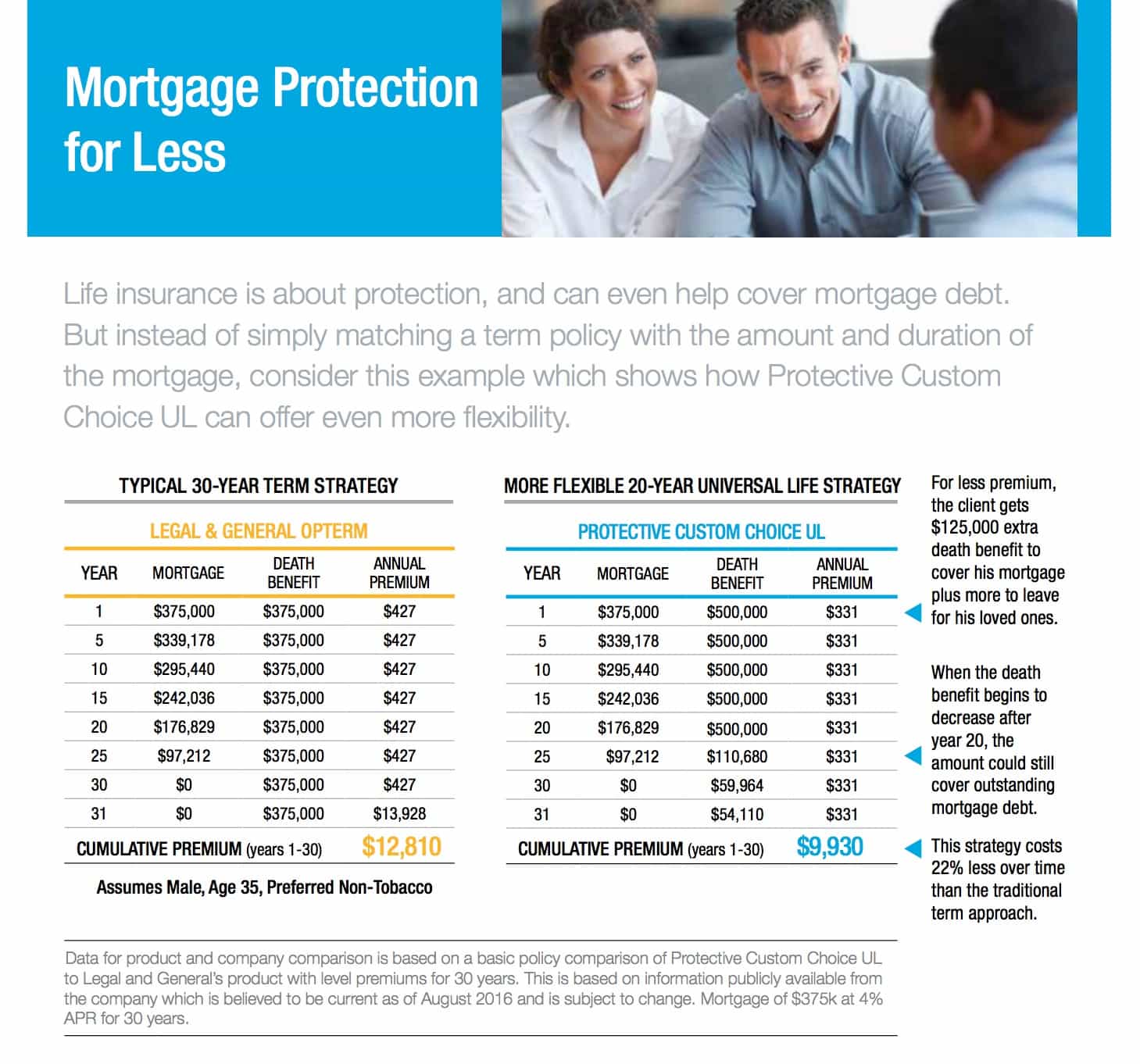
For homebuyers, taking on a mortgage without collateral protection leaves family members vulnerable to forced property liquidation or foreclosure if the primary wage earner dies or becomes incapacitated. Life insurance policies—specifically decreasing term life, level term life, and critical illness cover—act as a financial safety net designed to pay off the remaining principal or maintain monthly loan payments.
For financial institutions, encouraging or facilitating protection insurance ensures loan stability. Although mortgage lenders in many jurisdictions cannot legally require life insurance as an absolute condition for loan approval (unlike homeowners insurance), having coverage reduces default rates triggered by personal health emergencies or death.
Business Expansion and Client Retention for Intermediaries
Mortgage brokerage is historically transactional, with customer interactions spiking during home purchases and refinancing cycles. By collaborating with life insurance carriers, mortgage brokers shift toward a holistic financial planning model. This collaboration enhances client retention by positioning the broker as a single point of advice for home financing and risk management, while unlocking recurring or upfront commission revenue alongside loan origination fees.
Primary Collaboration Models in the Financial Services Industry
The structure of broker-insurer partnerships varies based on firm size, regulatory jurisdiction, technology stack, and licensing status.
- Broker-Insurer Collaboration
- Direct Referral Model
- Integrated Point-of-Sale (Embedded API)
- Dual-Licensed Advice Model
- Master Enterprise Program
1. The Strategic Referral Model
The strategic referral model is the most straightforward partnership structure. In this arrangement:
- The mortgage broker identifies a client’s need for life protection during the mortgage application process.
- The broker transfers the lead to an accredited life insurance agent, financial planner, or insurance brokerage.
- Upon policy binding, the insurance partner pays the referring mortgage broker a referral fee or split commission, where permitted by local law.
This model allows mortgage brokers to focus exclusively on debt origination while offering clients access to specialized insurance advisory services without assuming additional regulatory underwriting liabilities.
2. Integrated Point-of-Sale and Embedded Insurance Solutions
Advancements in financial technology have popularized embedded insurance protocols. Mortgage origination platforms and customer relationship management (CRM) software integrate via Application Programming Interfaces (APIs) directly into life insurance carriers' underwriting engines.
During the mortgage application process, digital tools pull borrower data—such as loan amount, term length, age, and income—to instantly generate personalized term life or mortgage protection quotes. Clients can opt in, complete streamlined health questionnaires, and receive instant or simplified underwriting decisions within the same digital workspace where their home loan is processed.
3. Dual-Licensing and In-House Protection Advisory
In mature financial advisory markets, mortgage brokerages frequently employ dual-licensed advisors or maintain an internal protection department. Advisors hold credentials to recommend both mortgage products and life insurance policies.
This model provides a seamless client experience. The advisor conducts a comprehensive "fact-find" assessment, structuring the mortgage repayment strategy alongside an aligned life and health insurance portfolio. By executing both transactions under one entity, the brokerage captures full advisory fees and policy commissions.
4. Enterprise Group Coverage and Preferred Provider Programs
Large mortgage brokerage networks often establish formal preferred partner programs with select life insurance carriers. In exchange for preferred placement on the broker's panel, insurance carriers offer:
- Exclusive pricing discounts or enhanced policy riders for the brokerage's clients.
- Streamlined medical underwriting thresholds (e.g., higher simplified issue limits).
- Co-funded marketing budgets, training resources, and dedicated underwriting desks to expedite application processing.
Regulatory Frameworks Governing Broker-Insurer Relationships
Because financial cross-selling intersects real estate, lending, and insurance sectors, collaborations must strictly comply with national and regional consumer protection statutes.
Disclaimer: Regulatory requirements vary significantly across jurisdictions and change over time. Mortgage and insurance professionals must consult legal counsel and regulatory authorities for specific compliance guidance.
United States: RESPA Section 8 and State Insurance Codes
In the United States, the primary federal law governing relationships among real estate settlement service providers is the Real Estate Settlement Procedures Act (RESPA), enforced by the Consumer Financial Protection Bureau (CFPB).
- RESPA Section 8(a) strictly prohibits giving or receiving any fee, kickback, or "thing of value" in exchange for the referral of settlement service business involving a federally related mortgage loan.
- Settlement Service Status: While core life insurance is often distinct from property title or closing services, mortgage protection policies tied directly to loan settlement must be structured carefully. Unearned referral fees between mortgage brokers and insurance agents are subject to severe enforcement penalties.
- Co-Marketing Rules: Mortgage brokers and life insurance agencies can engage in joint marketing, provided each party pays a proportionate share of the fair market value for advertising materials and services rendered.
- State Insurance Licensing: Insurance commissions can only be paid to entities or individuals holding a valid state insurance producer license. Unlicensed mortgage brokers cannot receive split insurance commissions.
United Kingdom: FCA Regulations and Consumer Duty
In the United Kingdom, mortgage advice is regulated under Mortgage Conduct of Business (MCOB) rules, while insurance distribution falls under Insurance Conduct of Business Sourcebook (ICOBS) rules, governed by the Financial Conduct Authority (FCA).
- FCA Consumer Duty: Introduced to mandate that regulated firms act to deliver good outcomes for retail customers, the Consumer Duty places heavy emphasis on addressing customer vulnerability and preventing foreseeable harm. Brokers are expected to discuss protection solutions so clients do not take on unhedged debt obligations.
- Dual Qualification: Many UK mortgage advisers hold relevant CII (Chartered Insurance Institute) or LIBF (London Institute of Banking & Finance) protection qualifications, allowing them to advise on both mortgage and protection contracts seamlessly.
Canada and Australia: Anti-Tying Rules and Best Interest Duties
- Canada: The Bank Act and provincial insurance regulations prohibit "coercive tied selling." A mortgage broker or lender cannot make the approval of a mortgage contingent upon purchasing life insurance from a specific carrier. Consumers must be informed of their right to purchase coverage independently.
- Australia: Under the National Consumer Credit Protection (NCCP) Act and the Best Interests Duty (BID) enforced by the Australian Securities and Investments Commission (ASIC), credit licensees must prioritize the client's best interests. When referring or writing life insurance, brokers must demonstrate that the product directly meets the consumer's requirements and objectives without conflict of interest.
Comparative Analysis of Collaboration Models
The table below outlines the operational mechanics, compliance considerations, and fee structures of key collaboration models.
| Collaboration Model | Typical Revenue / Fee Structure | Regulatory & Compliance Focus | Implementation Complexity | Primary Client Benefit |
|---|---|---|---|---|
| Direct Referral Agreement | Fixed referral fee or percentage split (licensed entities only). | RESPA Section 8 compliance, state licensing verification, clear referral disclosures. | Low | Access to specialized, independent life insurance specialists. |
| Embedded API / Digital POS | Technology access fees, shared digital commission pipelines. | Data privacy (GDPR/CCPA), explicit user opt-in, clear pricing transparency. | High (Requires IT integration) | Instant quotes and frictionless online application during loan origination. |
| Dual-Licensed In-House Advisory | Full upfront and renewal insurance commissions alongside mortgage broker fees. | Comprehensive advisory compliance (MCOB, ICOBS, BID), conflict of interest disclosures. | Medium-High | Single point of contact for loan financing and long-term risk protection. |
| Enterprise Co-Marketing | Shared marketing expenses based on strict fair market value (FMV). | Proof of independent valuation for marketing costs, prohibition of direct referral payments. | Medium | Educational resources, co-branded homebuyer guides, and bundled service value. |
Operational Workflow: From Mortgage Application to Policy Binding
To successfully integrate life insurance into mortgage origination without delaying property closings, brokerages and insurance partners follow a structured operational workflow.
- Step 1: Fact-Find & Needs Analysis
- Step 2: Information Sharing & Client Opt-In
- Step 3: Underwriting & Medical Evaluation
- Step 4: Policy Alignment with Mortgage Terms
- Step 5: Policy Binding & Loan Completion
Step 1: Fact-Find and Needs Analysis
During the initial mortgage consultation, the broker gathers financial data, loan details, dependent information, and existing coverage limits. A gap analysis reveals whether the borrower's family would face financial hardship in maintaining mortgage payments if a health or life event occurred.
Step 2: Information Sharing and Client Opt-In
With explicit written consent under applicable privacy laws (such as the Gramm-Leach-Bliley Act, CCPA, or GDPR), the broker transfers pertinent client metrics to the life insurance carrier or internal specialist. Digital APIs automate this step, preventing double data entry.
Step 3: Underwriting and Medical Evaluation
The life insurance company evaluates the application through standard, simplified, or automated underwriting protocols:
- Accelerated/Simplified Underwriting: Uses prescription databases, motor vehicle records, and credit-based attributes to approve policies in real time without medical exams.
- Fully Underwritten Policies: Required for higher coverage amounts or complex medical histories, involving paramedical exams and attending physician statements (APS).
Step 4: Policy Alignment with Mortgage Terms
The policy is structured to match the mortgage's financial characteristics:
- Coverage Amount: Equal to or exceeding the total mortgage principal.
- Policy Duration: Set to match the mortgage term (e.g., a 30-year level term policy for a 30-year fixed-rate mortgage).
- Beneficiary / Assignment: Decreasing term policies or mortgage protection plans directly link benefit payouts to the mortgage liability or designate family members as primary beneficiaries.
Step 5: Policy Binding and Loan Completion
The insurance carrier issues the policy certificate. If required by lender guidelines or client preference, evidence of coverage is logged in the mortgage closing file prior to funds disbursement.
Common Challenges and Risk Mitigation Strategies
While collaboration delivers clear advantages, structural and operational friction points can arise between mortgage brokers and insurance carriers.
- Collaboration Friction Points
- Timeline Misalignment: Mortgage Closing vs. Insurance Underwriting
- Compliance & Licensing: Unearned Fees / RESPA Violations
- Data Privacy Concerns: Unauthorized Data Sharing / Opt-Outs
Timeline Misalignment
Mortgage closings often run on strict contractual deadlines (e.g., 30-day closing windows). Traditional life insurance medical underwriting can take 4 to 8 weeks, creating a risk that insurance binding lags behind loan closing.
- Mitigation: Collaborative networks rely heavily on accelerated underwriting products and instant-issue term life platforms that bind within hours or days, ensuring coverage is active before closing.
Regulatory and Licensing Infringements
Paying referral fees to unlicensed mortgage personnel or entering into unverified marketing service agreements creates exposure to regulatory enforcement, fines, and license revocation.
- Mitigation: Brokerages must establish strict compliance oversight. Unlicensed staff should only provide general promotional information or direct clients to licensed producers without receiving direct compensation linked to policy volume. All joint marketing expenses must be audited for fair market value compliance.
Consumer Friction and Aggressive Cross-Selling
Overburdening homebuyers with aggressive insurance sales pitches during an already stressful real estate transaction damages client trust and reduces satisfaction metrics.
- Mitigation: Frame protection discussions around financial security and risk management rather than high-pressure sales. Presenting insurance options early in the pre-approval phase—rather than right before closing—allows clients time to consider their options thoughtfully.
Best Practices for Building a Successful Broker-Insurer Partnership
Financial institutions and independent brokers seeking to optimize protection collaboration should adhere to four core operational standards:
- Prioritize Tech-Enabled Workflows: Implement modern CRM and LOS (Loan Origination System) integrations with open APIs to allow single-sign-on access and automated data transfer between lending and insurance portals.
- Standardize Educational Content: Develop co-branded, plain-language consumer guides that explain the difference between lender-required hazard insurance, private mortgage insurance (PMI), and voluntary individual life insurance.
- Maintain Strict Audit Trails: Document consumer opt-ins, privacy consents, fee allocation calculations, and licensing verifications within compliance management systems.
- Conduct Regular Joint Training: Insurance carriers should provide ongoing product education to mortgage teams, updating them on underwriting guidelines, product enhancements, and regulatory updates.
Frequently Asked Questions
What is the main difference between private mortgage insurance (PMI) and life insurance sold through a mortgage broker?
Private Mortgage Insurance (PMI) protects the lender against financial loss if the borrower defaults on the loan payments. It is typically mandatory for conventional loans when the down payment is under 20%. In contrast, life insurance (or mortgage protection life insurance) protects the borrower and their beneficiaries. It pays out a cash benefit upon the insured’s death or disability, allowing surviving family members to pay off the mortgage or maintain monthly payments.
Can a mortgage broker force a buyer to purchase life insurance from a specific company?
No. In almost all major jurisdictions (including the US, Canada, the UK, and Australia), coercion or illegal "tied selling" is prohibited by law. Lenders and brokers cannot condition loan approval on purchasing life insurance from a specific carrier or agent. Borrowers retain the legal right to purchase insurance from any licensed provider of their choice or decline optional coverage altogether.
How do mortgage brokers get paid when referring clients to life insurance companies?
Payment structures depend on the broker’s licensing status and regional laws. Dual-licensed brokers receive standard insurance commissions directly from the carrier upon policy issuance. Unlicensed brokers cannot receive split insurance commissions; where legal under rules like RESPA, firms may establish compliant marketing service agreements based on fair market value for advertising services, or utilize flat administrative fees that do not fluctuate based on referral volumes or policy sales.
Is mortgage protection insurance better than standard term life insurance?
Standard term life insurance is generally more flexible and cost-effective than specialized mortgage protection insurance (MPI). Standard term life pays a fixed cash benefit directly to chosen beneficiaries upon death, and those funds can be used for any financial need—including paying off a mortgage, covering living expenses, or funding education. MPI policies often have decreasing payouts tied to the declining balance of a mortgage, and payouts may go directly to the lender.
How long does it take to secure a life insurance policy during the mortgage process?
Using modern digital APIs and accelerated underwriting, simplified issue policies can be approved and bound in minutes or days without requiring physical medical exams. However, traditional fully underwritten life insurance policies requiring medical record reviews or paramedical exams can take 3 to 6 weeks. Brokers recommend starting the insurance evaluation early in the mortgage pre-approval phase to ensure coverage is bound prior to loan closing.
Strategic Recommendation and Next Actions
For mortgage brokerages and life insurance carriers aiming to establish or scale a collaborative network:
- Assess Regulatory Eligibility: Review national and local licensing requirements (such as state insurance producer licenses or FCA permissions) to determine whether an internal dual-licensing model or a strategic third-party referral model is most appropriate.
- Audit Technology Compatibility: Choose life insurance carrier partners that offer open API endpoints compatible with your Loan Origination Software (LOS) or CRM to streamline client data transfer and eliminate manual entry.
- Establish Compliance Controls: Draft formal co-marketing agreements reviewed by specialized legal counsel to ensure strict compliance with RESPA Section 8, fair market value standards, and consumer privacy laws (GDPR, CCPA, GLBA).
- Implement Early Client Conversations: Integrate financial protection discussions into the initial loan pre-approval stage, helping borrowers protect their property investments without introducing friction at the closing table.
Image Gallery