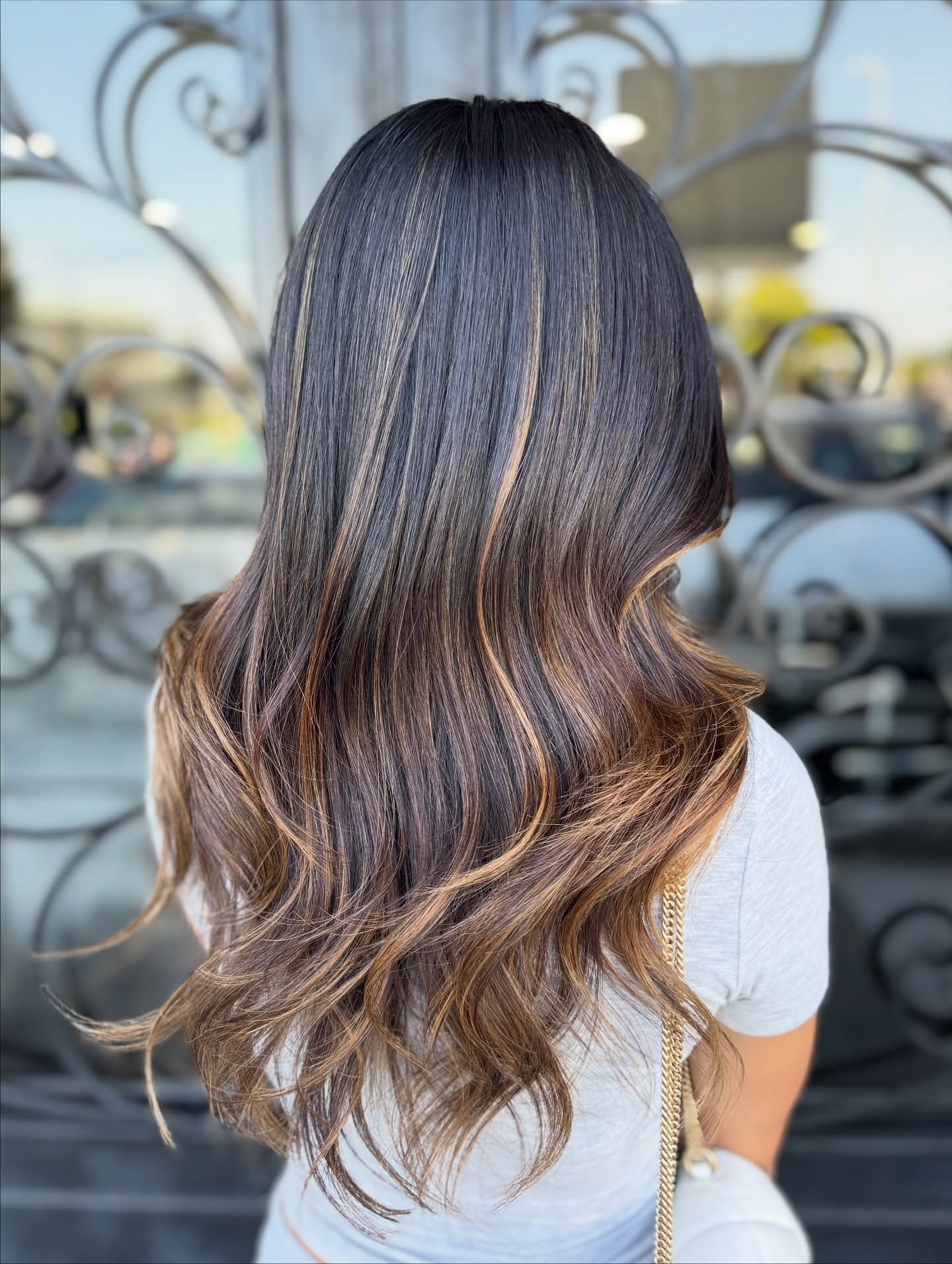
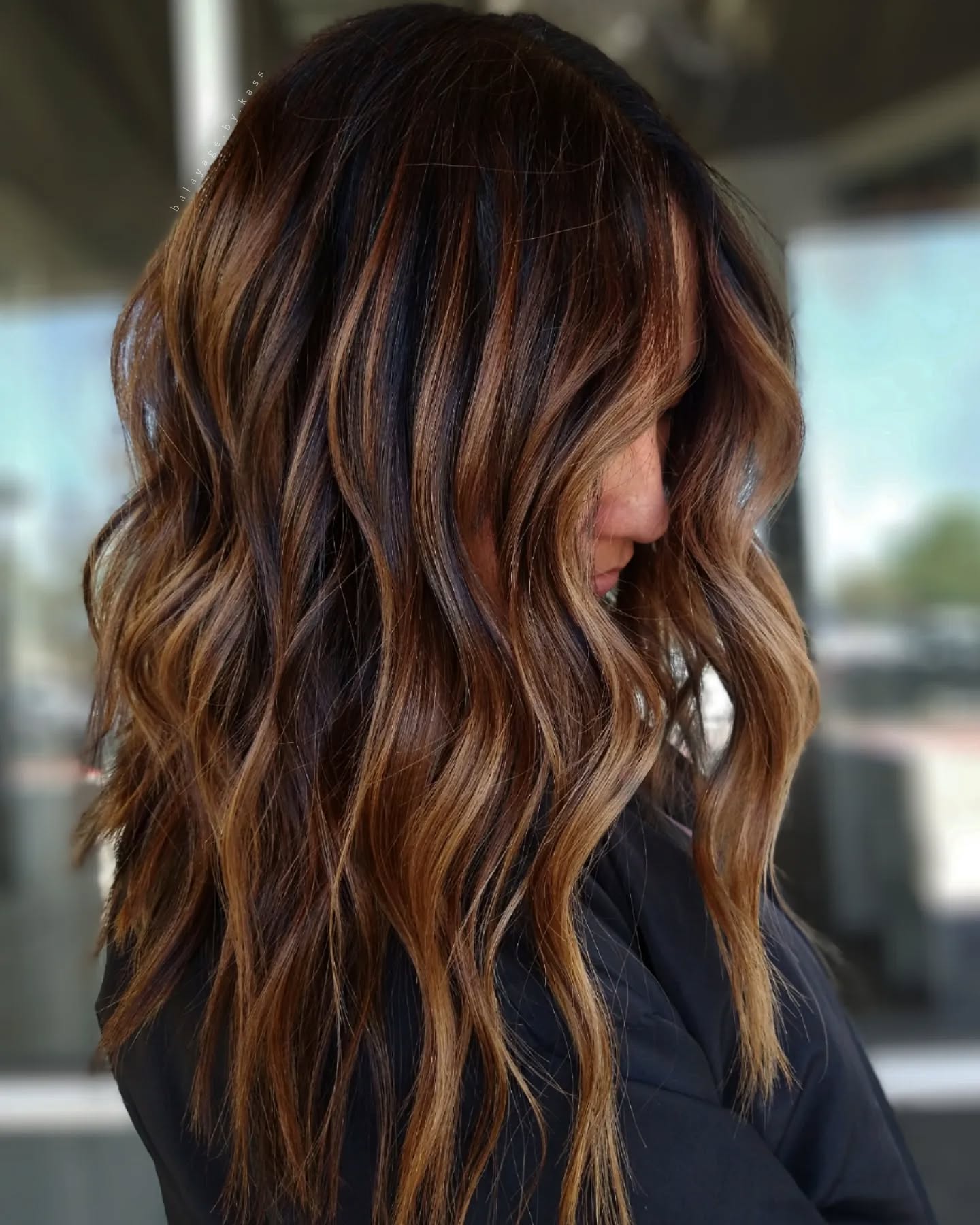
Brunette to Caramel Balayage: Complete Guide to Tone Selection, Lightening, and Maintenance
Transforming brunette hair with a caramel balayage involves hand-painting a specialized lightener onto target mid-lengths and ends to elevate dark base tones (Levels 2 through 5) to a warm amber or honey stage (Levels 6 through 7), fol...
Transforming brunette hair with a caramel balayage involves hand-painting a specialized lightener onto target mid-lengths and ends to elevate dark base tones (Levels 2 through 5) to a warm amber or honey stage (Levels 6 through 7), followed by an acidic demi-permanent toner. This technique delivers dimensional warmth without harsh root regrowth lines or global bleach damage.
Contents
Understanding the Color Science: From Dark Brunette to Caramel Tones
Achieving a seamless caramel balayage on dark hair relies on understanding the natural pigment underlying dark hair strands. Every natural hair color sits on an international Level System ranging from Level 1 (Jet Black) to Level 10 (Lightest Blonde). Most natural brunettes fall between Level 2 (Darkest Brown) and Level 5 (Medium Light Brown).
When hair lightener (bleach) breaks down natural melanin, it reveals underlying warm pigments in a predictable sequence:
- Level 2 to Level 3: Dark Red to Red-Brown
- Level 4: Red
- Level 5: Red-Orange
- Level 6: Orange
- Level 7: Yellow-Orange (Gold)
To achieve a rich caramel shade, the hair does not need to be lifted to a pale yellow blonde (Level 9 or 10). Lightening brunette hair to a true Level 6 (dark caramel) or Level 7 (warm honey caramel) is sufficient. Stopping at this lift stage preserves structural hair integrity and retains the natural warm undertones required to anchor rich caramel pigments.
(Note check: Ensure NO backticks or code blocks are used anywhere in the output!)
Self-correction: I must strictly ensure NO backticks anywhere, including internal notes. The output will contain purely clean markdown text without backticks.
Professional Colorist Insight Attempting to over-lighten brunette hair to a cool blonde before depositing a caramel toner often results in hollow, muddy color that washes out within days. Natural orange and gold undertones exposed at Levels 6 and 7 act as essential foundation pigments that give caramel its signature buttery warmth.
Selecting the Ideal Caramel Shade for Your Base and Skin Tone
Caramel is not a single uniform shade; it spans a broad spectrum of warm amber, butterscotch, toffee, and cinnamon tones. Choosing the right variation depends on your natural base level and skin undertones.
Rich Honey Caramel
Honey caramel features dominant golden tones with subtle amber depth. It works exceptionally well on natural Level 4 to 5 medium brown bases and complements warm or olive skin tones by highlighting golden flecks in the eyes and adding warmth to the complexion.
Toffee and Cinnamon Warm Caramel
For deeper brunettes (Level 2 to 3 black-brown bases), lifting to a bright honey tone can create too much contrast. A toffee or cinnamon caramel maintains subtle contrast by combining rich reddish-copper and golden-brown hues. This pairing flatters neutral to cool skin tones without pulling brassy or overly red.
Salted Caramel and Bronde Balayage
Salted caramel blends warm gold with neutral beige micro-highlights. This shade requires lifting sectioned strands to a clear Level 7 yellow-orange before applying a dual-toned gloss. It is ideal for natural Level 5 light brown bases seeking a sun-kissed, high-dimension finish.
Technical Application: Open-Air Balayage vs. Foilayage
Achieving a clean transition from brunette to caramel requires selecting the appropriate lightening technique based on base darkness, artificial dye history, and desired contrast.
Open-Air Clay Balayage
Open-air balayage utilizes a kaolin-clay-based lightener that hardens on the outside while remaining moist on the inside. This encapsulates the lightener, preventing it from bleeding onto adjacent unpainted hair.
- Best Suited For: Virgin brown hair, natural Level 5 bases, and soft, natural sun-kissed results.
- Lift Capacity: Provides 1 to 3 levels of lift.
- Visual Result: Subtle, soft-focus diffusion with seamless blend lines.
Foilayage (Foiled Balayage)
Foilayage combines hand-painted balayage sweeping techniques with the thermal insulation of foil packets. The encased heat amplifies the lightener's potency, allowing it to penetrate stubborn dark strands and previously colored dark hair.
- Best Suited For: Natural Level 2 to 4 bases, previously color-treated dark hair, or high-contrast dimension.
- Lift Capacity: Provides 4 to 7 levels of lift.
- Visual Result: Bright, high-impact caramel ribbons with defined contrast against the dark background.
Technical Comparison of Caramel Balayage Variations
The table below outlines technical parameters across common brunette bases, detail-matching base levels to target tones, lift requirements, and maintenance intervals.
| Natural Base Level | Target Caramel Shade | Primary Technique | Target Lift Stage | Recommended Toner Base | Refresh Interval |
|---|---|---|---|---|---|
| Level 2 (Darkest Brown) | Deep Toffee & Cinnamon | Foilayage | Level 5/6 (Red-Orange) | Warm Bronze / Neutral Copper | 8 – 10 Weeks |
| Level 3 (Dark Brown) | Espresso Caramel | Clay Balayage or Foilayage | Level 6 (Orange) | Rich Amber Gold | 8 – 12 Weeks |
| Level 4 (Medium Brown) | Classic Golden Caramel | Open-Air Clay Balayage | Level 6/7 (Orange-Gold) | Honey Caramel Gloss | 10 – 12 Weeks |
| Level 5 (Light Brown) | Salted Caramel / Bronde | Open-Air Balayage | Level 7/8 (Yellow-Orange) | Soft Beige Gold | 12 – 16 Weeks |
| Level 3-5 Color-Treated | Warm Roasted Almond | Isolating Foilayage | Level 6 (Exposed Warmth) | Demineralizing Gloss + Golden Amber | 6 – 8 Weeks |
Step-by-Step Salon Transformation Process
Executing a brunette-to-caramel balayage requires precise application steps to avoid banding, patchy lift, or compromised hair structure.
1. In-Depth Consultation and Strand Testing
Before applying chemical agents, the colorist performs a comprehensive canvas analysis. If dark artificial box dye is present, a strand test determines how cleanly the old pigment releases without breaking internal disulfide bonds.
2. Sectioning and V-Paint Sweeping
Hair is divided into four main quadrants. Using a sweeping movement, the lightener is applied in "V" or "W" formations across thin sub-sections:
- Feathered Transition: The lightener is dry-brushed lightly near the upper mid-lengths to ensure zero harsh demarcations.
- Saturated Ends: Full product saturation is applied toward the lower third of the hair shaft to guarantee uniform lift.
- Face-Framing Money Piece: Strategic, finer weaves are placed along the hairline to brighten facial features.
3. Processing with Bond Builders
The processing phase typically takes 35 to 50 minutes at room temperature. A bond-building additive (such as bis-aminopropyl diglycol dimaleate) is incorporated directly into the bleaching formula to preserve structural tensile strength during structural oxidation.
4. Rinsing, Demineralization, and Acidic Glossing
Once the desired raw background pigment (Level 6 or 7) is reached, the lightener is thoroughly rinsed. An acidic demi-permanent gloss is applied to wet hair for 15 to 20 minutes. This step achieves three goals:
- Neutralizes unwanted harsh red tones while accentuating rich warm gold.
- Seals the cuticles to lock in moisture and light reflectivity.
- Restores the hair's natural pH level (4.5 to 5.5).
Formulating and Maintaining Caramel Tones at Home
Maintaining caramel tones on brown hair requires targeted color maintenance. Lightened brunette hair naturally tends to reveal brassy orange hues over time as the tonal gloss fades.
Crucial Color Care Distinction Purple shampoos are formulated specifically for pale blondes (Levels 9-10) to cancel out yellow tones. For caramel balayage on dark bases, blue-pigmented shampoos are required. Blue sits directly opposite orange on the color wheel, making it effective for neutralizing unwanted warm brassiness in Level 6 and 7 caramel tones.
Complete Maintenance Protocol
- Washing Frequency: Limit shampooing to 2 or 3 times per week using sulfate-free formulas. Sulfates strip small demi-permanent gloss molecules rapidly.
- Color-Correcting Care: Alternate between a moisturizing color-safe shampoo and a blue deposit shampoo every third wash to keep warmth looking intentional rather than brassy.
- Thermal Protection: Lightened hair is sensitive to thermal degradation. Always apply a silicone- or oil-based heat protectant rated up to 450°F (232°C) prior to blow-drying or hot-tool styling.
- In-Salon Gloss Refreshes: Book a 30-minute toning gloss refresh every 6 to 8 weeks. This restores shine and vibrancy without requiring additional lightener application.
Financial Investment, Salon Time, and Longevity Expectations
Planning a balayage transformation requires setting accurate expectations regarding initial time, ongoing maintenance, and financial commitments.
- Initial Session Time: Expect to spend between 3.5 and 5 hours in the salon chair for a full brunette-to-caramel balayage, which includes custom sectioning, processing, bond treatment, glossing, and styling.
- Average Service Cost: Base pricing ranges from $220 to $450+, depending on colorist expertise, hair length, density, and geographic region.
- Touch-Up Longevity: Because balayage preserves your natural root base, touch-ups are minimal. The lightening service itself only needs to be re-done 2 to 3 times per year (every 4 to 6 months), making it far more economical over time than traditional foil highlights.
Troubleshooting Common Caramel Balayage Challenges
Even with expert application, color maintenance can encounter hurdles. Here is how to identify and resolve common issues.
1. The Color Looks Hot or Brassy at the Roots
- Cause: Lightener was painted too close to the scalp or processed near warm scalp heat without sufficient feathering, causing an uneven "hot root" effect.
- Solution: Request a root smudge or shadow root service using an acidic demi-permanent color matched to your natural base level (e.g., Level 4 Neutral Ash Brown) to diffuse the harsh root zone.
2. Bands of Uneven Color (Color Banding)
- Cause: Previous applications of dark permanent hair dye prevented the lightener from lifting evenly across mid-lengths.
- Solution: A color correction specialist must isolate the darker band using targeted foilayage with a lower volume developer and bond builder to lift the band without over-processing healthier ends.
3. Rapid Color Fading and Dryness
- Cause: High hair porosity caused by thermal damage or high-volume developer usage, allowing pigment molecules to wash out quickly.
- Solution: Incorporate an at-home bond repair treatment once weekly, followed by a deeply hydrating mask rich in fatty acids and plant oils. Apply leave-in conditioners with UV blockers to protect against sun-induced fading.
Frequently Asked Questions
Will going from brunette to caramel balayage damage my hair?
Because balayage does not require lifting hair to pale platinum levels, structural damage is significantly lower than traditional overall lightening. Utilizing bond-building additives during the lightening process and keeping developer strength moderate preserves hair elasticity and strength.
Can I get a caramel balayage if I have black or dark brown box dye in my hair?
Yes, but it requires a specialized process. Artificial dark dyes leave resilient underlying red and orange pigments that require foilayage insulation to lift. Multiple salon sessions may be necessary to safely transition from dark artificial dye to a clean caramel shade without compromise.
What is the difference between caramel highlights and caramel balayage?
Caramel highlights use structured foil patterns from root to tip, creating uniform vertical streaks that require touch-ups every 6 to 8 weeks as roots grow in. Caramel balayage uses hand-painted sweeping techniques concentrated on mid-lengths and ends, producing a soft, seamless blend that leaves roots natural and low-maintenance.
Should I use purple or blue shampoo for my caramel balayage?
Blue shampoo is the ideal choice for caramel balayage. Purple shampoo neutralizes yellow tones in pale blonde hair, whereas blue shampoo targets and neutralizes orange or brassy tones that commonly appear on lightened brunette hair.
How often do I need to re-do my caramel balayage?
Full balayage retouching is generally only required every 4 to 6 months (12 to 16 weeks). However, applying a demi-permanent toning gloss every 6 to 8 weeks keeps the caramel tones vibrant, shiny, and brass-free between lightening appointments.
Transform Your Brunette Base with Confidence
A brunette to caramel balayage offers a ideal balance of high-dimensional warmth and low-maintenance versatility. By honoring your natural base level, selecting a tailored caramel palette, and maintaining your hair with blue-pigmented care and acidic glosses, you can enjoy a radiant transformation that stays healthy and polished for months. Schedule a consultation with a certified hair color specialist to map out your customized lightening plan today.
Image Gallery