Why the Wordle Hard Mode Feels Tougher: Mechanics, Strategy, and the Infamous Trap
Wordle Hard Mode feels significantly tougher because it removes the ability to use "throwaway" or "burn" words to eliminate potential letters. By forcing players to include every revealed hint in all subsequent guesses, the mode create...
Wordle Hard Mode feels significantly tougher because it removes the ability to use "throwaway" or "burn" words to eliminate potential letters. By forcing players to include every revealed hint in all subsequent guesses, the mode creates "pattern traps" where a player can identify four out of five letters but remain statistically likely to fail before exhausting the remaining possibilities.
Contents
Understanding the Specific Rules of Hard Mode
To understand why the difficulty spikes, one must first define exactly what Wordle Hard Mode changes. In the standard version of the game, players are free to guess any five-letter word at any time, regardless of the clues they have already uncovered. This freedom is a powerful tool for information gathering.
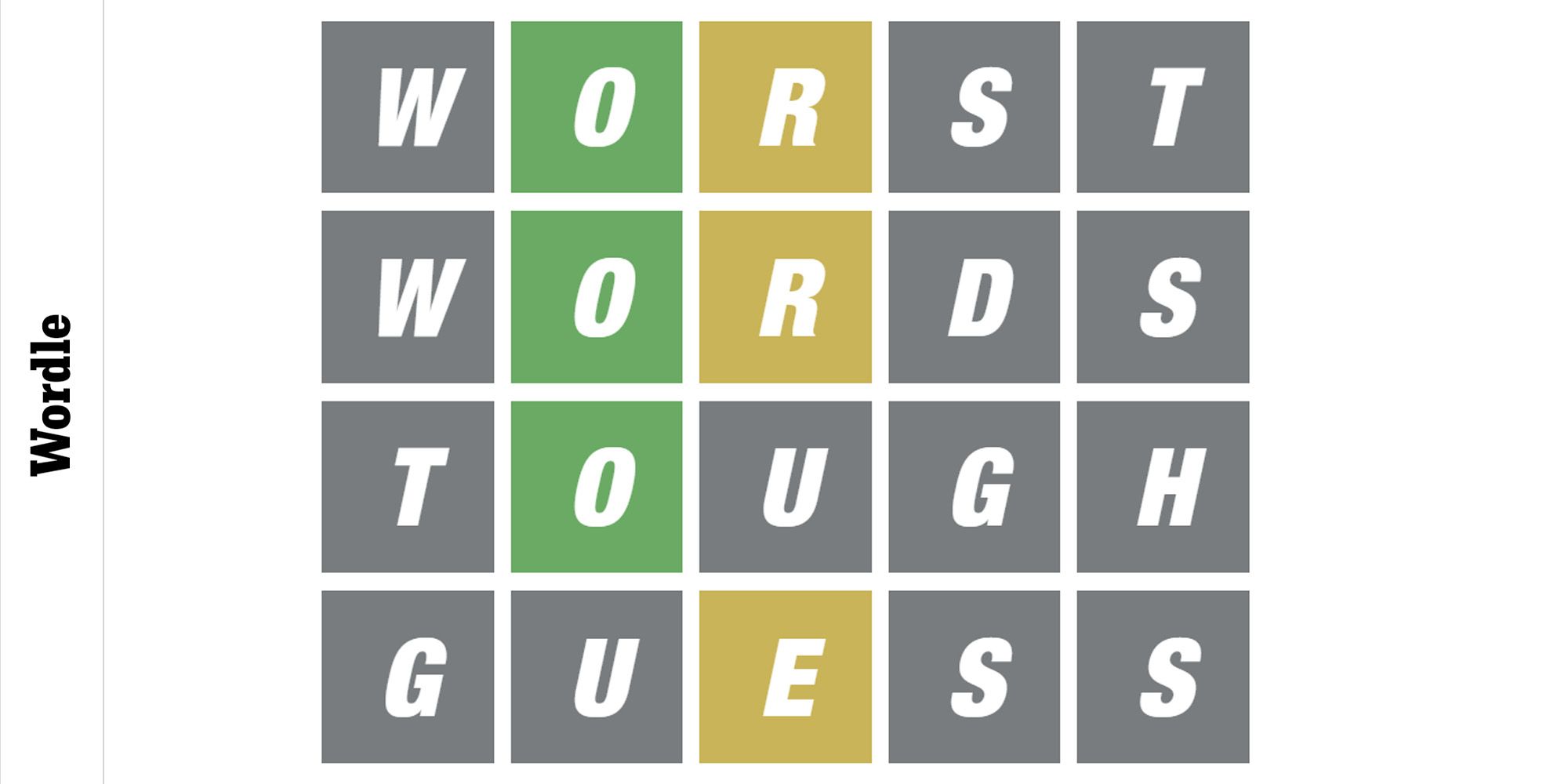
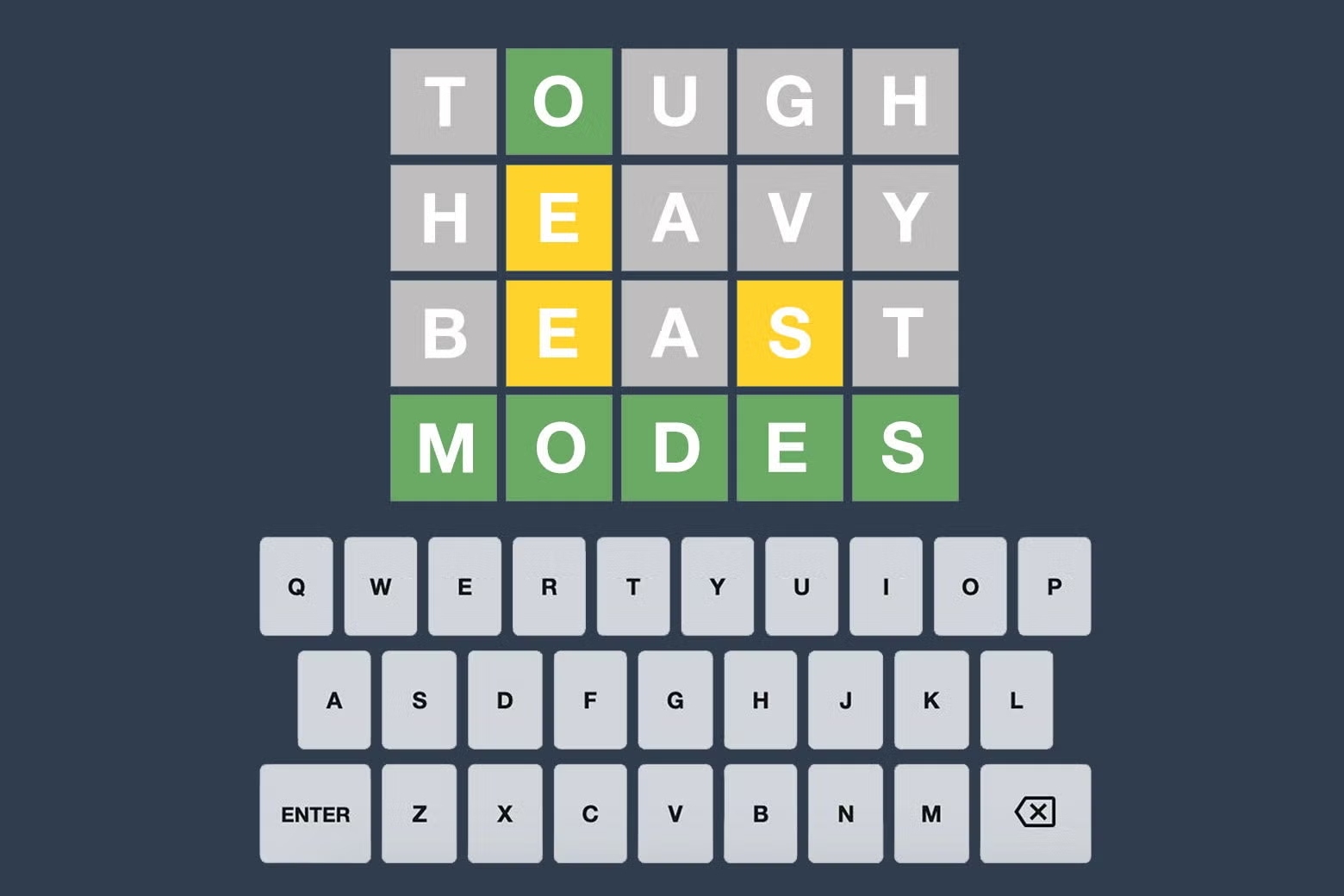
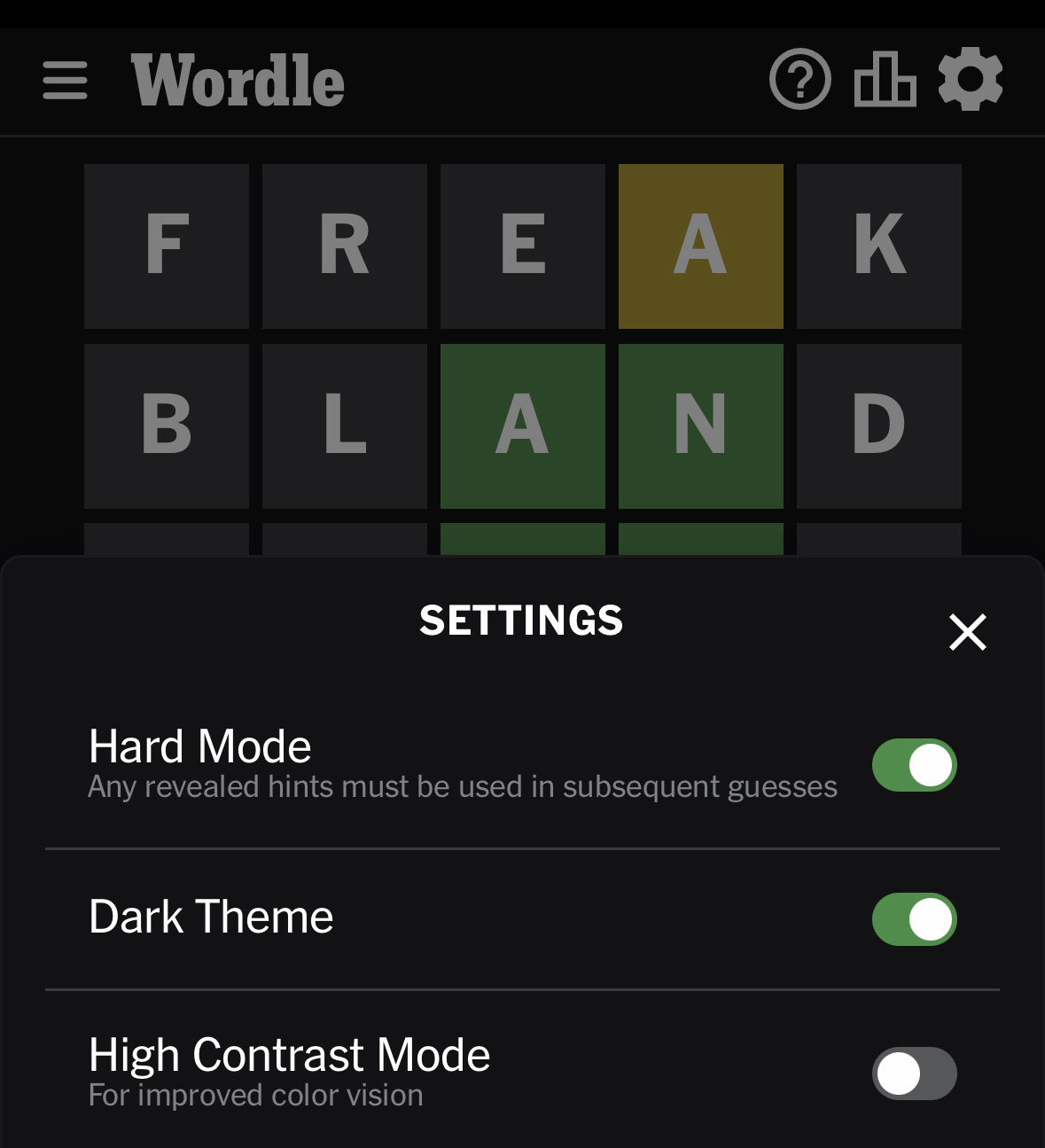
In Hard Mode—which players must manually toggle in the settings menu—the rules become restrictive. Any letter highlighted in green (correct letter, correct spot) must be used in that exact position in all following guesses. Any letter highlighted in yellow (correct letter, wrong spot) must be included somewhere in all subsequent guesses. While these rules seem like they simply enforce "good play," they actually strip away the most effective defensive strategies used in the standard game.
As of 2026, Wordle remains a daily ritual for millions, and the distinction between "Normal" and "Hard" mode continues to be a point of pride and frustration. The difficulty isn't just a psychological perception; it is a mathematical reality rooted in how the game limits your search space.
The Mechanics of the "Information Lock-In"
In standard Wordle, the primary objective of the first three guesses is often "letter elimination" rather than "word solving." A common strategy involves using words like ADIEU, STARE, or CLOUD to quickly scan the most common vowels and consonants. If a player finds that the word ends in "-IGHT" but still has four guesses left, a standard mode player might guess a word like "FLIMP" to check for F, L, M, and P all at once.
Hard Mode prevents this "Information Gain" strategy. Once you have identified that the word contains "I-G-H-T," Hard Mode mandates that every single guess thereafter ends in "IGHT." You are effectively locked into a path. This "Information Lock-In" means you can no longer use a single turn to test multiple disparate branches of the English language. You are forced to test them one by one, which is an inefficient use of the six-guess limit.
The Tactical "Burn" Word Restriction
The "burn" word is the secret weapon of the expert Wordle player. When faced with a situation where multiple words could fit a pattern, a burn word ignores the known letters to maximize the testing of unknown letters.
For example, if you know the word is _A_ER, the possibilities include BAKER, CAKER, FAKER, GAYER, LAYER, MAKER, PAGER, RACER, SAFER, TAKER, and WAFER. In Normal Mode, you could guess "GLYPH" to see if the L, Y, P, or H are present. In Hard Mode, you are strictly forbidden from doing this. You must guess "BAKER," then "CAKER," then "FAKER," effectively turning the game into a coin toss rather than a logic puzzle.
The Notorious "Trap" Words and Their Impact
The primary reason Hard Mode feels "unfairly" tough is the existence of specific letter clusters known as "Pattern Traps." These occur when a large number of words share a common suffix or prefix.
Common traps include:
- -IGHT: (FIGHT, LIGHT, MIGHT, NIGHT, RIGHT, SIGHT, TIGHT, WIGHT)
- -ATCH: (BATCH, CATCH, HATCH, LATCH, MATCH, PATCH, WATCH)
- -OWER: (LOWER, MOWER, POWER, ROWER, SOWER, TOWER)
- -A_E: (BAKE, CAKE, FAKE, LAKE, MAKE, RAKE, TAKE, WAKE)
If you happen to reveal four letters of a seven-option trap on your second guess, you have four guesses remaining to find one correct word among the five or six remaining possibilities. Mathematically, you have a high probability of "bottoming out" or losing the game entirely, even though you "know" almost the entire word. This is why Hard Mode is often described as more luck-dependent than Normal Mode once the initial clues are found.
Mathematical Reality: Entropy and Probability
From the perspective of Information Theory, Wordle is a game of reducing "entropy"—the measure of uncertainty. In each turn, an optimal player wants to choose a word that provides the most information, regardless of whether that word could actually be the answer.
Research into Wordle algorithms, famously highlighted by educators like Grant Sanderson (3Blue1Brown), demonstrates that the "best" guess is the one that narrows down the list of remaining possible words into the smallest possible groups. In Normal Mode, you can always choose the mathematically optimal word to partition the remaining list. In Hard Mode, the optimal partitioning word is often "illegal" because it doesn't use the letters you've already found.
This constraint forces players into a "Greedy Algorithm" approach—always trying to solve the word immediately because they are not allowed to do anything else. This approach is notoriously fragile when faced with high-volume word families.
Psychological Pressure and Risk Assessment
Beyond the math, there is a significant psychological component to why Hard Mode feels tougher. In Normal Mode, the player feels in control. If they are stuck, they can "think their way out" by designing a custom elimination word.
In Hard Mode, that agency is removed. Players often find themselves in a "death spiral" where they know they are guessing blindly within a trap. This leads to a higher level of "streak anxiety." Since many Wordle players in 2026 have maintained streaks for hundreds or even thousands of days, the risk of losing a streak to a "Hard Mode trap" makes the game feel much more high-stakes and stressful.
Comparative Analysis: Normal vs. Hard Mode
The following table breaks down the fundamental differences in gameplay experience and strategy between the two modes.
| Feature | Normal Mode | Hard Mode |
|---|---|---|
| Constraint | None; any 5-letter word is valid. | Must use all revealed hints in next guess. |
| Primary Strategy | Letter elimination and partitioning. | Direct solving and "trap" anticipation. |
| Risk of Traps | Low; can be bypassed with "burn" words. | High; often results in unavoidable failure. |
| Skill Type | Deductive logic and vocabulary. | Risk management and early-game strategy. |
| Information Gain | Optimized via multi-letter testing. | Sub-optimal due to mandatory repetition. |
| 2026 Popularity | Preferred for casual, daily play. | Preferred by "purists" and high-risk seekers. |
Strategic Adjustments for 2026 Players
To survive Hard Mode, players must change their opening strategy. In Normal Mode, you can afford to be aggressive with your first two guesses. In Hard Mode, you must be defensive from the very first letter.
- Avoid Early Commits: Do not guess a word that could lead to a trap early on. If you guess "STARE" and get a green "ARE," you might have actually made the game harder for yourself because you are now forced to guess words ending in "ARE" for the rest of the game.
- The "Vowel First" Rule: In Hard Mode, revealing consonants too early can be a liability. Many players now prefer to identify the vowel structure first, as vowels are less likely to lead to "rhyme traps" than common consonant endings like "-NG" or "-ST."
- Consonant Filtering: Choose starting words that use high-frequency but "safe" consonants (like R, S, T, L, N) that are spread across different positions. The goal is to avoid getting a "Green Lock" on the 4th and 5th positions too early.
Frequently Asked Questions
Is Wordle Hard Mode actually harder, or just different?
It is objectively harder. While it uses the same word list, the restriction on guesses significantly reduces the mathematical probability of solving "trap" words within six tries. It requires a different type of foresight to avoid getting stuck in a pattern.
Can I switch to Hard Mode mid-game?
No. To play a game in Hard Mode, you must enable the setting before you make your first guess. If you have already entered a word, the game will not allow you to toggle Hard Mode on for that specific puzzle, though you can still "self-enforce" the rules.
Why do some people prefer Hard Mode if it's more luck-based?
For many, the "luck" is part of the challenge. Hard Mode purists argue that standard mode is "too easy" because the ability to use burn words makes it nearly impossible to lose if you have a decent vocabulary. Hard Mode forces you to live with the consequences of your early guesses.
What is the worst word to get in Hard Mode?
Statistically, words ending in "-IGHT" or "-AZE" are the most difficult because of the sheer volume of valid English words that fit those patterns. In 2026, many seasoned players still consider a "-IGHT" word in Hard Mode to be the "streak-killer."
Does the NYT Wordle Bot use Hard Mode?
The Wordle Bot provided by The New York Times has settings for both modes. It uses different "optimal" starting words for Hard Mode (often "DEALT" or "PLATE") than it does for Normal Mode (often "CRANE" or "TRACE"), reflecting the need to avoid traps early.
Practical Recommendation for Players
If you find that Hard Mode is causing more frustration than enjoyment, consider a "hybrid" approach. Play in Normal Mode but try to follow the Hard Mode rules voluntarily. This allows you the "emergency exit" of using a burn word only when you realize you have fallen into a pattern trap. However, if you are seeking the ultimate test of your Wordle foresight, Hard Mode remains the definitive way to play—just be prepared to lose your streak to the letter "R" in "SHARE," "SPARE," "SCARE," and "STARE."
Image Gallery