How to Write an Option for a Financial Contract: A Comprehensive Guide
Writing an option for a financial contract requires precise articulation of the underlying asset, the strike price, the expiration date, and the specific rights conferred upon the holder. This process involves establishing a legally bi...
Writing an option for a financial contract requires precise articulation of the underlying asset, the strike price, the expiration date, and the specific rights conferred upon the holder. This process involves establishing a legally binding framework that defines the conditions under which a buyer may purchase or sell an asset at a predetermined price, effectively managing risk or creating leveraged investment exposure.
Contents
Understanding the Financial Option Framework
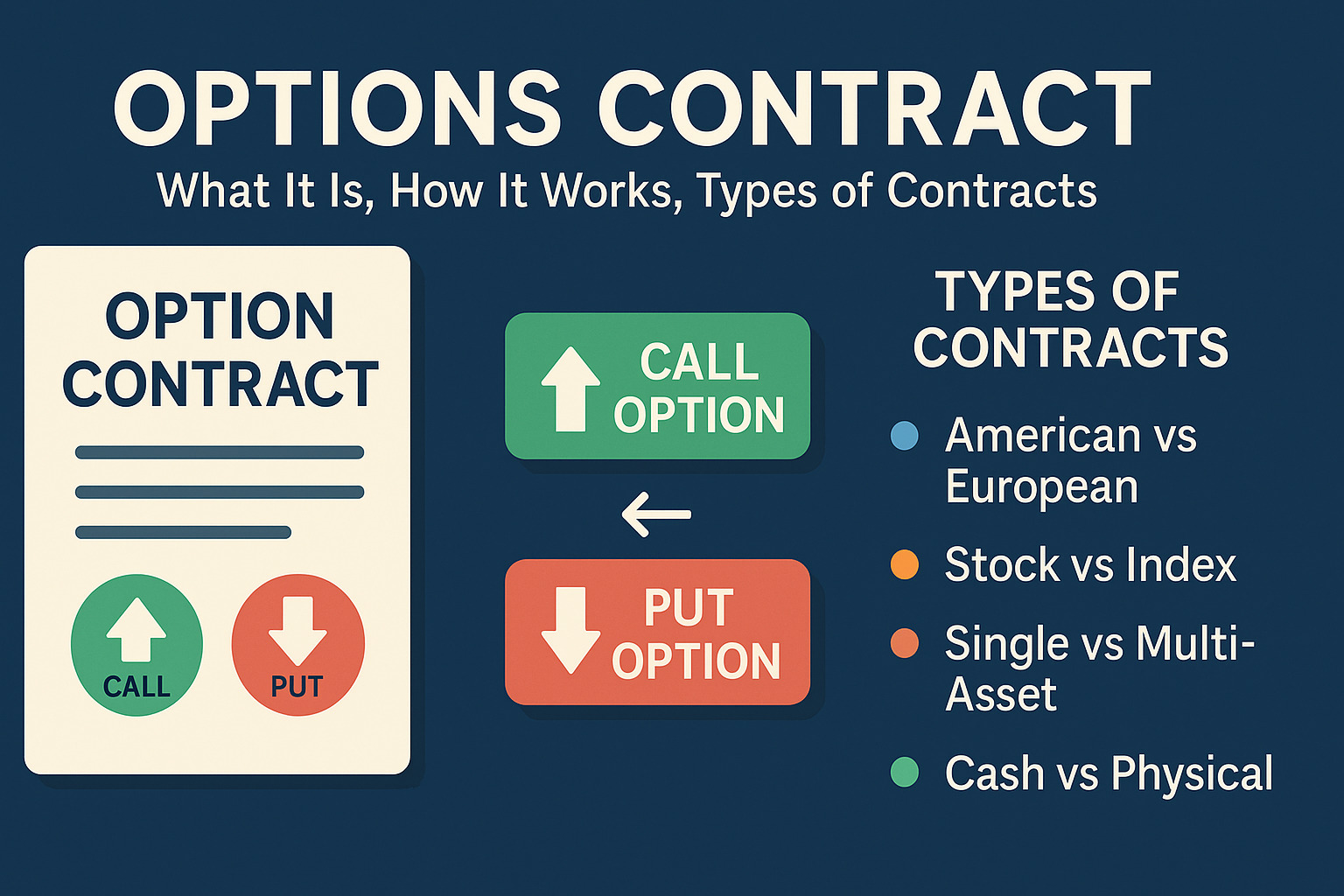
A financial option is a derivative contract that grants the holder the right, but not the obligation, to buy (a call) or sell (a put) an underlying asset at a specified price within a defined timeframe. Unlike standardized, exchange-traded options—which are regulated by bodies like the Options Clearing Corporation (OCC) in the United States—a bespoke or "over-the-counter" (OTC) option is written between two private parties.
Writing such a contract is a complex legal task. It is not merely about calculating premiums; it is about drafting language that survives scrutiny in a court of law or arbitration. Because these contracts often involve significant capital, they must be drafted with attention to jurisdictional requirements, clear definitions of "event of default," and mechanisms for physical or cash settlement.
Essential Components of an Option Contract
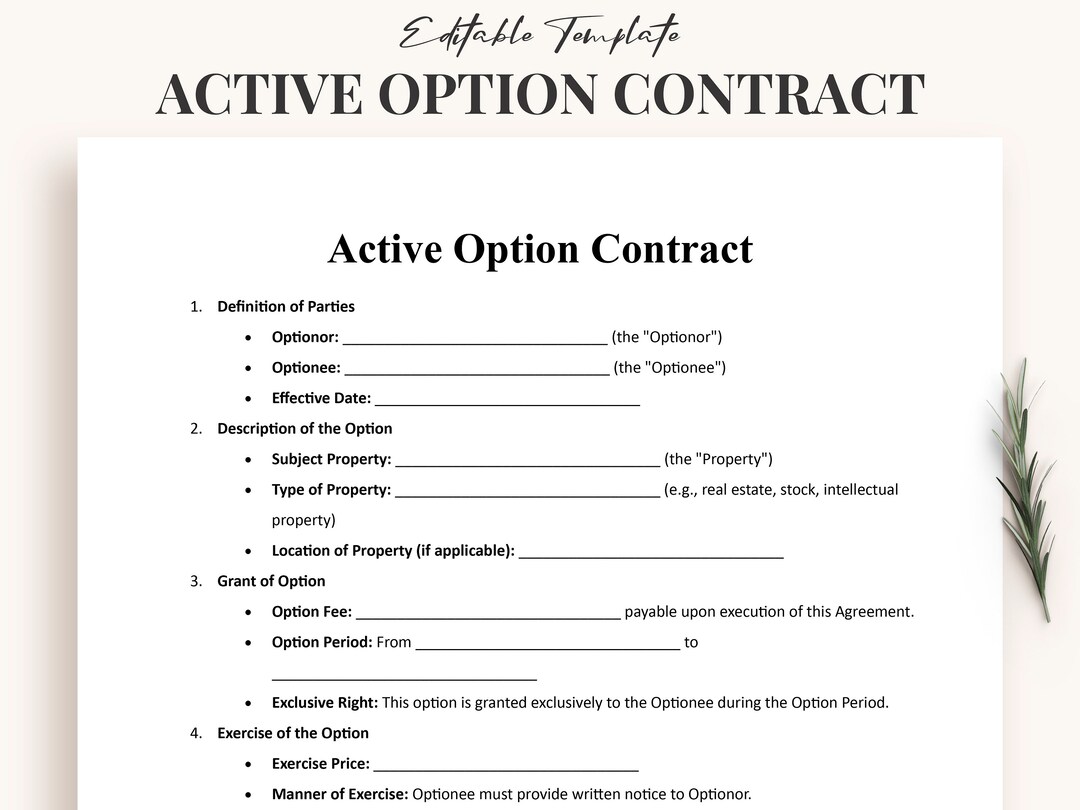
To draft a robust financial option, you must integrate several non-negotiable clauses. Omitting any of these can lead to "contractual ambiguity," which often results in litigation.
1. Identification of the Underlying Asset
You must specify the asset with absolute clarity. If it is a stock, include the ticker symbol and exchange. If it is a commodity, define the grade, quality, and delivery specifications. If it is a digital asset or a complex financial index, provide a precise calculation methodology to avoid disputes regarding value at expiration.
2. The Strike Price (Exercise Price)
This is the fixed price at which the underlying asset can be bought or sold. In a well-written contract, this is expressed in currency units per unit of the asset. You must also define the "adjustment events"—situations like stock splits, mergers, or dividend payouts—that would trigger a recalculation of the strike price to ensure the contract remains fair to both parties.
3. The Expiration Date and Time
The contract must stipulate exactly when the option expires. Use clear time zone designations (e.g., "5:00 PM Eastern Standard Time"). Ambiguity regarding the precise expiration moment can result in significant losses if one party exercises the right in a different time zone or market session.
4. Settlement Methodology
Determine whether the option will be settled via Physical Delivery (actual transfer of the asset) or Cash Settlement (the difference between the strike price and the current market price is paid). Physical delivery requires clear logistics regarding who pays for shipping, insurance, and regulatory transfer fees.
Comparative Table: Key Differences in Option Structures
| Feature | Standardized (Exchange) | Bespoke (OTC/Private) |
|---|---|---|
| Customization | Low (Fixed terms) | High (Fully negotiable) |
| Liquidity | High | Low (Difficult to exit) |
| Regulation | High (SEC/FINRA/OCC) | Contract Law (Private Law) |
| Counterparty Risk | Near-zero (Clearinghouse) | Significant (Credit risk) |
| Documentation | Standardized Ticket | ISDA Master Agreement |
Legal and Compliance Prerequisites
Before drafting the document, you must assess the legal standing of the participants. In many jurisdictions, financial derivatives are governed by specific statutes that dictate who is "eligible" to enter into these contracts. For instance, in the United States, the Commodity Futures Trading Commission (CFTC) and the Securities and Exchange Commission (SEC) have stringent rules regarding the types of entities that can enter into OTC derivatives.
The Role of the ISDA Master Agreement
Most professional financial contracts use the International Swaps and Derivatives Association (ISDA) Master Agreement as a foundational framework. Rather than writing an option contract from scratch, professionals often draft a "Schedule" that modifies or supplements the ISDA Master Agreement. This provides a battle-tested legal structure, specifically regarding netting provisions, collateral requirements, and termination events.
Step-by-Step Drafting Process
- Conduct a Counterparty Credit Assessment: Before committing to a contract, verify the financial health of the counterparty. If they cannot fulfill the obligation if the option is "in-the-money," the contract is worthless.
- Draft the Definitions Section: Explicitly define every technical term. If you use the term "Market Value," provide a formula or a reference to a reliable third-party data provider (e.g., Bloomberg or Reuters).
- Establish Collateral/Margin Requirements: Include provisions for "Initial Margin" (collateral posted at the start) and "Variation Margin" (collateral adjusted as the market price of the asset moves).
- Define Default and Remedies: What happens if one party fails to pay? Include clauses regarding grace periods, interest on late payments, and the right to terminate the contract prematurely.
- Legal Review: Have a qualified attorney specializing in derivatives law review the document. Generic contract templates often fail to account for specific tax implications or regional financial regulations.
Common Risks and Pitfalls
One of the most frequent mistakes in writing a custom option is failing to account for "Market Disruption Events." If the underlying asset ceases to trade, or if the exchange that reports its price closes unexpectedly, the contract needs a "fallback" methodology. Without this, the contract may become "frustrated" (legally impossible to perform), leading to the voiding of the agreement by a judge.
Another major risk is failing to harmonize the option terms with the tax reporting requirements of your jurisdiction. Ensure that the contract provides the necessary information for both parties to satisfy their respective tax reporting obligations, such as 1099-B forms or international equivalent reporting requirements.
Frequently Asked Questions (FAQ)
Can I write an option contract without a lawyer? While you can draft the text, it is highly discouraged. Financial contracts involve complex regulatory frameworks. Without legal oversight, you risk creating a contract that is unenforceable, illegal under local securities law, or fiscally ruinous due to poor drafting.
What is the difference between an American and European option? An American-style option allows the holder to exercise their right at any point up to the expiration date. A European-style option can only be exercised on the specific date of expiration. You must state the "Exercise Style" clearly in your contract.
What happens if the underlying asset is delisted? Your contract should contain a "Successor Asset" or "Discontinuance" clause. This defines how the strike price and asset identity will be mapped to a new asset if the original one disappears or changes identity (such as a corporate spin-off).
Do I need to register my private option contract with a regulator? In many jurisdictions, private, bespoke derivatives between sophisticated counterparties are exempt from exchange registration but may still be subject to reporting requirements under acts such as the Dodd-Frank Wall Street Reform and Consumer Protection Act. Consult with a compliance professional to determine your reporting duties.
How is the "premium" paid? The premium is the fee paid for the option. Your contract should specify the payment date, the currency, and the bank account details for the transfer. Use clear instructions to avoid funds being misdirected.
Final Recommendation
The creation of a financial option is an exercise in risk management, not just document drafting. If you are drafting a contract for a significant transaction, begin by adopting a standardized master framework like the ISDA Master Agreement. Focus your effort on the "Schedule"—the specific, negotiated details of your option—and ensure that all definitions, default triggers, and settlement mechanisms are audited by legal counsel to ensure they align with the current 2026 regulatory landscape.
Image Gallery