Maryland Court Case Search By Name: Complete 2026 Guide to Maryland Judiciary Case Search
Conducting a Maryland court case search by name allows individuals, legal professionals, and employers to look up public judicial records across the state's District and Circuit courts using the Maryland Judiciary Case Search database....
Conducting a Maryland court case search by name allows individuals, legal professionals, and employers to look up public judicial records across the state's District and Circuit courts using the Maryland Judiciary Case Search database. This official online portal provides access to millions of civil, criminal, and traffic case records, offering public transparency into Maryland's judicial system while operating under specific privacy guidelines and search limitations.
Contents
Understanding how to navigate this database effectively requires knowing the structural differences between Maryland court levels, mastering search filters, and interpreting the status codes and case dispositions correctly. Whether you are conducting a background check, tracking litigation, or researching personal legal history, utilizing official state resources ensures compliance with data access policies and delivers the most accurate, up-to-date docket information available for 2026.
Understanding the Maryland Judiciary Case Search System
The Maryland Judiciary Case Search system is an online repository maintained by the Maryland Courts. It compiles records from all 24 Maryland counties, covering Baltimore City, Montgomery County, Prince George's County, and every surrounding jurisdiction. The database serves as the primary gateway for public court records, merging data feeds from trial courts across the state.
Public access to these records is governed by the Maryland Rules Concerning Access to Court Records. While most trial court records are open to public inspection, certain sensitive cases—such as juvenile proceedings, adoption records, and specific expunged or shielded files—are strictly restricted from public view. Recognizing what is accessible and what remains confidential prevents wasted search efforts and clarifies expectations regarding record availability.
Types of Maryland Courts Included in Name Searches
To successfully perform a name search, you must understand how Maryland's court system is structured. The records available through the portal originate from two primary trial court levels, each handling distinct types of legal matters.
- District Court of Maryland: Handles minor criminal offenses (misdemeanors and certain serious traffic violations), landlord-tenant disputes, replevin actions, and civil claims where the amount in controversy generally does not exceed $30,000. Traffic citations and parking tickets also originate here.
- Circuit Courts: Located in each of the state's 24 counties, these courts handle major criminal felonies, civil cases involving large financial claims (usually exceeding $30,000), domestic relations matters including divorce and child custody, and appeals from the District Court or administrative agencies.
Appellate courts, including the Supreme Court of Maryland (formerly the Court of Appeals) and the Appellate Court of Maryland (formerly the Court of Special Appeals), maintain separate docket systems, though major appellate decisions and party filings may intersect with underlying trial court records.
Step-by-Step Guide to Executing a Name Search
Executing an effective name search on the Maryland Judiciary Case Search portal requires specific inputs and strategic use of filters to manage common names and large volumes of data. Follow this structured process to locate accurate records.
- Navigate to the Official Portal: Access the official Maryland Judiciary Case Search website through the Maryland Courts web domain to ensure security and data authenticity.
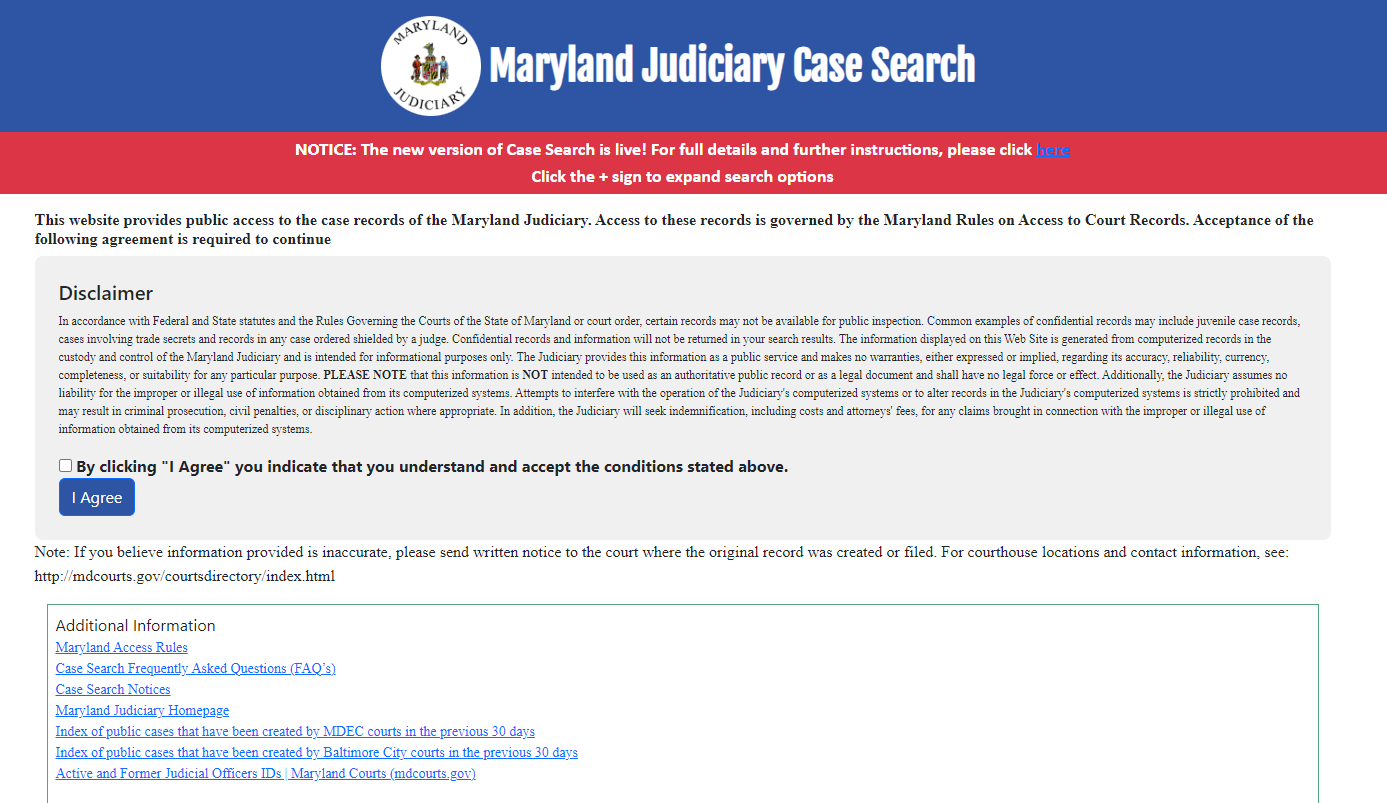
- Accept Terms and Conditions: Review the mandatory disclaimer regarding the use of public data, particularly restrictions against using the information for discriminatory employment practices or consumer reporting agency functions without proper compliance under the Fair Credit Reporting Act (FCRA).
- Enter Search Criteria: Input the subject's last name and first name in the designated text fields. Avoid entering middle names unless necessary to narrow down extremely common names, as strict matching parameters can inadvertently exclude valid records.
- Apply Jurisdiction and Court Filters: Narrow your search by selecting a specific county, Baltimore City, or choosing between District Court, Circuit Court, or both. Selecting specific jurisdictions drastically reduces false positives when searching common names.
- Filter by Case Type or Date Range: If you know the approximate filing date or the nature of the case (e.g., Traffic, Civil, Criminal), apply these filters to isolate the relevant record quickly from a long list of homonyms.
- Review Search Results: Examine the resulting index list, which typically displays party names, case numbers, filing dates, and court locations. Click on individual case numbers to view the complete docket history, charges, hearing schedules, and recorded dispositions.
Comparing Search Parameters and Data Availability
Different search methods yield varying levels of detail based on the inputs provided and the court level involved. The table below outlines the primary search categories and their operational scope.
| Search Parameter | Primary Target Data | Typical Limitations | Best Used For |
|---|---|---|---|
| Individual Name Search | Civil, criminal, and traffic dockets matching a specific last and first name. | Generates numerous results for common names; requires manual verification of middle names or birth years. | General background checks, locating pending personal lawsuits. |
| Business Name Search | Corporate entities, LLCs, or partnerships involved as plaintiffs or defendants. | Requires exact legal business naming conventions; misses filings under trade names if not properly indexed. | Corporate litigation research, vendor background vetting. |
| Case Number Search | Exact docket history, minute entries, and specific judge assignments for a known case. | Requires the exact, multi-digit alphanumeric case number issued by the court clerk. | Tracking ongoing legal proceedings where the docket number is already known. |
| Attorney Name Search | All active cases associated with a specific Maryland-licensed attorney bar number or name. | May include high volumes of dockets for active litigators, making manual sorting time-consuming. | Verifying legal representation or tracking an attorney's active caseload. |
Common Challenges and Troubleshooting Strategies
Searching for court records by name frequently presents challenges, particularly when dealing with common names or incomplete indexing data. Implementing targeted troubleshooting methods ensures thorough and accurate results.
- Dealing with Common Names: If a name search yields hundreds of results, cross-reference the output with known secondary identifiers such as middle initials, approximate age ranges, historical addresses listed on docket entries, or specific county jurisdictions where the individual is known to reside or conduct business.
- Handling Missing or Sealed Records: If a known case does not appear, verify whether the record has been shielded or expunged pursuant to Maryland law. Maryland's progressive expungement and shielding statutes allow qualifying criminal convictions and non-convictions to be removed from public view, rendering them invisible on the public search portal.
- Discrepancies in Case Status: Online portals may experience slight synchronization delays between courtroom proceedings and database updates. If a hearing occurred today, the minute entry or disposition may take 24 to 48 hours to reflect accurately in the public index. For time-sensitive matters, contact the specific court clerk's office directly.
Limitations, Legal Restrictions, and Compliance Realities
Public court data is a matter of public record, but its usage is subject to strict legal boundaries, particularly regarding consumer protection and employment screening.
Employers and landlords utilizing the Maryland Judiciary Case Search for screening purposes must remain compliant with the Fair Credit Reporting Act (FCRA) and state-specific ban-the-box legislation. Using informal online name searches as a direct substitute for a certified background check report can expose organizations to legal liability, especially if records contain outdated information, unverified dismissed charges, or mistaken identity issues involving homonyms.
Furthermore, downloading or scraping bulk data from the Maryland Judiciary portal violates terms of service and automated security protocols. Manual, individual record verification remains the gold standard for legal accuracy and compliance.
Frequently Asked Questions
Is the Maryland Judiciary Case Search free to use?
Yes, searching the Maryland Judiciary Case Search database and viewing basic docket information, party names, and case dispositions is entirely free for the public. However, certified copies of documents or specialized bulk data requests through the court clerk may incur nominal statutory fees.
Can criminal records be removed or hidden from the search results?
Yes, qualifying criminal records can be expunged or shielded under Maryland law. Once a judge grants an expungement or shielding petition, the records are removed from public view and will no longer appear on the online Maryland Judiciary Case Search portal.
Why is a specific case I am looking for not appearing in my name search?
A case may not appear if the name was entered incorrectly, if the record is sealed or confidential by law (such as juvenile or certain family law matters), or if the file has been expunged. Additionally, typographical errors made by court data entry clerks during initial filing can occasionally obscure records.
Does the online case search show a person's complete criminal history across the US?
No, the database is strictly limited to matters filed within the state courts of Maryland (District and Circuit courts). It does not include federal court cases, out-of-state convictions, or local municipal ordinance violations handled outside the Maryland state judiciary framework.
How current is the information displayed on the Maryland case search portal?
Most case dockets are updated in near real-time as court clerks enter minute orders, new filings, and final judgments. However, users should allow up to one business day for courtroom proceedings to be fully processed and reflected in the online public index.
Practical Recommendations for Accurate Record Retrieval
To maximize the effectiveness of your search, always verify the jurisdiction where the legal event occurred. Prioritize searching individual counties or Baltimore City directly if you have geographic clues, as statewide name searches on common surnames can produce unmanageable result sets. When critical legal or financial decisions depend on the results, always corroborate online docket summaries with certified paper records obtained directly from the respective Circuit or District Court Clerk's office.
Image Gallery