Rental Assistance Programs in Ohio: Eligibility, Application Steps, and Housing Resources
Ohio residents facing housing instability, rising rent burdens, or unexpected financial hardship can access several state, federal, and local rental assistance programs. Funding is distributed primarily through regional Community Actio...
Ohio residents facing housing instability, rising rent burdens, or unexpected financial hardship can access several state, federal, and local rental assistance programs. Funding is distributed primarily through regional Community Action Agencies, municipal housing authorities, and non-profit homeless prevention networks. These initiatives help eligible low-to-moderate-income households cover overdue rent, ongoing monthly payments, security deposits, and utility arrearages.
Contents
Overview of Ohio Rental Assistance Framework
Rental assistance in Ohio operates through a decentralized network funded by a combination of federal allocations from the U.S. Department of Housing and Urban Development (HUD), state funds managed by the Ohio Department of Development, and municipal housing grants.
Unlike temporary emergency pandemic funds, long-term and recurring rental assistance programs rely on established state and federal infrastructure. Assistance is categorized into three main delivery channels:
- Emergency Homelessness Prevention & Rapid Re-Housing: Designed for households facing imminent eviction, legal court summons, or literal homelessness.
- Tenant-Based Rental Assistance (Vouchers): Long-term subsidies that adjust rent obligations based on household income, primarily administered through Public Housing Authorities (PHAs).
- Community Action Agency Grants: Flexible, short-to-medium-term financial aid funded through state block grants, the State Housing Trust Fund (SHTF), and local municipal allocations.
Understanding which program matches your specific financial circumstances, geographic county, and urgency level is essential to securing aid before eviction proceedings escalate.
Key Rental Assistance Programs in Ohio
Community Action Agency Emergency Assistance
The primary entry point for emergency rental aid in most Ohio counties is the local Community Action Agency (CAA). Ohio's 48 CAAs cover all 88 counties, offering emergency housing relief through state block grants and targeted local funding.
These agencies provide one-time or multi-month grants to pay past-due rent (arrears) and prevent utility shutoffs. Payments are made directly to landlords and utility vendors on behalf of verified households. You can locate your regional agency through the Ohio Association of Community Action Agencies.
Housing Choice Voucher Program (Section 8)
The Housing Choice Voucher (HCV) program, funded by HUD and administered by local Public Housing Authorities, provides long-term rental assistance to low-income families, elderly residents, and individuals with disabilities.
Under the voucher program, qualified tenants pay approximately 30% of their adjusted gross monthly income toward rent, while the PHA pays the remainder directly to the property owner. Because demand for vouchers consistently exceeds federal funding, PHA waitlists periodically open and close throughout the year.
Emergency Solutions Grants (ESG) and Rapid Re-Housing
Funded through HUD and distributed by local homeless continuum of care (CoC) networks across Ohio, ESG programs focus on two distinct interventions:
- Homelessness Prevention: Provides rental arrears assistance, utility payment support, and housing relocation aid to individuals who have received formal legal notices to vacate.
- Rapid Re-Housing: Assists individuals and families currently residing in emergency shelters or places not meant for human habitation by covering security deposits, first month’s rent, and temporary rental subsidies while stabilizing employment.
Supportive Services for Veteran Families (SSVF)
Low-income military veterans residing in Ohio who are at risk of losing their housing can access specialized assistance through SSVF programs funded by the U.S. Department of Veterans Affairs. SSVF providers offer rent assistance, move-in assistance, legal representation for housing disputes, and case management designed to stabilize housing for veteran households.
Eligibility Criteria and Requirements
While specific program rules vary by funding source and administering organization, standard eligibility metrics apply across most Ohio rental assistance channels.
- Household Income Verification (Must be at or below 30%, 50%, or 80% of County AMI)
- Demonstrated Financial Need (Job loss, medical expense, utility arrears, etc.)
- Housing Instability Documentation (Notice to Leave, Past-Due Balance, Court Summons)
- Landlord Participation (W-9 form, lease agreement, direct payment)
1. Income Limits (Area Median Income)
Eligibility is primarily pegged to HUD-established Area Median Income (AMI) thresholds, which adjust based on county and household size:
- Extremely Low Income: Households earning at or below 30% of Area Median Income. Priority is typically assigned to this tier for long-term voucher programs and ESG aid.
- Very Low Income: Households earning at or below 50% of AMI.
- Low Income: Households earning up to 80% of AMI. Most CAA emergency grants cap eligibility at this standard.
2. Proof of Financial Hardship or Risk
Applicants must demonstrate that they are facing active housing instability or an unexpected financial disruption. Acceptable evidence includes:
- A formal 3-Day Notice to Leave or Notice to Vacate issued by the landlord under Ohio law.
- An active court summons for an eviction hearing (Forcible Entry and Detainer action).
- Proof of a substantial income reduction (e.g., job lay-off notices, reduced work hours) or extraordinary unexpected expenses (medical emergencies, essential vehicle repairs).
3. Required Verification Documentation Checklist
To process an application, administrators require complete verification documents. Missing documentation is the leading cause of application delays or rejections.
| Document Category | Acceptable Verification Items |
|---|---|
| Identity Verification | Government-issued photo ID, Driver’s License, State ID card, or passport for adult household members; Birth certificates or Social Security cards for dependents. |
| Income Verification | Last 30 to 60 days of pay stubs, W-2 forms, Social Security benefit statements (SSI/SSDI), unemployment benefit statements, or child support documentation. |
| Occupancy & Lease | Signed current lease agreement showing rental amount, property address, and landlord contact details. |
| Proof of Arrears | Landlord statement of account, late rent notice, or itemized ledger showing past-due balance. |
| Utility Obligations | Most recent electric, gas, water, or sewer statements showing balances or shut-off notices (if requesting utility aid). |
Step-by-Step Application Guide
Step 1: Identify the Right Local Resource
Determine which program fits your immediate timeline:
- If facing eviction within 3 to 7 days: Contact your county’s Legal Aid society immediately and call your local 211 line or Community Action Agency emergency intake portal.
- If struggling with ongoing rent costs: Check whether local Public Housing Authority waitlists are open for Housing Choice Vouchers or public housing units via HUD Ohio Resource Pages.
Step 2: Communicate with Your Landlord
Most emergency rental assistance payments are disbursed directly to property owners. Inform your landlord early that you are applying for assistance. Many agencies require landlords to sign a vendor agreement and submit a Form W-9 before funds can be issued. Having a cooperative landlord accelerates processing times significantly.
Step 3: Complete the Agency Intake Application
Submit your application through the designated online portal, by telephone, or during an in-person appointment. Ensure all household members and income sources are fully disclosed.
Step 4: Track Progress and Respond to Information Requests
After submission, check your application status weekly. Case managers routinely request updated bank statements or clarified income explanations. Failure to upload requested documents within specified deadlines (often 5 to 10 business days) can lead to file closure.
Overview of Ohio Rental Assistance Programs
The following reference table outlines major funding programs, administering agencies, target populations, and primary coverage areas across Ohio.
| Program Name | Administering Agency | Target Audience | Income / Eligibility Standard | Primary Coverage Areas |
|---|---|---|---|---|
| Community Action Emergency Aid | Local County CAAs | Low-to-moderate income households in financial crisis | Up to 80% AMI (varies by county grant) | Past-due rent, utility arrears, emergency housing costs |
| Housing Choice Voucher (Section 8) | Municipal & County Public Housing Authorities | Low-income families, seniors, disabled individuals | 30% to 50% AMI | Long-term monthly rent subsidy (tenant pays ~30% of income) |
| ESG / Rapid Re-Housing | Regional Homeless Continuums of Care (CoC) | Unhoused individuals or households at imminent risk | At or below 30% AMI | Security deposits, first month’s rent, short-term rent relief |
| SSVF Program | Approved Veteran Service Organizations (e.g., Volunteers of America) | Low-income military veterans and their families | At or below 50% AMI | Rent arrears, moving expenses, security deposits, legal aid |
| State Housing Trust Fund (SHTF) | Local Non-Profits & Housing Coalitions | Extremely low-income households and vulnerable populations | Typically below 50% AMI | Supportive housing, emergency home repairs, local rental subsidies |
Eviction Rules and Legal Tenant Protections in Ohio
Understanding Ohio eviction timelines is critical when seeking emergency rental relief. Under Ohio Revised Code (O.R.C.) Section 1923.04, landlords must serve tenants with a formal written 3-Day Notice to Leave the Premises before filing an eviction lawsuit in court.
- 3-Day Notice to Leave (Served by landlord for non-payment)
- Eviction Complaint Filed (Filed in Municipal or County Court)
- Court Hearing Scheduled (Typically 14 to 21 days after filing)
- Judgment & Writ of Execution (Bailiff move-out scheduled if granted)
Key Eviction Steps & Rights
- The 3-Day Notice is Not an Immediate Eviction: Receiving a 3-Day Notice does not mean a landlord can change locks or forcibly remove belongings. Only a court order enforced by a sheriff or bailiff can lawfully execute an eviction.
- Court Summons and Hearing: If the notice expires without resolution, the landlord files an eviction action in Municipal Court or County Court. Tenants receive a court summons with a scheduled hearing date.
- Eviction Diversion and Mediation: Major metropolitan areas in Ohio—including Cleveland, Columbus, Cincinnati, Akron, and Dayton—operate eviction diversion programs. In courtrooms with dedicated mediation programs, judges and magistrates may pause proceedings if an active rental assistance application is verified and the landlord agrees to receive direct back-pay.
- Right to Counsel: In Cleveland, low-income tenants with children have a legal Right to Counsel in eviction cases through Legal Aid. Other regions offer free or low-cost legal representation based on income through regional legal aid networks accessible via Ohio Legal Help.
Common Reasons for Application Delays and How to Prevent Them
- Incomplete Income Verification: Submitting outdated pay stubs or omitting secondary income sources (e.g., side-gig earnings, child support) causes application holds. Provide consecutive pay stubs for the exact timeframe specified by the agency.
- Unresponsive Landlords: Rental assistance administrators must establish vendor accounts to disburse funds. If a landlord fails to provide a W-9 or sign the payment acceptance agreement, processing stalls. Communicate directly with your landlord to ensure prompt return of agency paperwork.
- Unresolved Lease Name Discrepancies: The applicant’s legal name must match the name listed on the lease agreement and utility bills. If your living situation has changed, obtain an updated lease addendum before submitting your application.
- Applying After Court Judgments: Waiting until after a court issues a writ of restitution makes it difficult to secure assistance in time. Apply as soon as a payment delinquency occurs or immediately upon receiving a late notice.
Frequently Asked Questions
Can I get emergency rental assistance in Ohio if I have received a 3-Day Notice to Leave?
Yes. A 3-Day Notice to Leave provides documentable proof of housing instability, which is required by many emergency assistance programs. Submit your application immediately and provide a copy of the notice to your case manager and legal aid representative.
What is the maximum income limit to qualify for rental assistance in Ohio?
Income limits vary by county and funding source. Most emergency CAA programs serve households up to 80% of Area Median Income (AMI), while federal voucher programs and ESG grants prioritize households earning 30% to 50% of AMI. Check your specific county's income threshold guidelines through HUD or your local agency.
Do rental assistance programs pay money directly to tenants?
No. In almost all instances, approved funds are paid directly to the landlord or utility provider via direct deposit or check. Direct tenant payments occur only under rare federal exemptions when a landlord refuses to participate after formal administrative outreach.
How long does it take for a rental assistance application to be approved?
Processing timelines range from 2 to 6 weeks, depending on agency caseloads, funding availability, and documentation completeness. Emergency eviction-prevention channels may expedite applications for tenants with pending court hearing dates.
Can I receive rental assistance if I already have a Section 8 Housing Choice Voucher?
Yes, but assistance is restricted. Voucher holders pay an income-adjusted rent portion. Emergency programs cannot duplicate federal subsidies, but they can cover the tenant's individual share of rent or utility arrears if financial hardship is proven.
Action Plan for Ohio Renters
If you are struggling to keep up with rent payments or facing potential housing displacement in Ohio, take these practical steps immediately:
- Document Your Need: Gather your lease agreement, standard photo identification, 60 days of income proof, and written notices from your landlord or utility company.
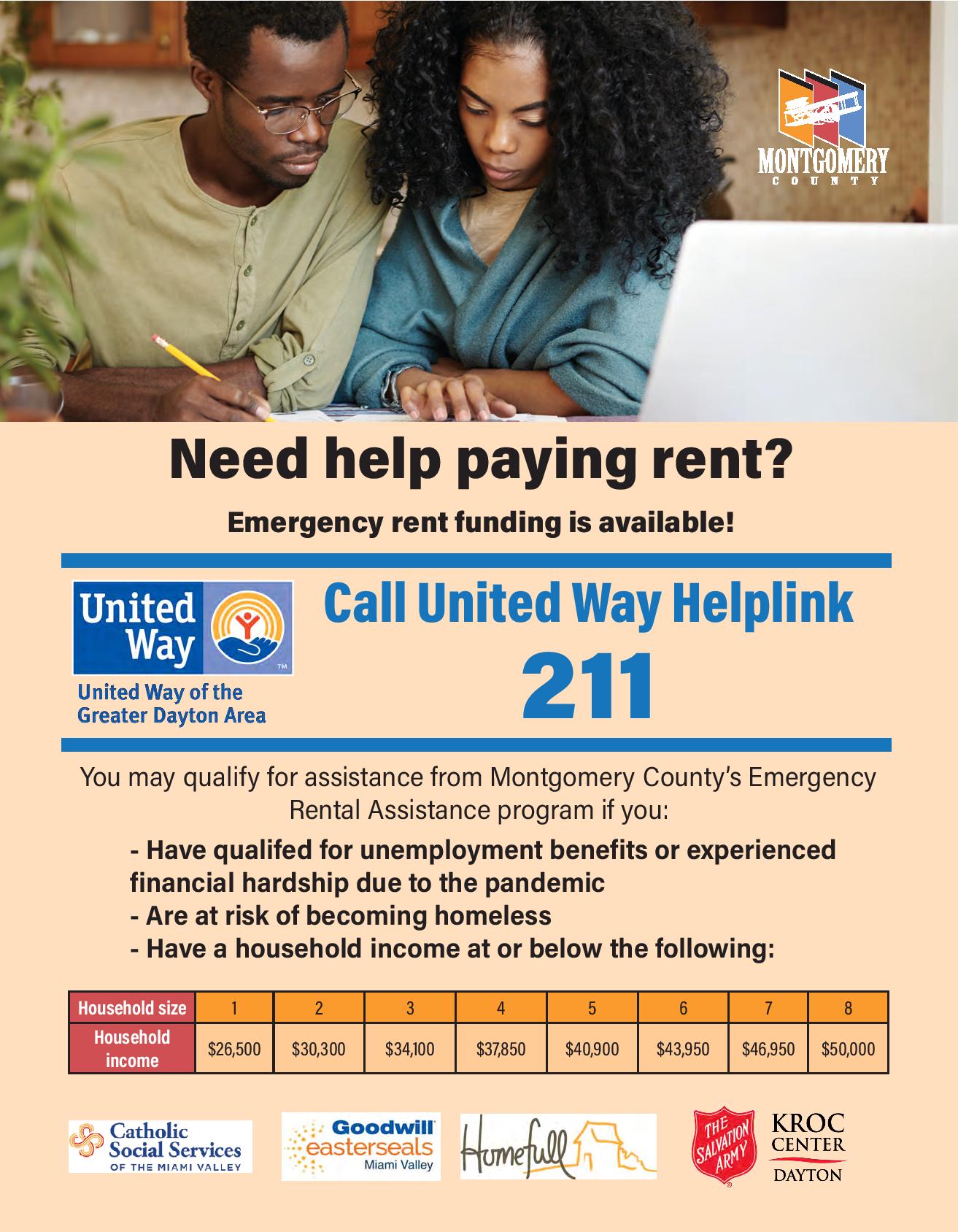
- Reach Out to Your CAA and 211: Contact your local Community Action Agency or call 2-1-1 (or visit 211.org) to connect with local emergency intake specialists.
- Notify Your Landlord: Inform your property owner that you are seeking financial aid, confirm their willingness to accept agency terms, and request a written ledger of your balance.
- Access Free Legal Assistance: If you receive a legal summons or eviction court filing, contact your regional Legal Aid society immediately through Ohio Legal Help to request legal representation and court mediation.
Image Gallery