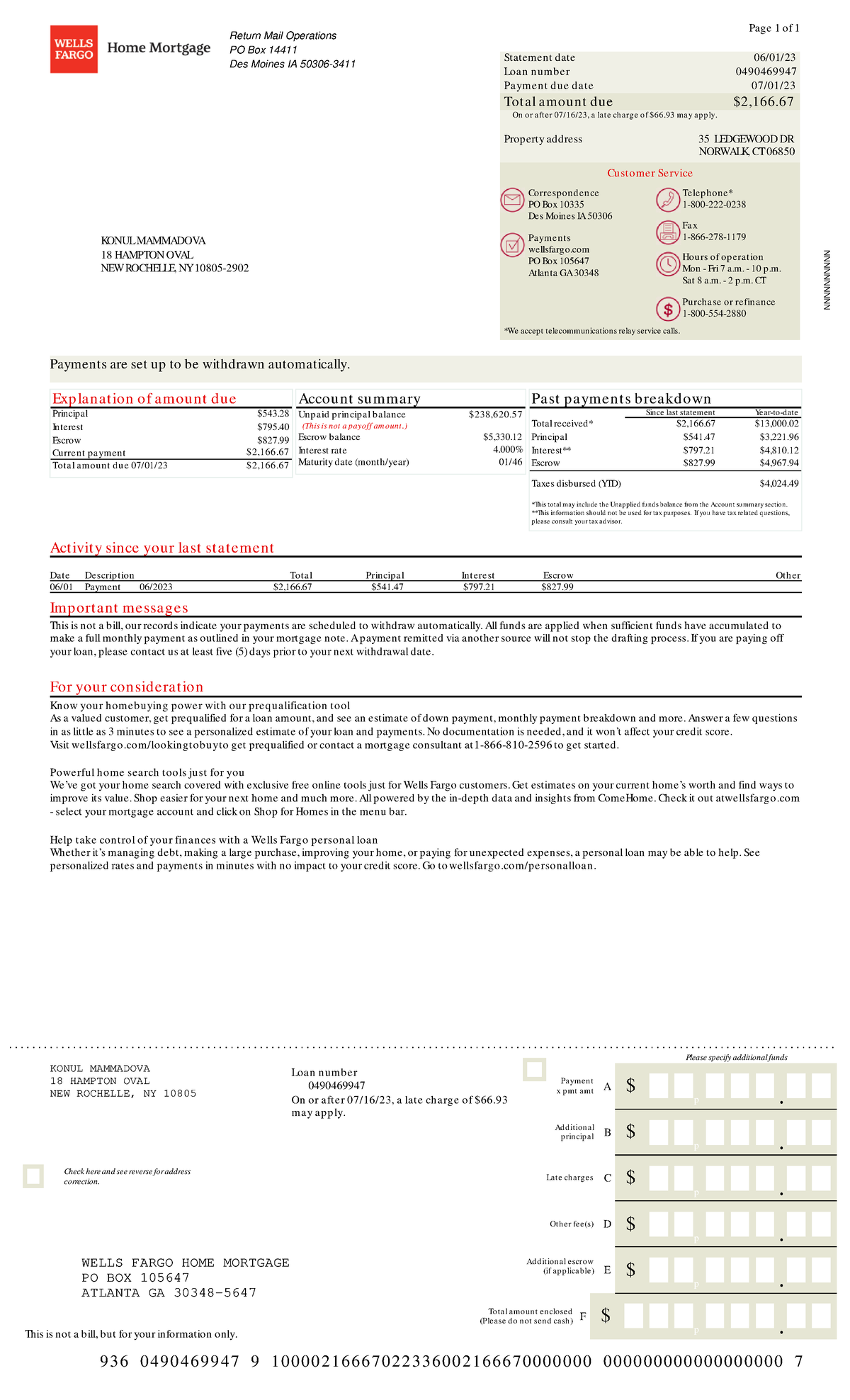
Navigating Wells Fargo Home Loan Rates and Mortgage Options
Wells Fargo home loan rates fluctuate in response to macroeconomic shifts, inflation data, and Federal Reserve monetary policy, making timely research essential for prospective homebuyers and homeowners looking to refinance. Securing a...
Wells Fargo home loan rates fluctuate in response to macroeconomic shifts, inflation data, and Federal Reserve monetary policy, making timely research essential for prospective homebuyers and homeowners looking to refinance.
Contents
Securing a mortgage requires a clear understanding of current market conditions, specific loan products, credit requirements, and the application process. Whether you are looking to purchase a primary residence, buy an investment property, or refinance an existing mortgage, navigating Wells Fargo's home lending portfolio involves weighing fixed rates against adjustable rates, evaluating closing costs, and understanding how your financial profile directly impacts your final interest rate and monthly payment.
Understanding Wells Fargo Mortgage Products and Loan Structures
Wells Fargo offers a diverse portfolio of mortgage products designed to accommodate different financial situations, down payment capabilities, and long-term ownership goals. Selecting the right product depends heavily on how long you plan to stay in the home and your tolerance for monthly payment fluctuations.
Fixed-Rate Mortgages
The conventional fixed-rate mortgage remains the most popular choice for borrowers seeking long-term predictability. Wells Fargo offers standard 15-year and 30-year fixed-rate loans.
- 30-Year Fixed: Provides lower monthly payments spread over three decades, though total lifetime interest payments are higher compared to shorter terms.
- 15-Year Fixed: Features higher monthly payments but substantially lower overall interest costs and a faster path to complete homeownership. Your interest rate is locked at closing and remains constant for the life of the loan, protecting you against broader economic inflation and rising market rates.
Adjustable-Rate Mortgages (ARMs)
For buyers who plan to move, sell, or refinance within a specific timeframe, an adjustable-rate mortgage can offer lower initial interest rates compared to fixed products. Wells Fargo structures these typically as hybrid ARMs, such as a 5/1 or 7/1 ARM.
- Initial Fixed Period: The interest rate remains fixed for the first 5 or 7 years.
- Adjustment Period: After the initial period, the rate adjusts annually based on designated benchmark indices and market conditions. Caps are established to limit how much the interest rate can increase during each adjustment and over the lifetime of the loan, providing a measure of security against runaway rate spikes.
Government-Backed Loans (FHA, VA, and USDA)
To assist buyers who may not qualify for conventional financing due to lower credit scores or limited savings for a down payment, Wells Fargo participates in government-insured loan programs.
- FHA Loans: Backed by the Federal Housing Administration, these require lower down payments (as low as 3.5%) and more flexible credit guidelines.
- VA Loans: Available to eligible military service members, veterans, and surviving spouses, offering zero down payment requirements and competitive interest rates without private mortgage insurance (PMI).
- USDA Loans: Designed for eligible rural and suburban homebuyers, offering 100% financing options with specific geographical and income restrictions.
Factors Influencing Your Personalized Mortgage Rate
Mortgage rates advertised by major lenders like Wells Fargo represent baseline figures for borrowers with pristine financial profiles. Your actual offered rate depends on several distinct variables evaluated during the underwriting process.
Credit Score and Financial History
Your credit score is one of the most heavily weighted factors in determining your interest rate. Lenders view higher credit scores (typically 740 and above) as representing lower default risk, thereby rewarding those borrowers with the most competitive interest rates. Borrowers with lower credit scores will typically be quoted higher rates to offset the statistical risk.
Down Payment and Loan-to-Value (LTV) Ratio
The size of your down payment directly impacts your Loan-to-Value ratio. Putting down 20% or more on a conventional purchase eliminates the need for private mortgage insurance (PMI) and often secures a more favorable interest rate. Smaller down payments increase the lender's risk, which can result in slightly higher interest rates or mandatory mortgage insurance premiums.
Loan Term and Property Type
Shorter loan terms, such as 15-year mortgages, generally carry lower interest rates than 30-year mortgages because the lender's capital is tied up for a shorter duration. Additionally, the type of property influences pricing; primary residences secure the best rates, while investment properties and multi-unit dwellings typically incur rate premiums or stricter pricing adjustments.
| Mortgage Product Type | Typical Term | Primary Benefit | Potential Drawback |
|---|---|---|---|
| 30-Year Fixed | 30 Years | Predictable, lower monthly payments | Higher lifetime interest costs |
| 15-Year Fixed | 15 Years | Substantially less total interest paid | Higher monthly financial commitment |
| 5/1 or 7/1 ARM | 30 Years (Hybrid) | Lower initial interest rate | Rate increases after the fixed period |
| FHA Loan | 15 or 30 Years | Low down payment (3.5%) and flexible credit | Mandatory mortgage insurance for the life of the loan |
| VA Loan | 15 or 30 Years | Zero down payment, no monthly PMI | Restricted to eligible military members and veterans |
The Wells Fargo Home Loan Application and Approval Process
Securing a mortgage with Wells Fargo involves a structured progression from initial rate shopping to final closing. Understanding each step helps streamline the experience and prevents unexpected delays.
1. Preparation and Document Gathering
Before submitting an application, organize essential financial documents. Lenders require thorough verification of income, assets, and liabilities. Be prepared to provide:
- W-2 forms and tax returns from the past two years.
- Recent pay stubs covering at least 30 consecutive days.
- Bank statements, investment account statements, and documentation verifying the source of your down payment funds.
- Proof of identity and employment history.
2. Getting Pre-approved
A mortgage pre-approval is a formal evaluation by an underwriter determining how much money Wells Fargo is willing to lend you. Unlike a pre-qualification, which relies on unverified self-reported data, a pre-approval requires a hard credit pull and verified documentation. Having a pre-approval letter strengthens your negotiating position when making an offer on a home, as sellers know you have verified financing power.
3. House Hunting and Rate Locking
Once pre-approved, you can shop for properties within your verified budget. When you go under contract on a home, you can choose when to lock in your interest rate. A rate lock protects you against market increases for a set period (typically 30 to 60 days) while your loan undergoes formal underwriting and home appraisal.
4. Underwriting and Closing
During underwriting, the loan processor and underwriter review the property appraisal, title search, and your financial updates to ensure everything complies with lending guidelines. Upon final approval, you will receive a Closing Disclosure detailing your exact closing costs, monthly payment, and loan terms. Review this document carefully before signing at the closing table.
Refinancing Options: When and Why to Refinance
Homeowners with existing mortgages often look to Wells Fargo to refinance their loans when market conditions or personal financial situations change. Refinancing replaces your current mortgage with a new loan, ideally with better terms.
Rate-and-Term Refinancing
Homeowners pursue rate-and-term refinancing primarily to secure a lower interest rate, transition from an adjustable-rate mortgage to a fixed-rate mortgage, or shorten their loan term from 30 years to 15 years. Lowering your interest rate can significantly reduce your monthly mortgage payment and decrease the total interest paid over the life of the loan.
Cash-Out Refinancing
A cash-out refinance allows you to tap into your accumulated home equity by replacing your existing mortgage with a larger loan amount and receiving the difference in cash. Homeowners frequently use cash-out refinancing to fund home renovations, consolidate high-interest debt, or cover major expenses. However, this increases your total mortgage debt and resets your loan term.
Frequently Asked Questions
How often do Wells Fargo mortgage rates change?
Wells Fargo mortgage rates change daily, and sometimes multiple times per day, in response to fluctuations in bond markets, Treasury yields, and broader economic indicators. Locking your rate is the only way to protect against these daily market movements.
Do I need to bank with Wells Fargo to get a home loan?
No, you do not need an existing checking, savings, or investment account with Wells Fargo to apply for a mortgage. However, relationship discounts or fee waivers may occasionally be available to existing premier or wealth management clients.
What is the minimum credit score required by Wells Fargo?
While specific minimum credit score requirements vary depending on the loan program (conventional, FHA, or VA), conventional loans typically require a minimum score of 620, though more competitive interest rates require scores of 740 or higher. Government-backed programs like FHA loans may accept lower scores with compensating factors.
How does Wells Fargo calculate closing costs?
Closing costs generally range from 2% to 5% of the total loan amount and cover fees associated with loan origination, home appraisal, title insurance, attorney fees, and government recording charges. Wells Fargo provides a detailed Loan Estimate within three days of your initial application outlining these expected costs.
Can I lock my interest rate before finding a home?
Wells Fargo offers options like a mortgage lock policy, but typically, a property must be identified and under contract before a formal rate lock can be executed for a specific closing window. Consult directly with a Wells Fargo home mortgage consultant regarding lock extension policies.
Next Actions for Prospective Homebuyers
To begin your home financing journey with Wells Fargo, review your current credit report for any discrepancies, calculate your debt-to-income ratio, and gather your financial documentation. Reaching out directly to a Wells Fargo home mortgage consultant or utilizing their online mortgage portal will allow you to get pre-approved and receive a personalized quote tailored to your specific financial profile and property goals.
Disclaimer: Mortgage rates, loan programs, and underwriting guidelines are subject to change without notice based on market conditions and applicant qualifications. This article is for informational purposes only and does not constitute formal financial or legal advice.
Image Gallery