Who Wrote and Performed the Song Unwritten?
The iconic pop anthem "Unwritten" was performed by British singer-songwriter Natasha Bedingfield, who also co-wrote the track alongside Danielle Brisebois and Wayne Rodrigues. Released in late 2004 as the third single from her debut st...
The iconic pop anthem "Unwritten" was performed by British singer-songwriter Natasha Bedingfield, who also co-wrote the track alongside Danielle Brisebois and Wayne Rodrigues. Released in late 2004 as the third single from her debut studio album of the same name, the song serves as a powerful manifesto for self-determination and personal agency.
Contents
As of 2026, "Unwritten" remains a cornerstone of 21st-century pop culture. Its enduring popularity is rooted not only in its infectious melody and gospel-inspired production but also in its universal message: that the future is not yet determined and every individual holds the "pen" to their own life story. While Bedingfield is the primary face of the song, the collaborative effort behind its creation and its subsequent use in high-profile media—ranging from MTV’s The Hills to the 2024 romantic comedy Anyone But You—has solidified its status as a timeless classic.
The Creative Minds Behind the Anthem
To understand who "Unwritten" is by, one must look at the trio of songwriters who blended individual styles to create a track that felt both personal and globally accessible.
Natasha Bedingfield: The Visionary Artist
Natasha Bedingfield emerged from a musical family (her brother is fellow pop star Daniel Bedingfield) with a distinct voice and a desire to create music that was "life-affirming." Unlike many pop stars of the mid-2000s who leaned into heartbreak or rebellion, Bedingfield focused on themes of empowerment and optimism. For "Unwritten," she wanted to capture the feeling of potential that comes with youth and transition.
Danielle Brisebois: The Veteran Songwriter
Danielle Brisebois played a critical role in the song's structural development. A former child actress (known for All in the Family) and a member of the 90s alternative rock band New Radicals, Brisebois brought a seasoned perspective to the writing room. Her influence can be heard in the song’s anthemic quality and its ability to bridge the gap between polished pop and organic, soulful instrumentation.
Wayne Rodrigues: The Producer and Co-Writer
Wayne Rodrigues was responsible for the song's production and co-writing. He crafted the rhythmic foundation that allows the song to build from a relatively sparse verse into an explosive, choir-backed chorus. The production choices—such as the acoustic guitar layering and the use of the California Agape Choir—were instrumental in making "Unwritten" sound distinct from the synthesizer-heavy tracks dominating the charts in 2004 and 2005.
Lyrical Analysis: The Power of the "Blank Page"
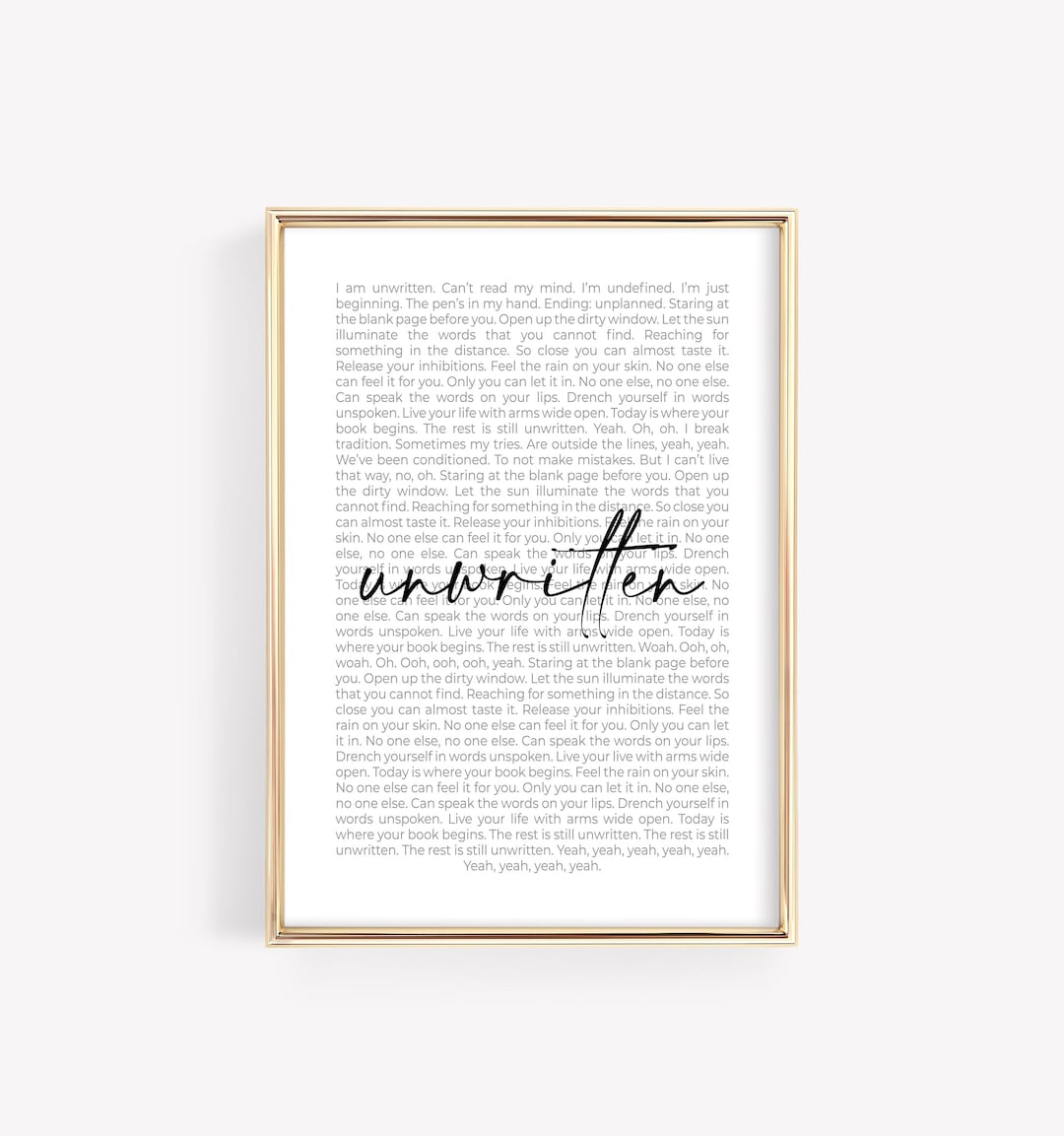
The lyrics of "Unwritten" are central to why the song resonates decades later. The metaphor of the "blank page" serves as a call to action for listeners to stop living in the shadows of others and start making their own choices.
- Self-Determination: Phrases like "No one else can feel it for you / Only you can let it in" emphasize that emotional experience and life direction are deeply personal responsibilities.
- Vulnerability as Strength: The line "Drench yourself in words unspoken / Live your life with arms wide open" suggests that true living requires a level of openness and risk-taking.
- The Rejection of Perfection: By stating "The rest is still unwritten," Bedingfield argues that mistakes and "scribbles" are part of the process, and that the story isn't over until the very end.
In 2026, these themes continue to find new audiences. In an era where digital footprints and social media can make young people feel like their lives are already "scripted" or under constant surveillance, the song's insistence on privacy and personal narrative ("Today is where your book begins") remains a radical and refreshing sentiment.
Musical Structure and Technical Composition
Technically, "Unwritten" is a masterclass in pop tension and release. It is set in the key of F Major with a moderate tempo of roughly 100 beats per minute. This "walking pace" tempo makes the song feel grounded and steady, mirroring the journey the lyrics describe.
Use of the Gospel Choir
One of the most defining features of "Unwritten" is the bridge and final choruses, which feature the California Agape Choir. The addition of a gospel-style backing vocal elevates the song from a standard pop track to a spiritual, communal experience. This choice was intentional; it provides a sense of "universal truth" to the lyrics, making the listener feel as though they are part of something larger than themselves.
Instrumental Layering
The song begins with a simple acoustic guitar riff, providing an organic feel. As the song progresses, layers of percussion, bass, and synthesizers are added. By the time the final chorus hits, the "wall of sound" approach creates a sense of euphoria that has made the song a favorite for graduation ceremonies, weddings, and cinematic climaxes.
Cultural Milestones and Media Resurgence
The reason many people ask "who is 'Unwritten' by" is often linked to where they first heard it. The song has had several distinct "lives" in the public eye.
The Hills Era (2006–2010)
For many Millennials, "Unwritten" is inseparable from the MTV reality show The Hills. Serving as the show's theme song, it became the sonic backdrop for the drama of Lauren Conrad and Heidi Montag. The song perfectly captured the show's aesthetic: the promise of a new life in Los Angeles and the uncertainty of young adulthood.
The 2024 Revival: Anyone But You
Nearly twenty years after its original release, "Unwritten" experienced a massive global resurgence due to the romantic comedy Anyone But You, starring Sydney Sweeney and Glen Powell. In the film, the song is used as a "serenity song" to calm Powell's character, eventually becoming a recurring motif that the entire cast dances to during the end credits. This sparked a viral TikTok trend, introducing Gen Z to Bedingfield's work and propelling the song back onto the Billboard and Spotify charts.
| Category | Detail |
|---|---|
| Primary Artist | Natasha Bedingfield |
| Album | Unwritten (2004) |
| Songwriters | Natasha Bedingfield, Danielle Brisebois, Wayne Rodrigues |
| Production | Wayne Rodrigues, Danielle Brisebois |
| Key/Tempo | F Major / 100 BPM |
| Notable Media | The Hills, Anyone But You, The Sisterhood of the Traveling Pants |
| Major Award | Grammy Nomination: Best Female Pop Vocal Performance (2007) |
Comparison: Unwritten vs. Other Bedingfield Hits
While "Unwritten" is her most famous work, Natasha Bedingfield had a string of hits in the mid-2000s that shared similar DNA. Comparing them helps clarify her artistic identity during that period.
- "Pocketful of Sunshine": Like "Unwritten," this track focuses on mental escapism and resilience. It relies more on an upbeat, danceable rhythm and repetitive hooks.
- "These Words": This was her breakout hit in the UK. It is more self-referential, documenting the actual struggle of writing a love song. It shares the "meta" songwriting theme found in "Unwritten."
- "Soulmate": A more traditional ballad that showcases her vocal range and vulnerability, though it lacks the anthemic "stadium" feel of "Unwritten."
Critical and Commercial Success
Upon its release, "Unwritten" was a certified hit. It peaked at number 5 on the Billboard Hot 100 in the United States and reached the top ten in numerous other countries, including the UK, Canada, and Germany. In 2007, Bedingfield received a Grammy Award nomination for Best Female Pop Vocal Performance, cementing her place among the elite vocalists of the era.
Beyond the charts, the song has been certified Multi-Platinum by the RIAA. Its longevity is evidenced by its streaming numbers; in 2024 and 2025, it frequently appeared on "Throwback" and "Feel Good" playlists, often outperforming contemporary hits in terms of daily active listeners.
Common Misconceptions
Despite its fame, there are several common misconceptions regarding the song's origin:
- The "One-Hit Wonder" Myth: Some listeners believe Bedingfield was a one-hit wonder. In reality, she had multiple Top 40 hits and a highly successful debut album that sold over 2 million copies worldwide.
- Authorship: People often assume the song was written by a large "pop factory." While it was a collaboration, Bedingfield was the primary driver of the concept and lyrics, ensuring the song felt authentic to her own life experiences.
- Genre: While labeled as "Pop," the song heavily incorporates elements of R&B, Soul, and Gospel, which is why it has such a broad appeal across different radio formats.
FAQs About the Song "Unwritten"
Who wrote the lyrics to "Unwritten"?
The lyrics were co-written by Natasha Bedingfield and Danielle Brisebois. The two spent time discussing the themes of potential and the fear of the unknown before drafting the verses that emphasize the "blank page" metaphor.
Is Natasha Bedingfield still active in 2026?
Yes, Natasha Bedingfield remains active in the music industry. Following the massive 2024 resurgence of "Unwritten," she embarked on a global tour and has released several new singles that build on her signature optimistic pop sound, while also appearing at major music festivals as a legacy act.
Why did "Unwritten" become popular again in the 2020s?
The song’s revival was primarily driven by its prominent use in the 2023/2024 film Anyone But You. The movie's success led to the "Unwritten Challenge" on social media platforms, where fans recreated the film's ending dance sequence.
What inspired the gospel choir in the song?
Bedingfield grew up singing in church and was heavily influenced by gospel music. She wanted "Unwritten" to have a communal, uplifting feeling that only a full choir could provide, leading to the recruitment of the California Agape Choir for the recording session.
Was "Unwritten" ever used in commercials?
Yes, the song has been licensed for dozens of commercials over the last two decades, including advertisements for hair care products, automobiles, and retail brands, usually to evoke a sense of freedom and new beginnings.
Conclusion and Recommendations
"Unwritten" is more than just a pop song; it is a cultural touchstone that has empowered multiple generations to embrace the uncertainty of the future. Created by the powerhouse team of Natasha Bedingfield, Danielle Brisebois, and Wayne Rodrigues, the song successfully combined philosophical lyrics with a high-energy gospel-pop production that has stood the test of time.
If you are a fan of "Unwritten," consider exploring the rest of Bedingfield's debut album to see how she explores similar themes of self-discovery. Additionally, looking into the work of co-writer Danielle Brisebois (especially her work with New Radicals) provides a deeper appreciation for the sophisticated songwriting that defines this era of pop music. Whether you first heard it on The Hills in 2006 or in a movie theater in 2024, the message remains the same: your story is yours to write.
Image Gallery