Universal Life Insurance Explained: Mechanics, Costs, and Strategies
Universal life (UL) insurance is a form of permanent life insurance that combines a death benefit with a tax-deferred savings component, known as cash value. Unlike traditional whole life insurance, universal life offers significant fl...
Universal life (UL) insurance is a form of permanent life insurance that combines a death benefit with a tax-deferred savings component, known as cash value. Unlike traditional whole life insurance, universal life offers significant flexibility, allowing policyholders to adjust their premium payments and death benefits over time to align with their evolving financial circumstances and goals.
Contents
What is Universal Life (UL) Insurance?
Universal life insurance represents a middle ground between the rigid structure of whole life insurance and the simplicity of term life insurance. It is designed to provide lifelong coverage, provided the policy remains adequately funded. The "universal" aspect refers to the policy's flexible nature; as long as the cash value is sufficient to cover the monthly cost of insurance (COI) and administrative fees, the policyholder can often skip or reduce premium payments.
In 2026, universal life remains a staple for individuals seeking long-term estate planning tools or a supplemental tax-advantaged savings vehicle. The policy is "unbundled," meaning the insurance company provides a transparent breakdown of the costs. Policyholders can see exactly how much of their premium goes toward the death benefit protection, how much is consumed by administrative expenses, and how much is credited to the cash value.
How Universal Life Insurance Works
The mechanics of a universal life policy revolve around the interplay between the premium payments, the cash value account, and the cost of insurance. When a policyholder pays a premium, the insurance company deducts the current COI and any administrative fees. The remainder of the payment is added to the cash value, where it earns interest.
The Cash Value Component
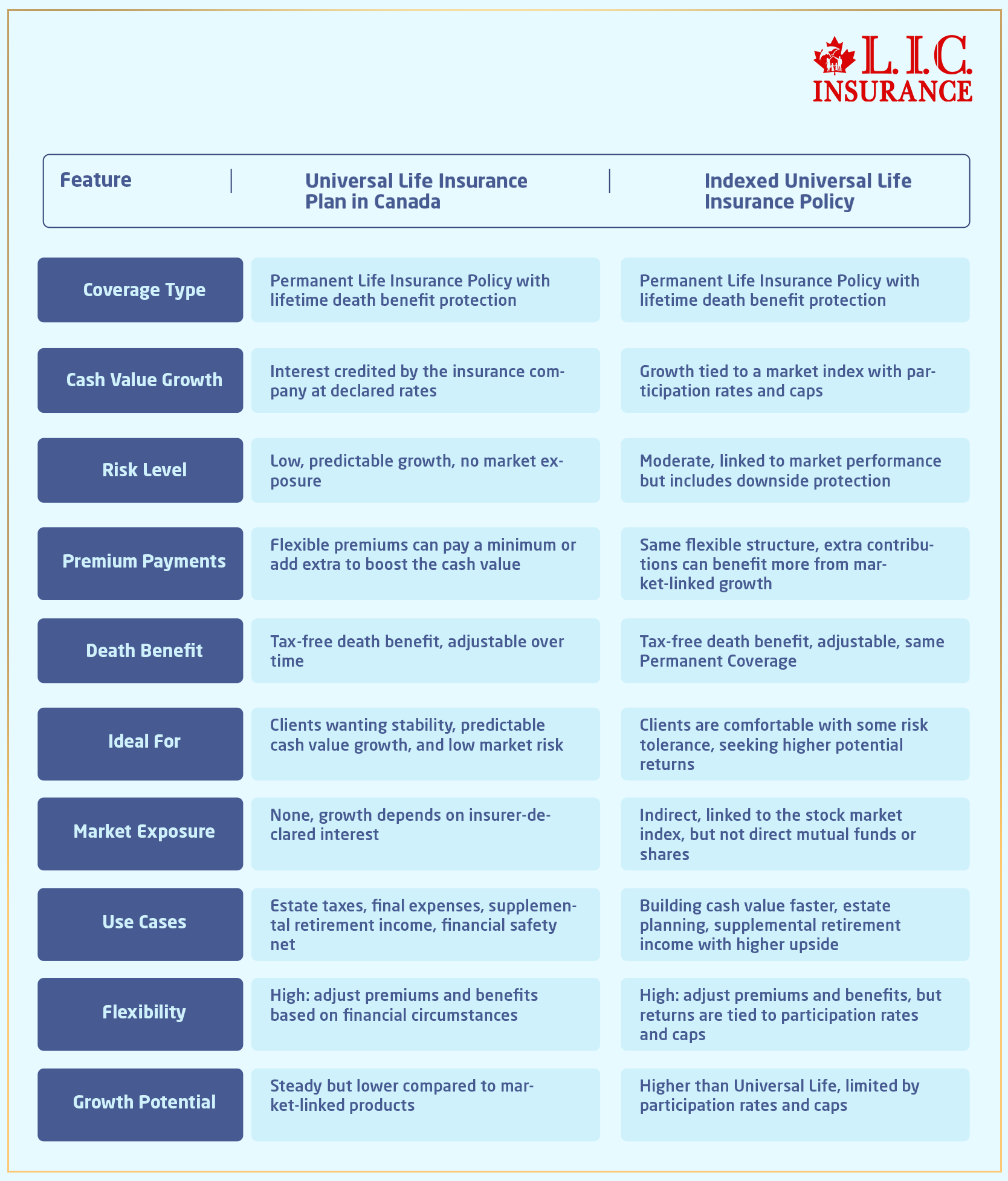
The cash value acts as an internal equity account. In a standard universal life policy, the cash value earns interest based on the insurer's current portfolio performance or a declared external index, often with a guaranteed minimum interest rate (e.g., 2% or 3%). This growth is tax-deferred under internal revenue codes, such as Section 7702 in the United States, which governs how life insurance contracts are defined for federal tax purposes.
Flexible Premiums
One of the primary selling points of UL is premium flexibility. If a policyholder experiences a financial windfall, they can "overfund" the policy (up to certain IRS limits) to grow the cash value faster. Conversely, if they face a temporary cash flow shortage, they can use the accumulated cash value to pay the premiums. This flexibility is vital for business owners or individuals with fluctuating incomes. However, it requires active management; if the cash value is depleted and the policyholder does not resume payments, the policy will lapse.
Death Benefit Options
Universal life policies typically offer two types of death benefit structures:
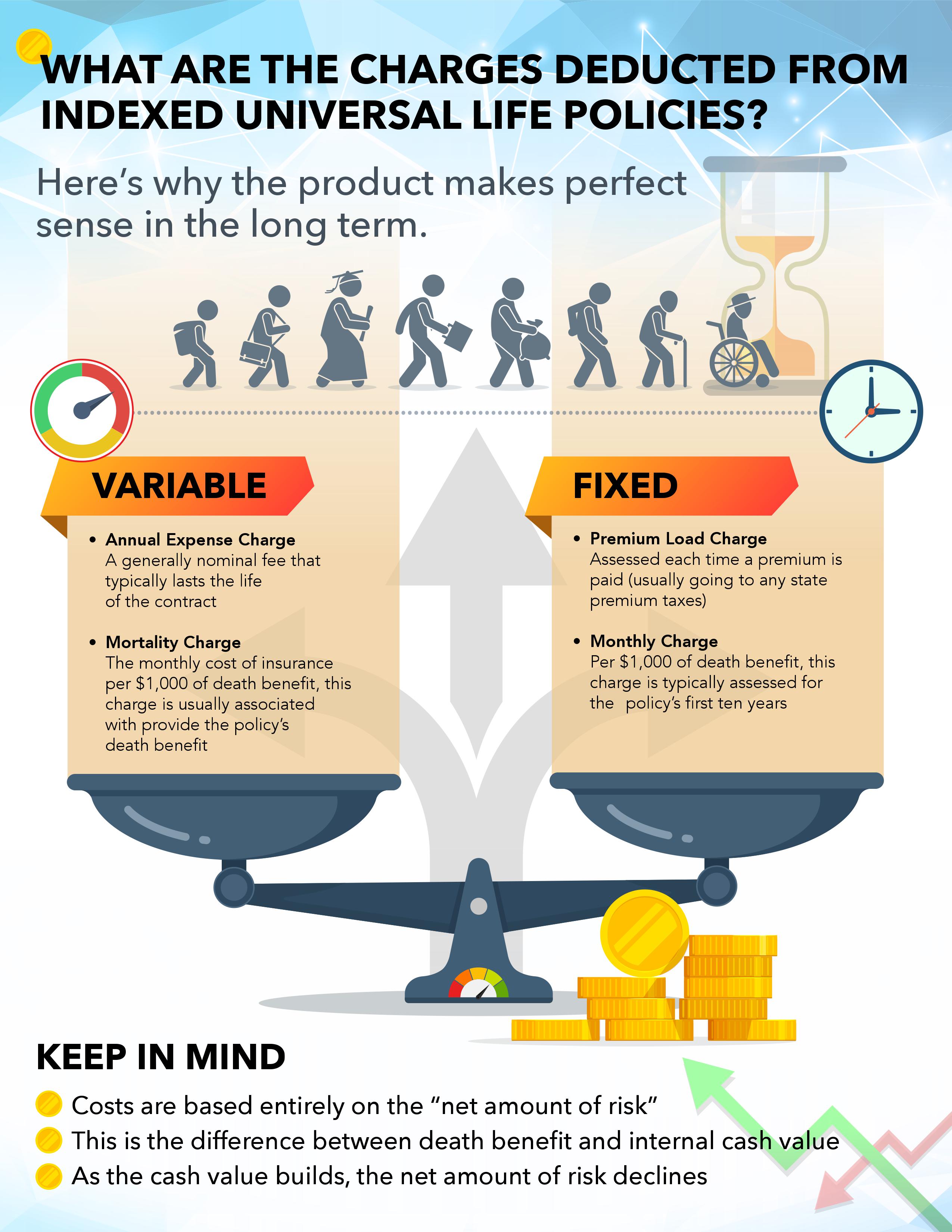
- Level Death Benefit (Option A): The death benefit remains constant. As the cash value grows, the "net amount at risk" to the insurance company decreases. This usually results in lower COI charges over time.
- Increasing Death Benefit (Option B): The death benefit consists of the face amount plus the accumulated cash value. This provides a higher payout to beneficiaries but comes with higher COI charges because the insurer’s risk remains higher.
Types of Universal Life Insurance
As the financial markets have evolved, several variations of universal life insurance have emerged to suit different risk appetites and financial objectives.
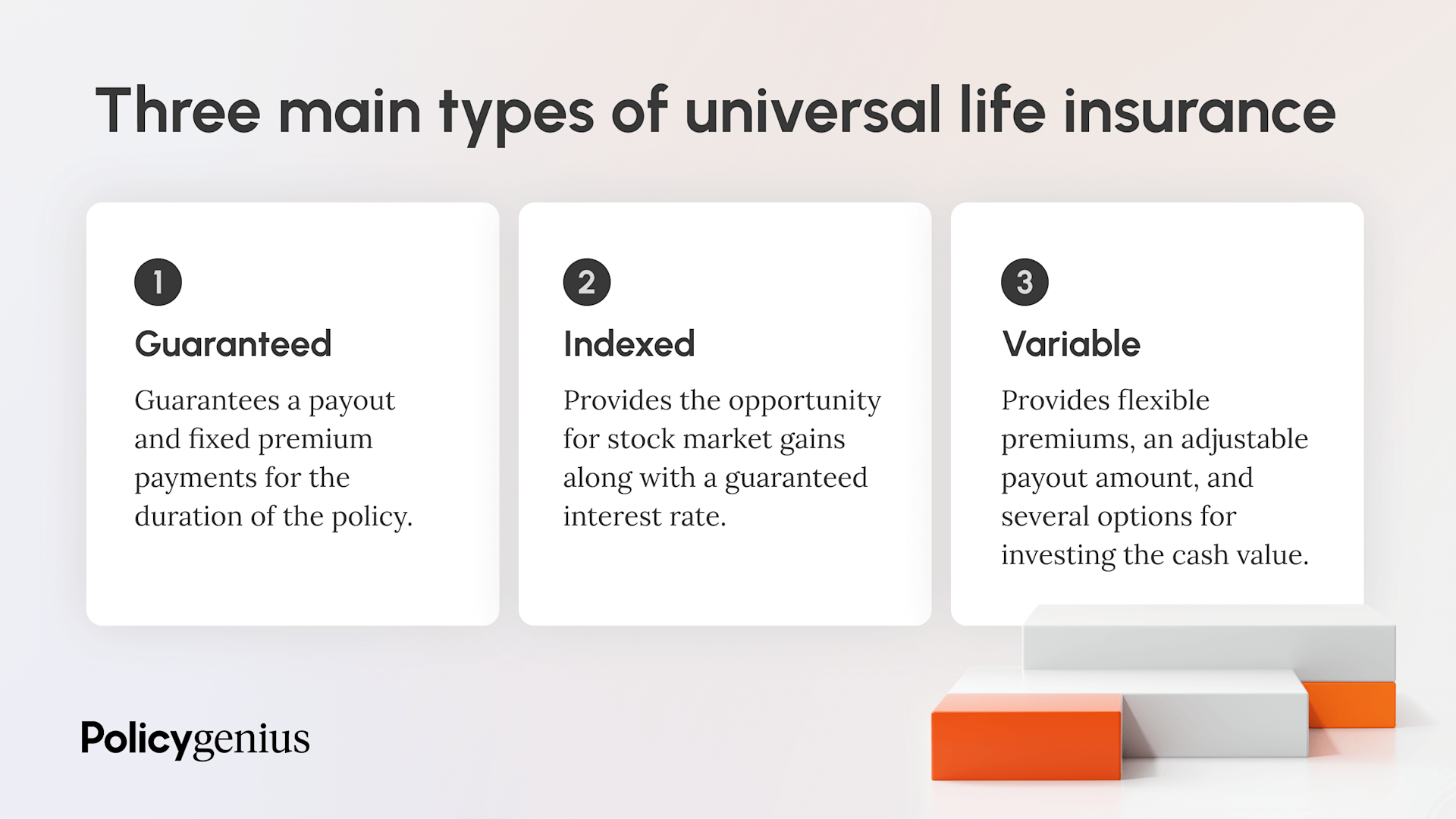
1. Guaranteed Universal Life (GUL)
GUL is often referred to as "no-lapse" universal life. It functions similarly to term insurance but can last until age 100 or 121. It focuses on the death benefit rather than cash value accumulation. As long as a specific premium is paid, the death benefit is guaranteed regardless of market performance or interest rate shifts. It is generally the least expensive way to secure permanent coverage.
2. Indexed Universal Life (IUL)
In an IUL policy, the interest credited to the cash value is tied to the performance of a financial index, such as the S&P 500. While the cash value is not directly invested in the stock market, the insurer uses a formula to credit interest based on index gains. These policies usually feature a "floor" (protecting against market losses) and a "cap" (limiting the maximum gain).
3. Variable Universal Life (VUL)
VUL allows policyholders to invest their cash value in various "sub-accounts," which are similar to mutual funds. This offers the highest potential for growth but also the highest risk, as the cash value can decrease if the underlying investments perform poorly. Because VUL involves securities, it is regulated by the Securities and Exchange Commission (SEC) and requires a prospectus.
Universal Life vs. Whole Life Insurance
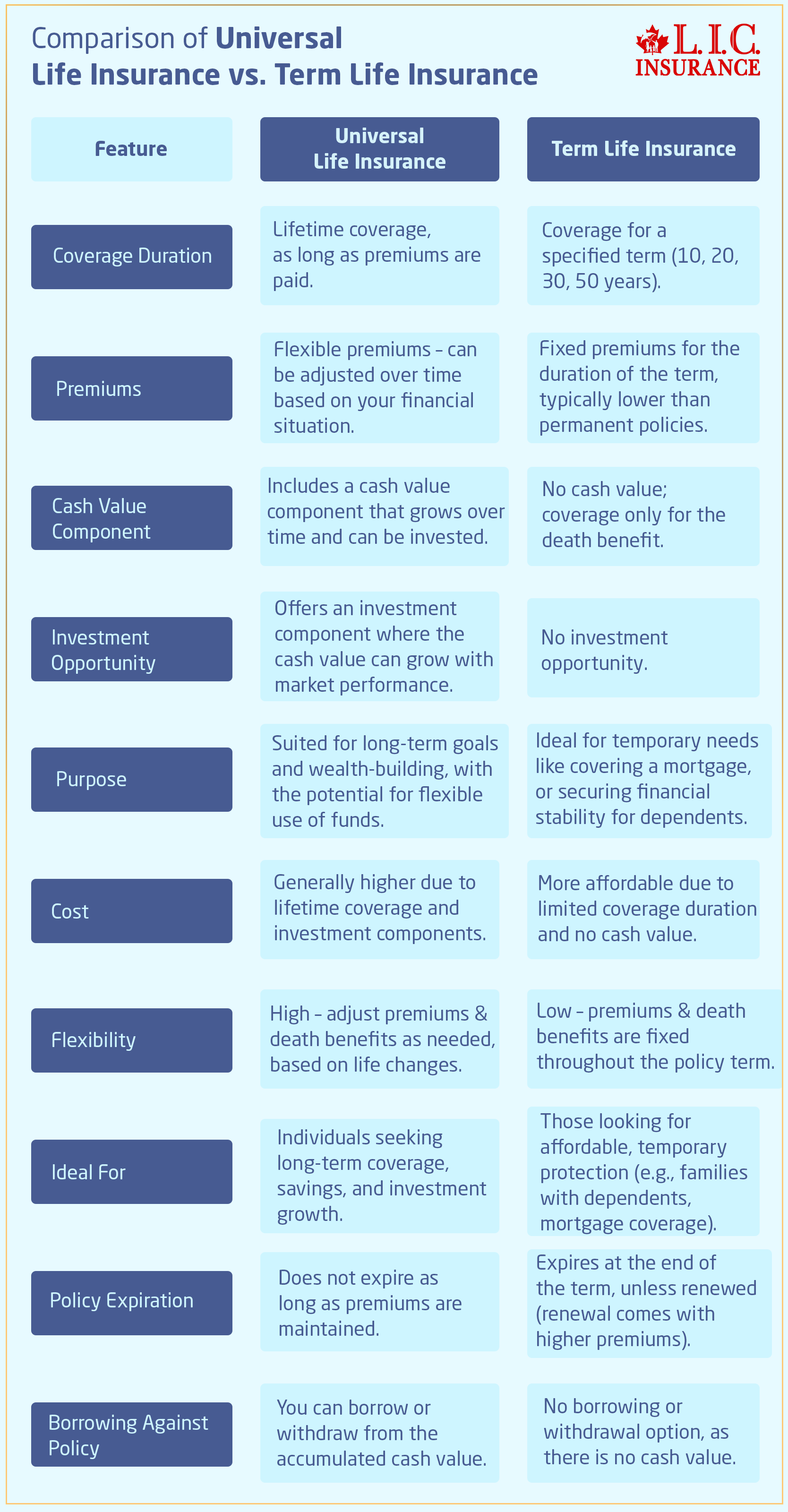
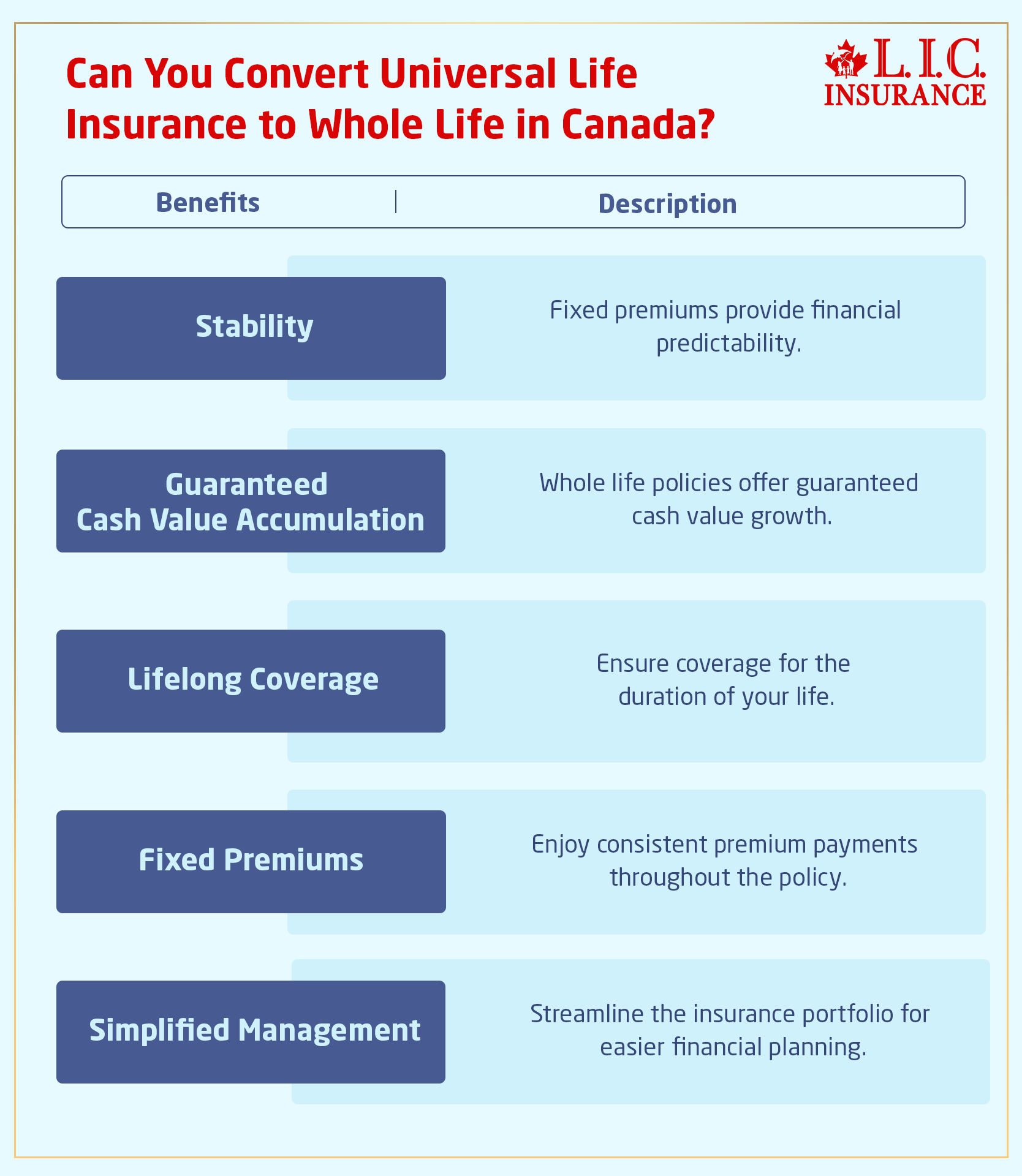
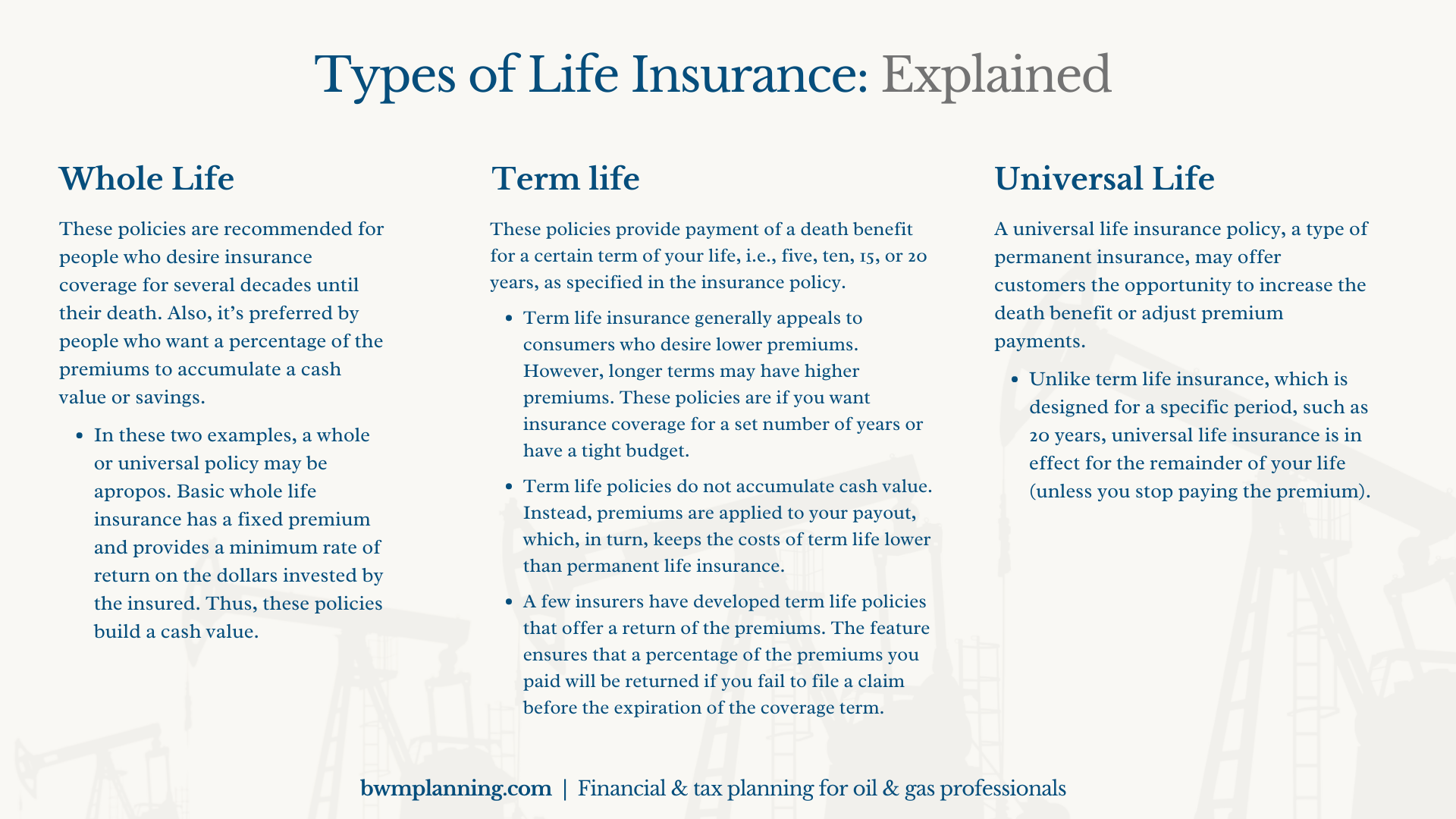
While both are permanent life insurance products, their internal structures differ significantly. Whole life insurance is characterized by guarantees: guaranteed premiums, a guaranteed death benefit, and a guaranteed schedule for cash value growth. Universal life trades these absolute guarantees for flexibility and transparency.
| Feature | Universal Life (UL) | Whole Life |
|---|---|---|
| Premiums | Flexible; can be adjusted or skipped | Fixed and level for the life of the policy |
| Cash Value Growth | Variable; based on interest or indices | Fixed; based on a guaranteed schedule |
| Transparency | High; costs are unbundled and disclosed | Low; costs and dividends are bundled |
| Investment Risk | Borne largely by the policyholder | Borne largely by the insurance company |
| Dividends | Rare; usually interest-crediting instead | Common in "participating" policies |
| Complexity | High; requires regular monitoring | Low; "set it and forget it" |
Key Advantages of Universal Life
The appeal of universal life insurance lies in its adaptability. For many high-net-worth individuals, it serves as more than just a death benefit; it is a strategic asset.
- Tax-Advantaged Growth: The cash value grows on a tax-deferred basis. Furthermore, policyholders can often access this money through tax-free policy loans, provided the policy stays in force.
- Adjustable Protection: As life stages change—such as children graduating college or a mortgage being paid off—the policyholder can request a reduction in the death benefit to lower the cost of the insurance.
- Accessibility: Unlike retirement accounts like 401(k)s or IRAs, there are generally no age-based restrictions (like the 59½ rule) for accessing the cash value, though surrender charges may apply in the early years of the policy.
Risks and Disadvantages to Consider
Universal life insurance is not a passive investment. It requires a clear understanding of the underlying risks, particularly regarding interest rates and insurance costs.
Rising Cost of Insurance (COI)
The COI is the actual price of the "term" insurance inside the UL policy. This cost increases every year as the insured person gets older. In the early years, the premiums usually exceed the COI, allowing the cash value to grow. However, in later years, the COI may exceed the premium. If the cash value isn't large enough to cover this gap, the policyholder must pay significantly higher premiums to keep the policy active.
Interest Rate Risk
For standard UL and IUL policies, low interest rates or poor index performance can lead to lower-than-expected cash value growth. If the interest earned is lower than the projections used when the policy was purchased, the policy may become underfunded. In 2026, with shifting global economic conditions, monitoring these internal rates of return is essential to prevent policy lapse.
Surrender Charges
Most UL policies have a surrender charge period that can last 10 to 15 years. If you cancel the policy or withdraw too much cash during this period, the insurer will deduct a substantial fee. This makes universal life a poor choice for short-term savings needs.
Cost Factors and Fees in 2026
When evaluating a universal life policy, it is critical to look beyond the premium and understand the fee structure. The National Association of Insurance Commissioners (NAIC) provides guidelines for these disclosures, but the specifics vary by carrier.
- Premium Expense Charges: A percentage taken off the top of every premium payment (often to cover state premium taxes and sales commissions).
- Administrative Fees: Monthly charges for policy maintenance.
- Mortality and Expense (M&E) Risk Charges: Fees related to the insurance company's risk of paying out the death benefit.
- Surrender Charges: Fees for early termination, which typically grade down to zero over a decade or more.
Is Universal Life Insurance Right for You?
Universal life insurance is best suited for individuals who need permanent coverage and have the financial discipline to monitor their policy performance. It is frequently used for:
- Estate Liquidity: Providing heirs with cash to pay estate taxes without liquidating real estate or business interests.
- Executive Benefits: Companies often use UL or VUL as a "Golden Handshake" for key employees.
- Supplementing Retirement: Using the cash value as a tax-free "volatility buffer" during market downturns in retirement.
If you prefer a hands-off approach and want guaranteed costs, whole life or even a long-term term life policy may be more appropriate. However, for those who value transparency and the ability to pivot their financial strategy, universal life offers a unique set of tools.
Frequently Asked Questions
Can I withdraw money from my universal life insurance policy?
Yes, you can typically access your cash value through withdrawals or policy loans. Withdrawals reduce the death benefit and may be taxable if they exceed the "basis" (the total premiums paid). Policy loans use the cash value as collateral and generally accrue interest, but they are not considered taxable income as long as the policy remains in force.
What happens if I stop paying premiums?
If you stop paying premiums, the insurance company will deduct the monthly COI and administrative fees from your accumulated cash value. As long as there is enough cash value to cover these expenses, the policy will remain active. If the cash value reaches zero, the policy will enter a grace period and eventually lapse, ending your coverage.
Is the interest rate on universal life insurance guaranteed?
Most standard universal life policies offer a minimum guaranteed interest rate, such as 2%. However, the actual rate credited is usually higher and determined by the insurance company based on their general account performance. Indexed policies (IUL) have a floor of 0% to protect against losses, but their gains are based on index performance, not a fixed interest rate.
How does the cost of insurance change over time?
In a universal life policy, the cost of insurance (COI) increases as you age. This is because the statistical likelihood of a claim being paid increases. To keep the policy sustainable, it is often necessary to build up a significant cash value in the early years to offset the much higher COI charges that occur when the policyholder is in their 70s or 80s.
Can I change my death benefit amount?
Yes, one of the defining features of universal life is the ability to increase or decrease the death benefit. Decreasing the benefit is usually straightforward and reduces the COI. Increasing the benefit typically requires "evidence of insurability," meaning you may need to undergo a new medical exam to prove you are still in good health.
Practical Next Steps
Before purchasing a universal life policy, request an In-Force Illustration. This document provides projections of how the policy will perform under different interest rate scenarios. Compare the "current" assumptions with the "guaranteed" assumptions to see the worst-case scenario. If the policy requires a 7% return to stay active until age 90, but the current market is only yielding 4%, you should consider a higher premium or a different product. Consult with a qualified financial advisor or a licensed insurance professional to ensure the policy structure aligns with your long-term legacy and liquidity needs.
Image Gallery