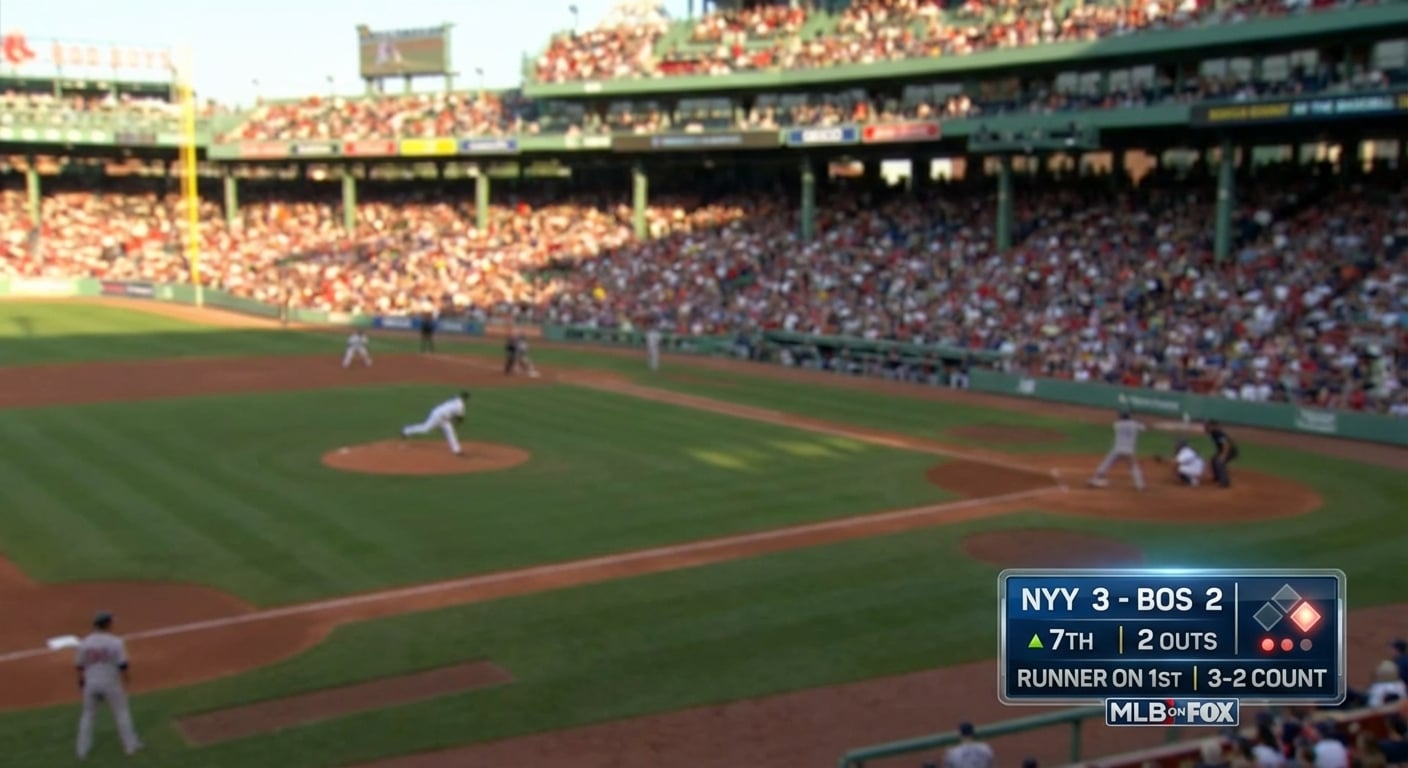
2026 MLB Scoreboard: Accessing Real-Time Baseball Scores via ESPN Technical Platforms
To access live 2026 MLB scores, users utilize the ESPN MLB Scoreboard, a high-frequency data aggregator providing real-time play-by-play updates, Statcast metrics, and win probability shifts. This platform leverages MLB Advanced Media...
To access live 2026 MLB scores, users utilize the ESPN MLB Scoreboard, a high-frequency data aggregator providing real-time play-by-play updates, Statcast metrics, and win probability shifts. This platform leverages MLB Advanced Media (MLBAM) feeds to deliver accurate results for the 162-game regular season, ensuring fans and bettors receive sub-five-second latency on scoring plays.
Contents
The digital landscape for sports media in 2026 demands instantaneous data delivery and deep analytical integration. For Major League Baseball enthusiasts, the ESPN scoreboard remains a primary touchpoint for tracking the league's 30 teams. Whether you are monitoring a tight race in the American League East or tracking individual player props for fantasy leagues, understanding the technical nuances and feature sets of the ESPN platform is essential for maximizing your viewing experience.
The Evolution of the ESPN MLB Scoreboard in 2026
As of the 2026 season, the ESPN MLB Scoreboard has transitioned from a static table of numbers into a dynamic, multi-layered data environment. The integration of 5G and early-stage 6G infrastructure has allowed for "Extreme Low Latency" (ELL) streams, where the digital score reflects the on-field action faster than standard cable broadcasts.
Key Functional Components of the 2026 Interface
The modern scoreboard is built on a responsive framework that adapts to the user's device, but the underlying data architecture remains consistent. Several core components define the 2026 user interface:
- The Live Game Strip: Located at the top of the ESPN home page and the dedicated MLB section, this strip provides a snapshot of active, upcoming, and completed games. In 2026, this feature includes "Momentum Indicators" that highlight teams currently threatening with runners in scoring position (RISP).
- Detailed Gamecast View: Clicking on an individual score opens the Gamecast. This sub-platform provides a 3D visualization of the strike zone, pitch velocity, and exit velocity for every play, powered by the latest iteration of Statcast technology.
- Win Probability Graphs: A staple of the 2026 experience, these real-time graphs calculate the likelihood of a team winning based on historical data, current score, inning, and base-out states.
- Integrated Betting Lines: With the continued expansion of legalized sports wagering, the 2026 scoreboard displays live odds, including money lines, totals, and run lines, which fluctuate in real-time alongside the score.
Technical Specifications of Live Scoring Data
The reliability of "baseball scores - mlb scoreboard - espn" relies on a complex backend ecosystem. ESPN does not manually input every pitch; instead, it utilizes high-speed API integrations.
Data Sourcing and Latency Management
ESPN consumes data directly from the MLB Gameday API. This feed is generated at the stadium by a combination of high-speed cameras and radar systems. In 2026, the industry standard for "Real-Time" is defined by a latency of less than 2.5 seconds from the moment the ball crosses the plate to the data appearing on the digital scoreboard.
Technical Note on Data Synchronization
Feed Redundancy ESPN employs a triple-redundant data ingestion system. If the primary MLBAM feed experiences a localized outage, the system automatically pivots to secondary providers like Sportradar or Genius Sports to ensure the scoreboard remains live without user intervention.
WebSocket Implementation The 2026 web interface utilizes advanced WebSockets. Unlike older "polling" methods where the browser asks for an update every 30 seconds, WebSockets allow the ESPN server to "push" the score to your device the millisecond it changes, significantly reducing battery drain on mobile devices and data overhead on desktops.
Hardware and Browser Optimization for 2026
To maintain the performance of the live MLB scoreboard, users should ensure their hardware meets the current 2026 benchmarks. High-refresh-rate displays (120Hz or higher) provide the smoothest experience for the moving 3D pitch trackers. Recommended browsers include the latest versions of Chrome, Safari, or the specialized gaming browsers that prioritize process threading for live-data tabs.
Comparing the 2026 MLB Scoreboard Providers
While ESPN is a dominant force, power users often compare it against other industry leaders such as MLB.com's Gameday and CBS Sports. Each platform serves a different segment of the target audience.
| Feature | ESPN MLB Scoreboard | MLB.com Gameday | CBS Sports Scoreboard |
|---|---|---|---|
| Primary Intent | General Consumption & News | Technical Analysis & Scouting | Fantasy Sports Tracking |
| Data Latency | 1.5 - 3.0 Seconds | < 1.0 Second | 3.0 - 5.0 Seconds |
| Statcast Depth | High (Exit Velo, Distance) | Maximum (Spin Rate, Break) | Moderate (Standard Box) |
| Visual Complexity | High (Video/Graphics) | Medium (Tactical/3D) | Low (Text-Heavy) |
| Ad Density | Moderate | Low | High |
| Betting Integration | Native (ESPN BET) | Limited (MGM Partner) | Deep (Various Books) |
Navigating the 2026 ESPN MLB Interface: A Step-by-Step Guide
For new users or those returning for the 2026 season, navigating the sheer volume of information on the ESPN MLB scoreboard requires a strategic approach.
Step 1: Accessing the Global Scoreboard
Navigate to the ESPN homepage. In 2026, the "Scores" tab is prioritized in the primary navigation menu. Select "MLB" from the dropdown to filter out other sports like the NBA or NFL. This ensures the browser only allocates resources to the baseball data stream.
Step 2: Customizing Your View
The 2026 update allows for "Favorite Team" pinning. By logging into your ESPN account, you can ensure that scores for teams like the New York Yankees or Los Angeles Dodgers always appear first, regardless of their chronological start time.
Step 3: Deep Diving into Box Scores
For completed games, the box score is the definitive record. ESPN’s 2026 box scores include advanced "Value Added" metrics for both pitchers and hitters, such as:
- WPA (Win Probability Added): How much a specific player's performance moved the needle toward a victory.
- Leverage Index: The importance of the situation in which a player was involved (e.g., a bases-loaded pinch hit in the 9th inning).
Step 4: Utilizing the "Watch" Toggle
If you have an active ESPN+ subscription or a cable provider link, the 2026 scoreboard features a "Watch Live" overlay. This allows you to view the live broadcast in a Picture-in-Picture (PiP) window while maintaining the full statistical scoreboard in the main browser area.
Advanced Metrics and Fantasy Baseball Integration
In 2026, the line between a casual fan and a fantasy manager has blurred. The ESPN scoreboard provides data points that were once reserved for professional front offices.
Understanding the 2026 Metric Suite
When viewing the "Player Stats" section of a live scoreboard, you will encounter several critical metrics:
- xwOBA (Expected Weighted On-Base Average): This calculates what a hitter's average should be based on the quality of their contact, regardless of whether a fielder made a lucky catch.
- Sprint Speed (Percentile): Real-time tracking of how fast a player is running toward first base or tracking a fly ball, compared to the rest of the league in 2026.
- Pitch Clock Violations: With the 2026 rules emphasizing pace of play, the scoreboard now tracks "Time Violations" as a standard box score stat.
Fantasy Impact and Real-Time Alerts
For those playing in ESPN Fantasy Baseball leagues, the scoreboard is directly tethered to your roster. In 2026, "Impact Alerts" notify you if your player is at bat with the bases loaded or if your starting pitcher has reached a critical pitch count threshold. This integration allows for immediate decision-making regarding benching or starting players in daily-move leagues.
Troubleshooting and Performance Optimization
Despite the advanced tech of 2026, users may occasionally encounter issues with score synchronization or page loading.
Common Failure Remedies
- Stale Data/Freeze: If the clock or pitch count appears stuck, the most common cause is a WebSocket timeout. Refreshing the page (Cmd+R or F5) usually forces a new handshake with the ESPN data server.
- Ad-Blocker Interference: Some aggressive ad-blockers in 2026 mistakenly flag the live-data scripts as tracking cookies. If the scoreboard won't load, whitelist
espn.comto allow the API calls to pass through. - High Memory Usage: Running multiple live Gamecast tabs can consume significant RAM. If your system slows down, consolidate your tracking to the "League-Wide" scoreboard view rather than opening 15 individual game tabs.
Operational Requirement: Mandatory Browser Settings
JavaScript Status The ESPN MLB Scoreboard requires JavaScript to be enabled. In 2026, "No-Script" environments will only render the final scores and will not support live updates or 3D animations.
Cookie Permissions To maintain your "Favorite Teams" and "Regional Settings" (which determine whether scores are shown in Eastern, Central, or Pacific time), the browser must accept first-party functional cookies from ESPN.
Historical Context and 2026 League Structure
The 2026 MLB season is significant as it follows several years of international expansion and rule stabilization. The scoreboard reflects these changes by including "International Series" designations for games played in London, Mexico City, and Tokyo.
The 2026 Schedule Realities
The scoreboard accounts for the balanced schedule implemented earlier in the decade. Every team plays every other team at least once. This makes the "Strength of Schedule" (SOS) indicators on the ESPN standings page particularly relevant as the season progresses into September 2026.
Comparison of Accessibility Features
In 2026, web accessibility is a legal and ethical mandate. The ESPN MLB scoreboard has made significant strides in providing data to all users.
- Screen Reader Compatibility: Every scoring play is tagged with ARIA labels, allowing visually impaired fans to hear "Home Run, Aaron Judge" via their assistive devices.
- High-Contrast Mode: A native toggle on the scoreboard allows for a "Dark Mode" or "High-Visibility Mode," reducing eye strain during night games.
- Audio Scoreboard: ESPN’s 2026 mobile app features a "Voice Summary" mode, where a synthesized voice provides a 30-second summary of all active games every 15 minutes.
Strategic Recommendations for Power Users
To get the most out of "baseball scores - mlb scoreboard - espn" in 2026, follow these expert-level tips:
- Leverage the "Split-Screen" Mobile Feature: The 2026 ESPN App supports native split-screening on most tablets and foldable phones. Keep the scoreboard on one side and your social media or fantasy app on the other.
- Set "Key Play" Notifications: Rather than receiving an alert for every run, configure the app to only notify you of lead changes or games entering the 9th inning with a save opportunity.
- Use the "Probable Pitchers" Tool: Before the games start, use the scoreboard's "Matchups" tab to analyze the ERA and WHIP of the day's starters. In 2026, this section also includes "Pitcher vs. Batter" historical data for the last five seasons.
2026 MLB Scoreboard FAQs
How often does the ESPN MLB scoreboard refresh? In 2026, the scoreboard uses persistent WebSocket connections, meaning updates are virtually instantaneous. There is no manual refresh interval; data is pushed to your screen as soon as it is verified by the MLB stadium data center. This ensures you see the strike or ball call within seconds of it happening on the field.
Can I see minor league or spring training scores on the ESPN MLB scoreboard? Yes, the 2026 ESPN platform has expanded coverage to include Triple-A (International League and Pacific Coast League) and full Spring Training schedules. You can toggle between "MLB," "Triple-A," and "Spring Training" using the league selector at the top of the scoreboard page.
Why are some scores marked as "Delayed" or "Postponed"? A "Delayed" status usually indicates a weather event or a technical issue at the stadium. In 2026, ESPN provides a "Weather Overlay" for these games, showing real-time radar images so fans can estimate when play will resume. "Postponed" games will usually include the rescheduled date and time in the game notes section.
Does the ESPN scoreboard show the 2026 "Ghost Runner" in extra innings? The scoreboard specifically indicates the "Man on Second" rule for extra-inning games. A small icon of a runner appears on second base at the start of every half-inning from the 10th inning onwards, ensuring fans tracking the box score understand the context of any subsequent runs scored.
Is the win probability on the scoreboard accurate for betting? The win probability is an analytical model based on thousands of historical game outcomes and current game states. While highly accurate for statistical analysis, it is a predictive tool and not a guarantee of the final result. Bettors should use it as one of many data points rather than a sole source of truth.
How do I view the 2026 MLB Standings from the scoreboard? Every ESPN scoreboard page contains a "Standings" link in the sub-navigation bar. This takes you to a comprehensive breakdown of the Divisional, League, and Wild Card races, complete with "Magic Number" calculations for teams nearing postseason clinching scenarios in the latter half of the 2026 season.
Final Summary of ESPN's Scoring Capabilities
The 2026 ESPN MLB Scoreboard represents the pinnacle of sports data accessibility. By combining elite-level technical infrastructure with user-centric design, it provides a comprehensive view of the baseball landscape. Whether you are a casual observer or a data-driven analyst, the platform’s integration of Statcast, real-time win probability, and multi-device synchronization makes it an indispensable tool for the modern Major League Baseball season. As the league continues to evolve with new rules and international games, the ESPN scoreboard remains the gold standard for tracking every pitch, hit, and out.
Image Gallery