Why Is the Price of Gold Dropping? Macroeconomic Drivers and Market Dynamics
The price of gold primarily drops due to rising real interest rates, a strengthening U.S. dollar, reduced geopolitical risk premiums, and institutional capital shifts toward yield-generating assets. Because physical gold generates no y...
The price of gold primarily drops due to rising real interest rates, a strengthening U.S. dollar, reduced geopolitical risk premiums, and institutional capital shifts toward yield-generating assets. Because physical gold generates no yield or dividends, higher returns on Treasury bonds increase the opportunity cost of holding precious metals, causing large-scale ETF liquidations and futures selling.
Contents
The Primary Catalysts Behind Declining Gold Prices
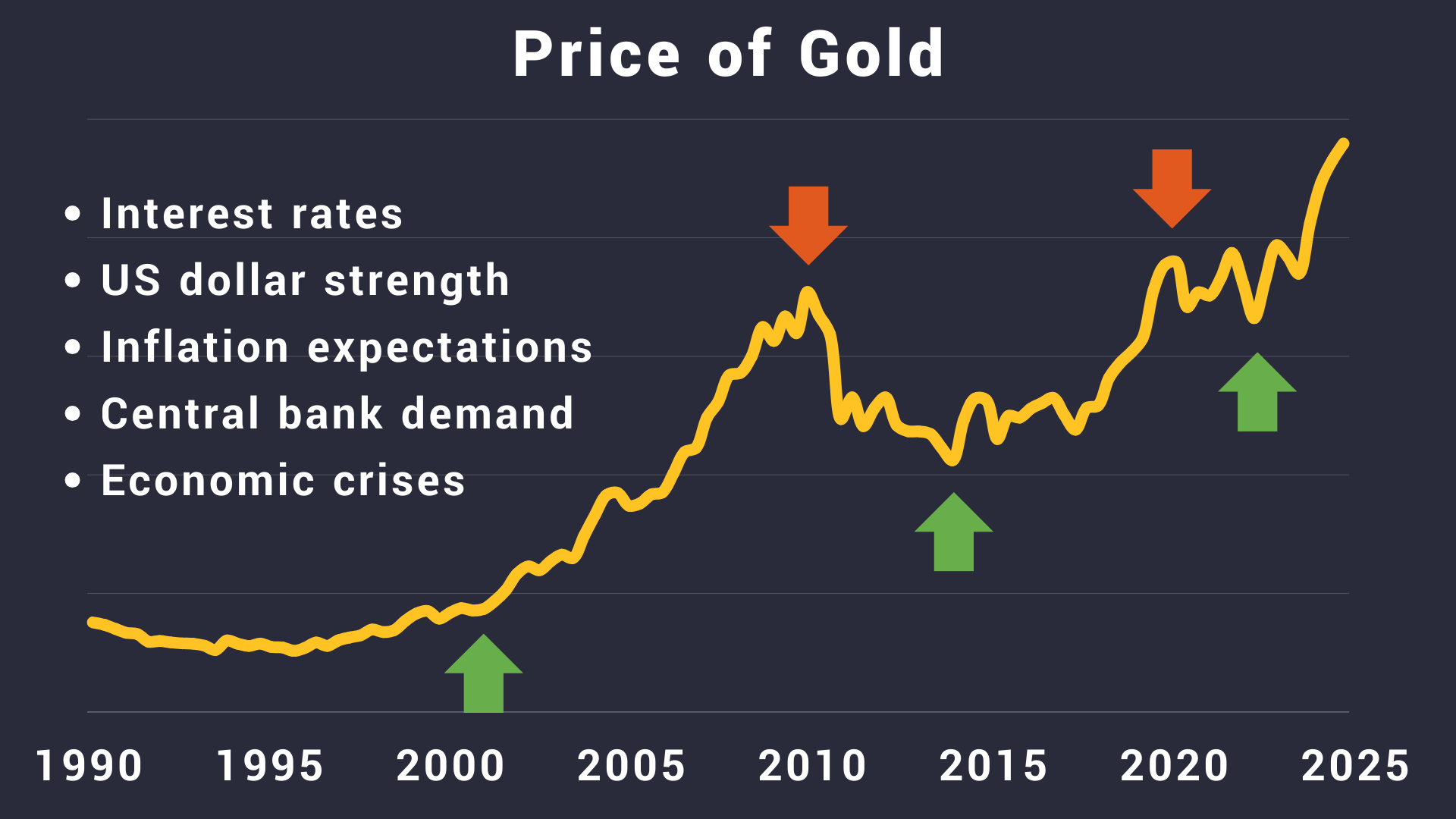
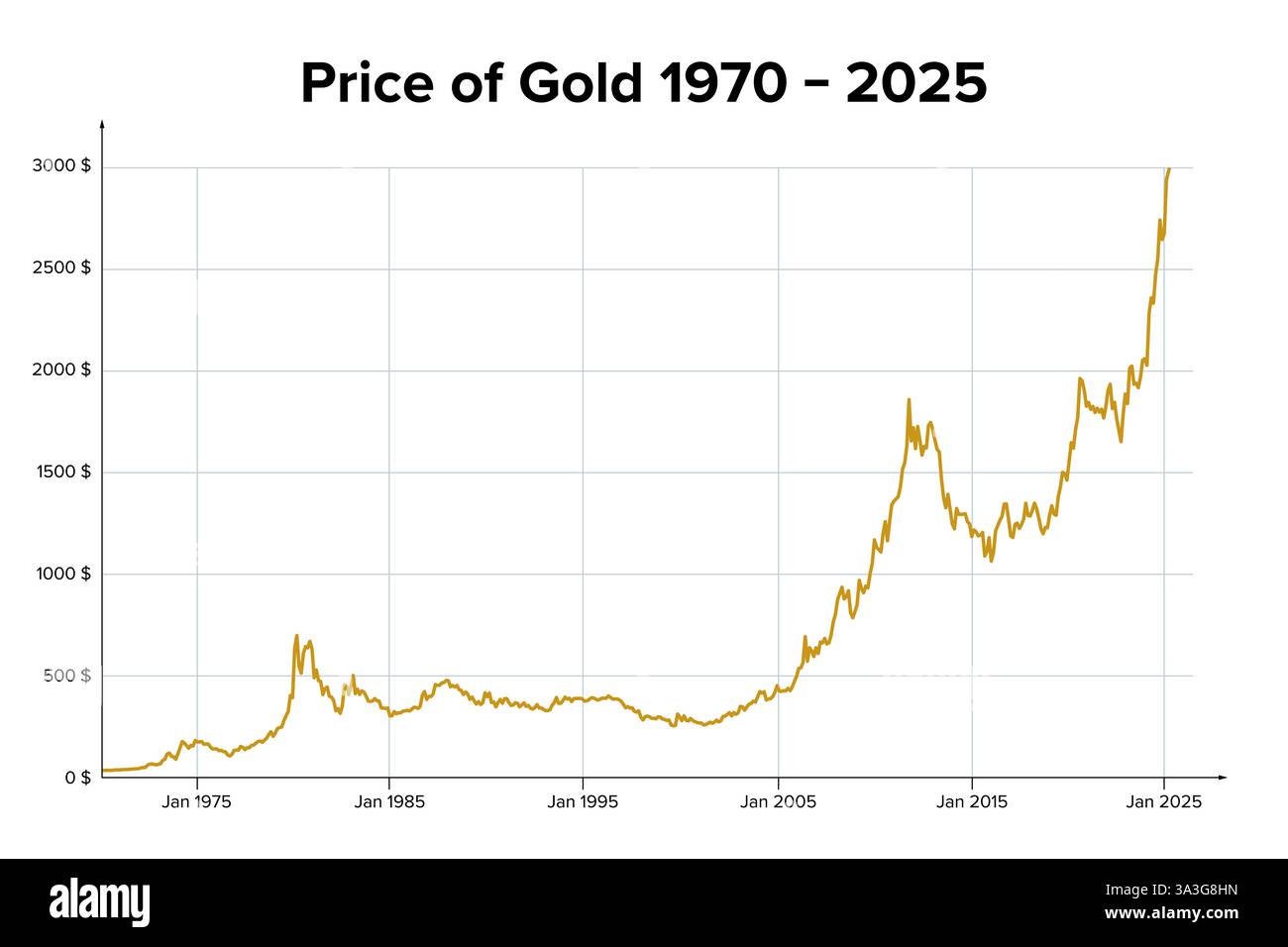
Gold has historically served as a store of value, a hedge against monetary debasement, and a safe-haven asset during acute financial crises. However, the spot price of gold fluctuates continuously based on global macroeconomic policy, currency movements, and institutional capital flows. When gold enters a sustained downtrend or experiences sharp sell-offs, several underlying macroeconomic catalysts are typically operating simultaneously.
Understanding why gold prices drop requires evaluating the asset class within the broader global financial architecture. Unlike sovereign bonds, corporate debt, or dividend-paying equities, physical gold does not produce cash flow. Consequently, its relative attractiveness shifts dramatically whenever competing global assets offer higher inflation-adjusted returns or lower holding costs.
- Rising Real Interest Rates: Increases holding opportunity cost
- U.S. Dollar Appreciation: Makes gold costlier in local money
- ETF Capital Outflows: Floods market with physical inventory
- Geopolitical Stabilization: Dissolves safety risk premiums
Rising Real Interest Rates and Opportunity Cost
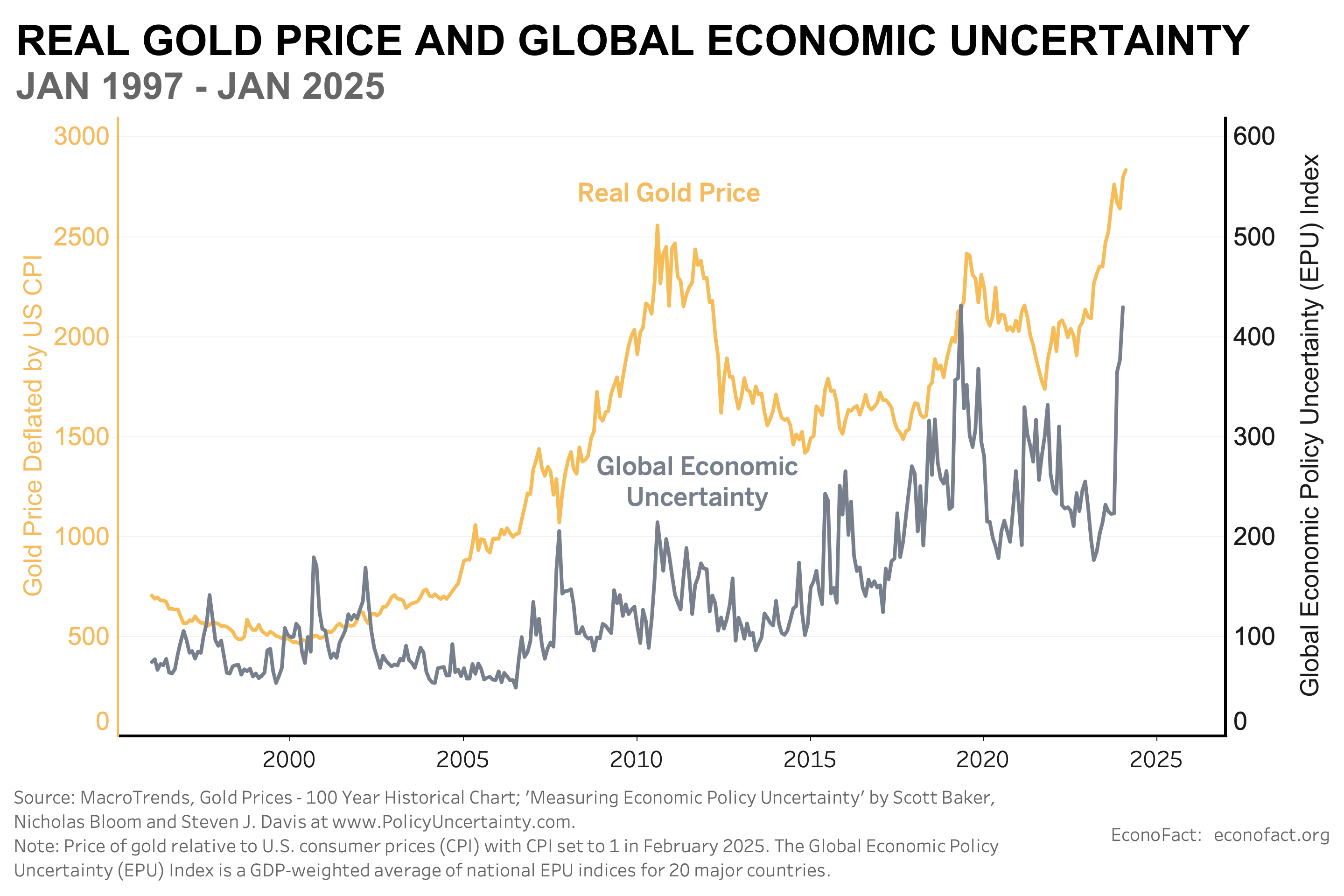
The single most influential driver of declining gold prices is the movement of real interest rates. Real interest rates represent the nominal interest rate offered by sovereign debt (such as U.S. Treasury bonds) minus the expected rate of inflation.
$$\text{Real Interest Rate} = \text{Nominal Yield} - \text{Expected Inflation}$$
When central banks—most notably the Federal Reserve System—raise benchmark interest rates to combat inflation or tighten monetary conditions, yields on short- and long-term government bonds rise. If nominal bond yields outpace inflation expectations, the real yield becomes positive and begins to expand.
Because bullion carries zero yield and incurs storage and insurance costs (known as the cost of carry), rising real yields penalize gold holders. Institutional money managers routinely reallocate capital out of zero-yield commodities into cash equivalents, money market funds, and government bonds to lock in guaranteed risk-free returns.
The Inverse Relationship with the U.S. Dollar Index (DXY)
Gold is internationally denominated and traded in U.S. Dollars (USD) per troy ounce. As a result, the value of gold shares an inverse correlation with the strength of the U.S. Dollar Index (DXY), which measures the greenback against a basket of major foreign currencies.
- Stronger U.S. Dollar
- Gold becomes more expensive in foreign currencies
- International demand contracts
- Spot gold prices decline
When the U.S. dollar appreciates due to robust domestic economic data, aggressive central bank policy, or safe-haven currency inflows, purchasing gold becomes significantly more expensive for buyers using international currencies such as the Euro, Japanese Yen, or British Pound. This exchange-rate friction suppresses global physical demand across major importing markets, forcing bullion dealers and spot traders to lower bid prices to restore market equilibrium.
Easing Geopolitical Tensions and Safe-Haven Premium Erosion
During periods of military conflict, regional instability, or systemic banking distress, market participants bid up the price of gold to purchase financial insurance. This structural bidding creates a "geopolitical risk premium" above the fundamental commodity valuation of gold.
When geopolitical conflicts reach diplomatic resolutions, systemic financial panics subside, or institutional banking liquidity is restored, this risk premium rapidly evaporates. Investors exit defensive positions to redeploy capital back into growth equities, high-yield corporate bonds, or alternative financial instruments. As panic-driven buying ceases, supply on institutional spot desks quickly outstrips demand, leading to rapid price corrections.
Institutional Mechanics: Futures Markets, ETF Outflows, and Technical Selling
While macroeconomic fundamentals establish the broad trend, market structure and institutional liquidity channels dictate the speed and severity of a gold market decline.
- Macro Uncertainty Eases / Yields Rise
- Institutional ETF Share Redemption
- Bullion Banks Liquidate Metal Vaults
- Breakage of Key Technical Support Levels
- Automated Futures Liquidation & Stop-Losses
- Accelerated Spot Price Drop
Outflows from Gold-Backed Exchange-Traded Funds (ETFs)
Securitized financial products like physical gold-backed Exchange-Traded Funds (such as SPDR Gold Shares) allow institutional and retail investors to gain exposure to gold without taking physical delivery of bars. These funds hold allocated physical bullion in secured vaults to back their outstanding shares.
When institutional investors turn bearish on gold, they redeem their ETF shares. To fulfill these redemption orders, ETF trust managers must liquidate the underlying physical gold through bullion banks. According to data tracked by the World Gold Council, multi-month net outflows from major gold ETFs flood the secondary market with physical inventory, placing persistent downward pressure on global spot prices.
Leveraged Derivatives and COMEX Futures De-risking
The paper market for gold, primarily traded through the Commodity Exchange (COMEX) in New York and the London Bullion Market Association (LBMA) OTC network, handles trading volume that dwarfs the physical bullion market. Traders use leveraged futures contracts and options to speculate on short-term price movements or hedge mining operations.
- Margin Calls and Forced Liquidation: When gold prices fall past key technical levels, traders holding leveraged long positions face margin calls from clearing brokers. If traders cannot deposit additional cash collateral, brokers automatically liquidate their futures contracts, triggering a cascading chain reaction of market sells.
- Algorithmic and Technical Trading: Quantitative hedge funds employ automated trading models that track moving averages (such as the 50-day and 200-day simple moving averages) and support/resistance zones. A breakdown below key support levels automatically triggers systematic short-selling and algorithmic sell orders, accelerating the speed of market downturns.
Macroeconomic Conditions Driving Gold Price Trends
To evaluate why gold is experiencing downward pressure, it is helpful to analyze how key economic indicators interact to influence spot prices:
| Economic Driver | Scenario Causing Gold to Drop | Underlying Financial Mechanism | Market Impact Magnitude |
|---|---|---|---|
| Real Interest Rates | Real yields move sharply positive | Increases opportunity cost of holding non-yielding bullion over Treasuries | High |
| U.S. Dollar (DXY) | Broad-based USD strengthening | Reduces purchasing power for international buyers holding non-USD currencies | High |
| Inflation Rates | Rapid disinflation or falling CPI | Reduces immediate demand for gold as a hedge against currency debasement | Medium-High |
| Equity Markets | Sustained bull market in stocks | Shifts capital away from defensive safe havens into risk-on assets | Medium |
| Central Bank Policy | Quantitative Tightening (QT) & rate hikes | Drains fiat system liquidity and elevates yields on cash and sovereign debt | High |
| Geopolitical Risk | Conflict de-escalation / peace treaties | Eliminates the safety premium priced into precious metals | Medium |
How Inflation and Central Bank Policies Shift Precious Metal Demand
The relationship between inflation and gold is often misunderstood. Gold does not automatically rise simply because nominal prices for consumer goods are increasing. Instead, gold reacts to the reaction function of central banks and the resulting change in inflation-adjusted purchasing power.
- High Inflation Occurs
- Central Bank Hikes Rates
- Real Yields Turn Positive
- Gold Prices Drop
- Real Yields Turn Positive
- Central Bank Remains Passive
- Real Yields Turn Negative
- Gold Prices Rally
- Real Yields Turn Negative
- Central Bank Hikes Rates
Disinflation and Central Bank Credibility
If inflation reports (such as the Consumer Price Index or Personal Consumption Expenditures index) demonstrate that price pressures are cooling, market expectations for future inflation drop. If central banks maintain high benchmark interest rates while inflation falls, real interest rates expand significantly.
Furthermore, when central banks convince markets that they will successfully restore price stability, investors lose the incentive to hold gold as an inflation hedge. The market perceives fiat currency as retaining its purchasing power over time, rendering physical metal accumulation less urgent for institutional treasury balance sheets.
Shifts in Central Bank Foreign Exchange Reserve Accumulation
Monetary authorities—including sovereign institutions like the European Central Bank and emerging market central banks—are among the largest holders of physical bullion. Central banks hold gold to diversify their foreign exchange reserves away from single-issuer fiat currencies.
While central banks have been historic net buyers, variations in their purchasing cadence directly impact market balance:
- Pause in Reserve Diversification: If central banks temporarily halt purchases due to high local currency pressures, high gold import tariffs, or domestic currency stabilization needs, a key structural bid under the market is removed.
- Reserve Liquidation: In extreme scenarios, developing nations facing balance-of-payments crises or sovereign debt obligations may sell portions of their gold reserves to raise U.S. dollars or foreign currencies to defend their exchange rates, increasing physical market supply.
Strategic Considerations for Investors During a Gold Downturn
Navigating a declining gold market requires understanding how different gold-related investments behave during prolonged downturns. Physical bullion, paper gold products, and mining equities exhibit distinct risk and return profiles when prices correct.
- Physical Bullion: Tracks spot price directly; zero default/counterparty risk, but incurs ongoing storage costs and yields no interest.
- Gold ETFs: High liquidity and tight bid-ask spreads; directly tracks spot prices but retains small management fee drags over time.
- Mining Stocks: Operates with operational leverage; falling gold prices compress profit margins, causing stocks to drop faster than spot gold.
Physical Bullion vs. Gold Mining Equities
A common point of confusion for investors is why gold mining stocks often drop significantly faster than spot gold during a market correction. This variance is explained by operational leverage.
Miners incur fixed costs to extract gold from the ground, including energy, equipment, labor, and environmental compliance.
All-In Sustaining Cost (AISC) = Fixed Extraction Costs + Capital Expenditures + Corporate Overhead
If a mining company has an All-In Sustaining Cost (AISC) of $1,400 per ounce:
- When gold is at $2,000/oz, the profit margin is $600/oz.
- If spot gold drops 10% to $1,800/oz, the miner's profit margin falls to $400/oz—a 33.3% reduction in net cash flow.
Because corporate earnings compress faster than the percentage decline in spot gold, mining company equities routinely experience higher volatility and steeper drawdowns during gold market pullbacks.
Common Mistakes to Avoid When Gold Prices Fall
- Ignoring Real Yield Trends: Attempting to buy a dip in gold while the Federal Reserve or global central banks are actively expanding real interest rates often leads to persistent portfolio drag.
- Confusing Nominal and Real Inflation: Buying gold during periods of high nominal inflation without accounting for central bank rate hikes ignores the powerful negative impact of rising nominal bond yields.
- Over-leveraging Futures Positions: Trading COMEX futures contracts with high leverage during a downward trend exposes accounts to sudden liquidation risks caused by short-covering rallies and high volatility.
- Treating Gold Like a Growth Asset: Expecting physical precious metals to generate continuous compounding capital gains during stable, high-yield macroeconomic regimes misaligns with gold's historic role as a long-term capital preservation vehicle.
Frequently Asked Questions
Why does gold drop when stock markets are falling?
During severe financial panics, institutional investors often face widespread margin calls and liquidity shortfalls across their equity portfolios. To raise fast cash and cover collateral requirements, funds frequently sell their most liquid, profitable holdings—including physical gold and gold ETFs. This cash-generation mechanism can cause gold prices to temporarily decline alongside stock indices during acute market liquidity squeezes.
Does a strong U.S. dollar always cause gold prices to fall?
In most macroeconomic regimes, yes. Gold is priced in U.S. dollars globally, creating a strong inverse correlation with the U.S. Dollar Index (DXY). However, this relationship can temporarily break down during major global sovereign crises, where both the U.S. dollar (as the global reserve currency) and gold (as a ultimate safe haven) are purchased simultaneously by international investors seeking safety.
How do rising interest rates specifically hurt gold prices?
Because physical gold does not pay interest, dividends, or coupon payments, holding it carries an opportunity cost. When central banks raise interest rates, risk-free assets like short-term U.S. Treasury bills yield attractive cash returns. Money managers reallocate capital away from non-yielding commodities into high-yielding fixed-income securities, resulting in lower institutional demand and falling gold prices.
How low can the price of gold drop during a correction?
The floor for gold prices during a severe downturn is often dictated by the average All-In Sustaining Cost (AISC) of global gold mining operations, alongside baseline physical demand from major sovereign central banks and commercial jewelry markets (primarily in India and China). When market prices drop near or below the marginal cost of production, miners curtail operations, reducing global supply and helping to establish a long-term price floor.
Should investors buy gold while prices are dropping?
Decisions to accumulate gold during a downturn depend on individual investment horizons, portfolio allocation strategies, and overall macroeconomic conditions. Long-term investors often use cost-average purchasing strategies during gold corrections to build defensive hedges against future currency debasement. Conversely, short-term tactical traders generally wait for technical support levels to hold and real interest rate expansion to peak before opening long positions.
Strategic Recommendations for Portfolios
When gold prices are experiencing downward pressure, financial market participants should take a structured, analytical approach before altering their asset allocation:
- Monitor Real Yield Spreads: Track the yield on 10-Year Treasury Inflation-Protected Securities (TIPS) available via the U.S. Department of the Treasury. A stabilizing or declining real yield curve is historically a prerequisite for gold prices to form a sustainable market bottom.
- Audit Holding Costs and Vehicle Mechanics: Review the expense ratios of gold ETFs and the vaulting and storage fees associated with physical bullion holdings. Ensure holding costs do not unnecessarily erode baseline capital during extended consolidation periods.
- Rebalance According to Target Allocations: Rather than attempting to market-time sharp price swings, institutional investors typically maintain a fixed portfolio percentage allocation to gold (often between 3% and 10%). Utilizing market corrections to rebalance back to target weighting allows investors to accumulate assets at lower valuations systematically.
Investors seeking tailored guidance regarding commodity allocations, risk management, or capital preservation strategies should consult a qualified financial advisor or fiduciary investment professional to align strategies with their individual risk tolerances and time horizons.
Image Gallery