Pinyin vs. Zhuyin: Which Script Wins for Learning Mandarin in 2026?
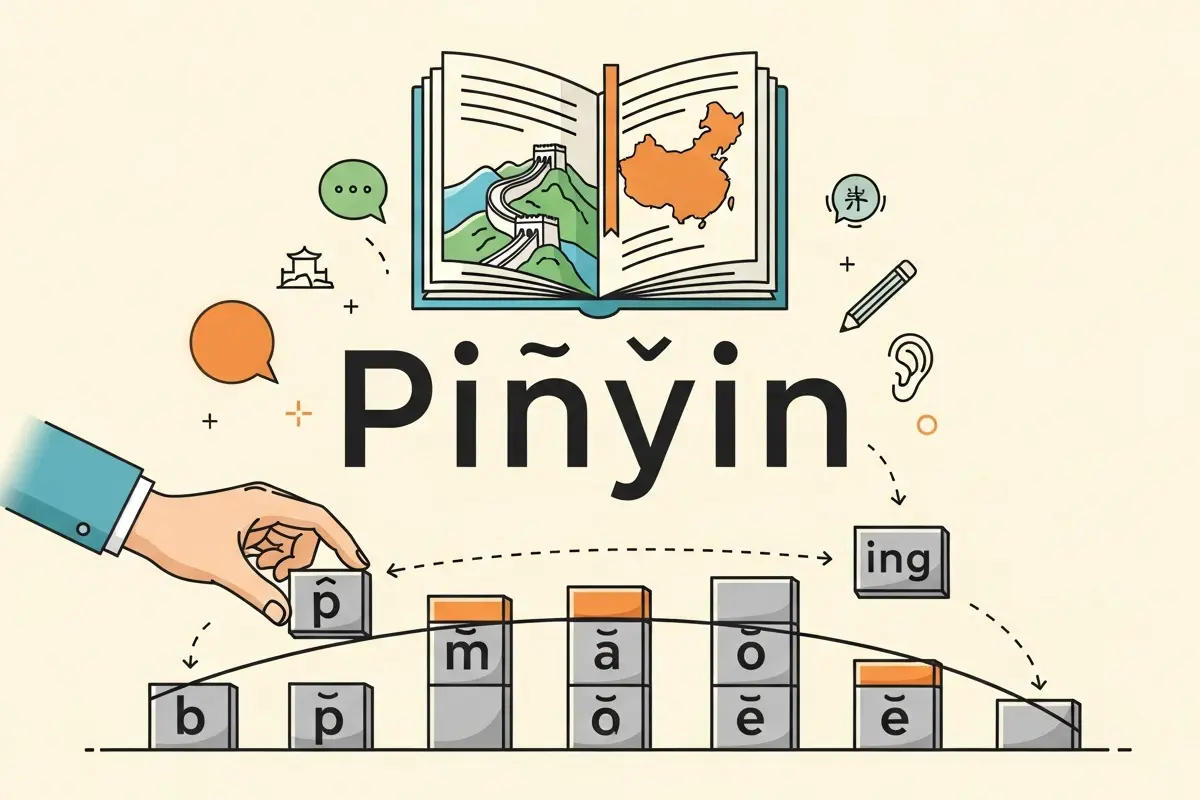
The "winner" between Pinyin and Zhuyin depends on your geographic focus and learning style. Hanyu Pinyin wins for accessibility and global standardization, making it ideal for business and international communication. Zhuyin (Bopomofo)...
The "winner" between Pinyin and Zhuyin depends on your geographic focus and learning style. Hanyu Pinyin wins for accessibility and global standardization, making it ideal for business and international communication. Zhuyin (Bopomofo) wins for phonetic accuracy and deep cultural immersion in Taiwan, preventing English-based pronunciation habits from forming.
Contents
Mandarin Chinese is a tonal language that does not use an alphabet. To bridge the gap for learners, two primary phonetic systems exist: Hanyu Pinyin and Zhuyin Fuhao (commonly known as Bopomofo). While both represent the exact same sounds of Standard Mandarin, they utilize different symbols and pedagogical approaches. In 2026, as digital tools for language learning have reached unprecedented levels of sophistication, the choice between these two systems remains a pivotal first step for every student of Chinese.
Understanding the Contenders: A Historical Perspective
Before evaluating which system "wins," it is essential to understand what they are and where they come from. These are not competing languages; they are competing "notation systems" used to indicate how Chinese characters (Hanzi) are pronounced.
Hanyu Pinyin (The Romanized Standard)
Hanyu Pinyin, often shortened to Pinyin, was developed in the People's Republic of China during the 1950s. Led by the linguist Zhou Youguang, the goal was to create a system that used the Latin alphabet to improve literacy rates and standardize the pronunciation of Mandarin across a vast, linguistically diverse nation.
By the late 20th century, Pinyin became the international standard (ISO 7098) and the primary method for entering Chinese characters into computers and smartphones. Today, it is the default system taught in Mainland China, Singapore, Malaysia, and most international university programs.
Zhuyin Fuhao (The Symbolic System)
Zhuyin Fuhao, or Bopomofo, predates Pinyin. It was developed by the Commission on the Unification of Pronunciation in 1913. Unlike Pinyin, which repurposes Latin letters, Zhuyin uses 37 unique symbols and four tone marks. These symbols were derived from simplified versions of ancient Chinese characters, meaning they "look" more like Chinese than the Latin alphabet does.
While Mainland China transitioned to Pinyin, Taiwan (the Republic of China) retained Zhuyin as its primary pedagogical tool. Children in Taiwan learn to read using Zhuyin before they transition to characters, and it remains the most popular input method for desktop computers in the region.
The Case for Hanyu Pinyin: Why It Dominates Global Learning
In 2026, Pinyin remains the most widely used bridge to Mandarin for several pragmatic reasons. For the majority of Western learners, the "win" goes to Pinyin due to its low barrier to entry.
1. Zero Learning Curve for the Script
Because Pinyin uses the Latin alphabet (A-Z), a learner can begin reading "Ni hao" on day one without memorizing a new set of symbols. This allows students to focus immediately on tones and vocabulary rather than struggling to decode a new script. For short-term travelers or business professionals who need functional Mandarin quickly, Pinyin is the indisputable leader.
2. Digital Ubiquity and Technical Support
Every modern operating system, from Windows 11 to iOS and Android, features a robust Pinyin Input Method Editor (IME). Typing in Pinyin is incredibly fast because it utilizes the standard QWERTY keyboard layout that most people already use for English. In the age of AI-driven translation and language apps, Pinyin is the native language of the digital interface.
3. Abundance of Learning Resources
The sheer volume of textbooks, YouTube tutorials, and apps like Duolingo or HelloChinese favors Pinyin. Because it is the official system of the PRC, which produces the majority of the world's Mandarin learning materials and the HSK (Hanyu Shuiping Kaoshi) proficiency tests, learners will find it much easier to find study partners and materials.
The Case for Zhuyin: Why It Might Be the Better Teacher
Despite Pinyin's popularity, many linguists and serious hobbyists argue that Zhuyin is the superior system for achieving a native-like accent and long-term literacy.
1. Eliminating "English Brain" Interference
The greatest weakness of Pinyin is its reliance on Latin letters. When an English speaker sees the Pinyin word "xi," their brain instinctively wants to pronounce it like "zi" or "she." When they see "c," they think of a "k" or "s" sound, rather than the "ts" sound it actually represents.
Zhuyin uses unique symbols like ㄒ (xi) and ㄘ (ci). Because these symbols have no equivalent in the English alphabet, the learner's brain is forced to associate the symbol with a brand-new sound. This "phonetic purity" often results in a much cleaner, more accurate accent from the beginning.
2. Superior Representation of Mandarin Phonology
Mandarin sounds are structured as an "initial" (consonant) and a "final" (vowel/glide combination). Zhuyin mirrors this structure perfectly. While Pinyin sometimes requires three or four letters to represent a single sound (like "iang"), Zhuyin often uses just two or three symbols. This layout makes the internal logic of Mandarin phonetics more transparent to the student.
3. Promoting Character Recognition
A common criticism of Pinyin is that learners become "addicted" to it. Because the Latin letters are so easy to read, students often find their eyes skipping over the actual Chinese characters to read the Pinyin underneath. Because Zhuyin looks like "miniature characters," it integrates more naturally with the visual study of Hanzi. Students who learn Zhuyin are often less likely to use the phonetic script as a permanent crutch.
Technical Comparison of Features
To help you decide which script wins for your specific needs, the following table compares the technical and practical aspects of both systems as they stand in 2026.
| Feature | Hanyu Pinyin | Zhuyin Fuhao (Bopomofo) |
|---|---|---|
| Script Type | Latin Alphabet (Romanization) | Unique Phonetic Symbols |
| Number of Symbols | 25 letters (excludes 'v') | 37 symbols |
| Primary Region | Mainland China, Singapore, Global | Taiwan |
| Tone Marking | Diacritics over vowels (ā, á, ǎ, à) | Marks at the end of syllables |
| Input Method | QWERTY Keyboard | Specialized Zhuyin Layout |
| Learning Curve | Very Low (Initial) | Moderate (Needs symbol memorization) |
| Pronunciation Accuracy | Prone to "English" interference | High (Distinct phonetic identity) |
| Resource Availability | High (HSK, global textbooks) | Moderate (Taiwan-centric materials) |
The Role of Geography and Goals
In 2026, the "winner" is often decided by where you plan to use the language. If you are moving to Taipei to study at National Taiwan University, learning Zhuyin is almost mandatory. You will see it in children's books, on street signs for pronunciation aid, and in the way locals type on their phones.
Conversely, if you are looking to do business in Shanghai, Beijing, or Singapore, Pinyin is the only practical choice. The HSK exams, which are the global standard for certifying Chinese proficiency, are entirely Pinyin-based. Furthermore, the vast majority of online content created in Mainland China uses Pinyin for search queries and metadata.
Can You Use Both?
It is entirely possible, and sometimes recommended, to learn both. Many advanced learners start with Pinyin to gain momentum and then learn Zhuyin later to refine their pronunciation or to access Taiwanese literature.
The transition from Pinyin to Zhuyin (or vice versa) is surprisingly simple because they are phonetically identical. For example, the Pinyin sound "m" is ㄇ in Zhuyin. The Pinyin "ao" is ㄠ. Once you learn the 37 conversion rules, you can switch between the two scripts fluently.
Frequently Asked Questions
Which system is faster for typing?
For those already proficient with a QWERTY keyboard, Pinyin is generally faster. Modern Pinyin IMEs use predictive AI to guess the characters you want based on just the first letter of each syllable. While Zhuyin typing is very fast among native Taiwanese users, it requires learning a new keyboard layout where symbols are mapped to specific keys, which can take weeks to master.
Why is Zhuyin called "Bopomofo"?
"Bopomofo" is simply the name of the first four symbols in the Zhuyin alphabet: ㄅ (bo), ㄆ (po), ㄇ (mo), and ㄈ (fo). It is a nickname similar to how we call the English alphabet the "ABCs."
Is Zhuyin harder for children to learn?
Actually, many educators find Zhuyin easier for young children because it does not conflict with the English alphabet they might be learning in school simultaneously. It treats Mandarin as a distinct phonetic entity, which can reduce confusion during the early developmental years.
Do I need to learn Zhuyin to read Traditional Characters?
No. While Zhuyin is most commonly paired with Traditional Characters (used in Taiwan and Hong Kong), you can use Pinyin to type and read Traditional Characters as well. Most digital input methods allow you to type in Pinyin and output the result in either Simplified or Traditional script.
Which one is better for self-study?
Pinyin is generally better for self-study because of the abundance of free online tools, dictionaries (like Pleco), and audio-visual resources that use Pinyin as the primary pronunciation guide.
Final Recommendation: Which Wins for You?
If you are a beginner looking for the path of least resistance, Hanyu Pinyin wins. It allows you to leverage your existing knowledge of the Latin alphabet to start speaking Mandarin immediately. It is the language of international travel, the HSK exam, and modern technology.
However, if you are a phonetic perfectionist or specifically interested in Taiwanese culture, Zhuyin wins. By investing a few days into memorizing the 37 symbols, you protect yourself from the "foreign accent" traps inherent in Pinyin and gain access to a unique cultural tool that has served the Chinese-speaking world for over a century.
Regardless of which you choose, remember that both are merely temporary scaffolding. The ultimate goal is to move beyond phonetic scripts and master the beauty of Chinese characters themselves.
Image Gallery