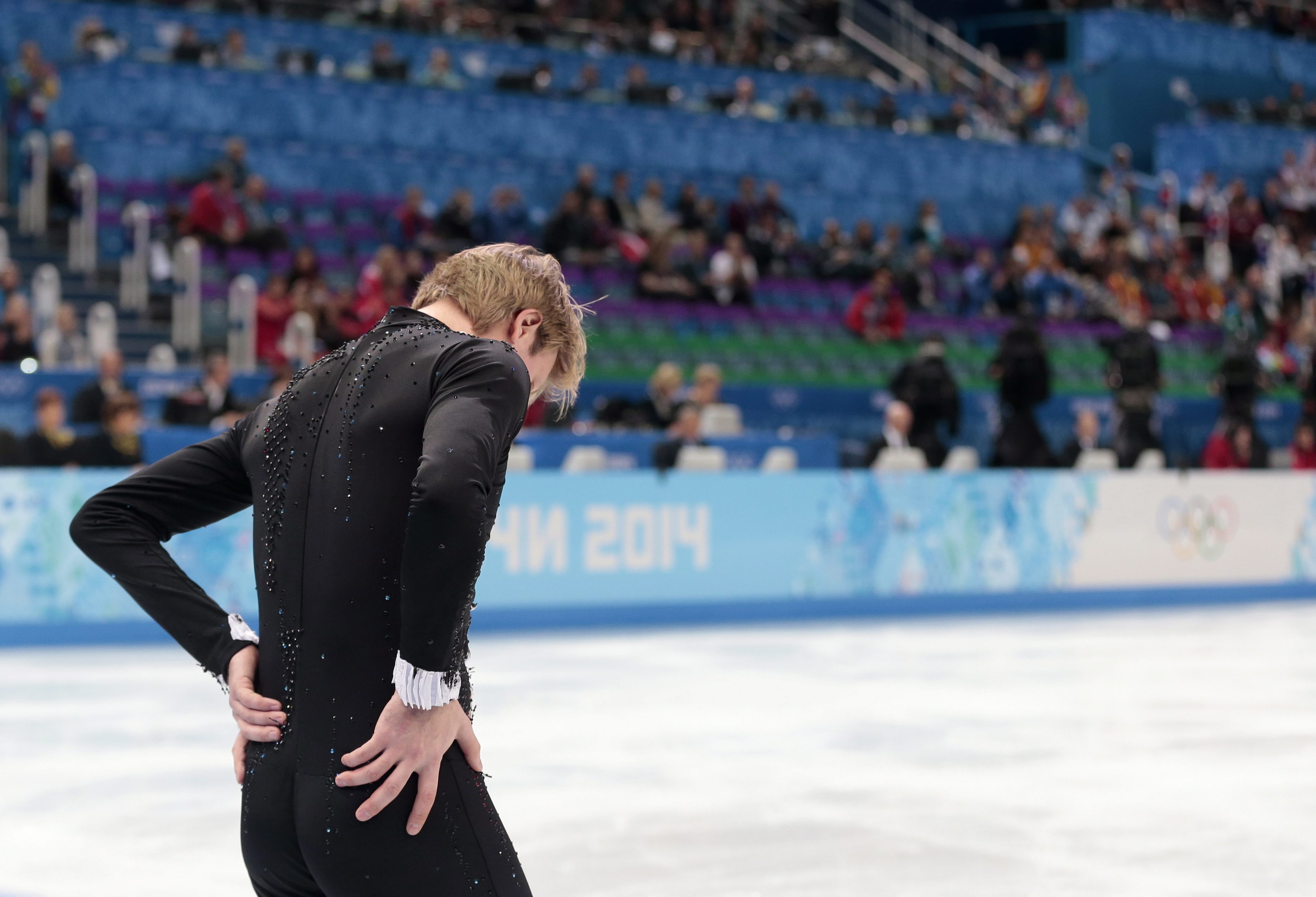
The Evolution of Male Figure Skaters in the 2000s: A Decade of Technical and Scoring Revolution
The 2000s marked a pivotal era for male figure skating, transitioning from the subjective 6.0 scoring system to the data-driven International Judging System (IJS). This decade saw the mastery of the quadruple jump, a shift toward compl...
The 2000s marked a pivotal era for male figure skating, transitioning from the subjective 6.0 scoring system to the data-driven International Judging System (IJS). This decade saw the mastery of the quadruple jump, a shift toward complex transitions, and a heightened emphasis on balanced athleticism and artistry following the 2002 Olympic judging scandal.
Contents
The Paradigm Shift: From 6.0 to the International Judging System
The single most significant factor in the evolution of male figure skating during the 2000s was the overhaul of the scoring system. For decades, the "6.0 system" reigned, where judges awarded two marks—one for technical merit and one for presentation—relative to other competitors. This system was often criticized for being opaque and prone to "block voting" or reputational judging.
The 2002 Salt Lake City Winter Olympics served as the catalyst for change. Following a high-profile judging scandal in the pairs event, the International Skating Union (ISU) fast-tracked the development of the International Judging System (IJS). Introduced in stages between 2003 and 2005, the IJS fundamentally changed how male skaters approached their programs.
Under the IJS, every element—jumps, spins, and step sequences—received a base value. Judges then awarded a Grade of Execution (GOE) ranging from -3 to +3 (at the time). This removed the "ranking" nature of the old system and replaced it with a cumulative points model. For male skaters, this meant that "playing it safe" was no longer a viable strategy; every second of a four-and-a-half-minute program had to be maximized for points.
The Technical Arms Race: The Rise of the Quadruple Jump
While the first quadruple jump was landed in 1988 by Kurt Browning, the 2000s were the decade where the quadruple toe loop became a mandatory requirement for any skater eyeing the podium. The early part of the decade was dominated by the rivalry between Alexei Yagudin and Evgeni Plushenko, both of whom pushed the technical boundaries of the sport.
In the 6.0 era (roughly 2000–2003), the focus was on the "quad-triple" combination. At the 2002 Olympics, Yagudin landed two quadruple toe loops in his free skate, setting a benchmark for technical difficulty that would stand for years. However, as the decade progressed and the IJS took hold, the risks associated with the quad changed.
Because the IJS penalized falls heavily and rewarded "clean" programs, some skaters began to strategize by omitting the quad in favor of high-quality triple jumps and maximized "levels" on non-jumping elements. This led to a massive philosophical divide in the sport, culminating in the "Quad Controversy" of the 2010 Vancouver Olympics, which served as the analytical bookend to the 2000s.
The Artistry of Transitions and Spin Complexity
Before the mid-2000s, male figure skating programs often featured "dead air"—periods where the skater would simply stroke across the ice to build speed for the next jump. The IJS introduced the Program Components Score (PCS), which specifically rewarded "Transitions," "Skating Skills," and "Choreography."
This forced male skaters to evolve beyond being mere "jumpers." The 2000s saw the rise of specialists who prioritized edge work and intricate footwork. Skaters like Jeffrey Buttle (Canada) and Stephane Lambiel (Switzerland) became icons not just for their jumps, but for their ability to weave complex movements throughout their programs.
- Spins: In the 90s, men’s spins were often an afterthought. In the 2000s, skaters had to achieve specific "levels" (1 through 4) by incorporating difficult variations, such as the doughnut spin or change-of-edge spins.
- Step Sequences: Footwork became a highlight of the program rather than a breather. Skaters were required to cover the entire ice surface with a variety of turns (twizzles, brackets, rockers, and counters) to earn a Level 4 designation.
Key Figures Who Defined the Decade
The evolution of the sport is best viewed through the lens of the athletes who dominated the ISU rankings and Olympic podiums during this ten-year span.
Alexei Yagudin and Evgeni Plushenko
The "Russian School" dominated the early 2000s. Yagudin was known for his emotional intensity and "skating from the heart," while Plushenko was a technical wizard, famous for his consistency with the quadruple-triple-double combination. Their showdown at the 2002 Salt Lake City Games remains one of the most celebrated events in skating history.
Stephane Lambiel
The "Spin Doctor" of the 2000s, Lambiel proved that male skaters could possess the flexibility and grace traditionally associated with the women's discipline. His ability to maintain incredible speed during centered, complex spins set a new standard for the IJS "Level 4" requirements.
Daisuke Takahashi
Takahashi represented the rise of Japanese men on the world stage. He was a pioneer in blending hip-hop and modern dance movements with traditional figure skating, proving that the artistic side of the sport could be contemporary and edgy.
Evan Lysacek and the "American Renaissance"
By the end of the decade, American skaters like Evan Lysacek and Johnny Weir brought a different flair to the ice. Lysacek’s focus on technical precision and stamina eventually led him to the 2010 Olympic Gold, despite the absence of a quadruple jump in his program—a victory that sparked intense debate about the IJS's weighting of jumps versus overall quality.
Comparing Scoring Systems in the 2000s
The following table illustrates the core differences between the systems used at the beginning and the end of the 2000s.
| Feature | Early 2000s (6.0 System) | Mid-to-Late 2000s (IJS/NJS) |
|---|---|---|
| Judging Focus | Subjective ranking against others. | Objective points for specific elements. |
| Technical Mark | Based on the most difficult jump landed. | Cumulative "Base Value" plus GOE. |
| Presentation Mark | One holistic mark (0.0 to 6.0). | Five distinct "Program Component Scores." |
| The Quad Jump | Attempted for "wow" factor; falls were less penalized. | Highly rewarded but risky; falls led to mandatory -1.0 deductions. |
| Non-Jump Elements | Spins and footwork were secondary. | Spins and footwork given "Levels" (1-4) for points. |
| Transparency | Low; judges' marks were often hidden or anonymous. | High; detailed "Protocols" published after events. |
Advancements in Training and Equipment
The physical demands of the quadruple jump and the complex footwork of the IJS era required a change in how male skaters trained. In the 1990s, training was almost exclusively on-ice. In the 2000s, off-ice conditioning became a science.
- Plyometrics and Core Strength: To achieve the 0.5 to 0.7 seconds of hang time required for a quadruple jump, skaters began utilizing high-intensity interval training (HIIT) and plyometrics to increase explosive power.
- Boot Technology: The 2000s saw the introduction of lighter, stiffer boots made from synthetic materials rather than traditional leather. This allowed for better ankle support during the high-impact landings of quadruple jumps while reducing the overall weight the skater had to lift into the air.
- Video Analysis: Coaches began using high-speed cameras to analyze the "take-off" and "air position" of jumps. This technical refinement was necessary to avoid the "under-rotation" penalties that became much stricter under the IJS.
The Quadruple Jump Controversy of 2010
As the decade drew to a close, the evolution of the male figure skater hit a philosophical wall. At the 2010 Vancouver Olympics, Evan Lysacek (USA) won the gold medal without a quadruple jump, defeating Evgeni Plushenko (Russia), who did land one.
Plushenko famously argued that "a quad is a quad" and that the sport was becoming "ice dance" without the risk of high-level acrobatics. Conversely, the IJS supporters argued that Lysacek was the superior skater because his transitions, spins, and triple jumps were executed with better quality (GOE). This debate forced the ISU to re-evaluate the point values of quadruple jumps in the years following 2010, eventually leading to the "multi-quad" era of the 2020s.
FAQ
Why did the scoring system change in 2004?
The system changed primarily due to the 2002 Olympic judging scandal, where it was discovered that judges had pre-arranged the results of the pairs event. The new IJS was designed to make judging more objective, transparent, and difficult to manipulate.
Who was the first male skater to land a quad-triple-triple?
While the 2000s saw many combinations, Evgeni Plushenko was the master of this particular sequence, landing a quadruple toe-triple toe-triple loop (4T-3T-3Lo) at the 2002 Cup of Russia, further cementing his technical legacy in the decade.
Did the 2000s favor artistry over athleticism?
It was a balancing act. The early 2000s favored pure athleticism (jumps). The mid-2000s (initial IJS) shifted slightly toward artistry and execution quality. By the end of the decade, the system was refined to try and balance both, though many felt it briefly disincentivized high-risk jumps.
How did the IJS affect the longevity of male skaters' careers?
The IJS made skating more physically demanding. Skaters could no longer "rest" during a program. This led to more frequent injuries, particularly in the hips and back, but also pushed skaters to adopt more professionalized medical and physical therapy routines.
What is a "Level 4" in figure skating?
In the IJS, non-jump elements like spins and step sequences are assigned levels from 1 to 4 based on the number of "features" (difficulty variations) a skater performs. A Level 4 is the highest degree of difficulty and rewards the most points.
Next Steps for Enthusiasts
For those looking to deepen their understanding of this transformative decade, the best action is to review the protocol sheets of the 2006 and 2010 Winter Olympics. Comparing the technical scores of the top five finishers provides a clear visual representation of how the IJS rewarded different styles of skating. Additionally, watching the 2002 "Winter" short program by Alexei Yagudin provides the ultimate example of the 6.0 era's peak before the sport changed forever.
Image Gallery