Understanding How Workers' Compensation Insurance Applies to Work-Related Injury or Illness Claims
Workers' compensation insurance provides essential medical, wage, and rehabilitative benefits to employees who suffer job-related injuries or illnesses. Functioning as a "no-fault" system, it ensures workers receive timely support rega...
Workers' compensation insurance provides essential medical, wage, and rehabilitative benefits to employees who suffer job-related injuries or illnesses. Functioning as a "no-fault" system, it ensures workers receive timely support regardless of who caused the accident, while protecting employers from most personal injury lawsuits arising from workplace incidents.
Contents
The Core Principles of Workers’ Compensation Coverage
Workers' compensation is a mandatory insurance program in nearly every U.S. state, designed to create a stable environment for both labor and management. As of 2026, the fundamental trade-off, often called the "compensation bargain," remains the bedrock of labor law. Under this agreement, employees give up their right to sue their employer for negligence in exchange for guaranteed benefits, regardless of fault.
The system is primarily governed by state laws, meaning the specific requirements, benefit amounts, and filing deadlines vary depending on the jurisdiction where the work is performed. However, the universal trigger for coverage is that the injury or illness must "arise out of and in the course of employment" (often abbreviated as AOE/COE). This means the incident must be linked to the duties the employee was hired to perform or occur while the employee was acting in the interest of the employer.
In 2026, the "no-fault" aspect is particularly vital. Unlike a standard personal injury case where a plaintiff must prove the defendant was negligent, a workers' compensation claimant only needs to prove that the injury is work-related. Even if an employee’s own clumsiness or a lapse in judgment caused the trip-and-fall, the insurance typically applies. Conversely, an employer cannot avoid paying benefits by claiming they provided a safe environment; if the injury happened on the clock during work activities, it is generally covered.
Defining a "Work-Related" Injury or Illness in 2026
Determining whether a condition is truly "work-related" is the most frequent point of contention in insurance claims. To qualify for benefits, the injury must have a clear causal link to the workplace environment or the tasks assigned to the worker.
Traumatic Injuries
These are acute events that happen suddenly. Examples include a construction worker falling from a scaffold, a warehouse employee straining their back while lifting a heavy crate, or an office worker sustaining a concussion from falling equipment. These are usually the easiest claims to process because the time, place, and cause of the injury are easily identifiable.
Occupational Illnesses and Cumulative Trauma
Workers' compensation also applies to conditions that develop over long periods. Occupational illnesses include respiratory diseases caused by inhaling toxic fumes or cancers linked to prolonged chemical exposure. Cumulative trauma, such as carpal tunnel syndrome from repetitive typing or hearing loss from constant machinery noise, also falls under this umbrella. In 2026, mental health conditions, such as Post-Traumatic Stress Disorder (PTSD) for first responders or severe stress-induced cardiac events, are increasingly recognized, though they often require more rigorous medical documentation than physical injuries.
The Scope of Employment
The "course of employment" extends beyond the physical desk or station. If an employee is traveling for business, attending a mandatory off-site training session, or running a specific errand for their manager, they are generally covered. However, the "coming and going rule" usually excludes injuries sustained during a normal commute to and from the fixed place of employment.
Types of Benefits Provided Under Workers' Compensation
When a claim is approved, the insurance carrier provides several categories of benefits intended to make the employee whole or support them through a period of disability.
- Medical Treatment: This is the most immediate benefit. It covers all "reasonable and necessary" medical care related to the injury. This includes emergency room visits, surgeries, hospital stays, prescription medications, and medical devices like crutches or braces. In most states, the insurance company or the employer has the right to choose the primary treating physician, at least initially.
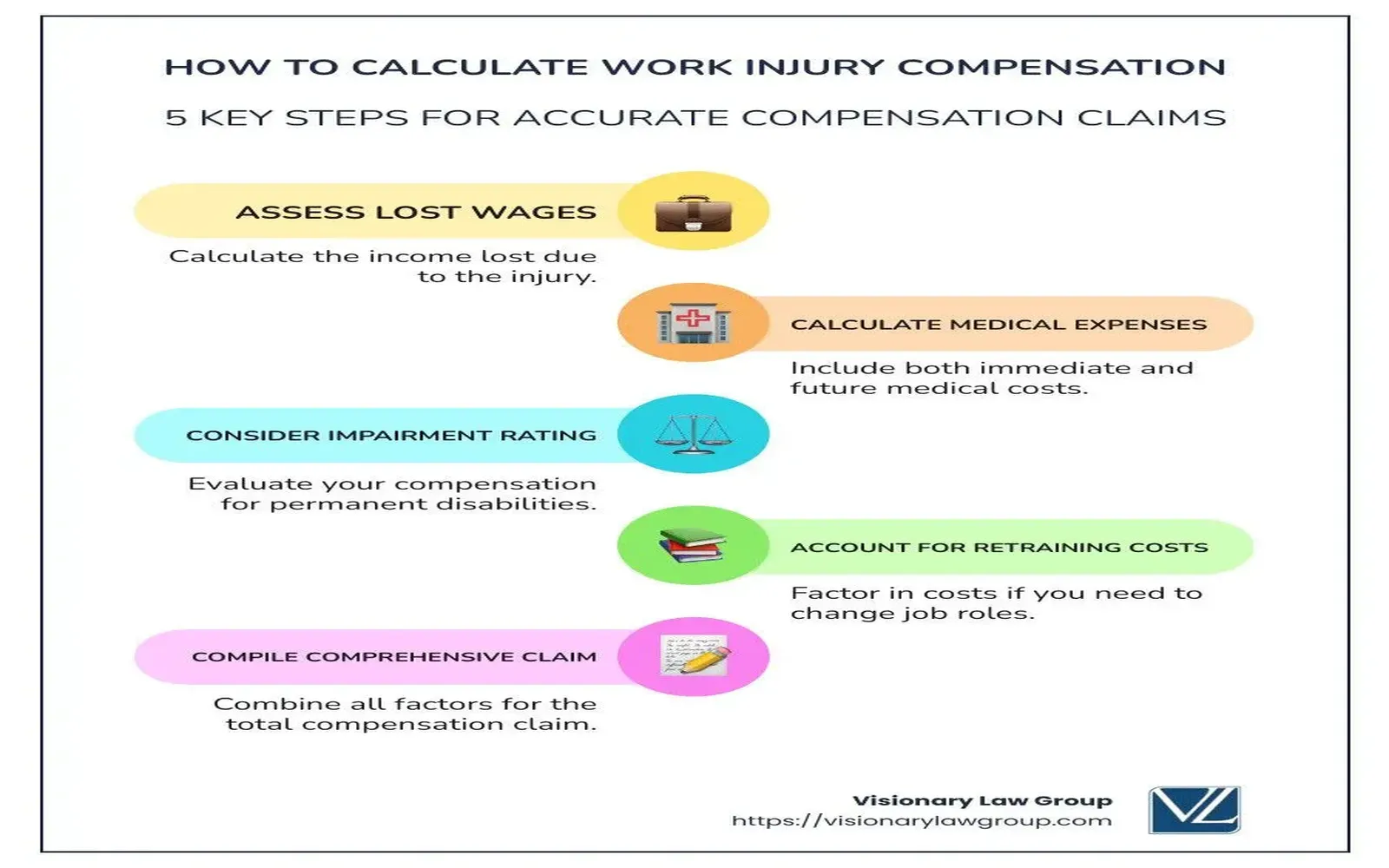
- Disability Benefits (Wage Replacement): If an injury prevents an employee from working, they receive a portion of their average weekly wage. This is typically about two-thirds of their gross pay, subject to state-mandated minimums and maximums. These benefits are categorized based on the severity and duration of the disability (e.g., Temporary Total Disability vs. Permanent Partial Disability).
- Vocational Rehabilitation: If a worker's injury is so severe that they cannot return to their previous role, workers' compensation may pay for retraining, tuition for new skills, or job placement services to help them find a different type of work within their new physical limitations.
- Death Benefits: If a workplace injury or illness results in a fatality, the insurance provides financial support to the deceased worker’s spouse and legal dependents. It also typically covers a portion of funeral and burial expenses.
Comparison of Disability Benefit Categories
The following table outlines the four primary types of disability benefits and how they are applied based on the medical evaluation of the worker.
| Benefit Type | Description | Duration | Typical Compensation |
|---|---|---|---|
| Temporary Total Disability (TTD) | The worker is completely unable to work but is expected to recover fully. | Until the worker returns to work or reaches MMI*. | ~66% of average weekly wages. |
| Temporary Partial Disability (TPD) | The worker can perform light-duty or part-time work while recovering. | Until full recovery or MMI. | A percentage of the difference in earnings. |
| Permanent Partial Disability (PPD) | The worker has reached MMI but has a lasting impairment (e.g., loss of finger). | Varies by state "scheduled loss" charts. | Lump sum or ongoing weekly payments. |
| Permanent Total Disability (PTD) | The worker is permanently unable to engage in any gainful employment. | Potentially for life or until retirement age. | ~66% of average weekly wages. |
*MMI stands for Maximum Medical Improvement, the point where a doctor determines the condition will not improve further with more treatment.
Common Exclusions: When Claims Are Denied
While the system is broad, workers' compensation insurance does not apply to every injury that occurs on company property. There are specific legal exclusions that allow insurers to deny claims:
- Intoxication and Substance Abuse: If the injury was caused primarily by the employee being under the influence of alcohol or illegal drugs, the claim is typically denied. Many states allow for post-accident drug testing to verify this.
- Self-Inflicted Injuries: Injuries sustained because an employee intentionally tried to harm themselves are never covered.
- Violation of Law or Company Policy: If a worker is injured while committing a serious crime or engaging in "horseplay" that clearly violates safety protocols, the insurance company may argue the injury did not occur within the "course of employment."
- Off-Duty Activities: Injuries sustained at a voluntary company softball game or an optional holiday party are often excluded, unless the employer explicitly required attendance or derived a direct business benefit from the event.
Steps to Filing a Workers' Compensation Claim
Navigating the claims process requires adherence to strict timelines. Failure to follow these steps can lead to a forfeiture of benefits.
Step 1: Immediate Medical Attention
The first priority is always safety. The employee should seek medical care immediately. In an emergency, any provider is acceptable, but for follow-up care, the employee must often use a provider within the employer’s preferred provider network (PPN) to ensure coverage.
Step 2: Notify the Employer
In most jurisdictions, the employee must notify their employer of the injury in writing. In 2026, many states require this notice within 30 days, though some have much shorter windows (as little as 3 to 7 days). Delaying this notice is the leading cause of claim disputes.
Step 3: The Employer Files the Claim
Once notified, the employer must provide the employee with the necessary claim forms and file a "First Report of Injury" with their insurance carrier and the state workers' compensation board. The U.S. Department of Labor provides resources for federal employees, while private sector workers must look to their specific state agency.
Step 4: Adjudication and Benefits
The insurance company will investigate the claim, reviewing medical records and potentially interviewing witnesses. They will then issue a decision to accept or deny the claim. If accepted, benefits begin, often after a short "waiting period" (usually 3 to 7 days) for which the worker is not paid unless the disability lasts beyond a certain timeframe.
Employer Obligations and Legal Requirements
For business owners in 2026, maintaining workers' compensation insurance is not just a best practice; it is a legal mandate. Even small businesses with only one or two employees are generally required to carry coverage. Failure to do so can result in massive fines, stop-work orders, and—most significantly—the loss of the "exclusive remedy" protection. If an uninsured employer is sued by an injured worker, they can be held liable for full personal injury damages, including pain and suffering, which are not available under the workers' compensation system.
Employers are also prohibited from retaliating against an employee for filing a claim. Firing, demoting, or harassing a worker because they sought benefits is illegal and can lead to separate wrongful termination lawsuits.
Frequently Asked Questions (FAQs)
Can I see my own doctor for a work-related injury? This depends on your state’s laws. Many states allow employers to designate a specific clinic or doctor for the initial 30 to 90 days of treatment. After that period, you may be able to switch to your own physician, provided they are authorized by the workers' compensation board. Always check with your claims adjuster before switching doctors to avoid unpaid bills.
What if the injury was my fault? Because workers' compensation is a "no-fault" system, you are still eligible for benefits even if you caused the accident through simple negligence. The only exceptions are if you were intoxicated, intentionally hurting yourself, or engaged in serious horseplay that violated company policy.
Are remote workers covered by workers' compensation in 2026? Yes. If you are a remote employee and sustain an injury while performing work-related tasks during your working hours, you are generally covered. However, the "home office" boundary can be complex. For example, tripping over your dog while walking to the kitchen for coffee might be denied, whereas a repetitive strain injury from your workstation would likely be covered.
How long do I have to report an injury? While state laws vary, the best practice is to report any injury immediately—ideally within 24 hours. Most states have a statutory limit ranging from 30 to 90 days for initial notification. Waiting too long creates a "gap in treatment" that insurance companies use as a reason to claim the injury didn't actually happen at work.
What is "Maximum Medical Improvement" (MMI)? MMI is a legal and medical milestone. It means your condition has stabilized and is not expected to improve further with additional medical treatment. Once you reach MMI, a doctor will assess whether you have any permanent impairment. This assessment determines your eligibility for permanent disability benefits.
Practical Recommendation
If you are an employee who has been injured on the job, your first action—after seeking medical help—should be to document everything. Take photos of the accident scene, keep a log of your symptoms, and maintain a file of every piece of correspondence you receive from the insurance company. If your claim involves a complex occupational illness or if the insurer denies your claim, consulting with a specialized workers' compensation attorney is highly recommended to ensure your rights are protected under the 2026 legal standards.
Image Gallery