Choosing Between Chicago Midway and O’Hare: A Complete 2026 Traveler’s Guide
Deciding between O’Hare (ORD) and Midway (MDW) depends on your airline preference, destination, and starting point in the city. O’Hare offers unparalleled international connectivity and premium lounges, while Midway provides a streamli...
Deciding between O’Hare (ORD) and Midway (MDW) depends on your airline preference, destination, and starting point in the city. O’Hare offers unparalleled international connectivity and premium lounges, while Midway provides a streamlined, domestic-focused experience dominated by Southwest Airlines, often resulting in shorter walks and faster terminal exits.
Contents
The Geographic Divide: Proximity and Transit Logistics
The primary factor for most travelers choosing between Chicago’s two major aviation hubs is their location relative to the central business district (the Loop) and the surrounding suburbs. In 2026, Chicago’s traffic patterns remain a significant variable in any travel itinerary, making the choice of airport a tactical decision based on your final destination.
O’Hare International Airport (ORD)
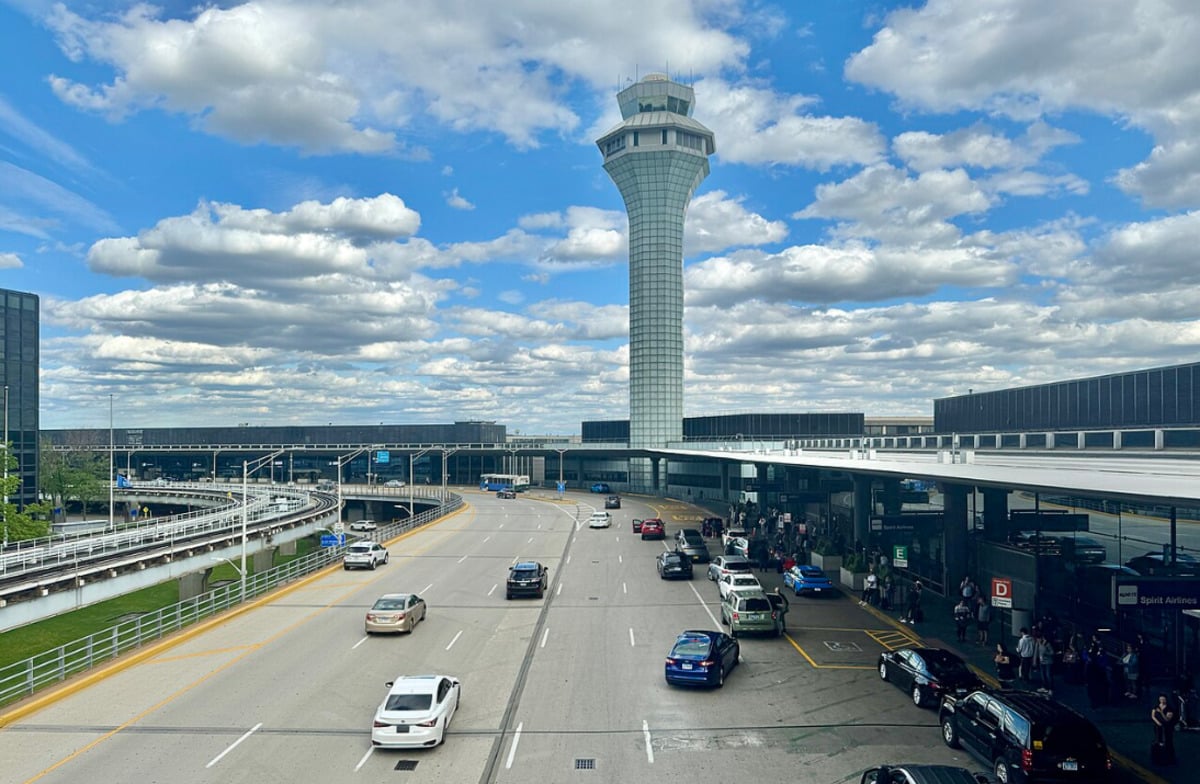
O’Hare is located approximately 18 miles northwest of the Loop. It is a sprawling complex that serves as a massive international gateway. Because of its distance and the volatility of the Kennedy Expressway (I-90), travel times can fluctuate wildly.
- Public Transit: The CTA Blue Line provides 24/7 service directly into the lower level of the O’Hare terminal complex (Terminals 1, 2, and 3). In 2026, the train ride from the Clark/Lake station takes roughly 45 to 55 minutes.
- Driving/Rideshare: During peak rush hour, a drive from the Loop to O’Hare can exceed 90 minutes. However, it is the more convenient choice for those traveling from the North Shore, northwest suburbs, or neighboring states like Wisconsin.
Midway International Airport (MDW)
Midway is located only about 10 miles southwest of the Loop. Its proximity to the city center is its greatest geographic advantage.
- Public Transit: The CTA Orange Line connects Midway to the Loop. While the Orange Line does not run 24 hours a day (typically ending around 1:00 AM), the journey is significantly shorter than the Blue Line, usually clocking in at 25 to 30 minutes from the Loop.
- Driving/Rideshare: A drive to Midway via the Stevenson Expressway (I-55) is generally more predictable than the trek to O’Hare, often taking 20 to 40 minutes depending on the time of day. It is the preferred choice for residents of the South Side and southwestern suburbs.
Airline Hubs and Destination Availability
Your choice is often dictated by who you are flying with and where you are going. The two airports serve fundamentally different markets and airline business models.
The O’Hare Dominance
O’Hare remains one of the busiest airports in the world and serves as a major hub for both United Airlines and American Airlines. If you are flying internationally—especially to Europe, Asia, or South America—O’Hare is likely your only option.
- Legacy Carriers: Beyond United and American, O’Hare hosts nearly every major international carrier, including Lufthansa, British Airways, ANA, and Emirates.
- Low-Cost Carriers: While O’Hare is a legacy hub, it also hosts Spirit and Frontier, primarily out of Terminal 5.
The Midway Specialist
Midway is famously dominated by Southwest Airlines, which accounts for over 90% of the airport's passenger traffic.
- Domestic Focus: If you are traveling within the United States or to select "near-international" destinations in Mexico or the Caribbean, Midway is a highly efficient choice.
- Secondary Carriers: Frontier and Delta also maintain a presence at Midway, but the options are significantly more limited compared to the hundreds of daily departures at O’Hare.
Terminal Experience: Modernization and Navigation
As of 2026, both airports have undergone significant transformations to improve the passenger experience. However, the scale of these improvements differs.
Navigating O’Hare’s "O’Hare 21" Progress
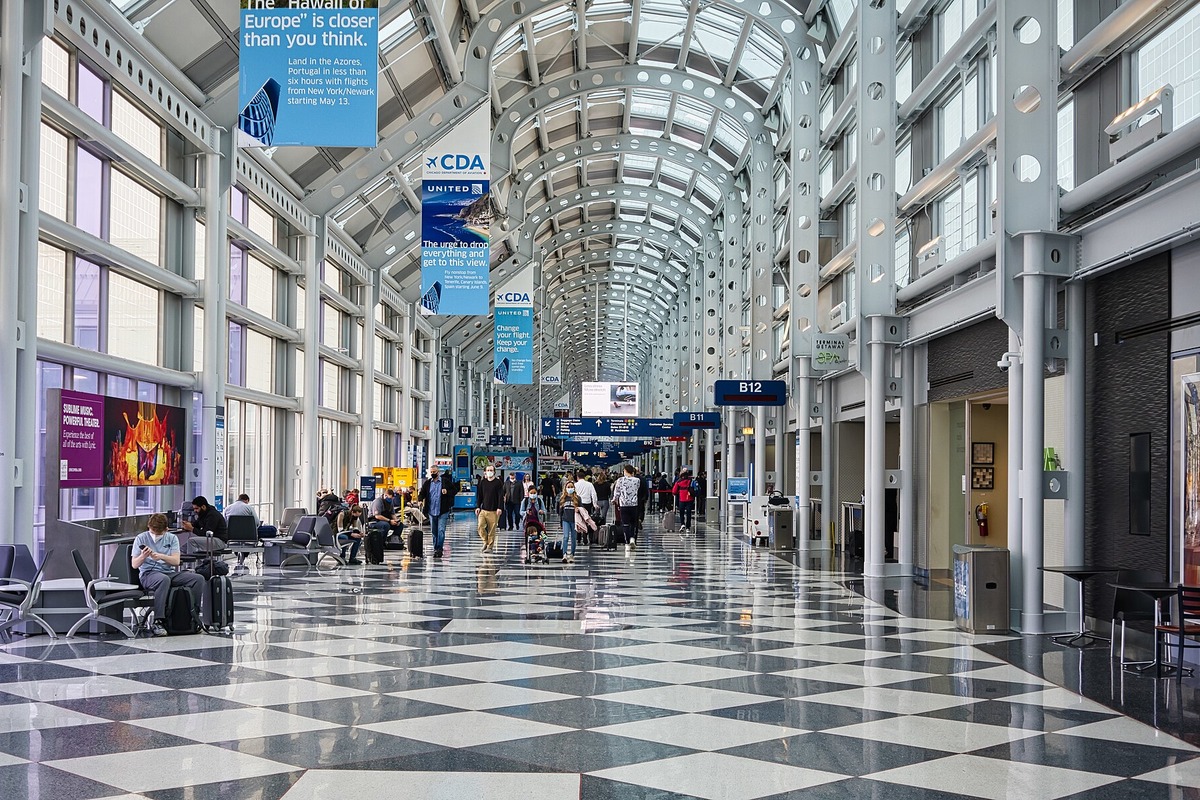
O’Hare is currently in the midst of its "O’Hare 21" redevelopment plan. In 2026, travelers will notice the massive expansion of Terminal 5, which now handles more domestic and international flights with updated gate technology and expanded customs facilities.
- The ATS (Airport Transit System): To move between terminals (especially to Terminal 5 or the Multi-Modal Facility), travelers must use the automated ATS train. This system is efficient but adds a layer of complexity to the arrival and departure process.
- Walking Distances: Because O’Hare is so large, the distance from security to the furthest gates in Concourse C or Terminal 5 can be nearly a mile. Travelers with mobility issues should always request assistance in advance.
Midway’s Modernization and Compact Layout
Midway completed its major "Midway Modernization Program" several years ago, resulting in a vastly improved security pavilion and a centralized concessions area.
- The "Single Terminal" Advantage: Unlike O’Hare, Midway operates out of a single main terminal building divided into three concourses (A, B, and C). Once you clear the central security checkpoint, all gates are within a 5-to-10-minute walk.
- Efficiency: The compact nature of Midway means you can typically arrive later (relative to your flight time) than you could at O’Hare. For many business travelers, the "curb-to-gate" speed at Midway is the deciding factor.
Comparative Overview: ORD vs. MDW
The following table summarizes the technical specifications and service levels of both airports as of 2026.
| Feature | O’Hare International (ORD) | Midway International (MDW) |
|---|---|---|
| Primary Carriers | United, American, Delta, Spirit | Southwest, Frontier, Delta |
| Total Terminals | 4 (1, 2, 3, 5) | 1 (Concourses A, B, C) |
| International Reach | Global (60+ countries) | Regional (Mexico, Caribbean, Canada) |
| CTA Rail Access | Blue Line (24/7 service) | Orange Line (Standard hours) |
| Avg. Security Wait | 15–45 Minutes | 10–25 Minutes |
| Dining/Shopping | High-end, luxury, diverse | Focused, local Chicago favorites |
| Lounge Access | Extensive (Polaris, Admirals, etc.) | Limited (The Club MDW) |
| Rideshare Costs | High (City taxes + Distance) | Moderate (City taxes + Proximity) |
Operational Reliability: Weather and Delays
Chicago is notorious for its weather, and both airports handle snow and wind differently due to their runway configurations and traffic volume.
O’Hare’s Capacity
O’Hare has eight runways. This massive infrastructure allows the airport to maintain a higher volume of arrivals and departures even during inclement weather. However, because the airport operates at such high capacity, a minor delay in one terminal can have a cascading effect across the entire system. In 2026, O’Hare’s sophisticated de-icing and snow removal teams are among the best in the world, but the sheer volume of flights means ground stops are more common here during major storms.
Midway’s Sensitivity
Midway has a much smaller footprint and shorter runways. This can be a disadvantage during heavy winter storms or severe rain, as certain aircraft types may face more stringent landing and takeoff restrictions than they would at O’Hare. That said, because Midway handles fewer flights, it often recovers more quickly from weather events than the massive O’Hare complex.
Cost Considerations: Fares, Parking, and Rideshares
Financial factors are often the tiebreaker when choosing between the two airports.
- Airfare: Southwest’s presence at Midway often keeps prices competitive for domestic routes. However, United and American frequently match these prices at O’Hare to maintain market share. Always check "hidden" costs like checked bag fees, which are often waived on Southwest but standard on legacy carriers at O’Hare.
- Parking: Both airports offer a range of parking from "Economy" lots to "Main Garage" premium spots. Midway’s economy lots are generally cheaper and closer to the terminal via shuttle than O’Hare’s massive Multi-Modal Facility (MMF) parking.
- Rideshare Surcharges: Chicago imposes specific "Airport Surcharges" on Uber and Lyft rides. While the tax is the same for both airports, the total fare to O’Hare is almost always higher due to the increased mileage and time spent in traffic.
Frequently Asked Questions
Which Chicago airport is better for international flights?
O’Hare is the superior choice for international travel. It hosts dozens of foreign flag carriers and offers non-stop flights to major global hubs. Midway’s international service is limited to a few destinations in North America and the Caribbean, primarily serviced by Southwest.
Is it easy to transfer between O'Hare and Midway?
Transferring between the two airports is possible but time-consuming. There is no direct rail link; you must either take the Blue Line to the Loop and transfer to the Orange Line (approx. 2 hours) or take a rideshare or private shuttle (approx. 45 to 90 minutes depending on traffic). It is generally not recommended to book connecting flights that require an airport swap in Chicago.
Does Midway have airport lounges?
Midway has limited lounge options compared to O'Hare. While O'Hare boasts multiple United Clubs, American Airlines Admirals Clubs, and high-end options like the United Polaris Lounge, Midway primarily offers "The Club MSW" and a USO lounge for military members.
Which airport is closer to downtown Chicago?
Midway is significantly closer to downtown Chicago (The Loop). It is approximately 10 miles away, compared to O'Hare's 18 miles. In ideal traffic, you can reach Midway from the Loop in under 20 minutes, whereas O'Hare typically requires a minimum of 35 to 40 minutes.
Which airport is better for Southwest Airlines travelers?
Midway is a massive hub for Southwest Airlines, offering the most flight options, frequencies, and direct routes. While Southwest does fly out of O’Hare (Terminal 5), the number of destinations is a fraction of what is available at Midway.
Final Recommendation
For the business traveler prioritizing time and efficiency for a domestic trip, Midway International Airport is usually the better choice due to its compact layout and proximity to the Loop.
For the international traveler or those seeking premium amenities like luxury lounges and a wider variety of dining, O'Hare International Airport is the clear winner despite the longer transit times.
If you are flying from the northern suburbs, choose O'Hare; if you are coming from the south or west, Midway will save you significant time on the road. In 2026, both airports offer a modern experience, so your decision should ultimately rest on which airline provides the best schedule for your specific destination.
Image Gallery