Is Legal & General Life Insurance No-Exam? How Accelerated Underwriting Works
Legal & General America provides no-exam life insurance through an accelerated digital underwriting process. Qualified applicants applying for term life insurance can secure coverage up to $2 million without requiring a physical exam,...
Legal & General America provides no-exam life insurance through an accelerated digital underwriting process. Qualified applicants applying for term life insurance can secure coverage up to $2 million without requiring a physical exam, blood draw, or urine sample. Approval relies on real-time data analysis of medical, prescription, driving, and background records.
Contents
Understanding Legal & General’s Accelerated Underwriting Model
Legal & General America—which issues policies through Banner Life Insurance Company in most U.S. states and William Penn Life Insurance Company of New York in New York—utilizes an automated, data-driven underwriting system designed to streamline policy issuance. Rather than requiring every applicant to undergo a traditional paramedical examination, the insurer leverages algorithms and electronic databases to assess mortality risk in real time.
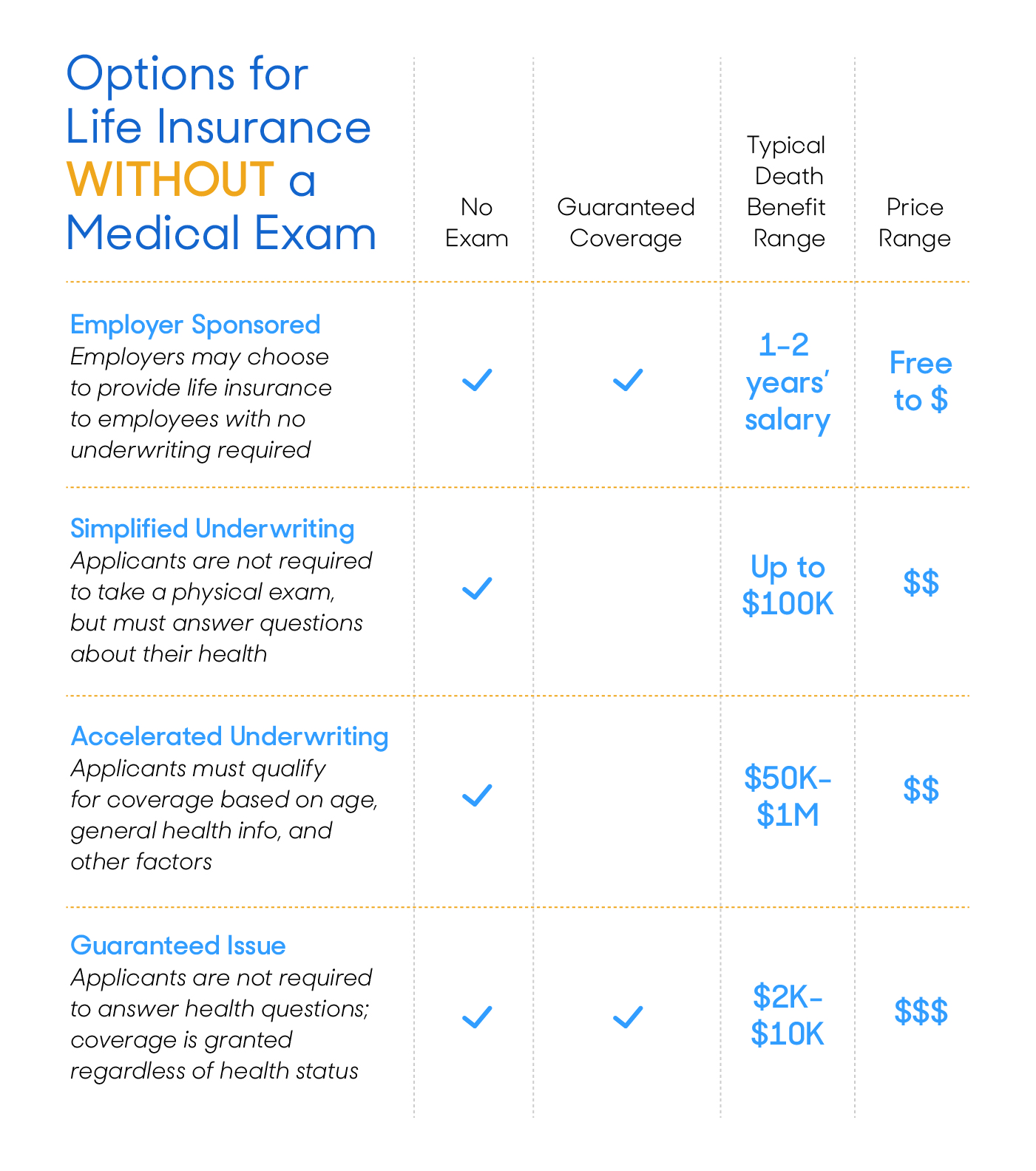
This approach is formally known as accelerated underwriting. It is distinct from simplified issue or guaranteed issue life insurance. Simplified issue policies often bypass medical exams by asking limited health questions, but they typically cap coverage at lower face amounts and charge higher premiums to offset the carrier's unquantified risk. Guaranteed issue policies require no health questions or exams at all but feature strict coverage caps and graded death benefits.
In contrast, Legal & General’s accelerated underwriting offers full-value term life insurance policies at traditional, fully underwritten premium rates. If your health profile and background data satisfy the carrier's digital risk criteria, the medical exam requirement is completely waived. If the automated system identifies potential health risks or inconsistent data points, your application seamlessly transitions into traditional underwriting, where a standard medical exam and lab work will be scheduled.
Qualification Criteria and Coverage Limits
Not every applicant automatically receives a no-exam decision. Legal & General America establishes specific eligibility parameters based on issue age, requested policy amount, personal medical history, and risk profile.
Age and Coverage Thresholds
Accelerated underwriting eligibility is restricted to specific age tiers and maximum face values:
- Ages 18 to 40: Applicants in this range may qualify for no-exam coverage on term life insurance policies up to $2,000,000.
- Ages 41 to 50: Applicants can qualify for up to $1,000,000 in no-exam term coverage.
- Ages 51 to 60: Applicants can qualify for up to $500,000 in no-exam term coverage.
- Ages 61 and Older: Applicants generally fall outside the accelerated underwriting parameters for a zero-exam path and must undergo standard underwriting, which typically includes a medical exam, blood sample, urine specimen, and potential resting ECG.
Note: Coverage limits and age bands are subject to corporate underwriting updates and state-specific regulatory approvals. Always confirm current parameters with an authorized agent.
Pre-Qualifying Personal Health Parameters
To qualify for a total exam waiver, applicants must generally demonstrate an uncomplicated health background. Legal & General America's automated engine searches for stable indicators, including:
- A Body Mass Index (BMI) within standard height-to-weight chart guidelines.
- No personal history of major chronic conditions such as heart disease, cancer, stroke, diabetes, or kidney illness.
- No personal history of alcohol or substance abuse treatment.
- Clean major family medical history prior to age 60 (specifically regarding hereditary cardiovascular disease or cancer in parents or siblings).
- A clean driving record with no recent major moving violations, DUI/DWI convictions, or license suspensions.
How the Digital Screening Process Evaluates Risk
When you submit an application under Legal & General's digital platform (such as Horizon or AppAssist), the insurer replaces the manual blood and urine collection with instant background checks across several secure, regulated data repositories.
- Digital Application (AppAssist / Horizon)
- Automated Data Retrieval (MIB, Rx, MVR, Credit Scores)
- If Data Discrepancy or High-Risk Identified:
- Traditional Exam Scheduled (Blood/Urine)
- If Data Discrepancy or High-Risk Identified:
- Underwriting Decision
- Instant Approval (No Exam Required)
1. Medical Information Bureau (MIB) Reports
The MIB Group is a member-owned data exchange that tracks coded information from previous individual life, health, and disability insurance applications. Legal & General queries the MIB database to verify that the medical history stated on your current application aligns with information previously reported to other insurance carriers.
2. Prescription Database History (Rx Records)
Automated systems query prescription data registries (such as Milliman IntelliScript or LexisNexis Risk Solutions). These reports show past and present prescription drugs, dosage levels, refill frequencies, and prescribing physicians. The insurer uses this data to confirm declared health conditions and uncover unstated chronic illnesses.
3. Motor Vehicle Reports (MVR)
Driving records are pulled directly from state departments of motor vehicles. A history of reckless driving, multiple speeding tickets, or driving under the influence indicates elevated mortality risk, which can cause the system to reject accelerated underwriting and request a full manual review.
4. FCRA-Compliant Credit-Based Public Records
Under the Fair Credit Reporting Act (FCRA), insurers may review credit-derived public records, bankruptcy filings, and consumer risk scores. These indicators evaluate financial stability and lifestyle consistency without directly pulling your full credit score in a way that impacts your credit rating.
Comparing No-Exam Accelerated Underwriting vs. Traditional Underwriting
Understanding the distinctions between accelerated underwriting and standard medical exam underwriting helps set expectations regarding timelines, requirements, and potential outcome paths.
| Feature | Legal & General Accelerated (No-Exam) | Traditional Underwriting |
|---|---|---|
| Medical Exam Required? | No physical exam, blood sample, or urine test. | Yes (paramedical exam, blood draw, urinalysis). |
| Maximum Face Amount | Up to $2,000,000 (age-dependent). | Unlimited (based on income and financial need). |
| Eligible Ages | Typically 18–60 years old. | 18–85+ years old. |
| Processing Time | Instant to 3 business days. | 3 to 8 weeks on average. |
| Premium Pricing | Standard, fully underwritten rates (Preferred Best to Standard). | Standard, fully underwritten rates (Preferred Best to Substandard/Table). |
| Data Sources | MIB, Rx records, MVR, credit-based risk scores, telephone interview. | Medical exam, lab results, attending physician statements (APS), MIB, Rx, MVR. |
| Ideal Applicant Profile | Young to middle-aged adults with clean medical histories and good credit. | Older applicants, high net-worth coverage seekers, or individuals with pre-existing conditions. |
Factors That Trigger a Mandatory Medical Exam
Applying for accelerated underwriting does not guarantee that you will skip the exam. Approximately 30% to 50% of applicants who enter an accelerated underwriting pipeline are randomly selected or system-routed to traditional underwriting due to specific data triggers.
If Legal & General's automated engine cannot verify your risk level electronically, it defaults to requiring a paramedical exam. Common triggers include:
- Elevated BMI or Weight Changes: If your reported height and weight cross risk thresholds, or if medical records reveal rapid unexplained weight loss or gain, physical measurements become necessary.
- Prescription Record Inconsistencies: Unmentioned prescriptions (such as maintenance medications for blood pressure, anxiety, asthma, or cholesterol) flagged in prescription databases will pause the automated approval.
- Inconclusive MIB Data: If prior insurance application records indicate medical follow-ups, abnormal lab findings, or underwriting decisions that conflict with your current application, human review and lab tests will be required.
- Complex Pre-existing Conditions: Diagnoses such as type 1 or type 2 diabetes, sleep apnea, hepatitis, rheumatoid arthritis, or prior cardiac events automatically remove an application from the no-exam track.
- High Requested Death Benefits: Requesting a policy face value that exceeds the age-based threshold (e.g., $1.5 million for a 45-year-old) automatically triggers physical underwriting requirements.
- Random Quality Control Sampling: To maintain underwriting integrity, carriers randomly select a small percentage of accelerated applicants to undergo standard exams and blood work to validate their predictive data models.
Pros and Cons of Legal & General's No-Exam Coverage
Evaluating the benefits and trade-offs of Legal & General’s accelerated underwriting model helps determine if this application route matches your needs.
Advantages
- Speed of Policy Issuance: Traditional life insurance applications often take 4 to 8 weeks while waiting for exam appointments and lab processing. Legal & General’s digital process can issue policy approval within hours or days.
- Convenience: Applicants avoid scheduling an in-home paramedical visit, fasting before blood draws, and giving urine samples.
- Competitive Pricing: Unlike simplified issue policies, which build higher risk margins into their premiums, Legal & General offers its top pricing tiers (including Preferred Best and Preferred) through its accelerated pathway.
- High Coverage Limits: Offering up to $2,000,000 without an exam allows middle-aged families and business partners to lock in substantial protection efficiently.
Limitations
- Strict Health Requirements: The no-exam path is designed primarily for healthy applicants. Minor medical complexities can derail the automated approval and send the file to traditional processing.
- Hard Age Caps: Applicants over age 60 cannot access the accelerated no-exam path for high face amounts, limiting accessibility for older adults.
- Surveillance of Personal Data: Applicants must consent to background checks covering prescription registries, driving records, and MIB files.
- Potential for Delay if Re-routed: If an application starts in the accelerated portal but gets flagged, total processing time can end up being slightly longer than if traditional underwriting had been selected initially.
Step-by-Step Guide: How to Apply for Legal & General No-Exam Coverage
Securing a policy through Legal & General's digital process involves a structured sequence of steps:
- Step 1: Determine Coverage & Needs
- Step 2: Submit Digital Application (AppAssist / Horizon)
- Step 3: Complete Tele-Interview (If Required)
- Step 4: Automated Data Verification (MIB, Rx, MVR Check)
- Data Verified & Clean:
- Step 5A: Instant Approval
- Step 6: Review & Sign Policy
- Data Flagged or Sampled:
- Step 5B: Schedule Paramedical Exam
- Step 6: Manual Underwriting Review
- Step 7: Final Decision & Policy Sign
- Data Verified & Clean:
Step 1: Request an Online Quote and Confirm Eligibility
Work with an independent life insurance agent or utilize Legal & General’s direct digital portal to generate term life quotes. Confirm that your age, desired term length (e.g., 10, 15, 20, 30, or 40 years), and requested coverage amount fall within the accelerated underwriting parameters.
Step 2: Complete the Application
Complete the electronic application form accurately. You will need to provide basic personal identification, social security number, employment details, lifestyle habits, and a complete medical history. Transparency is essential; withholding medical history can lead to claim denial during the policy's standard two-year contestability period.
Step 3: Participate in a Tele-Interview (If Prompted)
Depending on the application portal used (such as AppAssist), a brief telephone interview conducted by a trained medical examiner or voice representative may be scheduled. This call typically takes 15 to 30 minutes to review your medical history, primary physician contact details, lifestyle questions, and household details.
Step 4: Authorize Automated Data Checks
Grant electronic authorization allowing Legal & General America to pull records from the MIB, state MVR databases, prescription history repositories, and credit public records. The carrier's algorithm processes these data points to cross-check your application responses.
Step 5: Receive the Underwriting Decision
The underwriting algorithm will yield one of two outcomes:
- Approved as Applied (No-Exam): The system approves your application at the calculated risk class (e.g., Preferred Best, Preferred, or Standard). No physical exam is required.
- Re-routed to Full Underwriting: The system determines that additional evidence is needed. An examiner will contact you to schedule a paramedical visit to collect blood, urine, blood pressure readings, and physical measurements at no cost to you.
Step 6: Accept and Activate Coverage
Review your final policy document electronically, sign the delivery receipts, and set up your initial premium payment via electronic funds transfer (EFT) or credit card (where accepted). Coverage becomes active on the designated policy effective date once the first premium payment clears.
Frequently Asked Questions
Is Legal & General no-exam life insurance more expensive than traditional policies?
No. Legal & General America uses the exact same rate tables for accelerated underwriting as it does for traditional underwriting. If you qualify for the Preferred Best rate class through the no-exam process, you pay the exact same premium as someone who qualified for Preferred Best after taking a paramedical exam.
What happens if I apply for a no-exam policy and get rejected for accelerated underwriting?
If you do not qualify for instant, no-exam approval, your application is not automatically declined. Instead, it is transferred to traditional underwriting. You will be asked to complete a standard paramedical exam and provide medical records. Once those details are evaluated manually by a human underwriter, your policy can still be approved.
Does Legal & General offer no-exam permanent or whole life insurance?
Legal & General America primarily specializes in term life insurance (offering products through Banner Life and William Penn). The no-exam accelerated underwriting process is predominantly applied to their term life product lines (such as OPTerm). Permanent life insurance coverage options through the carrier may follow different underwriting guidelines and face lower maximum limits for exam waivers.
How far back does Legal & General check prescription and medical history?
Automated prescription database queries typically examine prescription fill history over the past 3 to 7 years. MIB databases record medical codes from prior life insurance applications over a 7-year rolling period, while motor vehicle reports review driving infractions over the preceding 3 to 5 years.
Can smokers or nicotine users qualify for Legal & General no-exam life insurance?
Yes. Tobacco users can qualify for accelerated no-exam underwriting provided they meet all other age, coverage amount, and medical criteria. However, nicotine users will be assigned to tobacco-specific rate classes (such as Tobacco Preferred or Standard Tobacco), which carry significantly higher premiums than non-tobacco rate tiers.
Final Recommendation: Next Steps for Applicants
If you are between the ages of 18 and 60, in generally good health, and seeking term life insurance coverage up to $2,000,000, Legal & General America’s accelerated underwriting pathway offers an efficient, cost-effective option to secure coverage without a medical exam.
To maximize your chances of securing a no-exam approval at the lowest possible rates:
- Gather details in advance: Have contact information for your physicians, details on any current prescriptions, and personal background history ready before applying.
- Be accurate and transparent: Discrepancies between your self-reported application details and prescription or MIB database checks are the primary cause of mandatory exam triggers.
- Compare carrier options: Consult with an independent life insurance broker who can compare Legal & General's accelerated guidelines against other carriers to ensure you secure the best policy structure for your specific health profile.
Disclaimer: This article is for informational and educational purposes only and does not constitute financial, legal, or professional insurance advice. Life insurance policy availability, underwriting rules, limits, and pricing are subject to individual state regulations and insurer underwriting guidelines. Consult a licensed life insurance agent or financial advisory professional prior to purchasing coverage.
Image Gallery