How to Calculate Cash Value Life Insurance Amount
Calculating the cash value of a life insurance policy requires adding your gross premium payments, subtracting mortality costs and administrative expenses, and factoring in interest earnings or dividends. Your net cash value reflects a...
Calculating the cash value of a life insurance policy requires adding your gross premium payments, subtracting mortality costs and administrative expenses, and factoring in interest earnings or dividends. Your net cash value reflects accumulated premiums plus growth, minus policy fees, surrender charges, and outstanding policy loans.
Contents
Understanding Cash Value, Surrender Value, and Death Benefit
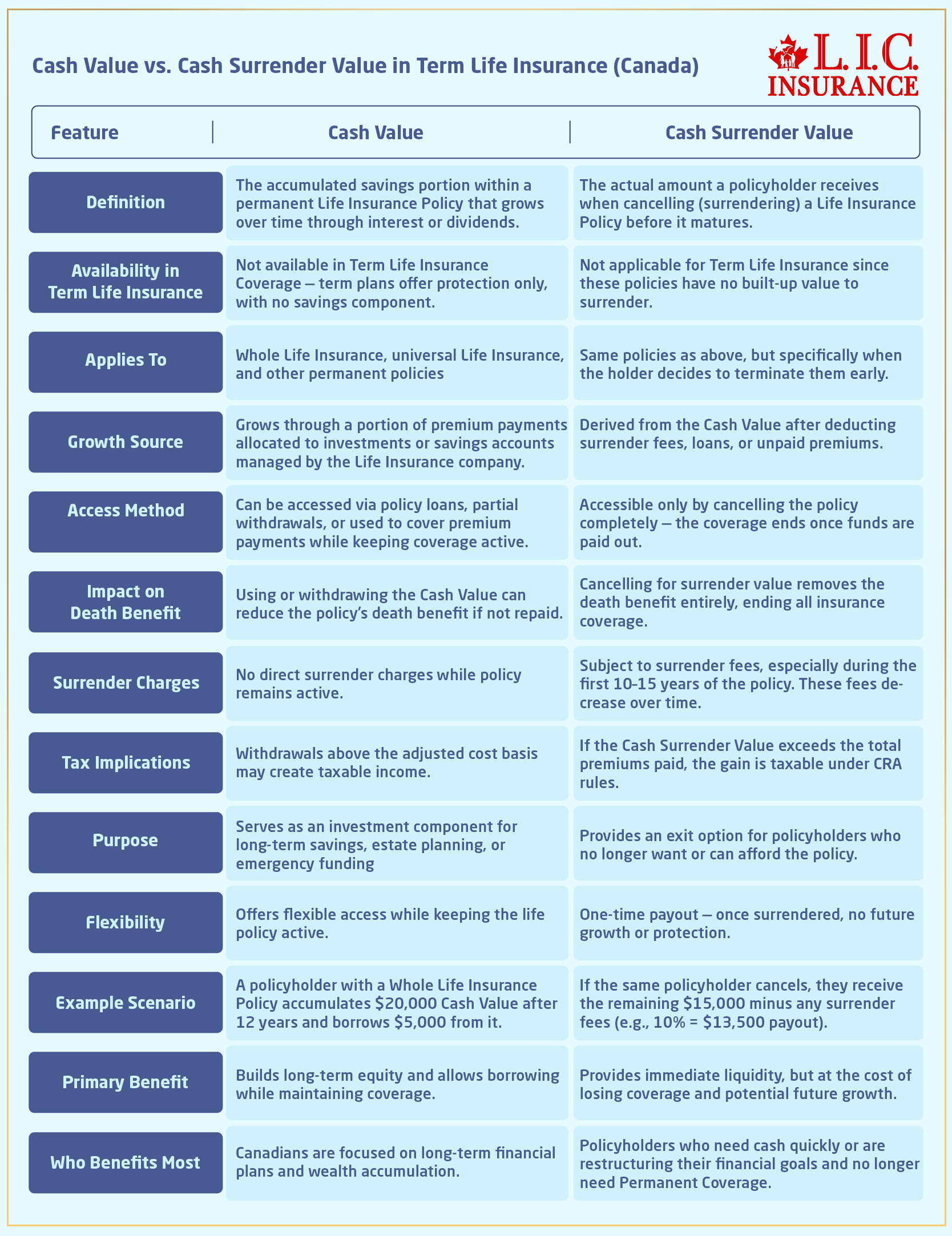
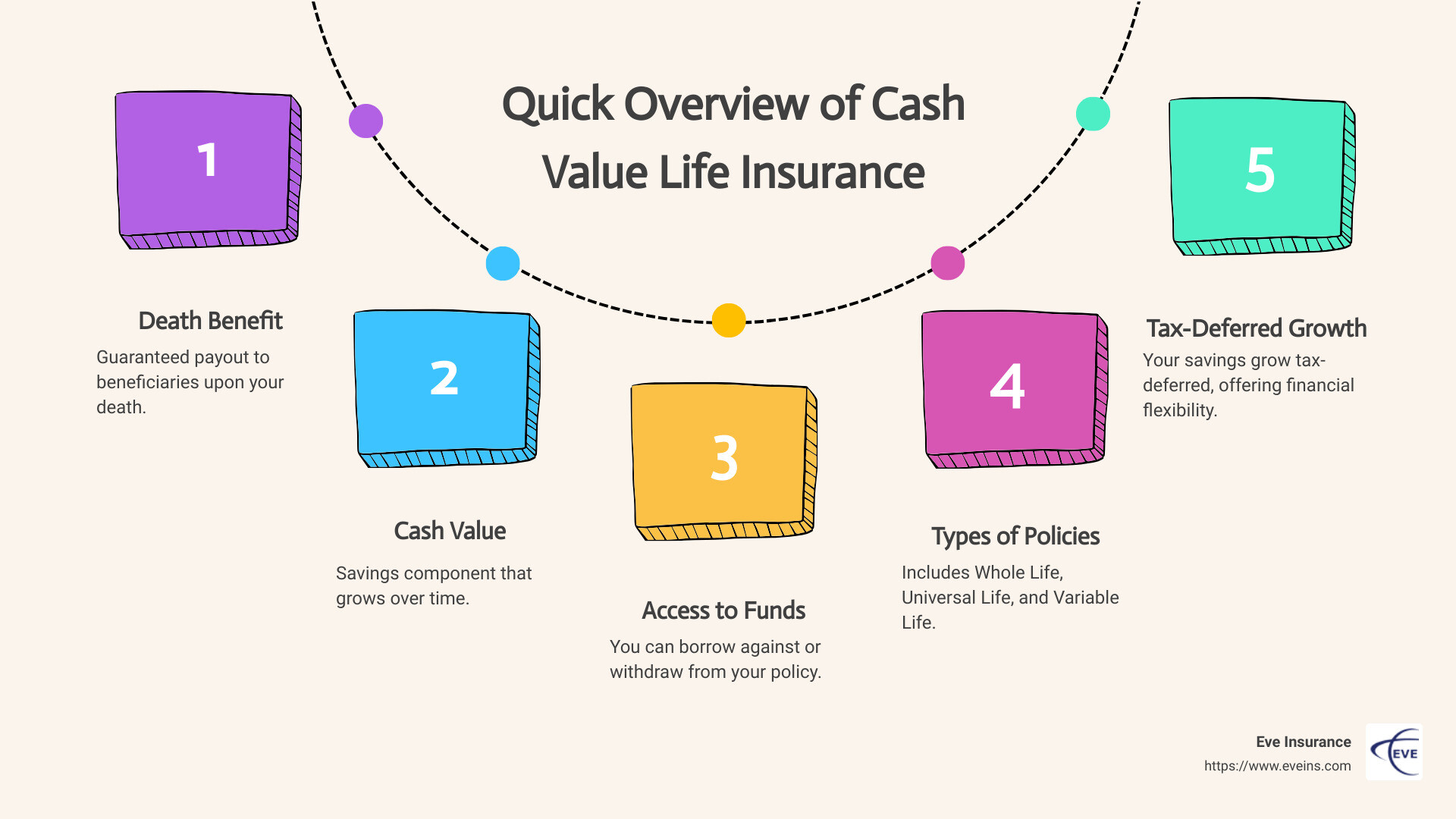
To accurately calculate your policy's worth, you must first distinguish between three distinct financial values associated with permanent life insurance policies: accumulated cash value, net cash surrender value, and death benefit.
- Accumulated Cash Value (Gross Cash Value): This is the total amount of tax-deferred money held within the policy's savings component. It includes all net premium allocations plus interest, market gains, or annual policyholder dividends earned over time.
- Net Cash Surrender Value: This represents the actual cash amount you will receive if you choose to terminate (surrender) the policy early. It is calculated by taking the accumulated cash value and subtracting any applicable surrender charges imposed by the insurance company, as well as outstanding policy loan balances and accrued loan interest.
- Death Benefit: This is the payout delivered to your designated beneficiaries upon your passing. In basic whole life policies, the cash value forms a portion of the death benefit payout rather than paying out separately, whereas specific universal life policy options allow beneficiaries to receive both the face amount and accumulated cash value.
Understanding these distinctions prevents common miscalculations. Policyholders often mistake the gross cash value listed on an annual statement for the liquid cash they can withdraw immediately. During the early years of a policy—typically the first 10 to 15 years—surrender fees can significantly reduce the amount of cash you can access.
The Core Mathematical Formula for Cash Value Accumulation
While every life insurance carrier uses proprietary actuarial models, all permanent life policies—including whole life, universal life, and variable life—follow the same fundamental mathematical framework to adjust cash value month by month.
Ending Cash Value = Beginning Cash Value + Net Premium Allocation + Investment/Interest Earnings - Cost of Insurance (COI) - Administrative Fees - Loan Interest/Withdrawals
Components of the Formula Explained
- Beginning Cash Value: The balance carried over from the previous billing cycle or policy month. In month one of a new policy, this value begins at zero.
- Net Premium Allocation: The gross premium you pay minus state premium taxes and upfront sales loads (agent commissions and policy setup expenses). For instance, if your monthly premium is $300 and the insurer deducts a 5% expense charge, your net premium allocation is $285.
- Interest Crediting / Investment Earnings: The growth rate applied to your accumulated balance. In whole life, this includes guaranteed minimum interest plus non-guaranteed dividends. In universal life, this reflects the carrier's declared crediting rate or an equity index return (capped by performance caps and participation rates). In variable life, this reflects the underlying fund performance.
- Cost of Insurance (COI): The pure mortality charge required to cover the insurer's risk of paying out the death benefit. COI is calculated based on your net amount at risk (the death benefit minus your current cash value) and increases as you age.
- Administrative and Maintenance Fees: Monthly deductions taken by the insurer to cover contract administration, premium collection, underwriting amortization, and overhead.
- Surrender Charges & Policy Loan Adjustments: When calculating the surrender value, insurers subtract contractual surrender penalties. If you have taken policy loans, outstanding principal and unpaid interest are also subtracted.
How Cash Value Calculations Differ by Policy Type
The mechanism used to calculate annual growth varies depending on the structure of your permanent life insurance contract.
| Policy Type | Growth Mechanism | Guaranteed Interest Rate | Cost of Insurance (COI) Structure | Risk Profile |
|---|---|---|---|---|
| Whole Life Insurance | Fixed guaranteed interest rate + annual participating dividends | Yes (typically 2% to 4%) | Bundled into fixed monthly premium | Lowest (Insurer bears risk) |
| Universal Life (UL) | Declared interest rate set periodically by insurer | Yes (guaranteed minimum floor, e.g., 1%–2%) | Unbundled monthly deduction (increases with age) | Low to Moderate |
| Indexed Universal Life (IUL) | Equity index performance (e.g., S&P 500) capped by caps & floors | Yes (0% floor prevents downside loss) | Unbundled monthly deduction (increases with age) | Moderate |
| Variable Universal Life (VUL) | Mutual fund-like subaccount performance | No guaranteed floor (subject to loss) | Unbundled monthly deduction (increases with age) | Highest (Policyholder bears market risk) |
Whole Life Insurance Mechanics
Whole life policies use a bundled structure. The insurance company guarantees a fixed growth schedule that ensures your cash value equals the policy's face amount at a specified maturity age (historically age 100, or age 121 under modern mortality tables).
In participating whole life contracts issued by mutual insurance companies, policyholders may also receive annual policy dividends. You can calculate the impact of dividends based on how you elect to apply them:
- Paid-up additions: Purchasing additional small blocks of paid-up life insurance, which increases both total death benefit and cash value growth.
- Accumulate at interest: Leaving dividends in an interest-bearing account with the carrier.
- Premium reduction: Directing dividends toward monthly premiums, lowering out-of-pocket costs while maintaining scheduled growth.
Universal Life (UL) and Indexed Universal Life (IUL) Mechanics
Universal life insurance separates (unbundles) the insurance charges from the savings element. To calculate UL cash value:
- Add the net premium paid during the period.
- Multiply the balance by the current credited interest rate (or indexed return for IUL contracts).
- Subtract the monthly Cost of Insurance (COI) rate multiplied by the Net Amount at Risk (NAR).
- Subtract monthly administration fees.
In IUL policies, index growth calculations involve three key variables:
- Participation Rate: The percentage of index gains credited to your policy (e.g., 80% participation on a 10% index gain yields an 8% gross return).
- Cap Rate: The maximum rate of return credited in a single cycle (e.g., a 9% cap limits growth even if the underlying index gains 15%).
- Floor: A minimum return guarantee (usually 0%) that protects your accumulated principal during stock market declines.
Variable Universal Life (VUL) Mechanics
Variable life cash value fluctuates based on the performance of underlying investment options called subaccounts. If your chosen equity subaccounts gain 12% in a year, your gross cash value increases accordingly; if subaccounts lose value, your cash value drops. Monthly COI and administrative charges are deducted regardless of market performance, meaning poor market returns combined with ongoing policy fees can shrink your cash value rapidly.
Step-by-Step Mathematical Example of Cash Value Calculation
To see how these principles function in practice, consider a hypothetical Universal Life policy with the following parameters:
- Beginning Cash Value (Month 12): $10,000
- Monthly Premium Paid: $400
- Premium Expense Charge: 5% ($20 fee; Net Premium = $380)
- Annual Interest Crediting Rate: 4.8% annually (0.4% monthly)
- Monthly Cost of Insurance (COI): $85
- Monthly Administration Fee: $15
- Current Surrender Charge Schedule: $1,200 penalty if surrendered in Year 2
Step 1: Add the Net Premium
$$\text{Adjusted Balance} = $10,000 + $380 = $10,380$$
Step 2: Calculate and Add Monthly Interest
$$\text{Gross Interest Earned} = $10,380 \times 0.004 = $41.52$$ $$\text{New Subtotal} = $10,380 + $41.52 = $10,421.52$$
Step 3: Subtract Policy Fees and Cost of Insurance
$$\text{Total Deductions} = $85 ; (\text{COI}) + $15 ; (\text{Admin Fee}) = $100$$ $$\text{Ending Accumulated Cash Value} = $10,421.52 - $100 = $10,321.52$$
Step 4: Calculate Net Cash Surrender Value
To find out how much cash the policyholder would actually take home if they terminated the policy at the end of this month: $$\text{Net Surrender Value} = \text{Accumulated Cash Value} - \text{Surrender Charge} - \text{Outstanding Loans}$$ $$\text{Net Surrender Value} = $10,321.52 - $1,200 - $0 = $9,121.52$$
In this example, while the policy statement shows an accumulated cash balance of $10,321.52, the actual cash value available upon policy surrender is $9,121.52.
Key Factors That Reduce Policy Cash Value
Several internal expenses and financial actions can slow cash value growth or shrink your overall balance over time.
1. Surrender Charge Schedules
Life insurance policies incur substantial upfront acquisition costs, including medical exams, underwriting verification, and sales commissions. Insurers recover these initial expenses by assessing surrender charges during the first 10 to 15 years of the policy.
Surrender penalties usually start high (e.g., 50% to 100% of cash value in year one) and gradually decrease by a fixed percentage each year until reaching zero. Always check your contract’s Surrender Charge Table before making withdrawals or terminating coverage.
2. Increasing Cost of Insurance (COI)
In unbundled policy contracts like Universal Life, the Cost of Insurance increases as you grow older. Because the likelihood of mortality rises with age, the monthly deduction for the death benefit grows larger every year.
If your policy's interest earnings do not keep pace with rising COI charges, the insurer will draw from your accumulated cash value to pay the difference. If left unmanaged, rising COI charges can exhaust your cash value entirely, causing the policy to lapse unless higher premiums are paid.
3. Policy Loans and Compound Interest
When you borrow money against your life insurance cash value, the insurer uses your cash value as collateral. While taking a policy loan does not trigger an immediate taxable event, interest accrues on the unpaid loan balance.
If interest accumulates faster than you make loan repayments, your total loan balance can grow larger than your cash value. This triggers an automatic policy lapse and can result in significant income tax liabilities on gains earned above your premium basis under federal tax guidelines managed by the Internal Revenue Service (IRS).
How to Obtain and Verify Your Actual Cash Value
Instead of performing manual calculations, policyholders should regularly verify their cash value directly with the insurance carrier using official policy documentation.
Annual Policy Statement
- Gross Accumulated Value
- Current Cost of Insurance
- Dividends/Interest Credited
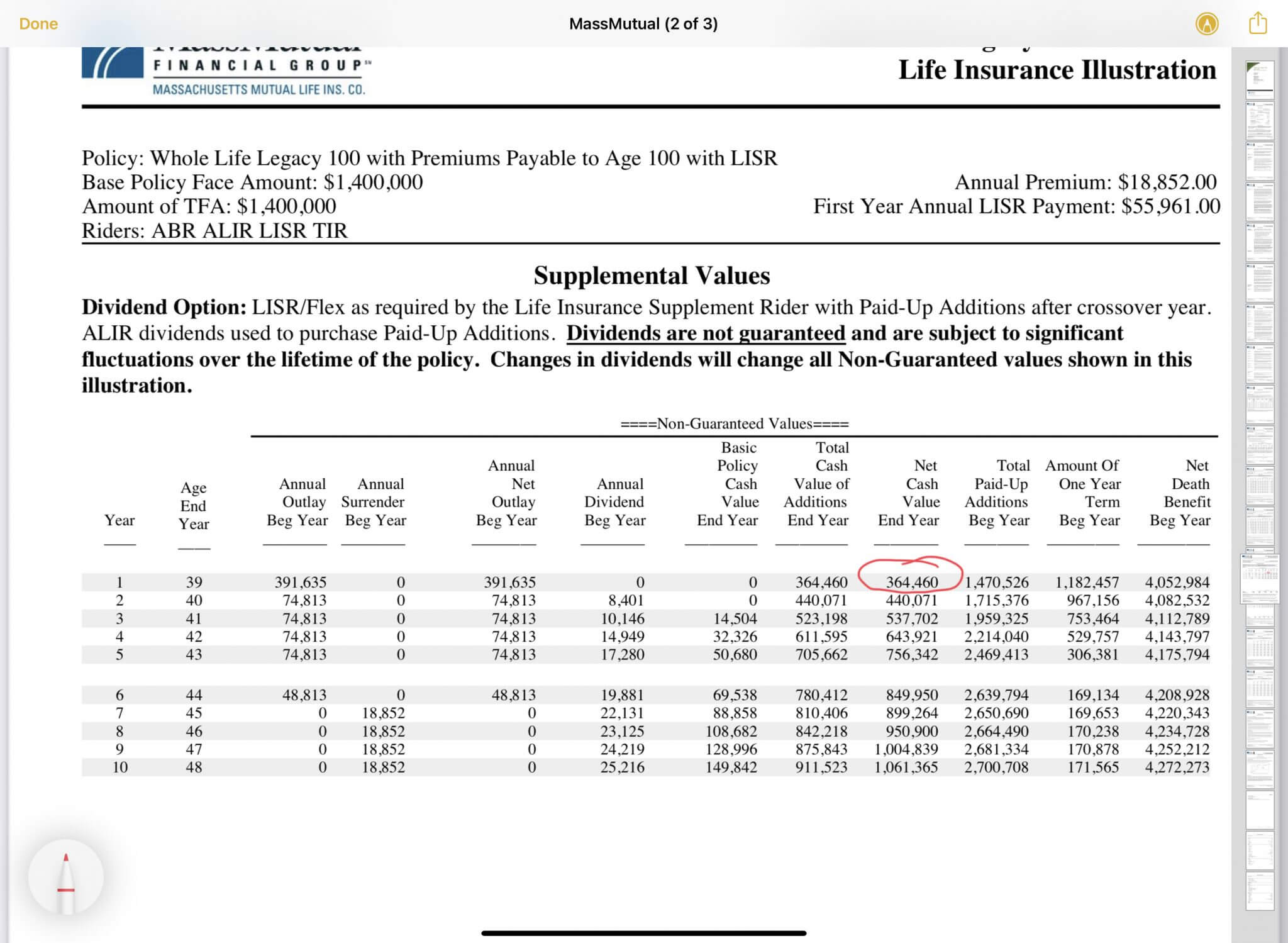
Inforce Policy Illustration
- Projected Future Values
- Guaranteed vs. Non-Guar.
- Net Cash Surrender Value
Carrier Customer Service
- Exact Payoff/Surrender Quote
- Tax Basis & Unpaid Loans
Review Your Annual Policy Statement: Insurance providers send annual policy statements detailing accumulated cash value, credited interest, dividend payments, policy fee deductions, and current surrender values.
Request an Inforce Illustration: An inforce illustration is an updated projection provided by your carrier. It calculates projected future cash value growth based on current interest rates, actual premium history, and projected COI deductions.
Check for Modified Endowment Contract (MEC) Status: If you pay excessive premiums into a cash value policy too quickly, it may violate federal tax funding rules under Section 7702 of the Internal Revenue Code. When a contract becomes a Modified Endowment Contract (MEC), cash value withdrawals and policy loans are taxed on a last-in, first-out (LIFO) basis and may incur a 10% early withdrawal penalty for policyholders under age 59½.
Confirm the Cost Basis: Your cost basis equals the total premiums paid into the policy minus any non-taxable dividends or tax-free withdrawals taken previously. Knowing your cost basis helps you calculate potential income taxes before surrendering a policy or taking withdrawals.
Strategic Uses and Tax Implications of Cash Value
Accumulated cash value inside a permanent life insurance contract provides several tax advantages and financial options under standard regulatory guidelines established by state insurance departments and modeled by the National Association of Insurance Commissioners (NAIC).
Tax-Deferred Growth
Cash value grows on a tax-deferred basis, meaning you do not pay annual income taxes or capital gains taxes on interest, dividends, or market growth as long as funds remain within the policy wrapper.
Tax-Free Withdrawals Up to Basis
Policyholders can make tax-free withdrawals from their accumulated cash value up to the total amount of premiums paid into the policy (your cost basis). Withdrawals above your cost basis are treated as taxable ordinary income.
Tax-Free Policy Loans
Borrowing against your cash value allows you to access capital without triggering income tax liabilities, regardless of whether the loan amount exceeds your cost basis. However, unpaid loan balances reduce the final death benefit paid to beneficiaries dollar-for-dollar.
1031 and 1035 Exchanges
Under Section 1035 of the Internal Revenue Code, policyholders can transfer accumulated cash value directly from one life insurance policy to another (or into a long-term care policy or annuity) without triggering tax liabilities on accumulated gains.
Frequently Asked Questions
Can I withdraw the entire cash value amount without cancelling my policy?
No. Withdrawing 100% of your accumulated cash value requires surrendering the policy, which terminates death benefit coverage completely. To keep your policy active, you must leave enough cash value in the contract to cover ongoing monthly administrative fees and Cost of Insurance charges.
What is the difference between cash value and face value?
The face value (or death benefit) is the total dollar amount paid out to your beneficiaries upon your death. The cash value is the internal savings balance that grows while you are alive. In standard whole life policies, your beneficiaries receive the policy face amount upon your death, while the remaining cash value reverts to the insurance company.
Why is my cash value lower than the total premiums I paid?
During the early years of a permanent life policy, a large portion of your monthly premium goes toward upfront agent commissions, underwriting expenses, administrative charges, and initial policy fees. It typically takes 10 to 15 years of consistent premium payments for cash growth to exceed total premium contributions.
How do policy loans affect cash value growth?
When you take out a policy loan, the carrier borrows against your cash value balance. Some insurers continue crediting interest on the borrowed portion (direct recognition vs. non-direct recognition policies), while others credit interest only on unborrowed funds. Unpaid loans accrue compound interest, which reduces both your cash surrender value and the final death benefit payout.
Are life insurance dividends guaranteed when calculating cash value?
No. Dividends are non-guaranteed distributions paid at the discretion of mutual life insurance companies based on their financial performance, mortality claims experience, and investment returns. Guaranteed cash growth relies strictly on the guaranteed interest rate written into your policy contract.
Practical Recommendations for Policyholders
Calculating life insurance cash value requires reviewing both your short-term liquidity needs and long-term financial goals. If you own or plan to purchase a cash-value life insurance policy, follow these steps to protect your financial position:
- Request an updated Inforce Illustration every 2 to 3 years from your insurer to verify that performance matches original projections.
- Monitor Cost of Insurance (COI) increases on flexible universal life contracts to ensure your accumulated cash value is sufficient to prevent policy lapses as you age.
- Confirm surrender penalties before withdrawing funds to avoid paying unnecessary surrender fees.
- Consult a qualified financial professional or CPA before executing policy surrenders, taking large withdrawals, or restructuring contracts to prevent unintended tax obligations.
Disclaimer: Life insurance policy terms, tax treatment, and calculation mechanics vary by provider, product type, and jurisdiction. Consult a licensed life insurance agent, certified financial planner (CFP), or tax advisor for professional guidance tailored to your specific policy.
Image Gallery