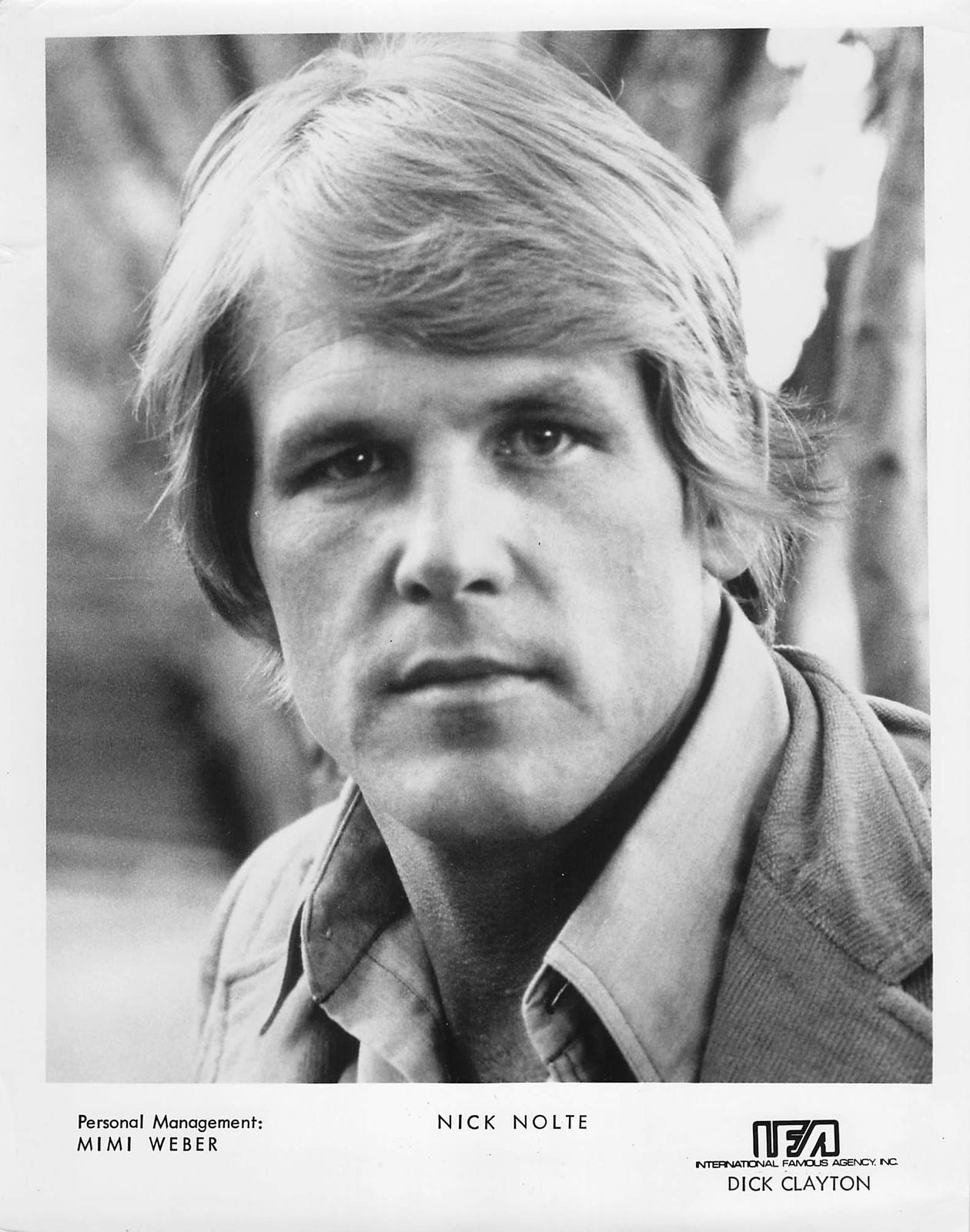
Nick Nolte’s 1972 Clairol Commercial: The Story Behind the Iconic "Summer Blonde" Ad
In 1972, before becoming a three-time Academy Award nominee, Nick Nolte starred in a famous commercial for Clairol’s "Summer Blonde" hair lightener. This advertisement, which featured a ruggedly handsome Nolte with sun-bleached hair, s...
In 1972, before becoming a three-time Academy Award nominee, Nick Nolte starred in a famous commercial for Clairol’s "Summer Blonde" hair lightener. This advertisement, which featured a ruggedly handsome Nolte with sun-bleached hair, served as a pivotal moment in his early modeling career and remains a classic "before they were famous" reference in Hollywood history.
Contents
The Origins of the "Summer Blonde" Campaign
In the early 1970s, the cosmetic industry was undergoing a massive shift toward "naturalism." Following the high-glamour, heavily styled 1960s, consumers in 1972 were increasingly interested in products that suggested an outdoor, active, and effortless lifestyle. Clairol, already a dominant force in the hair color market with its "Does she... or doesn't she?" campaign, sought to capture the youth market with Summer Blonde.
The product was not a traditional hair dye but a "lightener" designed to mimic the effect of the sun. To sell this "sun-kissed" look, Clairol needed models who looked as though they spent their days on a surfboard or a hiking trail rather than in a salon. Enter a thirty-one-year-old Nick Nolte. At the time, Nolte was a jobbing actor and model working in the Midwest and Los Angeles, far from the critical acclaim he would later receive for Rich Man, Poor Man (1976) or The Prince of Tides (1991).
The 1972 campaign was multifaceted, involving both television spots and high-circulation print advertisements. Nolte was often featured on the product packaging itself, standing alongside a blonde female model, embodying the "California Dream" that Clairol was exporting to the rest of the world.
Nick Nolte’s Role and the "Male Gaze" in 1970s Advertising
One of the most interesting aspects of the Nick Nolte Clairol commercial is the way it positioned the male model. In 1972, it was relatively rare for a man to be the centerpiece of a hair coloring product marketed primarily to women. However, Clairol’s strategy was twofold:
- Aspiration: Female consumers were meant to identify with the blonde woman in the ad, who was enjoying the company of a rugged, attractive man.
- The Emerging Male Market: While "Summer Blonde" was marketed to women, having a man like Nolte—who possessed a traditional, athletic masculinity—signaled that hair lightening wasn't just for the "beauty shop" crowd. It was for anyone who lived an active life.
Nolte’s look in the ad—shaggy, golden-blonde hair, often paired with denim or beachwear—became a blueprint for the 1970s "hunk" aesthetic. For Nolte, the job was purely functional. He has frequently noted in retrospectives that modeling was a way to fund his true passion for regional theater. Despite his later reputation as a "serious" and often "gritty" actor, this 1972 commercial serves as a reminder of his early status as a quintessential American heartthrob.
Technical Specifications: The Clairol Summer Blonde Formula
To understand why the commercial was so effective, one must look at the product itself. In 1972, "Summer Blonde" occupied a specific niche in the hair care aisle. Unlike permanent dyes that used heavy ammonia to deposit color, Summer Blonde was an alkaline-based lightener.
| Feature | Specification (Circa 1972) |
|---|---|
| Product Category | Highlighting / Lightening Kit |
| Active Ingredient | Hydrogen Peroxide (Developer) |
| Application Method | "Bottle-on" or "Squeeze-through" applicator |
| Target Result | 1–3 shades of lift; "Sun-kissed" highlights |
| Usage Frequency | Monthly or as needed for root touch-ups |
| Model Featured | Nick Nolte (and various female co-stars) |
The formula worked by slightly opening the hair cuticle and oxidizing the natural melanin. Because it lacked a heavy tint or "toner" step common in modern salon processes, the result was often a warm, golden hue—the exact look Nolte sported in the advertisements. This "warmth" was highly desirable in 1972, contrasting with the cool, ashy tones that would become popular in later decades.
The Sigourney Weaver Connection and Ambiguity
A common piece of Hollywood trivia suggests that Sigourney Weaver appeared alongside Nick Nolte in these 1972 Clairol ads. While it is verified that both actors did early modeling work for Clairol, there is significant debate among archivists as to whether they appeared in the same specific television spot.
Most photographic evidence from the 1972 "Summer Blonde" box art features Nolte with a model who bears a resemblance to Weaver but is generally identified by industry insiders as a professional model of the era, such as Chris O'Connor. However, the confusion persists because Weaver has confirmed in interviews that she did indeed film a Clairol commercial during the same period to earn her SAG card. Regardless of whether they shared the frame, the fact that two future industry titans were both "Clairol kids" speaks to the brand's ability to scout exceptional—if currently undiscovered—talent.
From Modeling to "Rich Man, Poor Man": The Transition
The visibility Nolte gained from the Clairol campaign cannot be understated. While it didn't give him "acting" credentials, it made his face ubiquitous in households across America. This "commercial familiarity" often helps actors when they transition into television roles, as casting directors look for faces that feel both fresh and relatable.
By 1976, just four years after the peak of the Summer Blonde campaign, Nolte landed the role of Tom Jordache in the miniseries Rich Man, Poor Man. The transformation was stark. He went from the polished, peroxide-blonde model of 1972 to a brooding, intense actor. Ironically, his character in the miniseries also possessed a rugged physicality, but it was used to convey trauma and class struggle rather than the carefree beach life of the Clairol ads.
Cultural Legacy of the 1972 Commercial
As of 2026, the 1972 Clairol commercial is frequently cited in retrospectives of American advertising. It represents a "time capsule" of early 70s aesthetics. The heavy use of soft-focus lenses, the focus on "natural" beauty (which actually required chemical assistance), and the crossover of male models into female-dominated spaces are all crystallized in this one campaign.
For Nolte himself, the commercial has been a source of humor in his later years. During talk show appearances, most notably on The Late Show with David Letterman, Nolte often laughed at his younger, "pretty boy" self. This ability to acknowledge his roots as a commercial model has only added to his persona as an unpretentious, authentic figure in Hollywood.
Common Misconceptions About the Commercial
- "Nolte was a teenager in the ad": In reality, Nolte was about 31 years old in 1972. His youthful features and the "surfer" aesthetic often lead viewers to believe he was much younger.
- "It was a shampoo commercial": While Clairol makes shampoo, "Summer Blonde" was a chemical lightener. It was a more "serious" cosmetic product that required careful application to avoid hair damage.
- "The ad was only in the US": Clairol’s "Summer Blonde" campaign was an international success, helping to establish the "California Look" in Europe and Australia throughout the early-to-mid 1970s.
How to View the Commercial Today
In 2026, finding the original 1972 Nick Nolte Clairol commercial is easier than ever due to the digitization of advertising archives. Several "Museum of Television" style websites and high-definition YouTube archives of 1970s commercials preserve the footage.
If you are a student of film history or advertising, analyzing this commercial offers insights into:
- Color Grading: Notice the specific "warmth" and saturation of the film stock used in 1972.
- Targeting: Observe how the dialogue (if present) or the music frames the product as a "lifestyle choice" rather than a "chemical process."
- Brand Consistency: Compare this to Clairol's modern 2026 marketing to see how "natural results" remain a core selling point, even as the formulas have evolved.
FAQ: Nick Nolte and Clairol
Was Nick Nolte the "Summer Blonde" man?
Yes, Nick Nolte was the primary male model for Clairol’s "Summer Blonde" kit in 1972. He appeared on the product boxes and in television commercials, often portrayed in outdoor or beach settings to emphasize the "natural" lightening effect of the product.
Who was the girl in the Clairol commercial with Nick Nolte?
While often rumored to be Sigourney Weaver, the woman on the 1972 box art and in the primary commercials is widely believed to be a professional model from that era, such as Chris O'Connor. Sigourney Weaver did model for Clairol at the same time, but their appearances in the same specific spot remain a point of historical debate.
Is Clairol Summer Blonde still available?
The original 1972 formulation has been discontinued for decades. However, Clairol continues to produce highlighting and lightening kits under different sub-brands (such as "Nice 'n Easy" or "Frost & Tip"). The "Summer Blonde" name itself has been retired or rebranded in most global markets.
Why did Nick Nolte do commercials?
Like many actors in the early 1970s, Nolte used modeling and commercial work to provide financial stability while he pursued theater and television roles. At the time, he was a working actor based in the Midwest and later California, looking for his big break.
Did the commercial help Nick Nolte's acting career?
While it didn't directly lead to his "serious" roles, the commercial gave him national exposure and a recognizable "look." This visibility is often considered a factor in his casting for later television roles that required a leading-man presence.
Final Recommendation
For those interested in the history of celebrity branding, the Nick Nolte 1972 Clairol commercial is a must-study. It serves as a masterclass in how a specific aesthetic—the "sun-kissed" outdoorsman—can be used to sell a beauty product across gender lines. If you are a collector of vintage memorabilia, original "Summer Blonde" boxes from 1972 featuring Nolte are highly sought-after items that capture a unique intersection of Hollywood history and American consumer culture.
Image Gallery