The Four-Headed Turtle Explained: Dissecting the Anomaly
The term "four-headed turtle" is a persistent urban legend and internet phenomenon that blends genuine biological anomalies with speculative fiction and misidentified photographic media. In reality, while multi-headed reptiles—a condit...
The term "four-headed turtle" is a persistent urban legend and internet phenomenon that blends genuine biological anomalies with speculative fiction and misidentified photographic media. In reality, while multi-headed reptiles—a condition known as polycephaly—are documented in scientific literature, a four-headed specimen has never been verified by the scientific community, distinguishing these claims from documented cases of bicephaly.
Contents
Understanding Polycephaly in Reptiles
Polycephaly is a rare congenital condition where an organism is born with more than one head. It occurs most frequently in snakes and turtles due to incomplete embryo splitting during early development, a process similar to the formation of conjoined twins in mammals. While bicephaly (two heads) is relatively well-documented in turtle populations, the condition rarely leads to long-term survival in the wild.
The developmental pathway of a turtle embryo is sensitive to environmental stressors, including temperature fluctuations during incubation and exposure to pollutants. While these factors may increase the frequency of developmental mutations, they do not explain the extreme rarity of multiple heads beyond the bicephalic stage. In biological terms, the complexity of branching the nervous system and circulatory paths required to support four distinct heads on a single reptilian body presents a severe physiological barrier that likely prevents such embryos from reaching full term.
Distinguishing Fact from Internet Mythology
The fascination with the "four-headed turtle" largely stems from digitally altered images and misinterpretations of shared physiological anomalies. Over the past two decades, various images have circulated on social media and image boards claiming to show turtles with three or four heads. In almost every instance, forensic digital analysis reveals either composite photography, where multiple images of a bicephalic turtle are layered, or the misidentification of a different creature entirely.
Unlike the two-headed turtles occasionally displayed in museums or research facilities—which are the result of a singular axis splitting—a four-headed organism would require two distinct splitting events or a catastrophic error in the blastula stage. There are no credible peer-reviewed journals or zoological archives that list a specimen with more than two heads. When you encounter these claims, they are typically categorized as "cryptid" lore or engagement-driven digital art rather than biological evidence.
Comparison of Documented and Speculative Anomalies
| Feature | Bicephalic (Two-Headed) Turtles | "Four-Headed" Claims |
|---|---|---|
| Evidence | Well-documented in peer-reviewed journals | No verified physical specimens |
| Origin | Incomplete embryo cleavage | Often digital manipulation or hoax |
| Biological Viability | Extremely low; usually die shortly after hatch | Theoretically impossible for vertebrates |
| Scientific Status | A rare but recognized congenital condition | Non-existent urban legend |
The Role of Environmental and Genetic Factors
If you are researching this topic because of news reports regarding "mutated" animals, it is important to separate scientific reality from sensationalism. Environmental toxins, such as heavy metals or pesticides in water sources, have been linked to an increase in physical deformities among amphibian and reptilian populations. However, these deformities usually manifest as missing limbs, shell malformations, or ocular issues, rather than the addition of complex anatomical structures like extra heads.
Genetic drift and inbreeding within isolated turtle populations can also heighten the prevalence of recessive traits. In extreme cases, this may lead to developmental errors. Researchers monitor these occurrences as "bioindicators," which act as early warning systems for ecosystem health. If you observe a turtle with a visible deformity, it is often a sign of localized environmental pressure rather than a spontaneous evolution toward multi-headedness.
Challenges in Observing and Studying Polycephaly
The scientific study of polycephalic reptiles is hampered by the fact that these animals rarely survive past the neonatal stage. Because the heads often share a single heart, lungs, and stomach, the competition for nutrients and oxygen between the two brains usually results in metabolic failure.
For those few specimens that do survive for a time, researchers face ethical and practical challenges:
- Feeding logistics: Both heads may attempt to swallow the same food, leading to internal injuries or choking.
- Mobility: Coordinated movement is difficult when two brains send conflicting signals to the same set of limbs.
- Medical Intervention: Most public aquariums or universities lack the veterinary infrastructure to provide long-term care for such complex multisystem anomalies.
Frequently Asked Questions
Are there any verified photos of a four-headed turtle?
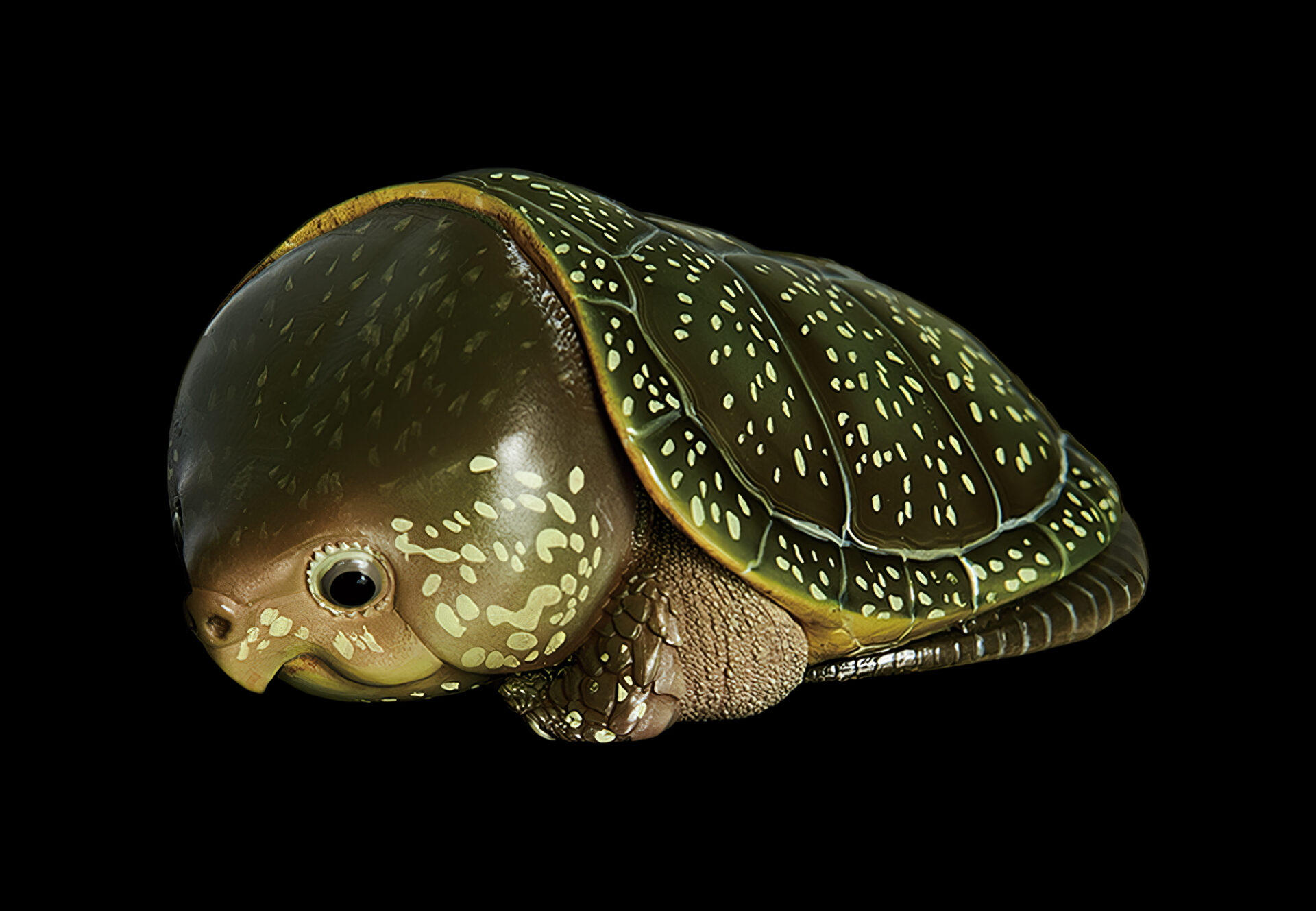
No. There are no verified, scientific, or zoological photographs of a four-headed turtle. Most images claiming to depict this are verified as digital composites or sculptures intended for entertainment.
Is polycephaly common in turtles?
Polycephaly is rare, not common. While it occurs more often in turtles than in other vertebrates, it remains a statistical outlier. Estimates suggest it affects only a fraction of a percentage of hatchlings, most of whom do not survive.
Can a multi-headed turtle grow into adulthood?
It is extremely rare. While there are isolated historical reports of bicephalic turtles living for several years in captivity, the metabolic and neurological stress of managing two heads usually results in early mortality.
Does radiation cause turtles to grow extra heads?
While high-level ionizing radiation can cause mutations, it typically causes cellular death, sterility, or tumors rather than organized, complex anatomical duplication like a head. The urban myth connecting radiation to multi-headed creatures is largely a trope of science fiction.
What should I do if I find an animal with a deformity?
If you encounter a turtle or any wildlife with significant deformities, do not attempt to capture or "fix" the animal. Contact your local wildlife conservation agency or state fish and wildlife department. They are equipped to study these animals and assess if the deformity is part of a larger, environment-related health trend.
Conclusion and Next Actions
The "four-headed turtle" is an interesting study in how digital misinformation can mimic biological reality. While the fascination with unique anatomy is a hallmark of human curiosity, the evidence confirms that polycephaly is limited to two heads in verified reptilian biology. If you are interested in the actual science of reptilian development, focus your research on "teratology" or "congenital malformations in chelonians" through institutional databases like the Association of Zoos and Aquariums or academic repositories like JSTOR. Should you encounter a live animal with a genuine physical abnormality, document the location and notify local wildlife authorities to ensure the animal receives professional assessment and to aid in environmental data collection.
Image Gallery